Cadbury Dairy Milk Roast Almond: Calories, Nutrition and Health Benefits
Premium milk chocolate enriched with roasted whole almonds, delivering antioxidants, healthy fats, and indulgent satisfaction with nutritional depth.
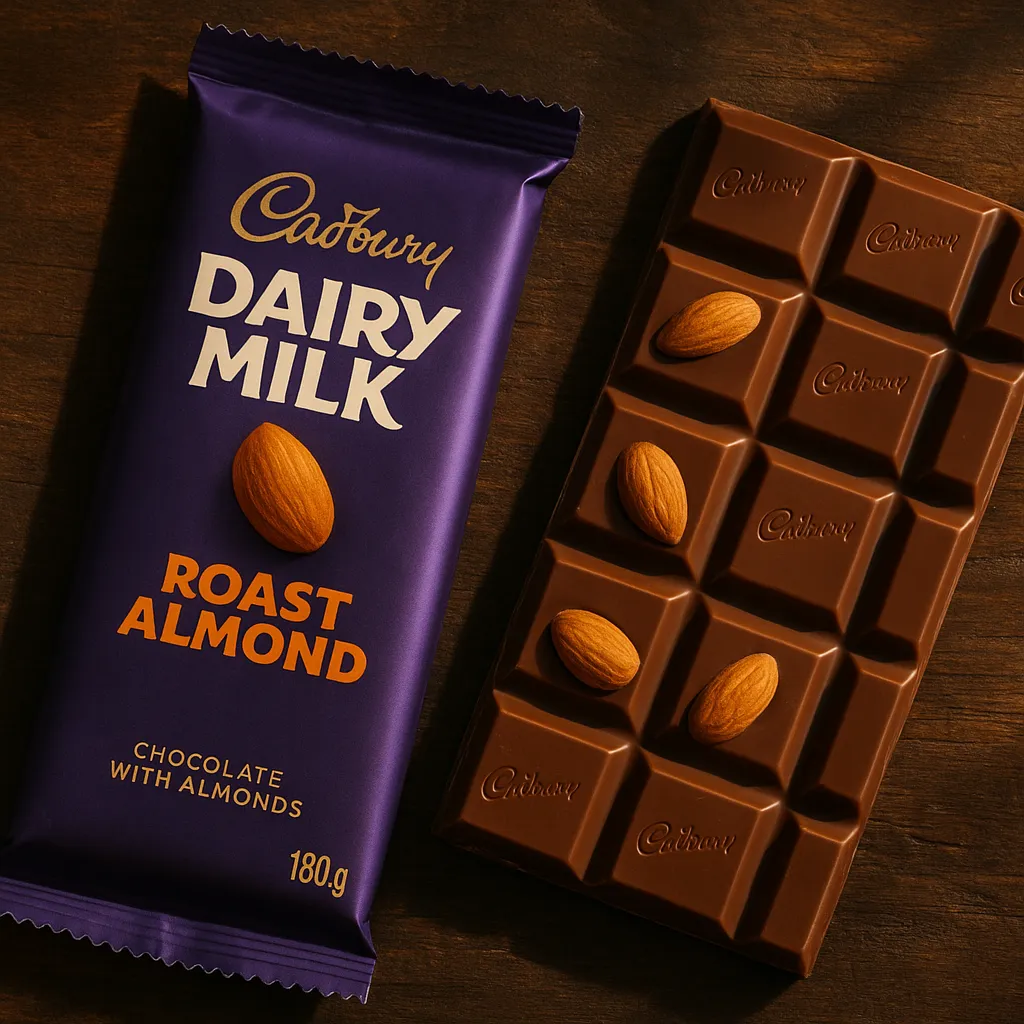
Quick Nutrition Facts
Per 100g
| Nutrient | Amount |
|---|---|
| Calories | 509 kcal |
| Protein | 9g |
| Carbohydrates | 54g |
| Fiber | 2g |
| Sugars | 48g |
| Fat | 29g |
| Saturated Fat | 18g |
| Magnesium | 68mg |
| Iron | 2.2mg |
| Zinc | 1.8mg |
Macronutrient Breakdown
 ChatGPT
  Claude
  AI Mode
  Perplexity
NUTRITIONIST INSIGHT
Cadbury Dairy Milk Roast Almond combines the antioxidant power of milk chocolate with the vitamin E and magnesium from roasted almonds. The roasting process enhances the almond's nutrient bioavailability while creating a satisfying crunch that improves satiety—making portion control easier than smooth chocolate alone.
Myth Busters
MYTH #1: All Chocolate Is Bad for Your Heart
TRUTH: Milk chocolate contains flavonoids and polyphenols that support cardiovascular health. Studies show moderate consumption (20-30g daily) improves blood flow and reduces blood pressure. Cadbury Dairy Milk Roast Almond provides these benefits while the almonds add heart-healthy monounsaturated fats.
MYTH #2: Almonds in Chocolate Negate the Sugar Content
TRUTH: While almonds provide fiber (2g per 100g) and healthy fats that slow sugar absorption, the bar still contains 48g sugar per 100g. Pairing small portions with protein or eating before exercise—not the almond content—is what matters for blood sugar control.
MYTH #3: Chocolate Causes Acne
TRUTH: Research shows chocolate alone doesn't cause acne. High-glycemic foods and excess dairy may trigger breakouts in sensitive individuals, but Cadbury's moderate dairy content (milk solids ~10%) is unlikely to be problematic for most people in small portions.
MYTH #4: You Can't Eat Chocolate While Losing Weight
TRUTH: Portion-controlled chocolate (15-20g or about 1-2 almonds) fits into any calorie deficit. The 509 calories per 100g means even small amounts provide satisfaction; studies show including favorite foods improves diet adherence and reduces overeating.
MYTH #5: Roasted Almonds Lose All Their Nutrients
TRUTH: Light roasting (like Cadbury's process) preserves 90%+ of almonds' vitamin E, magnesium, and antioxidants. The roasting actually enhances polyphenol availability for absorption.
NutriScore by Health Goals
| Health Goal | NutriScore | Why This Score? |
|---|---|---|
| Weight Loss |  | 509 cal/100g demands strict portions (max 20g). Offset with almonds' satiety but requires willpower. Best as rare treat, not daily. |
| Muscle Gain |  | 509 calories + 54g carbs + 9g protein ideal during calorie surplus for post-workout recovery. Almonds add 29g healthy fat for hormone balance. |
| Diabetes Management | | 48g sugar per 100g requires strict portion limits (10-15g max). Pair with protein/nuts. Monitor blood glucose 2 hours post-consumption. |
| PCOS Management | | High sugar (48g) and saturated fat (18g) affect insulin sensitivity. Limit to 10g portions once weekly; prioritize dark chocolate alternatives. |
| Pregnancy Nutrition | | Magnesium (68mg/100g) supports leg cramp prevention; almonds provide folate. Moderate portions (20-30g) safe and satisfy chocolate cravings without excessive sugar intake. |
| Viral/Flu Recovery | | Quick energy (509 cal) + antioxidants boost recovery. Magnesium and zinc from almonds support immune function. Enjoy 30-50g portions during convalescence. |
PERSONALIZED NUTRITION
Track your meals with NutriScan for personalized NutriScores based on your specific health goals!
Blood Sugar Response to Chocolate
Understanding how chocolate affects blood glucose helps you time portions strategically, especially for weight loss and diabetes management.
Typical Glucose Response Curve
This chart shows typical blood glucose response for general healthy individuals. Individual responses may vary. Not medical advice.
How to Flatten the Spike
Pairing chocolate with protein or healthy fat slows sugar absorption, reducing the blood glucose peak:
- 🥜 Peanut butter or almond butter - The almonds already present add fat; pair with additional nut butter for stronger effect
- 🥛 Greek yogurt or milk - Protein and calcium slow digestion
- 🥜 Handful of unsalted nuts - Adds fiber and extends satiety
- 🍵 Green tea - Polyphenols enhance chocolate's antioxidant effect and slow glucose spike
This combination not only reduces the glucose spike but extends energy release, preventing the sugar crash.
Cultural Significance
Cadbury Dairy Milk, launched in 1905, revolutionized chocolate manufacturing with its "glass and a half" campaign symbolizing premium creaminess. India remains a critical market since the 1948 acquisition of Cadbury Freia, with Roast Almond variants tailored to Indian palates.
In India:
- Cadbury holds 25% market share; Dairy Milk is the #1 chocolate brand
- Roast Almond and other variants reflect Indian preferences for nuts over other chocolate fillings
- Widely gifted during festivals (Diwali, Holi) and celebrations
- Manufacturing in India supports local cocoa sourcing from Tamil Nadu and other regions
Global Impact:
- Dairy Milk sold in 170+ countries; over 400 million bars annually
- Premium positioning relative to competing brands; recognized for consistent quality
- Supports sustainable cocoa farming partnerships in West Africa
Compare & Substitute
Chocolate Bars: Nutrition Per 100g
| Nutrient | Cadbury Dairy Milk Roast Almond | Cadbury Dairy Milk Silk (Dark) | Nestlé Munch | Amul Dark 72% |
|---|---|---|---|---|
| Calories | 509 kcal | 485 kcal | 495 kcal | 550 kcal |
| Carbs | 54g | 56g | 58g | 46g |
| Fiber | 2g | 1.5g | 1g | 4g |
| Protein | 9g | 8g | 6.5g | 11g |
| Fat | 29g | 25g | 28g | 36g |
| Sugar | 48g | 51g | 52g | 38g |
| Best For | Balanced indulgence, almonds | Silky texture, daily treat | Wafer crunch | Dark chocolate, antioxidants |
Frequently Asked Questions
Is Cadbury Dairy Milk Roast Almond healthier than regular Dairy Milk?
Roast Almond adds 2g fiber, extra magnesium (68mg vs 42mg), and vitamin E (15-20% DV) compared to plain Dairy Milk. The roasted almonds provide satiety and slow glucose absorption. Both are indulgences; Roast Almond offers marginal nutritional advantage but slightly higher calorie density (509 vs 480 kcal/100g). Best consumed in small, intentional portions.
Can I eat Cadbury Dairy Milk Roast Almond daily?
For weight loss: avoid daily; limit to 2-3 times weekly in 15-20g portions. For general health: 15-30g daily (3-6 almonds) fits most calorie targets. For muscle gain during surplus: up to 50g daily provides beneficial carbs/fats. Daily consumption risks exceeding sugar intake (WHO recommends <50g/day; one bar provides 48g). Monitor total intake.
What's the difference between roasted and raw almonds in chocolate?
Roasted almonds (as in Cadbury's bar) are lighter, crunchier, and have enhanced flavor; they retain 90%+ nutrient bioavailability. Raw almonds are softer, potentially retain marginally more heat-sensitive vitamins (though loss is minimal at typical roasting temperatures). Both provide similar protein (9g), fiber (2g), and healthy fats. Roasted offers better palatability.
Should I eat the whole bar or break it into portions?
Break into portions for three reasons: (1) reduces accidental overconsumption; (2) extends enjoyment (small pieces eaten slowly trigger satiety sooner); (3) easier blood sugar management. Store the rest in a cool place or refrigerator. Eating 1-2 almonds (15-20g) provides satisfaction without derailing fitness goals.
Does chocolate increase caffeine sensitivity?
Cadbury Dairy Milk Roast Almond contains ~6-10mg caffeine per 100g (milk chocolate has less than dark). Sensitive individuals may experience mild jitters if consumed late evening, especially combined with coffee. Almonds contain l-theanine naturally, which offsets caffeine jitters somewhat. Enjoy by early afternoon if caffeine-sensitive.
Can I eat this chocolate while intermittent fasting?
No. Chocolate's 509 calories breaks a fast; 48g sugar spikes insulin. Reserve for eating windows. If practicing time-restricted eating (e.g., 12-hour window), consume during the eating window post-workout for optimal glucose clearance and hormone response.


Similar Nutritious Foods
4505 Chicharrones Classic Chili Salt
7 Eleven Japan Crispy Corn Cheese
Explore More Nutrition Tools & Resources
AI Calorie Counter App - Snap a Photo, Get Macros
AI Nutritionist App That Reads Your Logged Meals
Best Protein Supplements for Women
Bulking Meal Plan App That Sets Your Surplus
ChatGPT Calorie Counter Alternative That Keeps the Total
ChatGPT Diet Plan Alternative That Tracks What You Eat
ChatGPT Weight Loss Coach Alternative With a Food Log
Fast Food Calorie Counter App That Reads the Tray
Free Calorie Tracker App with AI Photo Scans | NutriScan
Indian Diet Plan App With Veg and Non Veg Meals
Indian Food Calorie Calculator - Get Instant Nutrition Facts for Desi Meals — 2026
Intermittent Fasting for Women, Timer and Meal Log App
Intermittent Fasting Tracker App - Free Fasting Timer
Macro Tracker App That Fills the Numbers From a Photo
Mediterranean Diet Meal Plan App That Counts the Oil
Micronutrient Tracker App for Vitamins and Minerals
MyFitnessPal Alternative That Stays Free | NutriScan
NutriScore App: A Free Grade on Every Meal | NutriScan
Nutrition Label Scanner App for the Amount You Ate
Second Trimester Protein Guide
Vegetarian Meal Plan App With a Protein Target
Voice Calorie Counter - Speak to Track Meals Hands-Free
Water and Calorie Tracker App - Free Water Log