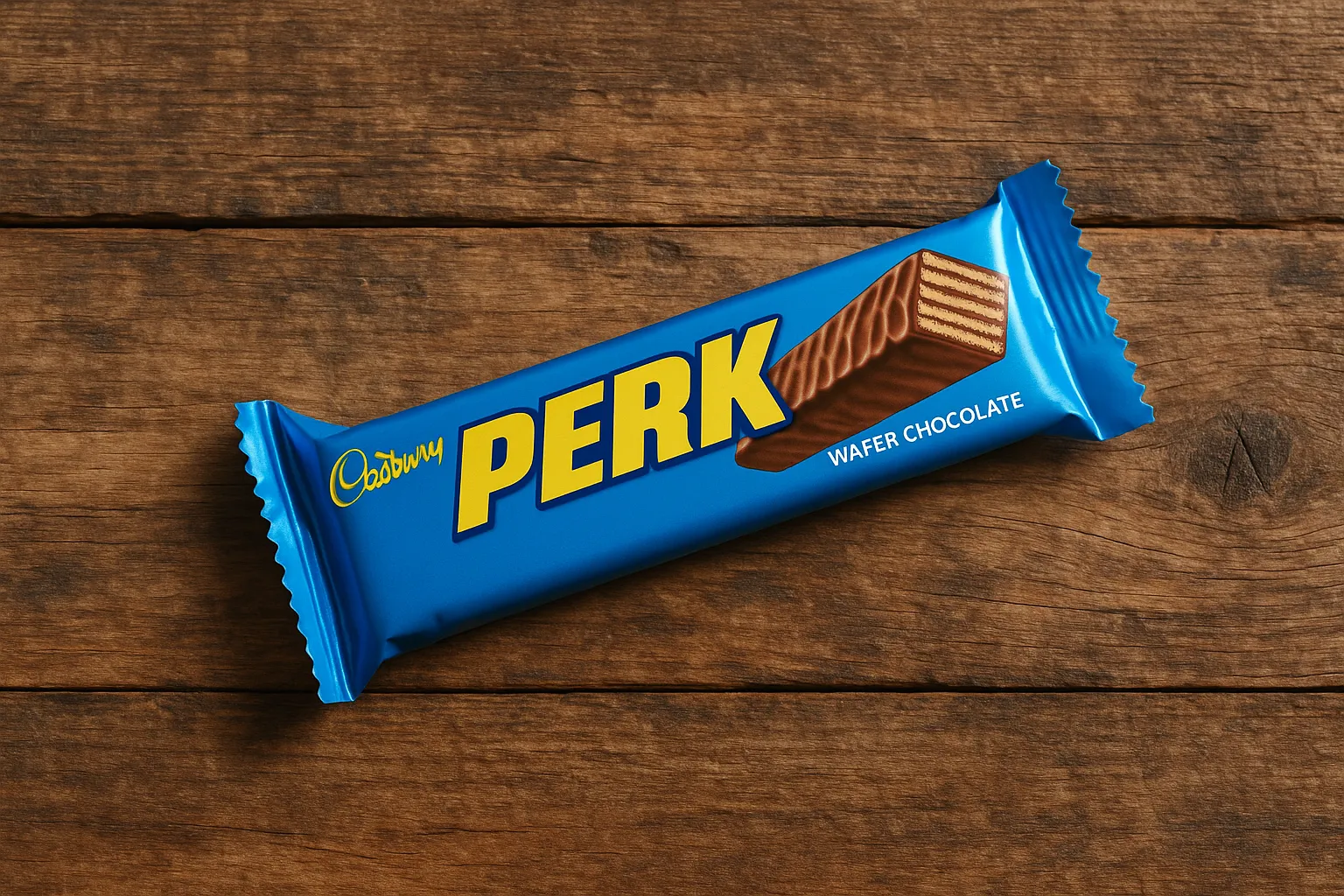
Cadbury Perk: Calories, Nutrition and Health Benefits
Light wafer chocolate with crispy layers and cocoa coating—low satiety despite moderate calories.
Quick Nutrition Facts
Per 1 Bar (34g)
| Nutrient | Amount |
|---|---|
| Calories | 190 kcal |
| Protein | 2.8g |
| Carbohydrates | 21g |
| Fiber | 0.2g |
| Sugars | 16g |
| Fat | 10g |
| Saturated Fat | 6g |
| Sodium | 80mg |
| Calcium | 120mg |
| Iron | 1.2mg |
Macronutrient Breakdown
 ChatGPT
  Claude
  AI Mode
  Perplexity
NUTRITIONIST INSIGHT
Cadbury Perk's wafer structure is engineered for volume with minimal satiety. The 190 calories fill quickly but dissipate within 60 minutes, triggering hunger spikes. The 0.2g fiber (97% less than a banana) cannot support blood sugar stability or digestive health.
Myth Busters
MYTH #1: Wafer Makes Chocolate Lighter/Healthier
TRUTH: Wafer is mostly air—it increases perceived volume without nutritional benefit. The rapid consumption rate (less chewing) increases glycemic response compared to solid chocolate. Per-gram, wafer is denser in sugar than solid chocolate.
MYTH #2: Eating Small Portions Prevents Weight Gain
TRUTH: Wafer's low satiety makes portion control nearly impossible. Studies show low-density foods (air-filled) cause 18–25% more calorie consumption per sitting. Eating one bar leads to eating two within an hour.
MYTH #3: Cocoa Coating Provides Antioxidants
TRUTH: Cadbury Perk contains minimal cocoa solids—mostly cocoa butter and added sugar. Dark chocolate (70%+ cocoa) delivers 200mg+ polyphenols per serving; Perk provides <50mg. Benefit is negligible.
MYTH #4: Wafer Chocolate Is Suitable for Snacking
TRUTH: Wafer structure ensures rapid consumption—you finish 190 calories in 2 minutes without fullness. Quick consumption prevents satiety signals from reaching the brain (20-minute lag). You'll be hungry again within the hour.
MYTH #5: Sugar in Small Portions Is Harmless
TRUTH: Even single servings of refined sugar impair blood vessel function, increase inflammation markers, and trigger rewarding dopamine cascades that promote overconsumption. One bar = sustained metabolic dysregulation for 4+ hours.
NutriScore by Health Goals
| Health Goal | NutriScore | Why This Score? |
|---|---|---|
| Weight Loss |  | 190 calories, 10g fat, 0.2g fiber. Minimal satiety; wafer encourages binge consumption. Poor macronutrient ratio for hunger control. |
| Muscle Gain | | Only 2.8g protein; carbs are 76% sugar. Insufficient for recovery; rapid blood sugar spike followed by crash. Choose protein sources instead. |
| Diabetes Management |  | GI 72+, 16g sugar (64% daily limit); wafer structure ensures rapid glucose absorption. Strictly forbidden; causes sharp blood glucose spikes. |
| PCOS Management | | Refined sugar worsens insulin resistance. Low fiber (0.2g) fails to support glycemic control. Avoid entirely. |
| Pregnancy Nutrition | | High refined sugar in pregnancy increases gestational diabetes and maternal glucose dysregulation risk. Choose nutrient-dense foods. |
| Viral/Flu Recovery | | Sugar suppresses white blood cell function. Vitamin C minimal. Wafer lacks satiety to sustain energy. Bone broth, citrus, and whole foods are superior recovery options. |
PERSONALIZED NUTRITION
Track your wafer chocolate intake with NutriScan for personalized NutriScores based on your health goals and actual hunger patterns!
Blood Sugar Response to Cadbury Perk
Wafer structure and minimal fiber create rapid blood glucose spikes followed by sharp crashes.
Typical Glucose Response Curve
This chart shows typical blood glucose response for general healthy individuals. Individual responses may vary. Not medical advice.
Preventing Blood Sugar Crashes
Pairing wafer chocolate with protein and fat slows glucose absorption:
- 🥛 Whole milk or yogurt - Casein protein + fat extend satiety and buffer glucose response
- 🥜 Handful of almonds - Protein + fat + fiber mitigate sugar spike and extend energy
- 🍞 Whole grain toast - Fiber (3–4g) slows sugar entry into bloodstream
- 🧈 Peanut or almond butter - Healthy fat + protein + fiber (2g per tbsp) stabilizes blood sugar
Even with these additions, Cadbury Perk remains a poor snack choice compared to dark chocolate or protein-based bars.
Cultural Significance
Cadbury Perk has been a beloved Indian chocolate bar since the 1980s, representing affordable indulgence and lightness.
In India:
- Marketed as a "light" chocolate alternative to heavier bars like 5 Star; wafer concept appeals to consumers seeking volume with moderation perception
- Often distributed in bulk at celebrations, offices, and as affordable gifts due to lower price point relative to Dairy Milk
- Iconic in Indian popular culture; featured in movies and advertisements emphasizing lightness and happiness ("Perk up your mood")
- Consumed across all income levels; positioned as everyday treat rather than premium indulgence
Global Context:
- Wafer-based chocolate format mimics successful bars like KitKat and Nestle Aero
- The "light" positioning has contributed to overeating perception—consumers believe wafer is healthier despite similar calorie density
- Available in 20+ countries worldwide, often as value-segment offering
Compare & Substitute
Cadbury Perk vs Similar Chocolate Bars (Per Bar)
| Nutrient | 🍫 Cadbury Perk | 🍫 Cadbury Dairy Milk | 🍫 KitKat 2 Finger | 🍫 Dark Chocolate 70% | 🍫 Protein Bar |
|---|---|---|---|---|---|
| Calories | 190 | 220 | 105 | 160 | 190 |
| Carbs | 21g | 24g | 12g | 13g | 9g |
| Sugar | 16g | 21g | 9g | 4g | 2g |
| Protein | 2.8g | 3.2g | 1.8g | 3.5g | 20g |
| Fat | 10g | 12g | 5.5g | 11g | 6g |
| Fiber | 0.2g | 0.3g | 0g | 2g | 4g |
| Best For | Rare treats | Occasional snack | Portion control | Health-conscious | Post-workout |
Frequently Asked Questions
Is Cadbury Perk good for weight loss?
No. At 190 calories with 10g fat and only 0.2g fiber, Cadbury Perk offers minimal satiety despite moderate energy content. The airy wafer structure accelerates consumption—you finish the bar in 2 minutes without feeling full. Low-density foods increase total calorie intake by 18–25% per sitting. Avoid entirely for weight loss; choose Greek yogurt, nuts, or whole fruits instead.
Can diabetics eat Cadbury Perk?
No. The 16g refined sugar per bar represents 64% of WHO's daily added-sugar limit in a single serving. The wafer structure ensures rapid glucose absorption (GI 72+), causing sharp blood glucose spikes 15–30 minutes post-consumption. Refined sugar impairs insulin sensitivity even in non-diabetics. Strictly avoid.
How much protein is in Cadbury Perk?
Only 2.8g per bar—inadequate for muscle building or satiety. The carb-to-protein ratio (7.5:1) is unfavorable for recovery. After intense exercise, choose Greek yogurt (15–20g protein), cottage cheese, or whey shakes to support muscle repair effectively.
What are the main health concerns?
Primary: 16g refined sugar (64% daily limit); 10g fat (50% saturated fat budget); 0.2g fiber (almost zero); rapid consumption due to low density; poor satiety leading to overeating within 1 hour; minimal micronutrients. Regular consumption accelerates weight gain, type 2 diabetes, and cardiovascular disease risk.
When is the best time to eat Cadbury Perk?
Only immediately post-intense workout (90+ minutes exercise) when muscle glycogen is depleted and insulin sensitivity is elevated. Pair with protein (20g whey) to buffer sugar absorption and support recovery. Never consume on empty stomach, before bed, or as a standalone snack—low satiety guarantees hunger within 1 hour.
Why does wafer chocolate cause more hunger than solid chocolate?
Wafer is 70% air by volume—it provides calories without satiety. The low density and rapid consumption prevent satiety signals from reaching the brain within the critical 20-minute window. You eat 190 calories in 2 minutes without feeling full. Solid chocolate (same calories) extends chewing time, allowing satiety hormones (GLP-1, peptide YY) to signal fullness before overconsumption.


Similar Nutritious Foods
4505 Chicharrones Classic Chili Salt
7 Eleven Japan Crispy Corn Cheese
Explore More Nutrition Tools & Resources
AI Calorie Counter App - Snap a Photo, Get Macros
AI Nutritionist App That Reads Your Logged Meals
Best Protein Supplements for Women
Bulking Meal Plan App That Sets Your Surplus
ChatGPT Calorie Counter Alternative That Keeps the Total
ChatGPT Diet Plan Alternative That Tracks What You Eat
ChatGPT Weight Loss Coach Alternative With a Food Log
Fast Food Calorie Counter App That Reads the Tray
Free Calorie Tracker App with AI Photo Scans | NutriScan
Indian Diet Plan App With Veg and Non Veg Meals
Indian Food Calorie Calculator - Get Instant Nutrition Facts for Desi Meals — 2026
Intermittent Fasting for Women, Timer and Meal Log App
Intermittent Fasting Tracker App - Free Fasting Timer
Macro Tracker App That Fills the Numbers From a Photo
Mediterranean Diet Meal Plan App That Counts the Oil
Micronutrient Tracker App for Vitamins and Minerals
MyFitnessPal Alternative That Stays Free | NutriScan
NutriScore App: A Free Grade on Every Meal | NutriScan
Nutrition Label Scanner App for the Amount You Ate
Second Trimester Protein Guide
Vegetarian Meal Plan App With a Protein Target
Voice Calorie Counter - Speak to Track Meals Hands-Free
Water and Calorie Tracker App - Free Water Log