Canelé de Bordeaux: Calories, Nutrition and Health Benefits
A classic French pastry from Bordeaux with a caramelized beeswax crust, soft rum-vanilla custard center, and 150 calories per piece.
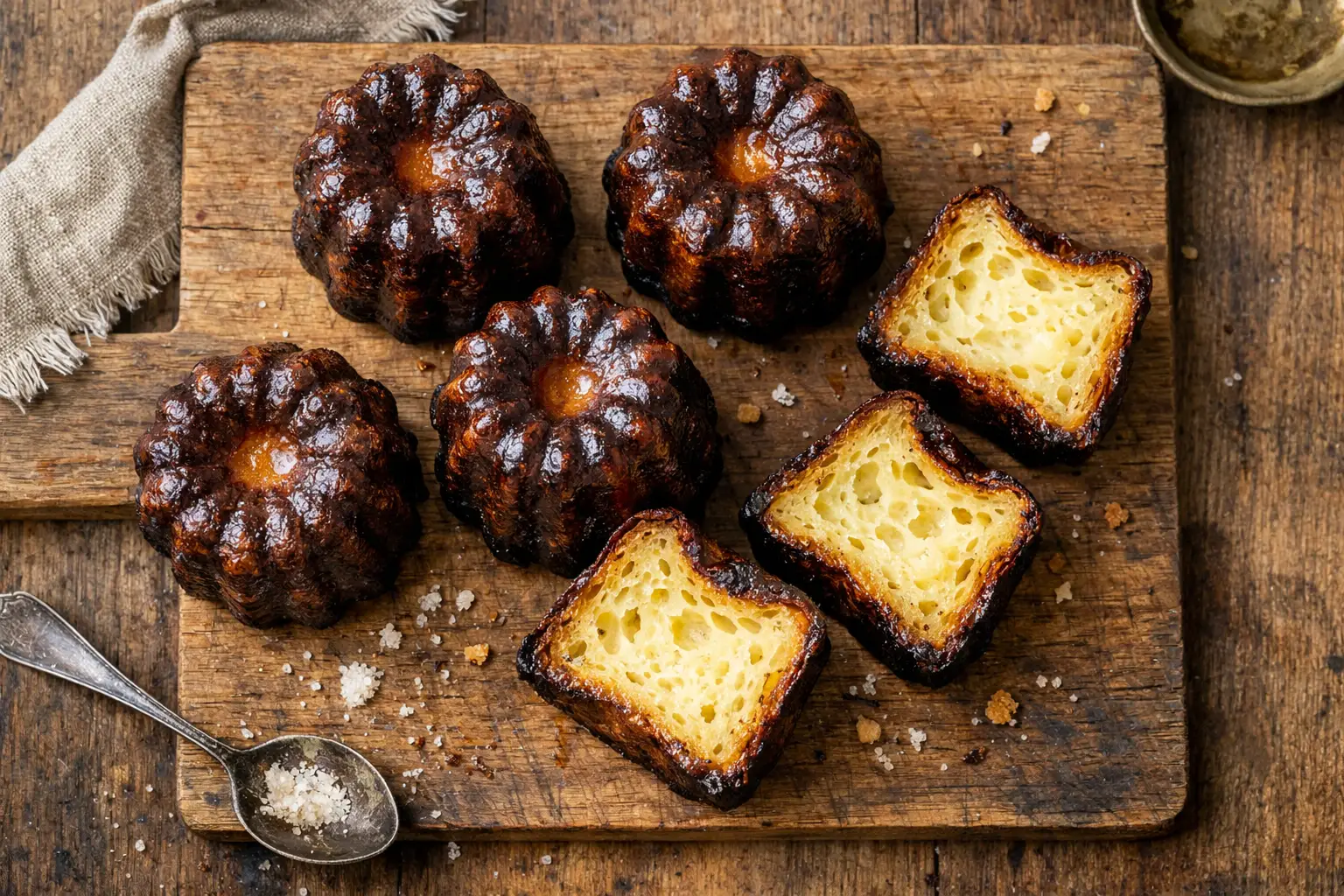
Quick Nutrition Facts
Per 1 Canelé (55g)
| Nutrient | Amount |
|---|---|
| Calories | 150 kcal |
| Protein | 2.2g |
| Carbohydrates | 19g |
| Fiber | 0g |
| Sugars | 15g |
| Fat | 4.5g |
| Saturated Fat | 2.2g |
| Cholesterol | 60mg |
| Calcium | 40mg |
| Vitamin A | 55mcg |
Macronutrient Breakdown
 ChatGPT
  Claude
  AI Mode
  Perplexity
NUTRITIONIST INSIGHT
Canelé packs 150 calories into a small 55g pastry, with 79% of those calories from sugar and refined flour. The custard base provides modest calcium and vitamin A from eggs and milk, but zero fiber means rapid digestion. Enjoy as an occasional treat, not a daily snack.
Myth Busters
MYTH #1: Canelé Is Healthy Because It's Small
TRUTH: At 150 calories per 55g piece with 15g sugar, eating 2-3 canelés equals a full slice of cake. Small size makes overconsumption easy. High-sugar, low-fiber foods contribute to energy crashes and weight gain regardless of portion appearance.
MYTH #2: The Beeswax Coating Is Unhealthy
TRUTH: Food-grade beeswax is recognized as safe (GRAS) by the FDA. It passes through the body undigested, adds negligible calories, and creates the signature caramelized crust. The only concern is ensuring pesticide-free sourcing.
MYTH #3: All the Rum Burns Off During Baking
TRUTH: USDA research shows 5-25% of alcohol can remain after baking, depending on time and temperature. Canelés bake at 220-250C for 60+ minutes, so residual alcohol is minimal but not zero. Those strictly avoiding alcohol should choose rum-free versions.
MYTH #4: Canelé Is Low-Fat Because There's No Visible Butter
TRUTH: A traditional batch uses ~50g butter plus 500ml whole milk. Fat accounts for 31% of calories (~4.5g per piece, 2.2g saturated). The custard batter absorbs fat during baking, hiding it in the soft interior.
MYTH #5: Custard Center Means It's Protein-Rich
TRUTH: Despite the egg-and-milk custard base, each canelé provides only 2.2g protein (7% of calories). The custard is predominantly sugar, flour, and milk rather than a meaningful protein source. A single egg contains more protein than three canelés.
NutriScore by Health Goals
| Health Goal | NutriScore | Why This Score? |
|---|---|---|
| Weight Loss |  | 150 calories per small piece, 15g sugar, zero fiber. Easy to overeat. Limit to 1 per week maximum. |
| Muscle Gain | | Only 2.2g protein per piece. Poor protein-to-calorie ratio. Better post-workout options exist. |
| Diabetes Management |  | High sugar (15g), zero fiber, estimated GI 65-75. UCSF gestational diabetes guidelines flag pastries as high-risk for blood sugar spikes. Avoid or limit to half a piece with protein. |
| PCOS Management | | Refined carbs and sugar can worsen insulin resistance. Limit to rare occasions, pair with protein. |
| Pregnancy Nutrition |  | Provides calcium and vitamin A from eggs/milk. However, beeswax has insufficient pregnancy safety data and trace rum may remain. Choose silicone-mold, rum-free versions. |
| Viral/Flu Recovery | | Easy to digest, provides quick energy from sugar. Mild custard is gentle on the stomach. Low overall nutritional density. |
PERSONALIZED NUTRITION
Track your meals with NutriScan for personalized NutriScores based on your specific health goals!
Blood Sugar Response to Canelé
Understanding how canelé affects your blood glucose helps you make informed decisions about when and how to enjoy this pastry.
Typical Glucose Response Curve
*This chart shows typical blood glucose response for general healthy individuals. Individual responses may vary. Not medical advice.*
How to Flatten the Spike
Pairing high-GI foods with protein or fat slows glucose absorption and reduces peak blood sugar:
- 🥛 Glass of whole milk or Greek yogurt - Protein and fat buffer the sugar rush
- 🥜 Handful of almonds or walnuts - Healthy fats and fiber slow digestion
- 🧀 Small piece of aged cheese - Protein-rich pairing classic in French cuisine
- 🫖 Green tea or black coffee (unsweetened) - May improve glucose metabolism
Eating canelé at the end of a protein-rich meal rather than on an empty stomach significantly reduces the glucose spike.
Cultural Significance
Canelé is one of Bordeaux's most iconic culinary creations, with roots stretching back centuries.
Origin & History:
- Nuns at the Couvent des Annonciades likely created the earliest version using leftover egg yolks from Bordeaux winemakers, who used egg whites to clarify wine
- The Canauliers guild registered a Corporation with the Parliament of Bordeaux in 1663, one of the earliest pastry-specific guilds in France
- Rum and vanilla became defining flavors thanks to Bordeaux's role as a major Caribbean trade port
The Modern Revival:
- After post-WWII decline, Mayor Jacques Chaban-Delmas made canelé the emblem of Bordeaux, serving it at all official dinners
- The Confrérie du Canelé de Bordeaux (Brotherhood) formed in 1985, standardizing the single-"n" spelling and registering it as a collective brand
- Traditional copper molds lined with beeswax create the signature dark, caramelized crust with a faint honey note
Global Adoption:
- Now found in patisseries from Tokyo to New York, often adapted with matcha, chocolate, or local flavors
- In India, artisan bakeries in Mumbai and Bangalore offer canelé alongside traditional mithai
- The distinctive shape and two-texture contrast (crispy shell, soft custard) make it instantly recognizable worldwide
Compare & Substitute
Canelé vs Similar Pastries (Per 100g)
| Nutrient | Canelé | Croissant | Madeleine | Crème Brûlée |
|---|---|---|---|---|
| Calories | 270 kcal | 406 kcal | 440 kcal | 260 kcal |
| Carbs | 35g | 46g | 50g | 24g |
| Fiber | 0g | 2g | 0.8g | 0g |
| Protein | 4g | 8g | 7g | 4g |
| Fat | 8g | 21g | 24g | 14g |
| Sugar | 27g | 7g | 30g | 21g |
| Cholesterol | 108mg | 67mg | 180mg | 140mg |
| Best For | Occasional treat, dessert | Breakfast, quick energy | Tea-time snack, gifting | Dessert, special occasions |
Frequently Asked Questions
How many calories are in a canelé?
A traditional canelé de Bordeaux (55g) contains approximately 150 calories. Per 100g, that is about 270 calories. The calories come primarily from sugar (15g) and refined flour, with moderate fat (4.5g) from butter and milk.
Portion awareness: Because canelés are small, it is easy to eat 2-3 in one sitting, which totals 300-450 calories, comparable to a full dessert.
Is canelé healthy?
Canelé is a treat, not a health food. It provides modest calcium (~40mg) and vitamin A (~55mcg) from eggs and milk, but is high in sugar with zero fiber. The custard base offers some micronutrients, but the sugar-to-nutrient ratio is poor.
Best approach: Enjoy 1 canelé as an occasional dessert rather than a regular snack. Pair with protein to reduce blood sugar impact.
Can diabetics eat canelé?
Diabetics should exercise caution. Each canelé has 19g carbs, 15g sugar, and zero fiber, which causes rapid blood sugar spikes. The estimated glycemic index is 65-75 (medium-high).
Tips for diabetics:
- Limit to half a canelé at a time
- Always pair with protein or healthy fat
- Eat after a meal, never on an empty stomach
- Monitor blood sugar 2 hours after eating
Consult your healthcare provider about including pastries in your meal plan.
Is the beeswax coating safe to eat?
Yes, food-grade beeswax is recognized as safe by the FDA. It passes through the digestive system undigested and adds negligible calories. The thin coating creates the signature caramelized crust and faint honey aroma.
The only consideration is sourcing quality: ensure beeswax is food-grade and pesticide-free. Many modern bakeries use silicone molds as an alternative.
Does canelé contain alcohol?
Traditional canelé uses dark rum in the batter. While most alcohol evaporates during 60+ minutes of baking at 220-250C, trace amounts (under 5%) may remain. Those avoiding alcohol entirely should request rum-free versions, which use vanilla extract as the sole flavoring.
How should I store canelé?
Best practices:
- Fresh (same day): Room temperature, uncovered, to maintain crust crispness
- Next day: Room temperature in paper bag, re-crisp in oven at 180C for 5 minutes
- Frozen: Wrap individually, freeze up to 1 month, reheat from frozen at 180C for 8-10 minutes
Avoid refrigerating, as moisture softens the signature crust. Track your treats with the NutriScan app to stay on top of your daily calorie goals.




Similar Nutritious Foods
4505 Chicharrones Classic Chili Salt
7 Eleven Japan Crispy Corn Cheese
Explore More Nutrition Tools & Resources
AI Calorie Counter App - Snap a Photo, Get Macros
AI Nutritionist App That Reads Your Logged Meals
Best Protein Supplements for Women
Bulking Meal Plan App That Sets Your Surplus
ChatGPT Calorie Counter Alternative That Keeps the Total
ChatGPT Diet Plan Alternative That Tracks What You Eat
ChatGPT Weight Loss Coach Alternative With a Food Log
Fast Food Calorie Counter App That Reads the Tray
Free Calorie Tracker App with AI Photo Scans | NutriScan
Indian Diet Plan App With Veg and Non Veg Meals
Indian Food Calorie Calculator - Get Instant Nutrition Facts for Desi Meals — 2026
Intermittent Fasting for Women, Timer and Meal Log App
Intermittent Fasting Tracker App - Free Fasting Timer
Macro Tracker App That Fills the Numbers From a Photo
Mediterranean Diet Meal Plan App That Counts the Oil
Micronutrient Tracker App for Vitamins and Minerals
MyFitnessPal Alternative That Stays Free | NutriScan
NutriScore App: A Free Grade on Every Meal | NutriScan
Nutrition Label Scanner App for the Amount You Ate
Second Trimester Protein Guide
Vegetarian Meal Plan App With a Protein Target
Voice Calorie Counter - Speak to Track Meals Hands-Free
Water and Calorie Tracker App - Free Water Log