Canned Beans: Calories, Nutrition and Health Benefits
Budget-friendly plant protein powerhouse with 8g protein, 8g fiber, and only 120 calories per half cup, fueling the 2026 bean movement.
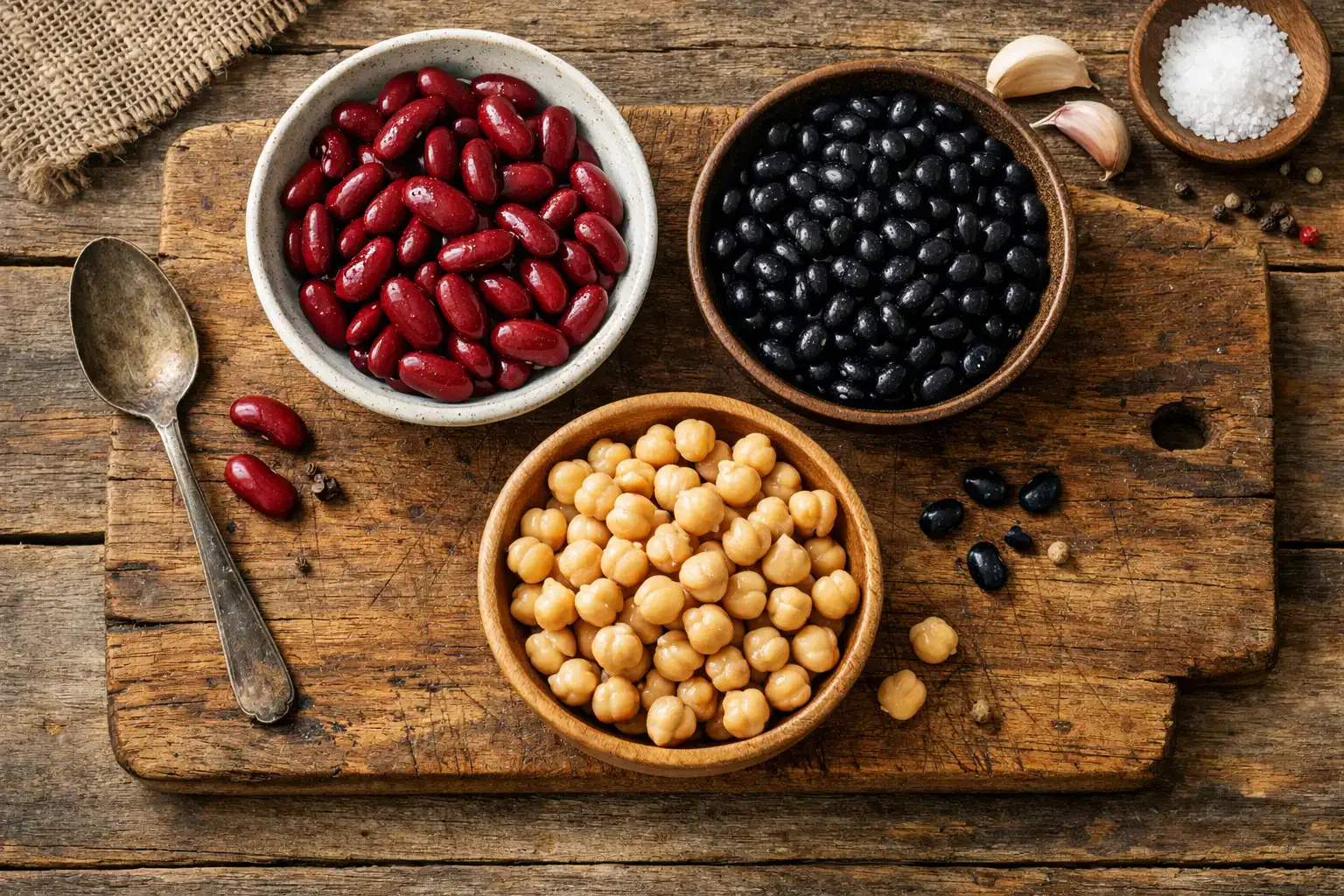
Quick Nutrition Facts
Per 1/2 Cup Drained & Rinsed (130g)
| Nutrient | Amount |
|---|---|
| Calories | 120 kcal |
| Protein | 8g |
| Carbohydrates | 22g |
| Fiber | 8g |
| Sugars | 1g |
| Fat | 0.5g |
| Iron | 2.4mg |
| Folate | 65mcg |
| Potassium | 305mg |
| Magnesium | 35mg |
Macronutrient Breakdown
 ChatGPT
  Claude
  AI Mode
  Perplexity
NUTRITIONIST INSIGHT
Canned beans deliver the same protein-to-calorie ratio as many meats at a fraction of the cost. Draining and rinsing cuts sodium by 40% while keeping all the fiber and protein intact. One serving provides 32% of your daily fiber needs.
Myth Busters
MYTH #1: Canned Beans Are Unhealthy Because of Sodium
TRUTH: Draining and rinsing canned beans removes up to 40% of sodium. A rinsed serving has about 200mg sodium, well within daily limits. The convenience trade-off is minimal compared to the protein and fiber benefits.
MYTH #2: Canned Beans Have No Nutritional Value
TRUTH: Canned beans retain most of their nutritional value compared to dried cooked versions. Protein, fiber, iron, and folate levels remain nearly identical. The canning process actually makes some nutrients more bioavailable.
MYTH #3: Beans Cause Too Much Gas to Be Worth Eating
TRUTH: While beans contain oligosaccharides that can cause gas, regular bean consumption reduces these symptoms significantly. Start with 1/4 cup servings, rinse well, and increase gradually. Your gut microbiome adapts within 2-3 weeks.
MYTH #4: Beans Are Too High in Carbs for Low-Carb Diets
TRUTH: Of the 22g total carbs per serving, 8g is fiber (not digested), leaving only 14g net carbs. This fiber-rich profile means beans have a low glycemic index (29-42) that won't spike blood sugar like refined carbs.
MYTH #5: You Need to Soak Canned Beans Before Using
TRUTH: Canned beans are already fully cooked and ready to eat straight from the can. Unlike dried beans, no soaking or extended cooking is needed. Simply drain, rinse, and add to any recipe.
NutriScore by Health Goals
| Health Goal | NutriScore | Why This Score? |
|---|---|---|
| Weight Loss |  | 120 calories with 8g protein and 8g fiber creates exceptional satiety. Bean consumption linked to lower body weight. |
| Muscle Gain |  | 8g plant protein per serving, pairs well with rice for complete amino acids. Iron supports oxygen delivery to muscles. |
| Diabetes Management | | Low GI (29-42), high fiber slows glucose absorption. Studies confirm beans reduce postprandial glycemic response. |
| PCOS Management | | Low GI with high fiber improves insulin sensitivity. Plant protein without the hormonal effects of animal protein. |
| Pregnancy Nutrition | | Rich in folate (65mcg) and iron (2.4mg), both critical for fetal development. Safe and recommended during pregnancy. |
| Viral/Flu Recovery | | Gentle on digestion, provides sustained energy and iron. Pair with vitamin C-rich foods to boost iron absorption. |
PERSONALIZED NUTRITION
Track your meals with NutriScan for personalized NutriScores based on your specific health goals!
Blood Sugar Response to Canned Beans
Understanding how canned beans affect your blood glucose can help you make informed decisions about portion sizes and meal pairings.
Typical Glucose Response Curve
This chart shows typical blood glucose response for general healthy individuals. Individual responses may vary. Not medical advice.
How to Flatten the Spike
Pairing beans with whole grains and vegetables creates a complete protein while keeping blood sugar stable:
- 🍚 Brown rice or quinoa - Completes amino acid profile, adds sustained energy
- 🥑 Avocado or olive oil - Healthy fats slow glucose absorption further
- 🍋 Lemon juice or tomatoes - Vitamin C boosts iron absorption by up to 6x
- 🧅 Onions and garlic - Prebiotic compounds support gut health and blood sugar regulation
This combination not only keeps blood sugar stable but also maximizes nutrient absorption from the beans.
Cultural Significance
Beans are among the oldest cultivated crops, with evidence of cultivation dating back over 7,000 years across multiple continents.
In India:
- Rajma (kidney beans) is a beloved staple in Punjabi cuisine, served with rice
- Chole (chickpeas) forms the base of countless North Indian dishes
- Ayurveda classifies beans as sattvic food promoting clarity and strength
- India is among the world's largest producers and consumers of pulses
Global Impact:
- Beans are a dietary cornerstone across Latin America, Africa, and Mediterranean regions
- 2016 was the UN International Year of Pulses; 2026 sees a renewed "Year of the Bean" movement
- Beans require 10x less water per gram of protein than beef production
- Over 400 million people worldwide depend on beans as their primary protein source
Compare & Substitute
Canned Beans vs Other Protein Sources (Per 100g)
| Nutrient | 🫘 Canned Beans | 🍗 Chicken Breast | 🥚 Eggs | 🧀 Tofu |
|---|---|---|---|---|
| Calories | 92 kcal | 165 kcal | 155 kcal | 76 kcal |
| Carbs | 17g | 0g | 1.1g | 1.9g |
| Fiber | 6g | 0g | 0g | 0.3g |
| Protein | 6g | 31g | 13g | 8g |
| Fat | 0.4g | 3.6g | 11g | 4.8g |
| Iron | 1.8mg | 1mg | 1.8mg | 5.4mg |
| Sugar | 0.8g | 0g | 1.1g | 0.6g |
| Potassium | 235mg | 256mg | 138mg | 121mg |
| Best For | Budget protein, fiber, satiety | Lean muscle, high protein needs | Complete protein, keto/low-carb | Low-cal plant protein, soy-based |
Frequently Asked Questions
Are canned beans as healthy as dried beans?
Yes, canned beans retain nearly all their nutritional value. Protein, fiber, iron, and folate levels are comparable to home-cooked dried beans. The main difference is sodium content, which drops by 40% with a simple drain-and-rinse step.
Key points: Buy low-sodium varieties when available, always drain and rinse, check labels for added sugars in flavored varieties.
How many calories are in canned beans?
A 1/2 cup serving (130g) of canned beans averages 120 calories. This varies slightly by type: black beans (110 cal), kidney beans (110 cal), chickpeas (135 cal), navy beans (130 cal), and pinto beans (120 cal).
Per 100g drained and rinsed, most canned beans provide 85-105 calories, making them one of the most calorie-efficient protein sources available.
Can diabetics eat canned beans?
Canned beans are excellent for diabetes management. Most varieties have a glycemic index of 29-42, classified as low GI. The 8g fiber per serving slows glucose absorption significantly.
Tips for diabetics:
- Choose plain varieties without added sugar or sauce
- Pair with non-starchy vegetables for balanced meals
- 1/2 to 1 cup per meal is a good starting portion
- Monitor blood sugar 2 hours after eating
Research shows beans paired with rice reduce postprandial glucose compared to rice alone. Always consult your healthcare provider.
Are canned beans good for weight loss?
120 calories per serving with 8g each of protein and fiber makes canned beans exceptionally satiating. Studies show regular bean consumers have 22% lower risk of obesity.
Best practices: Use as a meat substitute in meals, add to salads for staying power, pair with vegetables for volume eating, aim for 1/2 to 1 cup per day.
How much protein is in canned beans?
Canned beans provide 8g protein per 1/2 cup (130g). While not a complete protein on their own, combining with rice or grains creates a complete amino acid profile.
At roughly $0.25 per serving, canned beans are approximately 4.5x cheaper than meat per gram of protein, making them the most affordable protein source in most grocery stores.
Should you rinse canned beans?
Yes, rinsing is strongly recommended. It reduces sodium by up to 40%, removes excess starch that contributes to gas, and improves the texture for most recipes.
How to rinse: Open can, pour beans into a colander, rinse under cold running water for 30 seconds while gently tossing, and drain well before using.


Similar Nutritious Foods
4505 Chicharrones Classic Chili Salt
7 Eleven Japan Crispy Corn Cheese
Explore More Nutrition Tools & Resources
AI Calorie Counter App - Snap a Photo, Get Macros
AI Nutritionist App That Reads Your Logged Meals
Best Protein Supplements for Women
Bulking Meal Plan App That Sets Your Surplus
ChatGPT Calorie Counter Alternative That Keeps the Total
ChatGPT Diet Plan Alternative That Tracks What You Eat
ChatGPT Weight Loss Coach Alternative With a Food Log
Fast Food Calorie Counter App That Reads the Tray
Free Calorie Tracker App with AI Photo Scans | NutriScan
Indian Diet Plan App With Veg and Non Veg Meals
Indian Food Calorie Calculator - Get Instant Nutrition Facts for Desi Meals — 2026
Intermittent Fasting for Women, Timer and Meal Log App
Intermittent Fasting Tracker App - Free Fasting Timer
Macro Tracker App That Fills the Numbers From a Photo
Mediterranean Diet Meal Plan App That Counts the Oil
Micronutrient Tracker App for Vitamins and Minerals
MyFitnessPal Alternative That Stays Free | NutriScan
NutriScore App: A Free Grade on Every Meal | NutriScan
Nutrition Label Scanner App for the Amount You Ate
Second Trimester Protein Guide
Vegetarian Meal Plan App With a Protein Target
Voice Calorie Counter - Speak to Track Meals Hands-Free
Water and Calorie Tracker App - Free Water Log