Carnivore Snacks (Beef Stick): Calories, Nutrition and Health Benefits
The ultimate high-protein portable snack with 10g protein, just 80 calories, and virtually zero carbs per stick.
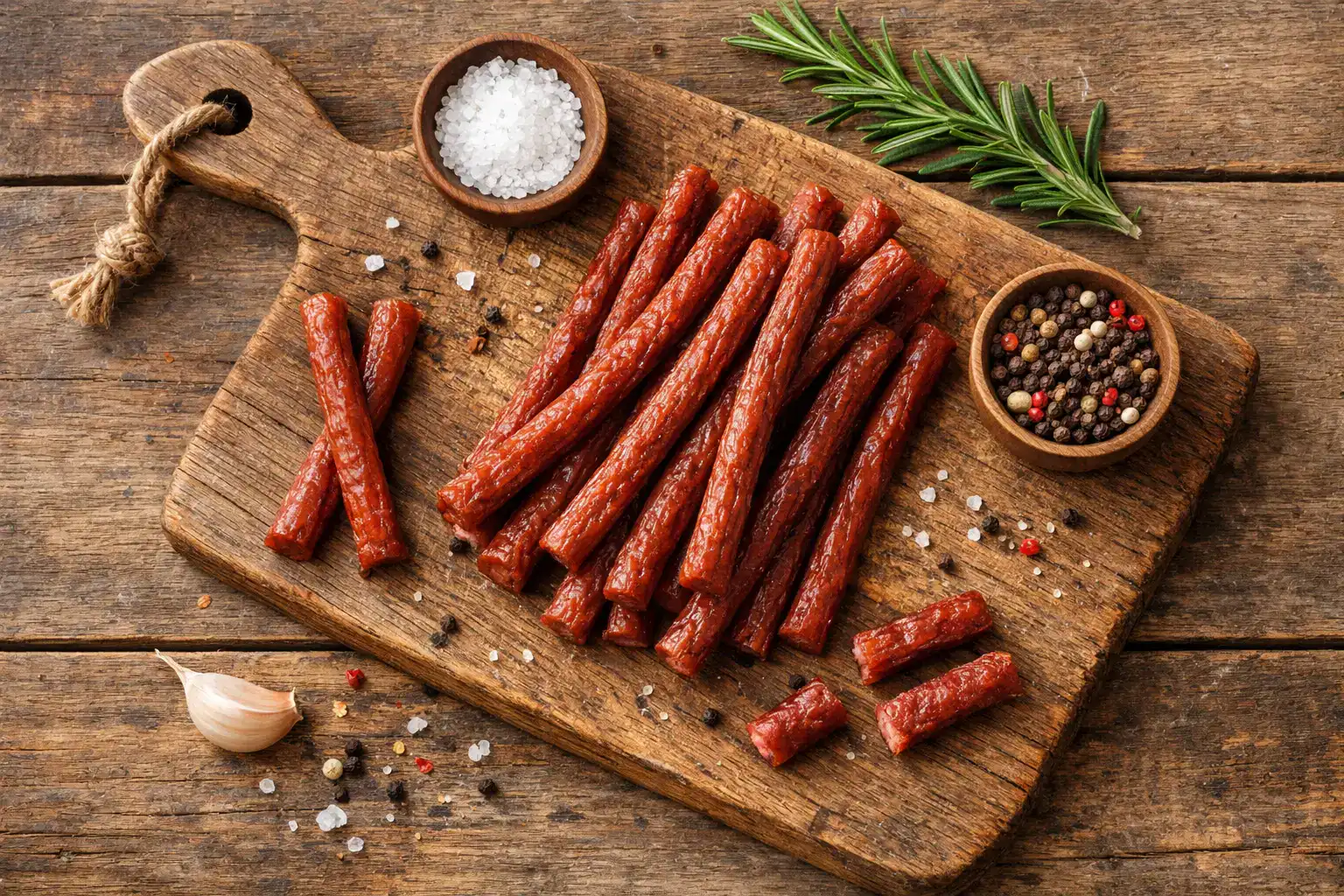
Quick Nutrition Facts
Per 1 Beef Stick (28g)
| Nutrient | Amount |
|---|---|
| Calories | 80 kcal |
| Protein | 10g |
| Carbohydrates | 1g |
| Fiber | 0g |
| Sugars | 1g |
| Fat | 4g |
| Sodium | 480mg |
| Iron | 1.1mg |
| Vitamin B12 | 0.9mcg |
| Zinc | 2.4mg |
Macronutrient Breakdown
 ChatGPT
  Claude
  AI Mode
  Perplexity
NUTRITIONIST INSIGHT
Beef sticks deliver 10g of complete protein in just 80 calories, making them one of the most protein-dense snacks available. The high bioavailable iron and vitamin B12 support energy and red blood cell production, especially useful for athletes and those on low-carb diets.
Myth Busters
MYTH #1: Beef Sticks Are Junk Food
TRUTH: Quality beef sticks made from grass-fed beef with minimal ingredients provide high-quality complete protein with all essential amino acids. Look for brands with 5 or fewer ingredients and no added sugars.
MYTH #2: Beef Sticks Are Too High in Sodium
TRUTH: While sodium content (480mg per stick) is notable, this is 20% of daily value. For active individuals who lose electrolytes through sweat, this sodium actually helps maintain fluid balance. Moderate sodium intake is part of a balanced diet for most healthy adults.
MYTH #3: All Processed Meats Cause Cancer
TRUTH: The WHO classification refers to heavily processed meats with nitrites and high-temperature cooking. Minimally processed, nitrate-free beef sticks made from whole cuts differ significantly from ultra-processed deli meats. Choose grass-fed, uncured varieties.
MYTH #4: Beef Sticks Have Too Much Fat
TRUTH: A standard beef stick has only 4g of fat, with a significant portion being monounsaturated fat (same type found in olive oil). Grass-fed beef contains higher omega-3 fatty acids compared to grain-fed, making it a nutritionally superior choice.
MYTH #5: You Can't Build Muscle with Snack Foods
TRUTH: Beef protein supplementation effectively improves body composition and supports muscle protein synthesis. A single beef stick provides 10g of complete protein, contributing meaningfully to the 20-40g protein per meal recommended for muscle building.
NutriScore by Health Goals
| Health Goal | NutriScore | Why This Score? |
|---|---|---|
| Weight Loss |  | Only 80 calories with 10g protein. High-protein snacks increase satiety and reduce overall calorie intake. Virtually zero carbs. |
| Muscle Gain | | 10g complete protein per stick with all essential amino acids. Iron and zinc support muscle recovery and testosterone production. |
| Diabetes Management | | Near-zero carbs (1g) cause minimal blood sugar impact. Choose sugar-free varieties and monitor sodium intake. |
| PCOS Management |  | Low-carb, high-protein profile supports insulin sensitivity. Watch sodium content which may worsen bloating. |
| Pregnancy Nutrition |  | Good iron source (1.1mg per stick) for preventing anemia during pregnancy. Choose nitrate-free varieties. High sodium is a concern; limit to 1 stick daily. |
| Viral/Flu Recovery | | Zinc (2.4mg) supports immune function. Easy to eat when appetite is low. Sodium helps with hydration balance. |
PERSONALIZED NUTRITION
Track your meals with NutriScan for personalized NutriScores based on your specific health goals!
Blood Sugar Response to Beef Stick
Understanding how beef sticks affect your blood glucose helps you make informed snacking decisions.
Typical Glucose Response Curve
This chart shows typical blood glucose response for general healthy individuals. Individual responses may vary. Not medical advice.
How to Flatten the Spike
Protein-rich foods like beef sticks already produce minimal blood sugar response. To further stabilize energy levels:
- 🥑 Pair with avocado slices - Adds healthy fats and fiber for sustained energy
- 🧀 Add cheese cubes - Combines protein sources for extended satiety
- 🥒 Eat with raw vegetables - Fiber from veggies slows any minor sugar absorption
- 🥜 Combine with a handful of nuts - Healthy fats and additional protein
This combination provides a balanced macronutrient profile that keeps blood sugar steady for hours.
Cultural Significance
Dried and cured meat snacks have been a survival staple across cultures for thousands of years.
History and Heritage:
- Pemmican (dried meat + fat) sustained Indigenous peoples of North America for centuries
- South African biltong and European dried sausages share similar preservation traditions
- Jerky-style meats became essential for explorers, soldiers, and travelers worldwide
In India:
- Beef jerky-style snacks less common due to cultural and religious dietary practices
- Mutton and chicken variants follow similar drying and seasoning methods
- Bakkwa (dried meat) popular in Indo-Chinese communities during festivals
Modern Trend:
- Carnivore and keto diets drove beef stick popularity from 2020 onward
- Global meat snack market projected to exceed $12 billion by 2027
- Clean-label, grass-fed varieties dominate the premium segment
Compare & Substitute
Beef Stick vs Similar High-Protein Snacks (Per 100g)
| Nutrient | 🥩 Beef Stick | 🍗 Chicken Jerky | 🥜 Almonds | 🧀 String Cheese |
|---|---|---|---|---|
| Calories | 290 kcal | 250 kcal | 579 kcal | 280 kcal |
| Carbs | 4g | 10g | 22g | 3g |
| Fiber | 0g | 0g | 12.5g | 0g |
| Protein | 36g | 33g | 21g | 24g |
| Fat | 14g | 3g | 50g | 18g |
| Sodium | 1,700mg | 1,200mg | 1mg | 1,400mg |
| Iron | 3.9mg | 1.5mg | 3.7mg | 0.2mg |
| Best For | Portable protein, keto, low-carb | Low-fat protein, lean muscle | Fiber + healthy fats, plant-based | Calcium, kid-friendly snack |
Frequently Asked Questions
How many calories are in a beef stick?
A standard beef stick (28g) contains approximately 80 calories. Calorie counts vary by brand from 70 to 110 per stick depending on fat content and added ingredients. Premium grass-fed varieties typically fall in the 70-90 calorie range.
Are beef sticks good for weight loss?
Yes, beef sticks are excellent for weight loss. With 10g protein and only 80 calories per stick, they provide high satiety per calorie. Protein-rich snacks reduce overall calorie intake by curbing hunger between meals.
Best practices: Limit to 2-3 sticks per day, choose low-sodium varieties, pair with vegetables for fiber.
Can diabetics eat beef sticks?
Beef sticks are one of the best snack options for diabetics due to their near-zero carbohydrate content (1g per stick). They cause minimal blood sugar impact and provide sustained energy through protein.
Tips for diabetics:
- Choose sugar-free varieties (some brands add sugar in marinades)
- Watch sodium content (some exceed 500mg per stick)
- Pair with fiber-rich vegetables for balanced nutrition
- Monitor blood sugar 2 hours after eating
Always consult your healthcare provider for personalized dietary advice.
Are beef sticks healthy or processed?
Quality varies enormously between brands. Premium beef sticks with 5 or fewer whole-food ingredients (beef, salt, spices) are a nutritious high-protein snack. Avoid brands with added sugars, MSG, sodium nitrite, and artificial preservatives.
What to look for: Grass-fed beef, no added sugars, nitrate-free, minimal ingredients list.
How much protein is in a beef stick?
A standard 28g beef stick contains about 10g of complete protein, providing all 9 essential amino acids. This makes beef sticks among the most protein-dense portable snacks at 36g protein per 100g.
For muscle building, 2-3 sticks provide 20-30g protein, meeting the threshold for stimulating muscle protein synthesis.
Are beef sticks safe during pregnancy?
Commercially packaged, shelf-stable beef sticks are generally considered safe during pregnancy. They provide iron (1.1mg per stick) which helps prevent pregnancy anemia.
Precautions during pregnancy:
- Choose nitrate-free, preservative-free varieties
- Limit to 1 stick per day due to high sodium
- Avoid homemade or refrigerated jerky products (listeria risk)
- Check with your healthcare provider


Similar Nutritious Foods
4505 Chicharrones Classic Chili Salt
7 Eleven Japan Crispy Corn Cheese
Explore More Nutrition Tools & Resources
AI Calorie Counter App - Snap a Photo, Get Macros
AI Nutritionist App That Reads Your Logged Meals
Best Protein Supplements for Women
Bulking Meal Plan App That Sets Your Surplus
ChatGPT Calorie Counter Alternative That Keeps the Total
ChatGPT Diet Plan Alternative That Tracks What You Eat
ChatGPT Weight Loss Coach Alternative With a Food Log
Fast Food Calorie Counter App That Reads the Tray
Free Calorie Tracker App with AI Photo Scans | NutriScan
Indian Diet Plan App With Veg and Non Veg Meals
Indian Food Calorie Calculator - Get Instant Nutrition Facts for Desi Meals — 2026
Intermittent Fasting for Women, Timer and Meal Log App
Intermittent Fasting Tracker App - Free Fasting Timer
Macro Tracker App That Fills the Numbers From a Photo
Mediterranean Diet Meal Plan App That Counts the Oil
Micronutrient Tracker App for Vitamins and Minerals
MyFitnessPal Alternative That Stays Free | NutriScan
NutriScore App: A Free Grade on Every Meal | NutriScan
Nutrition Label Scanner App for the Amount You Ate
Second Trimester Protein Guide
Vegetarian Meal Plan App With a Protein Target
Voice Calorie Counter - Speak to Track Meals Hands-Free
Water and Calorie Tracker App - Free Water Log