Cassava Fiber Chips: Calories, Nutrition and Health Benefits
A crunchy, gluten-free snack made from cassava root with high fiber content and impressive potassium levels for mindful snacking.
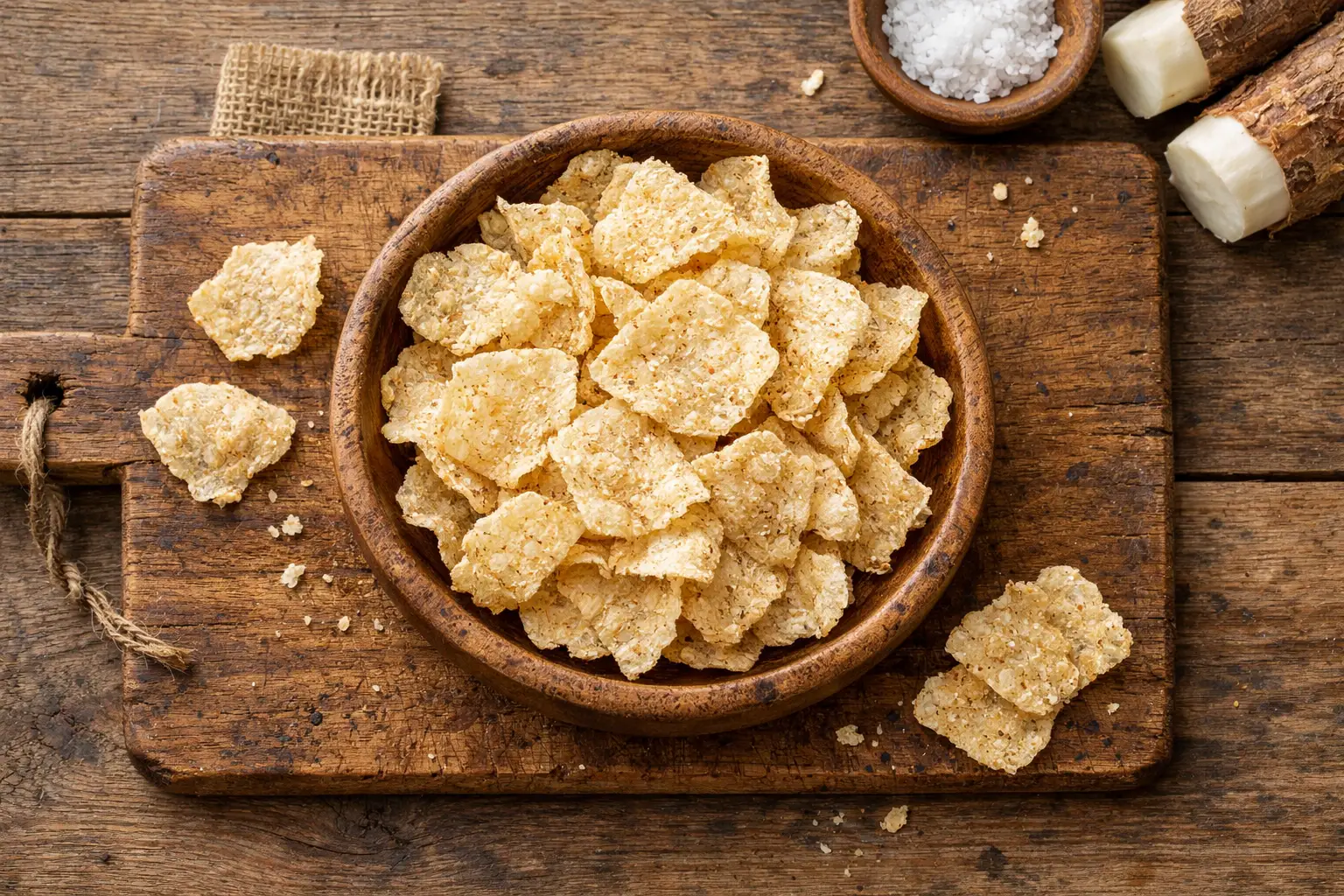
Quick Nutrition Facts
Per 1 oz Serving (28g)
| Nutrient | Amount |
|---|---|
| Calories | 130 kcal |
| Protein | 1g |
| Carbohydrates | 18g |
| Fiber | 5g |
| Sugars | 1g |
| Fat | 6g |
| Potassium | 246mg |
| Vitamin E | 0.8mg |
| Vitamin B5 | 0.25mg |
| Sodium | 84mg |
Macronutrient Breakdown
 ChatGPT
  Claude
  AI Mode
  Perplexity
NUTRITIONIST INSIGHT
Cassava fiber chips provide 5g of fiber per serving - more than most conventional chips. The resistant starch in cassava acts as a prebiotic, feeding beneficial gut bacteria and supporting digestive health.
Myth Busters
MYTH #1: All Chips Are Equally Unhealthy
TRUTH: Cassava fiber chips offer 5g fiber per serving compared to 1g in regular potato chips. The fiber content promotes satiety and supports digestive health, making them a more nutritious snacking choice.
MYTH #2: Cassava Chips Are Low Carb
TRUTH: Cassava chips contain 18g carbs per 28g serving (69g per 100g). They're a carbohydrate-rich food - not suitable for strict keto diets. However, the high fiber content (5g) reduces net carbs and slows digestion.
MYTH #3: Gluten-Free Means Healthier
TRUTH: While cassava chips are naturally gluten-free and safe for celiac disease, gluten-free doesn't automatically mean healthier. They're still a calorie-dense snack at 515 calories per 100g. Portion control remains essential.
MYTH #4: Cassava Chips Are a Good Protein Source
TRUTH: Cassava fiber chips contain only 1.3g protein per 100g. For protein needs, pair with high-protein dips like hummus, Greek yogurt, or bean dip to create a more balanced snack.
MYTH #5: You Can Eat Unlimited Amounts Because They're Natural
TRUTH: Natural doesn't mean unlimited. One serving provides 130 calories and 296mg sodium per 100g. Moderation is key - stick to one 28g serving for mindful snacking.
NutriScore by Health Goals
| Health Goal | NutriScore | Why This Score? |
|---|---|---|
| Weight Loss |  | 130 calories per serving, high in fiber (5g) promotes fullness, but calorie-dense at 515 cal/100g. Limit to 1 serving. |
| Muscle Gain | | Low protein (1g), but provides quick carbs and 868mg potassium per 100g for muscle function. Pair with protein source. |
| Diabetes Management |  | High carb content (18g per serving). Cassava has GI of 74. Eat small portions with protein; monitor blood sugar. |
| PCOS Management | | High fiber helps blood sugar control, but carb content requires portion awareness. Limit to 1/2 serving with protein. |
| Pregnancy Nutrition | | Potassium supports healthy blood pressure, but lacks folate. Choose as occasional snack, not staple food. |
| Viral/Flu Recovery | | Easy to digest, provides quick energy, good potassium for hydration. Low in immune-boosting vitamins A and C. |
PERSONALIZED NUTRITION
Track your meals with NutriScan for personalized NutriScores based on your specific health goals!
Blood Sugar Response to Cassava Fiber Chips
Understanding how cassava fiber chips affect your blood glucose helps make informed snacking decisions.
Typical Glucose Response Curve
This chart shows typical blood glucose response for general healthy individuals. Individual responses may vary. Not medical advice.
How to Flatten the Spike
Pairing cassava chips with protein or healthy fat slows glucose absorption and reduces the peak blood sugar level:
- Hummus or bean dip - Adds protein and fiber
- Greek yogurt tzatziki - Provides protein and probiotics
- Guacamole - Healthy fats from avocado
- Nut butter (almond, cashew) - Healthy fats and protein
This combination not only reduces the glucose spike but also extends energy release, keeping you fuller for longer.
Cultural Significance
Cassava (also called yuca, manioc, or tapioca) is one of the most important food crops in tropical regions, feeding over 800 million people worldwide.
Origins & Global Impact:
- Originated in South America over 10,000 years ago
- Brought to Africa and Asia by Portuguese traders in the 16th century
- Third-largest source of carbohydrates in the tropics after rice and maize
- Drought-tolerant crop vital for food security in developing nations
In Latin America:
- Brazil: Known as mandioca; cassava flour (farofa) is a staple
- Colombia & Venezuela: Arepas made with cassava flour
- Caribbean: Bammy bread and cassava pone are traditional dishes
In Africa:
- Nigeria: World's largest cassava producer; fufu is a staple
- Ghana, Congo, Tanzania: Cassava leaves eaten as vegetables
- Essential famine-resistant crop during droughts
Modern Snack Evolution:
- Cassava chips emerged as a gluten-free alternative in the 2010s
- High-fiber versions developed to meet health-conscious demand
- Popular in paleo and grain-free diet communities
Compare & Substitute
Cassava Fiber Chips vs Similar Snacks (Per 100g)
| Nutrient | Cassava Chips | Potato Chips | Plantain Chips | Sweet Potato Chips |
|---|---|---|---|---|
| Calories | 515 kcal | 536 kcal | 519 kcal | 532 kcal |
| Carbs | 69g | 53g | 58g | 57g |
| Fiber | 3.7g | 4.8g | 4.2g | 4.9g |
| Protein | 1.3g | 7g | 2.1g | 4.4g |
| Fat | 26g | 35g | 28g | 30g |
| Potassium | 868mg | 1275mg | 536mg | 670mg |
| Sodium | 296mg | 525mg | 305mg | 420mg |
| Best For | Gluten-free, high fiber | Classic flavor, higher protein | Slightly sweet, lower sodium | Sweet taste, more fiber |
Frequently Asked Questions
Are cassava fiber chips healthy?
Cassava fiber chips are a healthier alternative to many conventional snacks. Each 28g serving provides 5g fiber (20% daily value) and they're naturally gluten-free. The high potassium content (868mg per 100g) supports heart and muscle function.
Key benefits: High fiber, gluten-free, no artificial ingredients (in quality brands), resistant starch for gut health.
Can diabetics eat cassava fiber chips?
Diabetics should eat cassava chips in moderation due to their carbohydrate content (18g per serving) and higher glycemic index (GI 74).
Tips for diabetics:
- Limit to half a serving (14g, ~5 chips)
- Always pair with protein (cheese, hummus, Greek yogurt)
- Eat as part of a meal, not alone
- Monitor blood sugar 2 hours after eating
The fiber content (5g) helps slow glucose absorption compared to refined snacks. Always consult your healthcare provider.
How many calories are in cassava fiber chips?
A standard 1oz (28g) serving contains 130 calories. Per 100g, cassava chips provide approximately 515 calories.
The calorie breakdown: 69g carbohydrates, 26g fat, 1.3g protein per 100g. Most calories come from starch and cooking oil.
Are cassava chips better than potato chips?
Both have pros and cons - choose based on your dietary needs:
Cassava Chips Advantages:
- Higher fiber per serving (some brands 5g vs 1g)
- Naturally gluten-free
- Lower sodium (296mg vs 525mg per 100g)
- Contains resistant starch
Potato Chips Advantages:
- Higher protein (7g vs 1.3g per 100g)
- More potassium (1275mg vs 868mg per 100g)
- Widely available and affordable
Bottom line: Cassava chips are better for gluten-free and fiber needs; both should be eaten in moderation.
What are the main health benefits of cassava fiber chips?
Key Benefits:
- Digestive Health: 5g fiber per serving supports regular bowel movements
- Gluten-Free: Safe for celiac disease and gluten sensitivity
- Heart Health: 868mg potassium per 100g helps regulate blood pressure
- Gut Microbiome: Resistant starch feeds beneficial bacteria
- Sustained Energy: Complex carbohydrates for longer-lasting fuel
How much cassava chips can I eat per day?
General Guidelines:
- 1 serving (28g) daily - Occasional snack for most adults
- 1/2 serving daily - Diabetes, weight loss, or low-sodium diets
- 1-2 servings daily - Athletes or higher caloric needs
Considerations: Watch sodium intake (296mg per 100g adds up), pair with protein for satiety, choose brands with minimal added ingredients.
Track your snacking with NutriScan app to see how cassava chips fit your daily goals.
Are cassava chips safe during pregnancy?
Cassava chips are generally safe during pregnancy as an occasional snack. They provide potassium for healthy blood pressure and easy-to-digest carbs for energy.
Considerations:
- Low in folate (0mcg) - ensure adequate folate from other sources
- Watch sodium intake if managing pregnancy-related hypertension
- Choose quality brands without excessive additives
Best consumed as part of a balanced diet, not as a primary food source.


Similar Nutritious Foods
4505 Chicharrones Classic Chili Salt
7 Eleven Japan Crispy Corn Cheese
Explore More Nutrition Tools & Resources
AI Calorie Counter App - Snap a Photo, Get Macros
AI Nutritionist App That Reads Your Logged Meals
Best Protein Supplements for Women
Bulking Meal Plan App That Sets Your Surplus
ChatGPT Calorie Counter Alternative That Keeps the Total
ChatGPT Diet Plan Alternative That Tracks What You Eat
ChatGPT Weight Loss Coach Alternative With a Food Log
Fast Food Calorie Counter App That Reads the Tray
Free Calorie Tracker App with AI Photo Scans | NutriScan
Indian Diet Plan App With Veg and Non Veg Meals
Indian Food Calorie Calculator - Get Instant Nutrition Facts for Desi Meals — 2026
Intermittent Fasting for Women, Timer and Meal Log App
Intermittent Fasting Tracker App - Free Fasting Timer
Macro Tracker App That Fills the Numbers From a Photo
Mediterranean Diet Meal Plan App That Counts the Oil
Micronutrient Tracker App for Vitamins and Minerals
MyFitnessPal Alternative That Stays Free | NutriScan
NutriScore App: A Free Grade on Every Meal | NutriScan
Nutrition Label Scanner App for the Amount You Ate
Second Trimester Protein Guide
Vegetarian Meal Plan App With a Protein Target
Voice Calorie Counter - Speak to Track Meals Hands-Free
Water and Calorie Tracker App - Free Water Log