Chayote: Calories, Nutrition and Health Benefits
A crisp, pear-shaped vegetable with incredibly low calories and impressive health benefits for metabolic health and weight management.
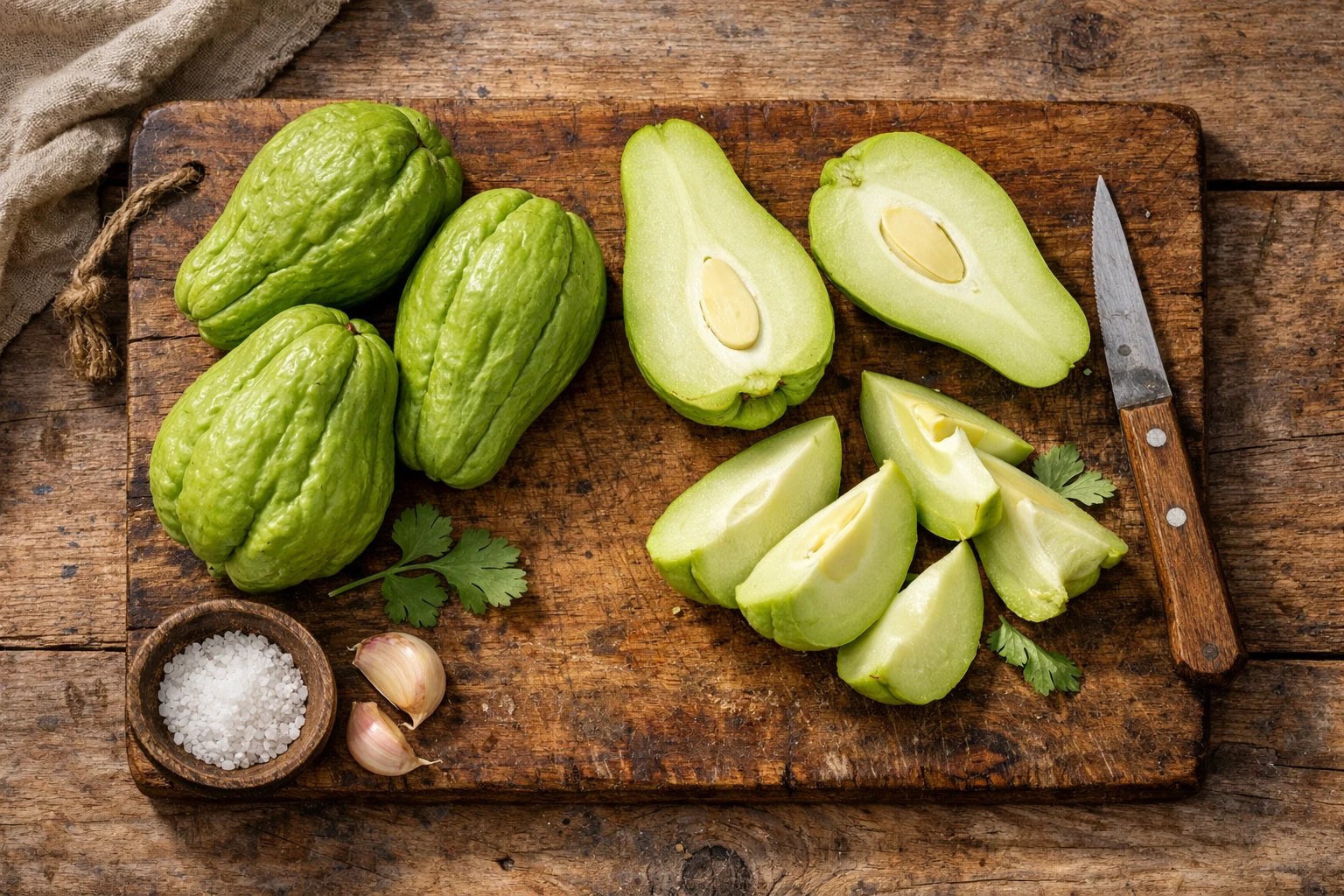
Quick Nutrition Facts
Per 100g Raw Chayote
| Nutrient | Amount |
|---|---|
| Calories | 19 kcal |
| Protein | 0.8g |
| Carbohydrates | 4.5g |
| Fiber | 1.7g |
| Sugars | 1.9g |
| Fat | 0.1g |
| Potassium | 125mg |
| Vitamin C | 7.7mg |
| Folate | 93mcg |
| Magnesium | 12mg |
Macronutrient Breakdown
 ChatGPT
  Claude
  AI Mode
  Perplexity
NUTRITIONIST INSIGHT
Chayote is one of the lowest-calorie vegetables available at just 19 kcal per 100g. Its high water content (94%) and fiber make it exceptionally filling while supporting hydration and digestive health.
Myth Busters
MYTH #1: Chayote Has No Nutritional Value
TRUTH: While low in calories, chayote is rich in folate (93mcg/100g, 23% DV), vitamin C, and potassium. Research shows chayote has significant antioxidant properties that help prevent cellular aging and oxidative stress.
MYTH #2: You Must Peel Chayote Before Eating
TRUTH: The skin is entirely edible, especially on young chayotes. The skin contains additional fiber and nutrients. Only older chayotes with tough skin need peeling. The flat seed inside is also edible when cooked.
MYTH #3: Chayote Is Only Good for Cooking
TRUTH: Raw chayote has a crisp, refreshing texture similar to cucumber or jicama. Slice thin for salads, use as a low-carb chip alternative with dips, or add to fresh spring rolls.
MYTH #4: Chayote Causes Gas and Bloating
TRUTH: Chayote is actually one of the easiest vegetables to digest. Unlike cruciferous vegetables, chayote's polysaccharides support healthy gut bacteria without causing excessive gas.
MYTH #5: All Squash Varieties Are Similar Nutritionally
TRUTH: Chayote is unique among squash: 90% fewer calories than butternut squash, higher water content, and contains unique compounds studied for anti-cardiovascular and antidiabetic properties.
NutriScore by Health Goals
| Health Goal | NutriScore | Why This Score? |
|---|---|---|
| Weight Loss |  | Only 19 cal/100g, 94% water, 1.7g fiber. Eat unlimited quantities for fullness with minimal calorie impact. |
| Muscle Gain |  | Very low protein (0.8g) and calories. Use as low-cal filler alongside protein sources. |
| Diabetes Management | | Extremely low GI, only 4.5g carbs. Studies show antioxidant effects in metabolic syndrome. |
| PCOS Management | | Very low carb, anti-inflammatory properties, supports insulin sensitivity. |
| Pregnancy Nutrition | | Excellent folate source (93mcg, 23% DV) crucial for fetal neural development. Low calorie, easy to digest. |
| Viral/Flu Recovery |  | Vitamin C for immunity, easy to digest, hydrating. Mild flavor suits reduced appetite. |
PERSONALIZED NUTRITION
Track your meals with NutriScan for personalized NutriScores based on your specific health goals!
Blood Sugar Response to Chayote
Understanding how chayote affects your blood glucose can help you make informed decisions about incorporating it into your diet.
Typical Glucose Response Curve
This chart shows typical blood glucose response for general healthy individuals. Individual responses may vary. Not medical advice.
How to Optimize Blood Sugar Response
Pairing chayote with protein or healthy fat creates an even flatter glucose response:
- 🥑 Avocado slices - Healthy fats complement chayote's mild flavor
- 🧀 Cottage cheese or paneer - Adds protein to chayote salads
- 🍋 Lime juice and olive oil - Classic Mexican preparation that adds healthy fats
- 🥜 Peanut or almond butter - Dip raw chayote sticks for a satisfying snack
Chayote's extremely low glycemic impact makes it ideal for keeping blood sugar stable throughout the day.
Cultural Significance
Chayote (Sechium edule) is native to Mesoamerica and has been cultivated for thousands of years.
In Mexico and Central America:
- Called chayote, güisquil, or pataste depending on region
- Integral to traditional soups, stews, and salads
- Served with lime and chili as street food
- Every part used: fruit, shoots, roots, and leaves
Global Names and Uses:
- Louisiana: Mirliton - stuffed and baked Cajun-style
- Caribbean: Christophine - curried or in soups
- India: Chow chow - used in sambar and kootu
- Philippines: Sayote - sautéed with garlic
- Australia/New Zealand: Choko - pickled or in pies
Sustainability:
- Perennial vine that produces abundantly
- Grows in poor soil with minimal water
- Zero waste: leaves and shoots are nutritious greens
- Important food security crop in tropical regions
Compare & Substitute
Chayote vs Similar Vegetables (Per 100g)
| Nutrient | 🥒 Chayote | 🥒 Cucumber | 🥕 Zucchini | 🎃 Butternut Squash |
|---|---|---|---|---|
| Calories | 19 kcal | 15 kcal | 17 kcal | 45 kcal |
| Carbs | 4.5g | 3.6g | 3.1g | 12g |
| Fiber | 1.7g | 0.5g | 1g | 2g |
| Protein | 0.8g | 0.7g | 1.2g | 1g |
| Fat | 0.1g | 0.1g | 0.3g | 0.1g |
| Potassium | 125mg | 147mg | 261mg | 352mg |
| Folate | 93mcg | 7mcg | 24mcg | 27mcg |
| Vitamin C | 7.7mg | 2.8mg | 17.9mg | 21mg |
| Best For | Diabetes, weight loss, folate | Hydration, lowest calorie | Versatile cooking, vitamin C | Higher energy, vitamin A |
Frequently Asked Questions
Is chayote good for weight loss?
Yes, chayote is exceptional for weight loss. At only 19 calories per 100g with 1.7g fiber and 94% water content, it provides maximum volume with minimal calories. You can eat large portions to feel satisfied without consuming significant calories.
Best practices: Eat raw as snacks, add to soups for bulk, use as a low-carb pasta substitute when spiralized.
Can diabetics eat chayote?
Chayote is highly recommended for diabetics. It has an extremely low glycemic index, only 4.5g carbs per 100g, and minimal impact on blood sugar.
Benefits for diabetics:
- Nearly flat glucose response curve
- High fiber slows any sugar absorption
- Research shows antioxidant benefits for metabolic syndrome
- Can be eaten in generous portions
Studies on older adults with metabolic syndrome showed chayote consumption had antioxidant effects and prevented telomere attrition.
How do you prepare and eat chayote?
Chayote is versatile and can be prepared many ways:
Raw:
- Slice thin for salads with lime and chili
- Cut into sticks for dipping
- Shred for slaws
Cooked:
- Sauté with garlic and onions
- Add to soups and stews (cooks in 10-15 minutes)
- Steam and mash as a low-carb potato substitute
- Stuff and bake like peppers
The skin is edible on young chayotes. The flat seed is edible when cooked and has a nutty flavor.
What are the main health benefits of chayote?
Key Benefits:
- Metabolic Health: Antioxidants support healthy aging and reduce oxidative stress
- Heart Health: Good potassium-to-sodium ratio supports blood pressure
- Digestive Health: Fiber and polysaccharides support healthy gut bacteria
- Folate Rich: 23% DV folate crucial for cell division and pregnancy
- Anti-inflammatory: Compounds may help reduce chronic inflammation
- Hydration: 94% water content supports fluid balance
Is chayote safe during pregnancy?
Chayote is excellent during pregnancy. It provides 93mcg folate per 100g (23% DV), which is crucial for preventing neural tube defects. The mild flavor is often tolerable during morning sickness, and it's easy to digest.
Pregnancy benefits:
- High folate for fetal development
- Gentle on sensitive stomachs
- Hydrating with minimal calories
- No known contraindications
How does chayote compare to other squash varieties?
Chayote is unique among squash:
- 90% fewer calories than butternut squash
- Higher water content than most squash
- More folate than zucchini or cucumber
- Milder flavor that works raw or cooked
- Can be eaten raw unlike most winter squash
Choose chayote when you want the lowest calorie option; butternut for higher energy needs and vitamin A.


Similar Nutritious Foods
4505 Chicharrones Classic Chili Salt
7 Eleven Japan Crispy Corn Cheese
Explore More Nutrition Tools & Resources
AI Calorie Counter App - Snap a Photo, Get Macros
AI Nutritionist App That Reads Your Logged Meals
Best Protein Supplements for Women
Bulking Meal Plan App That Sets Your Surplus
ChatGPT Calorie Counter Alternative That Keeps the Total
ChatGPT Diet Plan Alternative That Tracks What You Eat
ChatGPT Weight Loss Coach Alternative With a Food Log
Fast Food Calorie Counter App That Reads the Tray
Free Calorie Tracker App with AI Photo Scans | NutriScan
Indian Diet Plan App With Veg and Non Veg Meals
Indian Food Calorie Calculator - Get Instant Nutrition Facts for Desi Meals — 2026
Intermittent Fasting for Women, Timer and Meal Log App
Intermittent Fasting Tracker App - Free Fasting Timer
Macro Tracker App That Fills the Numbers From a Photo
Mediterranean Diet Meal Plan App That Counts the Oil
Micronutrient Tracker App for Vitamins and Minerals
MyFitnessPal Alternative That Stays Free | NutriScan
NutriScore App: A Free Grade on Every Meal | NutriScan
Nutrition Label Scanner App for the Amount You Ate
Second Trimester Protein Guide
Vegetarian Meal Plan App With a Protein Target
Voice Calorie Counter - Speak to Track Meals Hands-Free
Water and Calorie Tracker App - Free Water Log