Cheung Fun: Calories, Nutrition and Health Benefits
Silky steamed rice noodle rolls - a beloved dim sum classic that's naturally gluten-free and low in fat.
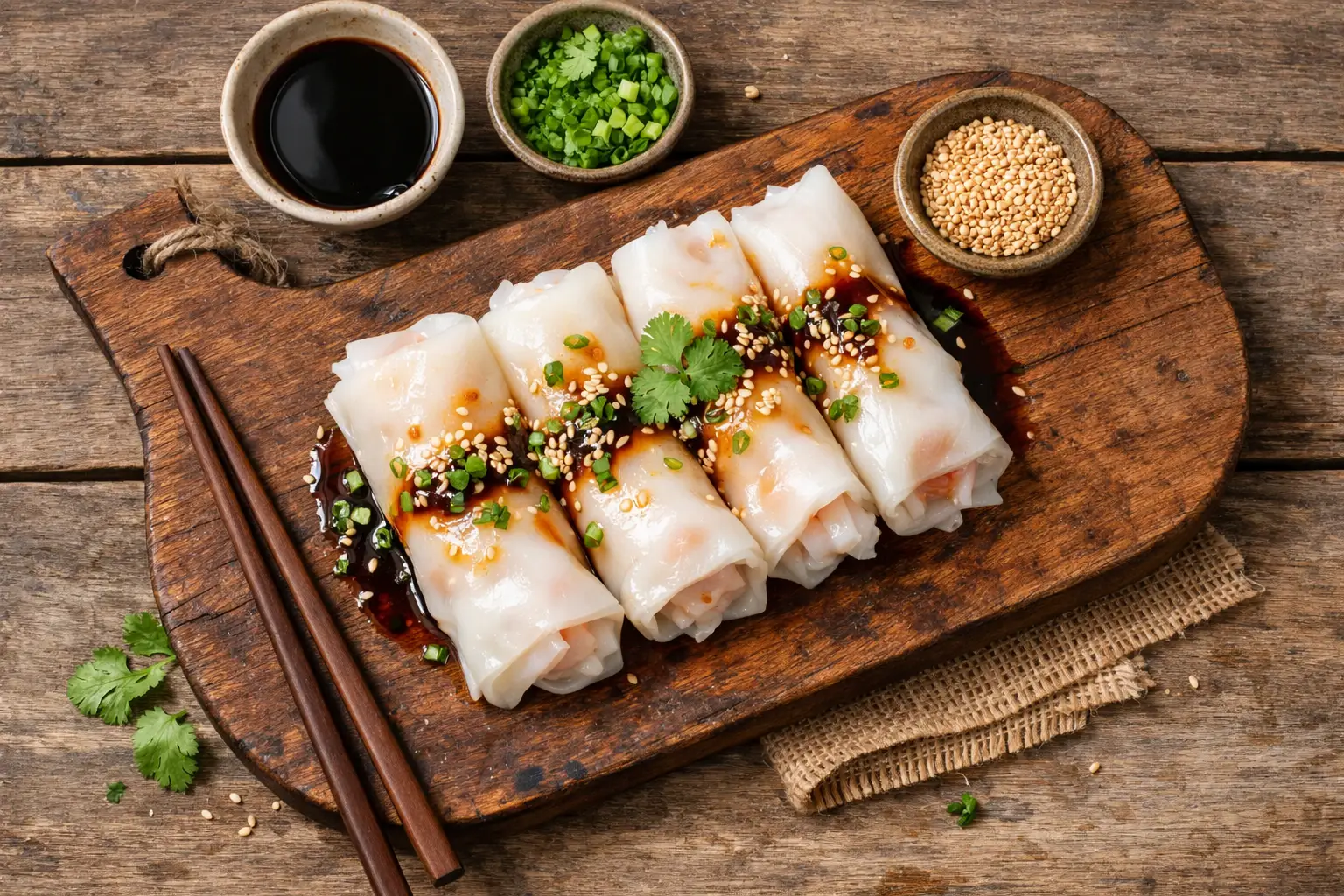
Quick Nutrition Facts
Per 100g Steamed Cheung Fun (Plain)
| Nutrient | Amount |
|---|---|
| Calories | 107 kcal |
| Protein | 2.8g |
| Carbohydrates | 23g |
| Fiber | 0.4g |
| Sugars | 0.2g |
| Fat | 0.7g |
| Sodium | 15mg |
| Iron | 0.4mg |
| Calcium | 8mg |
| Potassium | 25mg |
Macronutrient Breakdown
 ChatGPT
  Claude
  AI Mode
  Perplexity
NUTRITIONIST INSIGHT
Cheung fun is one of the healthiest dim sum choices - steamed rather than fried, with minimal fat and easily digestible rice carbs. Pair with protein fillings and vegetables for a balanced meal.
Myth Busters
MYTH #1: All Dim Sum Is High in Calories
TRUTH: Steamed cheung fun has only 107 calories per 100g - significantly lower than fried dim sum options. The steaming method preserves nutrients without adding fat.
MYTH #2: Rice Noodles Are Not Filling
TRUTH: Cheung fun provides satisfying carbohydrates that deliver sustained energy. Pairing with protein fillings like shrimp increases satiety and keeps you fuller longer.
MYTH #3: Cheung Fun Is Just Empty Carbs
TRUTH: While primarily a carbohydrate source, cheung fun is low in fat, easy to digest, and provides quick energy. Choose versions with shrimp or vegetables for added protein and nutrients.
MYTH #4: Soy Sauce Makes Cheung Fun Unhealthy
TRUTH: Light soy sauce in moderation (1 tbsp = 879mg sodium) is acceptable. Use low-sodium soy sauce or a small drizzle of sweet soy sauce to control sodium intake while enjoying authentic flavor.
MYTH #5: Cheung Fun Contains Gluten
TRUTH: Traditional cheung fun is made only from rice flour and water - naturally gluten-free. However, soy sauce typically contains wheat. Request gluten-free tamari for a fully gluten-free meal.
MYTH #6: Diabetics Must Avoid All Rice Noodles
TRUTH: Rice noodles have a moderate glycemic index (40-58), lower than white rice. Cheung fun in controlled portions paired with protein is manageable for diabetics who monitor their intake.
NutriScore by Health Goals
| Health Goal | NutriScore | Why This Score? |
|---|---|---|
| Weight Loss |  | Low fat (0.7g/100g), reasonable calories. Control portions and skip sweet soy sauce for best results. |
| Muscle Gain |  | Low protein (2.8g/100g). Choose shrimp-filled har cheung for extra protein, or pair with other protein dishes. |
| Diabetes Management | | Moderate GI (40-58). Limit to 2-3 rolls, pair with protein, monitor blood sugar response. |
| PCOS Management | | Refined carbohydrate affects insulin. Limit portions and combine with vegetables and lean protein. |
| Pregnancy Nutrition | | Safe when freshly prepared; easy to digest, gentle on morning sickness. Ensure fillings are fully cooked. |
| Viral/Flu Recovery |  | Easy to digest, gentle on stomach, provides quick energy. Light and comforting when appetite is low. |
PERSONALIZED NUTRITION
Track your dim sum meals with NutriScan for personalized NutriScores based on your specific health goals!
Blood Sugar Response to Cheung Fun
Understanding how cheung fun affects your blood glucose can help you make informed decisions about portion sizes and pairings.
Typical Glucose Response Curve
This chart shows typical blood glucose response for general healthy individuals. Individual responses may vary. Not medical advice.
How to Flatten the Spike
Pairing carbohydrates with protein or fat slows glucose absorption and reduces blood sugar spikes:
- 🦐 Choose shrimp filling (har cheung) - Adds protein to slow digestion
- 🥬 Order with steamed vegetables - Fiber slows glucose absorption
- 🥢 Use light soy sauce sparingly - Reduces sodium intake
- 🥜 Add a side of congee with century egg - Protein-rich pairing
This combination reduces the glucose spike and provides more sustained energy throughout your dim sum meal.
Cultural Significance
Cheung fun (腸粉) originated in Guangdong province, China, and has become an essential part of Cantonese dim sum culture.
In China:
- Name means "intestine noodle" from its rolled shape
- Traditional breakfast food in Guangzhou, served from pushcarts
- Each region has variations: Hong Kong-style is thinner, Cantonese-style thicker
- Fillings range from plain to shrimp (har cheung), char siu, or beef
Global Dim Sum Culture:
- Essential item in dim sum restaurants worldwide
- Freshness indicator: silky texture shows quality rice flour
- Versatile: can be served steamed, pan-fried, or with various sauces
- Often the first dim sum item children learn to enjoy
Compare & Substitute
Cheung Fun vs Similar Dim Sum (Per Serving)
| Nutrient | 🥟 Cheung Fun (3 rolls) | 🥟 Har Gow (4 pcs) | 🥟 Siu Mai (4 pcs) | 🥟 Char Siu Bao (1 bun) |
|---|---|---|---|---|
| Calories | 160 kcal | 160 kcal | 200 kcal | 250 kcal |
| Carbs | 35g | 16g | 12g | 40g |
| Fiber | 0.5g | 1g | 0.5g | 1g |
| Protein | 4g | 10g | 12g | 8g |
| Fat | 1g | 4g | 10g | 6g |
| Sodium | 200mg* | 350mg | 450mg | 400mg |
| GI | Moderate (45-55) | Low-Moderate | Low | High (70+) |
| Best For | Low-fat, gluten-free | High protein | Protein boost | Comfort food |
*With light soy sauce
Frequently Asked Questions
How many calories are in cheung fun?
Plain steamed cheung fun has approximately 107 calories per 100g. A typical serving of 3 rolls (150g) contains about 160 calories.
Calories by filling type:
- Plain cheung fun: 107 kcal/100g
- Shrimp (har cheung): 125 kcal/100g
- Char siu (BBQ pork): 140 kcal/100g
- Beef: 135 kcal/100g
Is cheung fun healthy?
Yes, cheung fun is one of the healthier dim sum options:
Health benefits:
- Low fat: Under 1g per 100g (steamed, not fried)
- Gluten-free: Made from rice flour
- Easy to digest: Gentle on the stomach
- Low sodium (without sauce): Only 15mg per 100g
Tips for healthier eating: Choose steamed over pan-fried, use low-sodium soy sauce, add vegetable sides.
Is cheung fun gluten-free?
Yes, traditional cheung fun is gluten-free as it's made from rice flour, water, and sometimes tapioca starch.
Watch out for:
- Regular soy sauce (contains wheat)
- Cross-contamination in restaurants
- Some modern recipes may add wheat starch
Safe alternatives: Request gluten-free tamari or coconut aminos instead of soy sauce.
Can diabetics eat cheung fun?
Diabetics can enjoy cheung fun in moderation with proper planning.
Tips for diabetics:
- Limit to 2-3 rolls per meal
- Choose shrimp or beef fillings for added protein
- Pair with steamed vegetables
- Monitor blood sugar 2 hours after eating
- Avoid sweet soy sauce
Rice noodles have a moderate glycemic index (40-58), lower than white rice.
What is the difference between cheung fun and chow fun?
| Feature | Cheung Fun | Chow Fun |
|---|---|---|
| Cooking | Steamed | Stir-fried |
| Shape | Rolled sheets | Flat wide noodles |
| Texture | Silky, soft | Slightly chewy |
| Calories | ~107/100g | ~170/100g |
| Fat | Very low | Higher (from oil) |
| Served | Dim sum | Main dish |
Is cheung fun safe during pregnancy?
Yes, cheung fun is safe during pregnancy when properly prepared.
Safety tips:
- Choose reputable restaurants with high turnover
- Ensure shrimp or meat fillings are fully cooked
- Eat freshly steamed, not sitting out
- Avoid raw or undercooked fillings
Benefits during pregnancy: Easy to digest, gentle on morning sickness, provides quick energy.
How many cheung fun rolls should I eat?
Recommended portions:
- Weight loss: 2-3 rolls (100-150g)
- Maintenance: 3-4 rolls (150-200g)
- Athletes/Active: 4-6 rolls (200-300g)
Remember that cheung fun is typically part of a larger dim sum meal, so balance with other dishes.
What's the best sauce for cheung fun?
Traditional options:
- Sweet soy sauce (tim cheung) - classic choice
- Light soy sauce - lower sodium option
- Hoisin sauce - sweeter, richer
- Sesame oil drizzle - adds flavor and healthy fats
For health goals: Use sauces sparingly, request sauce on the side, or try a squeeze of lime for a fresh twist.


Similar Nutritious Foods
4505 Chicharrones Classic Chili Salt
7 Eleven Japan Crispy Corn Cheese
Explore More Nutrition Tools & Resources
AI Calorie Counter App - Snap a Photo, Get Macros
AI Nutritionist App That Reads Your Logged Meals
Best Protein Supplements for Women
Bulking Meal Plan App That Sets Your Surplus
ChatGPT Calorie Counter Alternative That Keeps the Total
ChatGPT Diet Plan Alternative That Tracks What You Eat
ChatGPT Weight Loss Coach Alternative With a Food Log
Fast Food Calorie Counter App That Reads the Tray
Free Calorie Tracker App with AI Photo Scans | NutriScan
Indian Diet Plan App With Veg and Non Veg Meals
Indian Food Calorie Calculator - Get Instant Nutrition Facts for Desi Meals — 2026
Intermittent Fasting for Women, Timer and Meal Log App
Intermittent Fasting Tracker App - Free Fasting Timer
Macro Tracker App That Fills the Numbers From a Photo
Mediterranean Diet Meal Plan App That Counts the Oil
Micronutrient Tracker App for Vitamins and Minerals
MyFitnessPal Alternative That Stays Free | NutriScan
NutriScore App: A Free Grade on Every Meal | NutriScan
Nutrition Label Scanner App for the Amount You Ate
Second Trimester Protein Guide
Vegetarian Meal Plan App With a Protein Target
Voice Calorie Counter - Speak to Track Meals Hands-Free
Water and Calorie Tracker App - Free Water Log