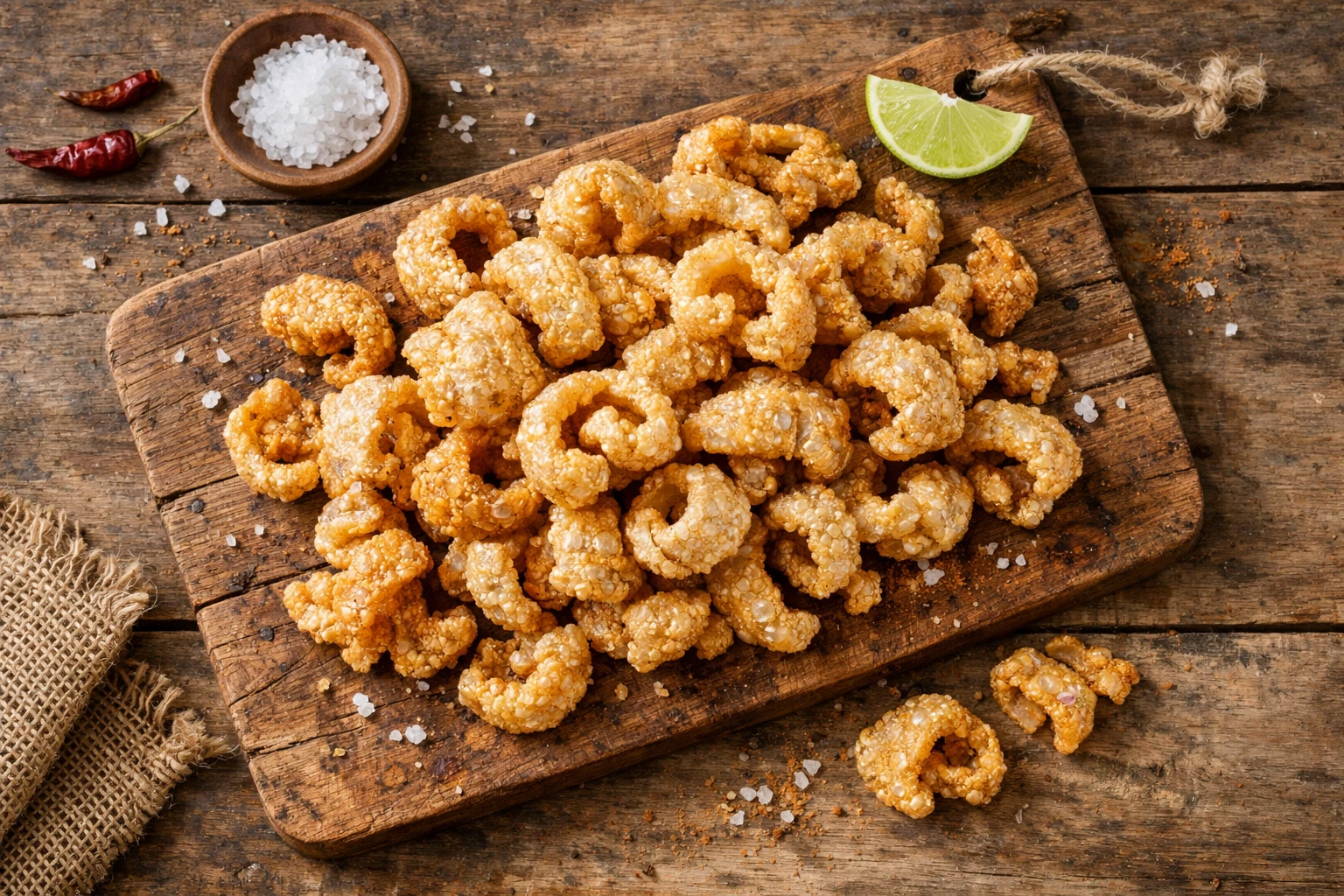
Chicharrones: Calories, Nutrition and Health Benefits
Crispy, crunchy zero-carb snack packed with protein and collagen—a keto dieter's dream that requires mindful portion control.
Quick Nutrition Facts
Per 100g Serving
| Nutrient | Amount |
|---|---|
| Calories | 544 kcal |
| Protein | 61g |
| Carbohydrates | 0g |
| Fiber | 0g |
| Sugars | 0g |
| Fat | 31g |
| Saturated Fat | 11g |
| Sodium | 950mg |
| Cholesterol | 95mg |
| Iron | 1.8mg |
Macronutrient Breakdown
 ChatGPT
  Claude
  AI Mode
  Perplexity
NUTRITIONIST INSIGHT
Chicharrones deliver 61g of protein per 100g with zero carbs, making them exceptional for keto and low-carb diets. The collagen from pig skin supports joint and skin health, but watch sodium intake—one serving can contain 40% of daily limits.
Myth Busters
MYTH #1: Chicharrones Are Just Empty Calories
TRUTH: Chicharrones provide 61g of complete protein per 100g—more than most protein bars. They contain all essential amino acids and collagen for skin and joint health. High-protein snacks support muscle maintenance and satiety.
MYTH #2: Pork Rinds Spike Blood Sugar
TRUTH: With zero carbs and a glycemic index of 0, chicharrones don't raise blood sugar at all. They're one of the safest snacks for diabetics and those managing blood glucose levels.
MYTH #3: All Fat in Chicharrones Is Unhealthy
TRUTH: While chicharrones contain saturated fat, about 45% of their fat is oleic acid—the same heart-healthy monounsaturated fat found in olive oil. Moderation is key, not complete avoidance.
MYTH #4: Chicharrones Have No Nutritional Value
TRUTH: Beyond protein, chicharrones provide collagen (beneficial for skin elasticity and gut health), iron (1.8mg per 100g), and zinc. They're a nutrient-dense snack when portion-controlled.
MYTH #5: Pork Rinds Are Worse Than Potato Chips
TRUTH: Per serving, chicharrones have zero carbs vs 15g in chips, more protein (9g vs 2g), and often less sodium. For low-carb dieters, they're objectively the better choice.
NutriScore by Health Goals
| Health Goal | NutriScore | Why This Score? |
|---|---|---|
| Weight Loss |  | High protein promotes satiety but calorie-dense (544/100g). Limit to 1 oz portions. |
| Muscle Gain |  | Excellent protein source (61g/100g) with complete amino acids. Great post-workout snack. |
| Diabetes Management |  | Zero carbs, glycemic index of 0—ideal for blood sugar control. Watch sodium if hypertensive. |
| PCOS Management | | Zero carbs support insulin sensitivity. High protein aids hormone balance. Moderate due to saturated fat. |
| Pregnancy Nutrition |  | High sodium (950mg/100g) can worsen pregnancy swelling. Protein is beneficial but choose lower-sodium alternatives. |
| Viral/Flu Recovery | | Collagen supports gut healing; protein aids recovery. High sodium may cause dehydration. |
PERSONALIZED NUTRITION
Track your meals with NutriScan for personalized NutriScores based on your specific health goals!
Blood Sugar Response to Chicharrones
Understanding how chicharrones affect your blood glucose helps explain why they're popular among diabetics and keto dieters.
Typical Glucose Response Curve
This chart shows typical blood glucose response for general healthy individuals. Individual responses may vary. Not medical advice.
How to Enjoy Chicharrones Smartly
Since chicharrones have zero carbs, pairing strategies focus on balancing sodium and adding nutrients:
- 🥑 Guacamole - Adds potassium to balance sodium, plus healthy fats
- 🍅 Fresh salsa - Adds vitamins, fiber, and minimal calories
- 🥒 Cucumber slices - Hydrating, adds fiber and freshness
- 🧀 Queso dip (moderate) - Adds calcium, but increases saturated fat
This combination adds micronutrients while keeping the snack low-carb and satisfying.
Cultural Significance
Chicharrones have deep roots in Spanish and Latin American cuisine, dating back to the Spanish colonization of the Americas in the 16th century.
In Latin America:
- Essential in Mexican cuisine—served at celebrations, street vendors, and with salsa verde
- Colombian chicharrón accompanies bandeja paisa, the national dish
- Peruvian chicharrón is served with sweet potato and salsa criolla
- Filipino chicharon evolved from Spanish influence, often with vinegar dipping sauce
Global Variations:
- Spain: Torrezno from Soria, traditionally thick-cut
- Germany: Griebenschmalz—rendered pork fat with crispy bits
- USA: Southern pork rinds became mainstream as keto diet grew
- Philippines: Chicharon bulaklak (intestine) and chicharon bituka varieties
Modern Revival:
- Keto diet boom (2015-present) turned chicharrones into health food aisle staples
- Artisanal versions with exotic seasonings (lime-chili, BBQ, habanero)
- High-protein alternative to conventional chips in sports nutrition
Compare & Substitute
Chicharrones vs Similar Snacks (Per 100g)
| Nutrient | 🥓 Chicharrones | 🥔 Potato Chips | 🧀 Cheese Puffs | 🥜 Roasted Peanuts |
|---|---|---|---|---|
| Calories | 544 kcal | 536 kcal | 567 kcal | 599 kcal |
| Carbs | 0g | 53g | 57g | 16g |
| Fiber | 0g | 4.4g | 1g | 8g |
| Protein | 61g | 7g | 6g | 26g |
| Fat | 31g | 35g | 36g | 52g |
| Sodium | 950mg | 525mg | 1058mg | 410mg |
| Sat. Fat | 11g | 3.5g | 7g | 7g |
| Best For | Keto, diabetics | General snacking | Flavor craving | Protein + fiber |
Frequently Asked Questions
Are chicharrones good for keto diet?
Yes, chicharrones are one of the best keto snacks available. With 0g carbs and 61g protein per 100g, they won't kick you out of ketosis. The 31g of fat per serving also supports ketone production.
Best practices: Choose plain or minimally seasoned varieties. Avoid brands with added sugars or maltodextrin. Limit to 1-2 oz daily to manage calories.
Can diabetics eat chicharrones?
Diabetics can safely enjoy chicharrones as they have zero carbs and a glycemic index of 0. They won't spike blood sugar levels at all.
Tips for diabetics:
- Choose low-sodium options (under 200mg per serving)
- Watch portions—they're calorie-dense
- Pair with vegetables for added fiber
- Check labels for hidden carbs in flavored varieties
Always consult your healthcare provider for personalized advice.
How much protein is in chicharrones?
Chicharrones contain 61g of protein per 100g—among the highest of any snack food. A typical 1 oz (28g) serving provides about 17g of protein.
This protein includes collagen, which supports skin elasticity, joint health, and gut lining integrity. For muscle building, combine with complete protein sources like eggs or Greek yogurt.
Are chicharrones healthy or unhealthy?
Chicharrones have both benefits and drawbacks:
Health Benefits:
- High protein: 61g per 100g supports muscle and satiety
- Zero carbs: Ideal for keto, diabetic, and low-carb diets
- Collagen content: Supports skin, joints, and gut health
- No sugar: Won't contribute to tooth decay or blood sugar issues
Health Concerns:
- High sodium: 950mg per 100g (40% daily value)
- Saturated fat: 11g per 100g
- Calorie dense: Easy to overeat
- Processed food: Deep-fried in oil
Verdict: Healthy in moderation (1 oz daily), problematic if over-consumed.
Do chicharrones have collagen?
Yes, chicharrones are naturally rich in collagen since they're made entirely from pig skin, which is approximately 80% collagen protein.
Collagen benefits:
- Supports skin elasticity and hydration
- Aids joint health and reduces joint pain
- Promotes gut lining integrity
- Supports hair and nail strength
Note: High-heat frying may denature some collagen, reducing absorption efficiency compared to hydrolyzed collagen supplements.
How many chicharrones can I eat per day?
General Guidelines:
- 1 oz (28g) daily - Most healthy adults (154 cal, 17g protein, 270mg sodium)
- 0.5 oz daily - Those watching sodium or saturated fat
- Avoid or limit - Those with heart disease, hypertension, or kidney issues
Why limit portions: The high sodium (950mg/100g) and saturated fat (11g/100g) can impact cardiovascular health with excessive consumption.
Track your snacks with NutriScan app to ensure chicharrones fit your daily nutrition goals.
Are pork rinds better than potato chips?
For low-carb and keto dieters, yes—pork rinds are objectively better:
| Factor | Pork Rinds Win | Potato Chips Win |
|---|---|---|
| Carbs | 0g vs 53g | — |
| Protein | 61g vs 7g | — |
| Fiber | — | 4.4g vs 0g |
| Sodium | — | 525mg vs 950mg |
Bottom line: Pork rinds for keto/diabetic diets; chips if you need fiber and lower sodium.


Similar Nutritious Foods
4505 Chicharrones Classic Chili Salt
7 Eleven Japan Crispy Corn Cheese
Explore More Nutrition Tools & Resources
AI Calorie Counter App - Snap a Photo, Get Macros
AI Nutritionist App That Reads Your Logged Meals
Best Protein Supplements for Women
Bulking Meal Plan App That Sets Your Surplus
ChatGPT Calorie Counter Alternative That Keeps the Total
ChatGPT Diet Plan Alternative That Tracks What You Eat
ChatGPT Weight Loss Coach Alternative With a Food Log
Fast Food Calorie Counter App That Reads the Tray
Free Calorie Tracker App with AI Photo Scans | NutriScan
Indian Diet Plan App With Veg and Non Veg Meals
Indian Food Calorie Calculator - Get Instant Nutrition Facts for Desi Meals — 2026
Intermittent Fasting for Women, Timer and Meal Log App
Intermittent Fasting Tracker App - Free Fasting Timer
Macro Tracker App That Fills the Numbers From a Photo
Mediterranean Diet Meal Plan App That Counts the Oil
Micronutrient Tracker App for Vitamins and Minerals
MyFitnessPal Alternative That Stays Free | NutriScan
NutriScore App: A Free Grade on Every Meal | NutriScan
Nutrition Label Scanner App for the Amount You Ate
Second Trimester Protein Guide
Vegetarian Meal Plan App With a Protein Target
Voice Calorie Counter - Speak to Track Meals Hands-Free
Water and Calorie Tracker App - Free Water Log