Chicken Leg Piece: Calories, Nutrition and Health Benefits
Lean, flavorful poultry powerhouse packed with about 19.5g complete protein per cooked skinless piece. Essential amino acids support muscle gain and weight management with micronutrient density.
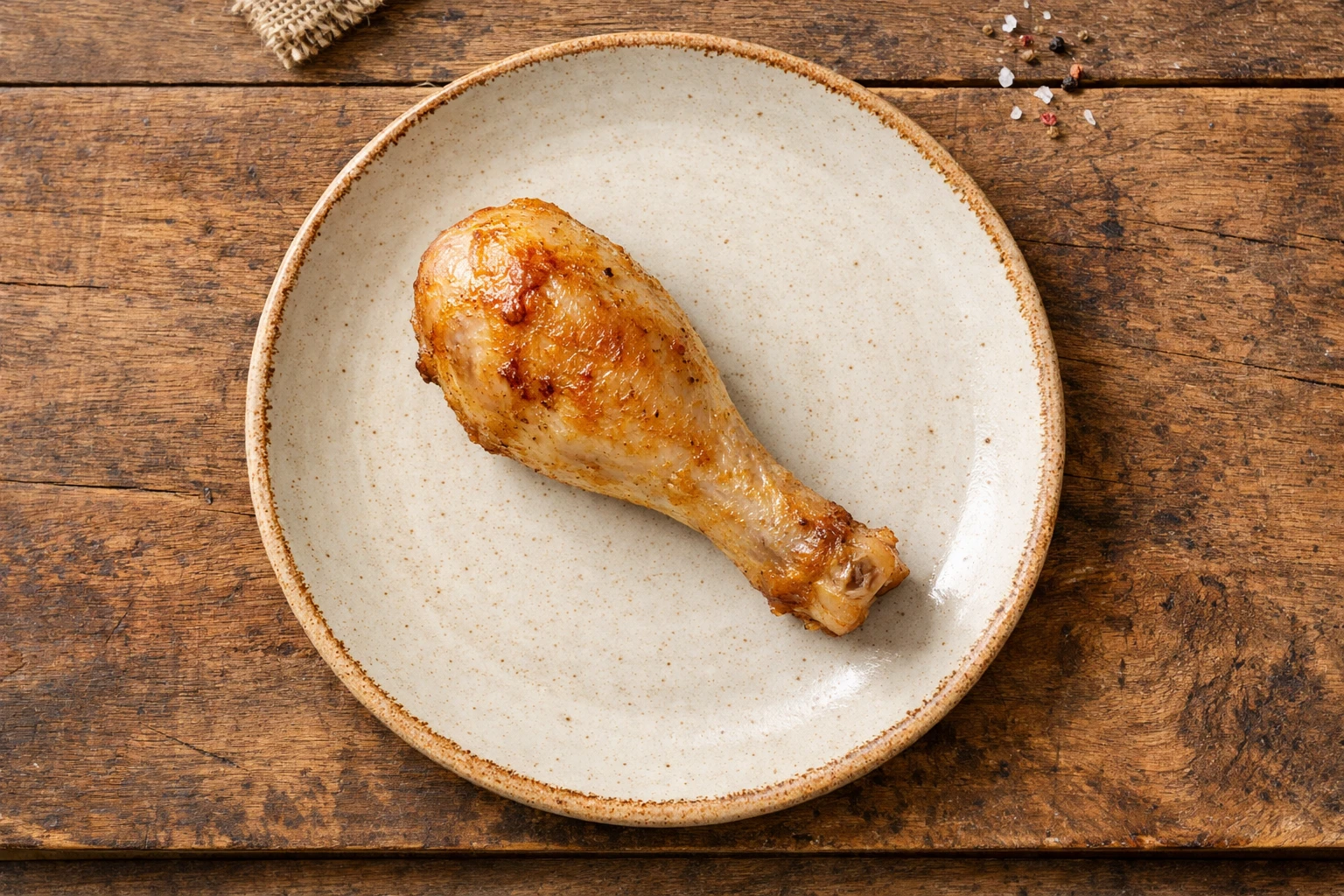
Quick Nutrition Facts
Per 100 g (cooked, without skin)
1 cooked skinless thigh (75 g): about 124 kcal, 19.5 g protein
| Nutrient | Amount |
|---|---|
| Calories | 165 kcal |
| Protein | 26g |
| Carbohydrates | 0g |
| Fiber | 0g |
| Fat | 7g |
| Saturated Fat | 2g |
| Cholesterol | 81mg |
| Vitamin B6 | 0.5mg |
| Selenium | 25mcg |
| Phosphorus | 156mg |
Macronutrient Breakdown
 ChatGPT
  Claude
  AI Mode
  Perplexity
NUTRITIONIST INSIGHT
Chicken leg piece offers superior nutrient density compared to breast: more B vitamins, selenium, and iron. The slightly higher fat (7g) supports hormone synthesis and micronutrient absorption. Prepare grilled or steamed without skin to optimize for weight loss while maintaining all protein benefits.
Myth Busters
MYTH #1: Chicken Leg is Too Fatty for Weight Loss
TRUTH: One leg piece (without skin) contains only about 5g fat, similar to a medium egg. Its 19.5g protein creates satiety that supports fat loss. Studies show high-protein poultry diets outperform low-fat approaches for body composition.
MYTH #2: All Chicken Meat Has the Same Nutrition
TRUTH: Leg meat contains more iron (150% more than breast) and selenium (crucial for thyroid), but slightly more fat. Both are excellent; legs offer better micronutrient density, breast offers lower calories. Choose based on your specific health goal.
MYTH #3: Chicken Should Never Be Eaten with Skin
TRUTH: Skin adds 100+ calories and 10g fat per leg piece. For weight loss, remove it. For muscle gain or micronutrient absorption, skin's fat aids vitamin absorption (A, D, E). Skin's collagen also supports joint health—remove for cutting calories, keep for nutrient synergy.
MYTH #4: Chicken Causes High Cholesterol
TRUTH: Dietary cholesterol minimally impacts blood cholesterol; saturated fat is the primary concern. One leg piece (7g fat, 2g saturated) fits heart-healthy diets. Chicken remains recommended by cardiologists for cardiovascular health worldwide.
MYTH #5: Cooking Method Doesn't Affect Chicken Nutrition
TRUTH: Grilling/steaming preserves protein; frying in oil adds 5-8g fat per piece. Choose cooking methods carefully: grilled (10 min) vs fried (same calories from added oil). Preparation significantly impacts final nutrition.
MYTH #6: Chicken Leg Isn't Safe for Diabetes
TRUTH: Chicken leg's zero carbs and high protein make it ideal for diabetes—blood sugar stable. The risk arises from sugar-heavy cooking sauces (tandoori marinades, sweet-spicy coatings). Prepare steamed, grilled, or in savory curries without added sugars.
NutriScore by Health Goals
| Health Goal | NutriScore | Why This Score? |
|---|---|---|
| Weight Loss |  | 124 calories and 19.5g protein per piece (165 kcal, 26g per 100 g), zero carbs. High satiety, supports lean muscle retention during deficit. Eat 1-2 pieces per meal; unlimited protein options exist within calorie budget. |
| Muscle Gain | | Complete 19.5g protein per piece (all 9 amino acids), 5g fat for hormone synthesis, zero carbs for lean gains. Post-workout ideal; pair with carbs (rice, sweet potato) for glycogen replenishment. |
| Diabetes Management | | Zero carbs, high protein (19.5g per piece) stabilizes blood glucose. Cook without sugar-based sauces. Excellent for sustained energy and preventing post-meal spikes. |
| PCOS Management | | High protein (19.5g per piece) supports insulin sensitivity; zero carbs prevent spike triggers. Lean meat supports PCOS-friendly macronutrient ratios (high protein, moderate fat, low carb). |
| Pregnancy Nutrition | | 19.5g protein per piece supports fetal development, selenium crucial for thyroid during pregnancy. B vitamins aid energy. Eat 1-2 pieces per day safely. |
| Viral/Flu Recovery | | Complete protein (19.5g per piece) for immune recovery, B vitamins aid energy restoration. Easy to digest cooked form. Zinc and selenium support immune function during convalescence. |
PERSONALIZED NUTRITION
Track your meals with NutriScan for personalized NutriScores based on your specific health goals!
Blood Sugar Response to Chicken Leg Piece
Chicken leg's zero carbohydrate content means minimal blood glucose response—ideal for diabetes management and stable energy throughout the day.
Typical Glucose Response Curve
This chart shows typical blood glucose response for general healthy individuals. Individual responses may vary. Not medical advice.
Optimal Pairing for Sustained Energy
- 🍚 Brown rice or basmati rice - Sustained carbohydrate energy with lower GI
- 🥔 Sweet potato - Fiber slows glucose absorption, supports satiety
- 🥬 Non-starchy vegetables (leafy greens, broccoli) - Fiber and micronutrients without carb spike
- 🌾 Whole grain roti - Traditional pairing in Indian cuisine, provides complex carbs
This combination maintains stable blood sugar while maximizing nutrient absorption and meal satisfaction.
Cultural Significance
Chicken is a cornerstone of Indian cuisine, offering affordable, accessible protein across regions and religious contexts.
In India:
- Staple across non-vegetarian Indian households
- Northern India: tandoori chicken, butter chicken (murgh makhani)
- South India: spicy chicken curry, chicken 65, pepper chicken
- Coastal regions: fish curry variations with chicken alternatives
- Widespread acceptance across Hinduism, Islam, Sikhism, Christianity
- Post-partition, chicken became bridge between vegetarian and meat-eating cultures
- Urban middle class: primary protein source replacing cost-prohibitive lamb/mutton
Global Impact:
- Most-consumed poultry globally (2+ billion birds annually)
- Recommended by nutritionists worldwide for lean protein
- Gym culture staple for bodybuilding and fitness
- Sustainable alternative to beef (lower greenhouse gas emissions)
- Supports food security in developing nations
Compare & Substitute
Chicken Leg vs Similar Proteins (Per 100g cooked, without skin)
| Nutrient | 🍗 Chicken Leg | 🍗 Chicken Breast | 🥩 Fish (Tilapia) | 🥛 Greek Yogurt |
|---|---|---|---|---|
| Calories | 165 kcal | 140 kcal | 110 kcal | 100 kcal |
| Protein | 26g | 29g | 23g | 16g |
| Carbs | 0g | 0g | 0g | 5g |
| Fiber | 0g | 0g | 0g | 0g |
| Fat | 7g | 3g | 2g | 3g |
| B6 | 0.5mg (25% DV) | 0.8mg (40% DV) | 0.1mg (5% DV) | 0.1mg (5% DV) |
| Selenium | 25mcg (36% DV) | 22mcg (31% DV) | 32mcg (46% DV) | 5mcg (7% DV) |
| Best For | Flavorful protein, muscle gain | Lower-calorie protein | Lean, omega-3 rich | Probiotics, dairy-free |
Frequently Asked Questions
Is chicken leg piece good for weight loss?
Yes, absolutely. At about 124 calories with 19.5g protein and zero carbs per cooked skinless piece, chicken leg supports fat loss while preserving muscle. The high protein-to-calorie ratio creates lasting fullness and boosts metabolism. Eat 1-2 leg pieces per day as part of a calorie-controlled diet.
How much protein is in chicken leg piece?
One cooked leg piece (75g, without skin) provides about 19.5g complete protein containing all nine essential amino acids, or 26g per 100 g. This single piece meets about 20% of daily protein needs for a 100g daily target. Chicken is among the most protein-dense, affordable foods available.
Can diabetics eat chicken leg piece?
Yes, ideal choice. Zero carbs mean zero blood sugar impact; the 19.5g protein per piece stabilizes glucose levels and supports sustained energy. Avoid sugar-sweetened sauces (tandoori marinades, sweet-spicy coatings). Prepare grilled, steamed, or in savory curries—safe for all diabetes types.
Is chicken leg higher in fat than breast?
Leg contains 7g fat vs breast's 3g, but remains lean when skin is removed. The extra fat includes B vitamins, selenium (thyroid support), and iron (more than breast). Both are excellent; choose legs for superior micronutrient density, breast for fewer calories.
What cooking methods are best for chicken leg piece?
Grilling, steaming, and baking preserve nutrition while minimizing added fat. Avoid deep frying (adds 8g+ fat from oil). For Indian cuisine: pressure cooking in savory curries, tandoori preparation (marinades should be oil-based, not sugar-based). Cook 12-15 minutes until internal temp reaches 165°F (74°C).
When should I eat chicken leg piece?
Ideal post-workout (within 30-60 minutes) for protein synthesis and muscle recovery. For weight loss, eat at lunch or early dinner for sustained satiety. For diabetes, any meal with non-starchy vegetables. For muscle gain, pair with carbs (rice, sweet potato) to replenish glycogen.
How many chicken leg pieces should I eat daily?
General guideline: 1-2 pieces per meal, 2-3 meals per day = 4-6 pieces daily fits most diets (80-120g protein). Individual needs vary by weight, activity level, and goals. Athletes may consume 3+ pieces daily; sedentary individuals should limit to 1-2 pieces daily.
Is chicken leg piece safe during pregnancy?
Yes, excellent during pregnancy. The 19.5g complete protein per piece supports fetal development; selenium (25mcg) is crucial for thyroid function during pregnancy; B6 aids hormone regulation. Cook thoroughly (internal temp 165°F / 74°C) to prevent foodborne illness. Safe to eat 1-2 pieces daily.


Similar Nutritious Proteins
4505 Chicharrones Classic Chili Salt
7 Eleven Japan Crispy Corn Cheese
Explore More Nutrition Tools & Resources
AI Calorie Counter App - Snap a Photo, Get Macros
AI Nutritionist App That Reads Your Logged Meals
Best Protein Supplements for Women
Bulking Meal Plan App That Sets Your Surplus
ChatGPT Calorie Counter Alternative That Keeps the Total
ChatGPT Diet Plan Alternative That Tracks What You Eat
ChatGPT Weight Loss Coach Alternative With a Food Log
Fast Food Calorie Counter App That Reads the Tray
Free Calorie Tracker App with AI Photo Scans | NutriScan
Indian Diet Plan App With Veg and Non Veg Meals
Indian Food Calorie Calculator - Get Instant Nutrition Facts for Desi Meals — 2026
Intermittent Fasting for Women, Timer and Meal Log App
Intermittent Fasting Tracker App - Free Fasting Timer
Macro Tracker App That Fills the Numbers From a Photo
Mediterranean Diet Meal Plan App That Counts the Oil
Micronutrient Tracker App for Vitamins and Minerals
MyFitnessPal Alternative That Stays Free | NutriScan
NutriScore App: A Free Grade on Every Meal | NutriScan
Nutrition Label Scanner App for the Amount You Ate
Second Trimester Protein Guide
Vegetarian Meal Plan App With a Protein Target
Voice Calorie Counter - Speak to Track Meals Hands-Free
Water and Calorie Tracker App - Free Water Log