Coconut Kefir: Calories, Nutrition and Health Benefits
A dairy-free probiotic powerhouse made from fermented coconut milk, packed with gut-friendly bacteria and healthy medium-chain triglycerides.
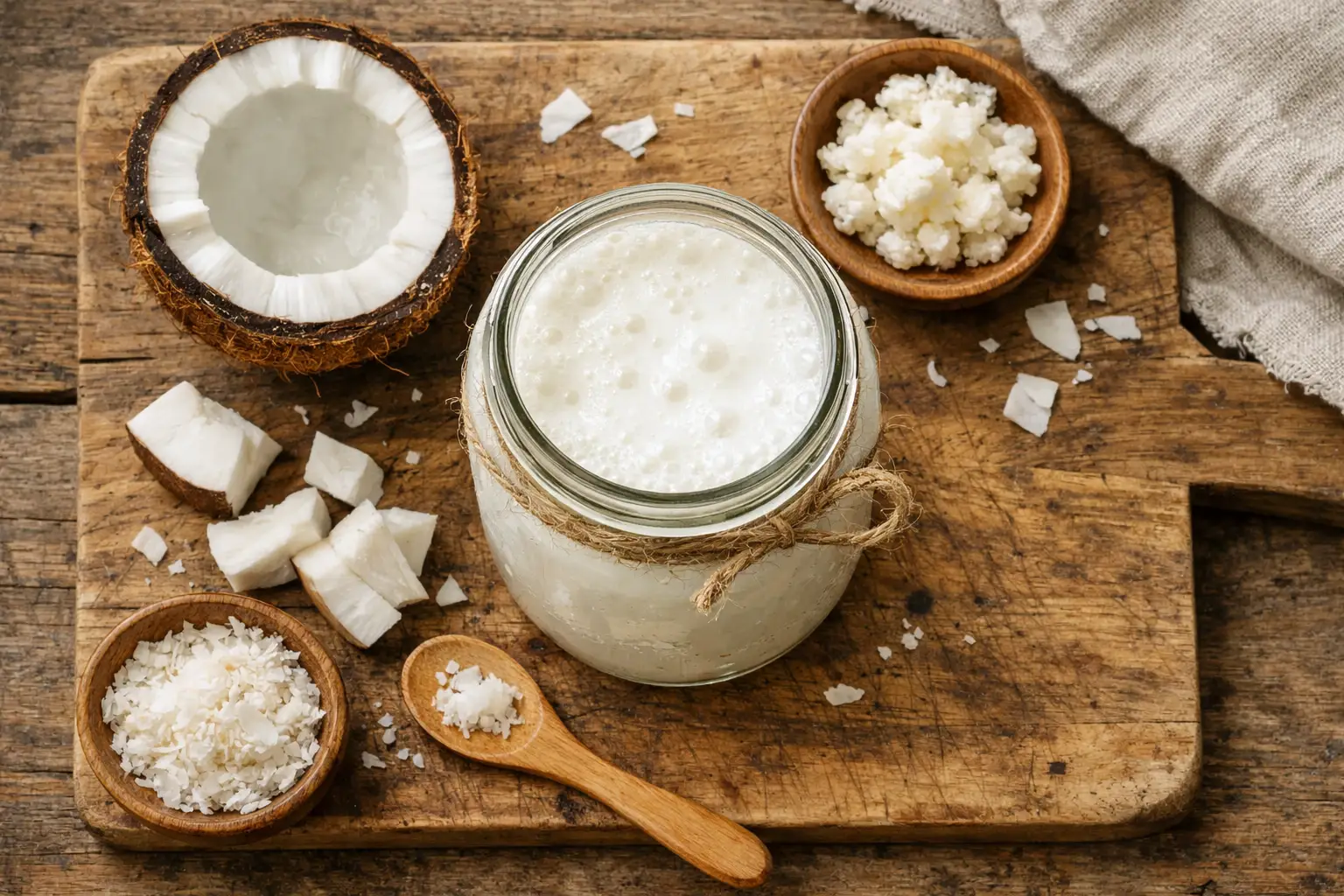
Quick Nutrition Facts
Per 1 Cup Coconut Kefir (240ml)
| Nutrient | Amount |
|---|---|
| Calories | 80 kcal |
| Protein | 1g |
| Carbohydrates | 8g |
| Fiber | 0g |
| Sugars | 6g |
| Fat | 5g |
| Saturated Fat | 4.5g |
| Calcium | 10mg |
| Iron | 0.4mg |
| Probiotics | 12+ strains |
Macronutrient Breakdown
 ChatGPT
  Claude
  AI Mode
  Perplexity
NUTRITIONIST INSIGHT
Coconut kefir delivers probiotics comparable to dairy kefir without lactose or casein. The medium-chain triglycerides (MCTs) from coconut milk are metabolized quickly for energy rather than stored as fat, making it a smart choice for gut health and weight management.
Myth Busters
MYTH #1: Coconut Kefir Has the Same Nutrition as Dairy Kefir
TRUTH: Coconut kefir is lower in protein (1g vs 6g per cup) and calcium but provides unique MCTs and lauric acid. Both deliver comparable probiotic diversity with up to 61 strains of bacteria and yeasts, but they serve different nutritional roles.
MYTH #2: All Coconut Kefir Contains Live Probiotics
TRUTH: Only unpasteurized coconut kefir contains live cultures. Heat processing kills beneficial bacteria, so check labels for "live and active cultures" or "contains live probiotics." Homemade versions using water kefir grains guarantee live cultures.
MYTH #3: Coconut Kefir Is Too High in Fat for Weight Loss
TRUTH: The 5g of fat per cup are primarily MCTs, which research shows are metabolized differently than long-chain fats. MCTs increase energy expenditure and promote satiety, potentially supporting weight loss rather than hindering it.
MYTH #4: Fermented Coconut Products Are Unsafe During Pregnancy
TRUTH: Pasteurized coconut kefir is safe during pregnancy and provides beneficial probiotics. Fermented dairy products including kefir are recommended during pregnancy for digestive comfort. Avoid unpasteurized homemade versions during pregnancy.
MYTH #5: Coconut Kefir Raises Cholesterol Because of Saturated Fat
TRUTH: The saturated fat in coconut is primarily lauric acid, a medium-chain fatty acid that behaves differently from animal-based saturated fats. Studies show moderate coconut consumption does not significantly increase cardiovascular risk in healthy individuals.
NutriScore by Health Goals
| Health Goal | NutriScore | Why This Score? |
|---|---|---|
| Weight Loss |  | Only 80 calories per cup with MCTs that boost metabolism. Probiotics support healthy digestion and nutrient absorption. |
| Muscle Gain |  | Low protein content (1g per cup) limits muscle-building potential. Better as a gut health supplement alongside protein-rich foods. |
| Diabetes Management | | Low glycemic index. Studies show kefir probiotics reduce fasting blood sugar and improve insulin sensitivity in type 2 diabetics. |
| PCOS Management | | Probiotics help manage insulin resistance and gut inflammation linked to PCOS. Low sugar content avoids insulin spikes. |
| Pregnancy Nutrition | | Probiotics support digestive comfort during pregnancy. Fermented foods are recommended for prenatal nutrition. Choose pasteurized varieties only. |
| Viral/Flu Recovery |  | Probiotics strengthen immune response. Easy to digest, gentle on upset stomach, provides hydration and quick energy during illness. |
PERSONALIZED NUTRITION
Track your meals with NutriScan for personalized NutriScores based on your specific health goals!
Blood Sugar Response to Coconut Kefir
Understanding how coconut kefir affects your blood glucose can help you make informed decisions about when and how to consume it.
Typical Glucose Response Curve
This chart shows typical blood glucose response for general healthy individuals. Individual responses may vary. Not medical advice.
How to Flatten the Spike
Pairing fermented beverages with protein or fiber slows glucose absorption and reduces the peak blood sugar level:
- 🥜 Nut butter on toast with coconut kefir - Adds protein and fiber to your probiotic drink
- 🫐 Berries blended into coconut kefir - Low-GI fruit adds fiber and antioxidants
- 🥒 Coconut kefir smoothie with spinach - Fiber and minerals moderate glucose response
- 🌰 Chia seeds stirred into coconut kefir - Soluble fiber creates a gel that slows sugar absorption
This combination not only reduces the glucose spike but also extends energy release, keeping you fuller for longer.
Cultural Significance
Kefir originated in the Caucasus Mountains over 2,000 years ago, with traditional preparation using animal-skin bags hung near doorways.
In India:
- Coconut-based fermented drinks have ancient roots in Kerala and coastal regions
- Ayurveda recognizes fermented coconut preparations for digestive health (agni)
- Traditional "toddy" from coconut palm shares fermentation principles with kefir
- Growing popularity in urban India as a dairy-free probiotic alternative
Global Impact:
- Kefir grains passed down as family heirlooms in Caucasus cultures for generations
- Coconut kefir gained mainstream popularity in the 2010s with the rise of plant-based diets
- Now produced commercially in North America, Europe, and Australia
- Water kefir and coconut kefir are the most popular dairy-free fermented alternatives worldwide
Compare & Substitute
Coconut Kefir vs Similar Probiotic Foods (Per 100g)
| Nutrient | 🥥 Coconut Kefir | 🥛 Dairy Kefir | 🍶 Kombucha | 🥣 Coconut Yogurt |
|---|---|---|---|---|
| Calories | 33 kcal | 41 kcal | 13 kcal | 110 kcal |
| Carbs | 3.3g | 4.5g | 3g | 6g |
| Fiber | 0g | 0g | 0g | 0g |
| Protein | 0.4g | 3.8g | 0g | 0.8g |
| Fat | 2.1g | 1g | 0g | 9g |
| Sugar | 2.5g | 4.5g | 2.5g | 5g |
| Probiotics | 12+ strains | 30-60 strains | 5-10 strains | 5-8 strains |
| Best For | Dairy-free gut health, vegan | Highest probiotic diversity | Low-cal probiotic hydration | Creamy dairy-free snack |
Frequently Asked Questions
Is coconut kefir good for gut health?
Yes, coconut kefir is excellent for gut health. It contains up to 12 strains of live probiotics including Lactobacillus and Bifidobacterium species that support healthy gut flora, improve digestion, and strengthen the intestinal barrier.
Best practices: Start with 1/2 cup daily and increase gradually. Drink on an empty stomach for maximum probiotic benefit. Choose unpasteurized varieties with "live and active cultures" on the label.
Can diabetics drink coconut kefir?
Yes, coconut kefir can be beneficial for diabetics. It has a low glycemic index and studies show kefir probiotics may help reduce fasting blood sugar levels.
Tips for diabetics:
- Choose unsweetened varieties (check labels for added sugars)
- Limit to 1 cup (240ml) per day
- Drink with meals to moderate overall glycemic response
- Monitor blood sugar 2 hours after drinking
Always consult your healthcare provider before adding fermented foods to your diabetes management plan.
How many calories are in coconut kefir?
A 1-cup serving (240ml) of unsweetened coconut kefir contains approximately 80 calories, with 5g fat, 8g carbohydrates, and 1g protein.
Calorie content varies by brand. Sweetened or flavored varieties can contain 120-160 calories per cup. Always check nutrition labels and choose unsweetened for the lowest calorie option.
Is coconut kefir dairy-free and vegan?
Yes, coconut kefir made with coconut milk and water kefir grains (or vegan probiotic cultures) is completely dairy-free and vegan. Traditional kefir grains contain dairy-derived microorganisms, so strict vegans should look for products made with water kefir grains or plant-based cultures.
What is the difference between coconut kefir and regular kefir?
Coconut kefir uses coconut milk, providing MCTs and being dairy-free. Regular kefir uses cow or goat milk, offering higher protein (6g vs 1g) and more probiotic diversity (up to 61 strains). Both support gut health, but coconut kefir suits lactose-intolerant and vegan diets.
When is the best time to drink coconut kefir?
Depends on your goal:
- Gut Health: Morning on an empty stomach for maximum probiotic colonization
- Weight Loss: Before meals to promote fullness with MCTs and probiotics
- Diabetes: With meals to moderate blood sugar response
- Immunity: Morning or evening consistently for sustained probiotic benefit
IMPORTANT NOTE
Start with 1/2 cup if new to fermented foods to avoid digestive discomfort.


Similar Nutritious Foods
4505 Chicharrones Classic Chili Salt
7 Eleven Japan Crispy Corn Cheese
Explore More Nutrition Tools & Resources
AI Calorie Counter App - Snap a Photo, Get Macros
AI Nutritionist App That Reads Your Logged Meals
Best Protein Supplements for Women
Bulking Meal Plan App That Sets Your Surplus
ChatGPT Calorie Counter Alternative That Keeps the Total
ChatGPT Diet Plan Alternative That Tracks What You Eat
ChatGPT Weight Loss Coach Alternative With a Food Log
Fast Food Calorie Counter App That Reads the Tray
Free Calorie Tracker App with AI Photo Scans | NutriScan
Indian Diet Plan App With Veg and Non Veg Meals
Indian Food Calorie Calculator - Get Instant Nutrition Facts for Desi Meals — 2026
Intermittent Fasting for Women, Timer and Meal Log App
Intermittent Fasting Tracker App - Free Fasting Timer
Macro Tracker App That Fills the Numbers From a Photo
Mediterranean Diet Meal Plan App That Counts the Oil
Micronutrient Tracker App for Vitamins and Minerals
MyFitnessPal Alternative That Stays Free | NutriScan
NutriScore App: A Free Grade on Every Meal | NutriScan
Nutrition Label Scanner App for the Amount You Ate
Second Trimester Protein Guide
Vegetarian Meal Plan App With a Protein Target
Voice Calorie Counter - Speak to Track Meals Hands-Free
Water and Calorie Tracker App - Free Water Log