Coconut Yogurt (Dairy-Free): Calories, Nutrition and Health Benefits
A creamy, dairy-free probiotic powerhouse made from coconut milk with live cultures, delivering healthy MCT fats and gut-friendly bacteria in every spoonful.
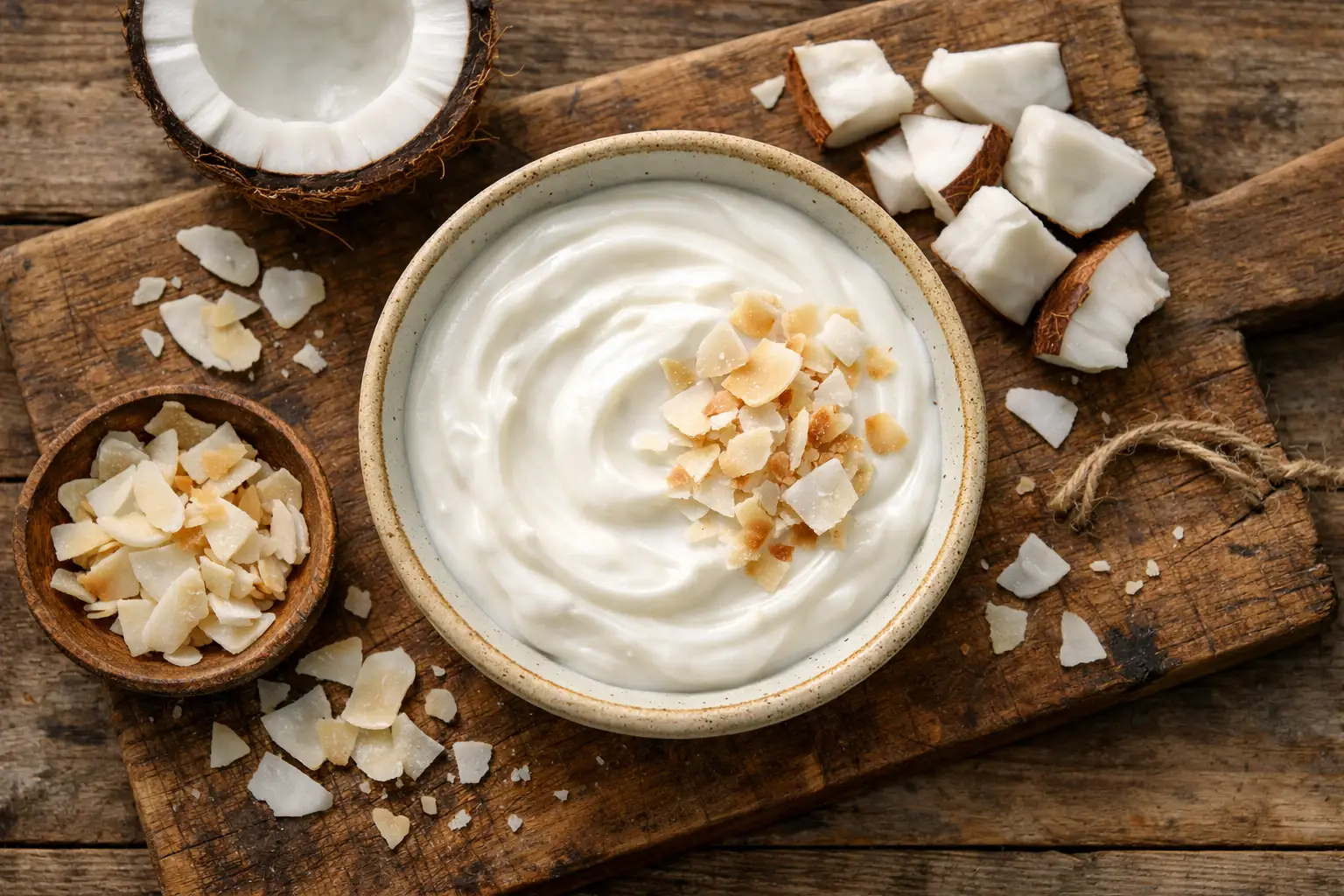
Quick Nutrition Facts
Per 1 Cup Coconut Yogurt (150g)
| Nutrient | Amount |
|---|---|
| Calories | 140 kcal |
| Protein | 1.5g |
| Carbohydrates | 13g |
| Fiber | 0.3g |
| Sugars | 10g |
| Fat | 11g |
| Saturated Fat | 9g |
| Calcium | 20mg |
| Iron | 0.5mg |
| Potassium | 75mg |
Macronutrient Breakdown
 ChatGPT
  Claude
  AI Mode
  Perplexity
NUTRITIONIST INSIGHT
Coconut yogurt delivers medium-chain triglycerides (MCTs) that are metabolized faster than long-chain fats, providing quick energy. Pair it with high-protein toppings like nuts or seeds to compensate for its low protein content (only 1g per 100g).
Myth Busters
MYTH #1: Coconut Yogurt Is Just as Nutritious as Dairy Yogurt
TRUTH: Coconut yogurt has significantly less protein (1g vs 5g per 100g) and calcium (13mg vs 110mg) compared to dairy yogurt. While it provides beneficial MCT fats that support energy metabolism, it should not be considered a 1:1 nutritional replacement without supplementing protein and calcium.
MYTH #2: All Coconut Yogurts Are Low in Sugar
TRUTH: Plain unsweetened coconut yogurt has about 7g sugar per 100g, but flavored varieties can contain 15-20g sugar per 100g from added sweeteners. Always read labels. Excess added sugar consumption is linked to metabolic syndrome regardless of the yogurt base.
MYTH #3: Coconut Yogurt Is Bad for Heart Health Due to Saturated Fat
TRUTH: While coconut yogurt is high in saturated fat (6g per 100g), the MCTs in coconut are metabolized differently from animal saturated fats. Research shows MCT consumption does not adversely affect metabolic risk factors when consumed as part of a balanced diet.
MYTH #4: Coconut Yogurt Has No Probiotics
TRUTH: Quality coconut yogurt is fermented with live bacterial cultures including Lactobacillus and Bifidobacterium strains. Look for "live and active cultures" on labels. Probiotics in fermented plant-based foods support gut microbiome diversity.
MYTH #5: Coconut Yogurt Causes Weight Gain
TRUTH: A 150g serving has only 140 calories. The MCT fats in coconut yogurt may actually support weight management. Studies show MCT oil does not lead to adverse metabolic profiles compared to other fats in weight loss diets.
NutriScore by Health Goals
| Health Goal | NutriScore | Why This Score? |
|---|---|---|
| Weight Loss |  | 140 calories per serving with MCTs that promote satiety. Choose unsweetened; limit to 1 serving daily. |
| Muscle Gain |  | Very low protein (1.5g per serving). Must pair with protein sources like nuts, seeds, or protein powder. |
| Diabetes Management | | Low glycemic impact due to high fat and low carb content. Choose unsweetened only; flavored varieties may spike blood sugar. |
| PCOS Management |  | Low sugar when unsweetened, but high saturated fat may affect insulin sensitivity. Limit to 100g daily. |
| Pregnancy Nutrition | | Probiotics may improve pregnancy outcomes, but low in calcium and protein. Supplement with fortified foods or prenatal vitamins. |
| Viral/Flu Recovery | | Easy to digest, probiotics support immune function, MCTs provide quick energy during illness. |
PERSONALIZED NUTRITION
Track your meals with NutriScan for personalized NutriScores based on your specific health goals!
Blood Sugar Response to Coconut Yogurt
Understanding how coconut yogurt affects your blood glucose helps you make informed dietary choices, especially if managing diabetes or insulin sensitivity.
Typical Glucose Response Curve
This chart shows typical blood glucose response for general healthy individuals. Individual responses may vary. Not medical advice.
How to Flatten the Spike
Pairing coconut yogurt with fiber and protein further slows glucose absorption and keeps blood sugar steady:
- 🌰 Chia seeds or flaxseeds - Adds fiber and omega-3 fatty acids
- 🥜 Almond butter or walnuts - Provides protein and healthy fats
- 🫐 Fresh berries (blueberries, raspberries) - Low-GI fruits with antioxidants
- 🌾 Rolled oats or granola (unsweetened) - Adds complex carbs and fiber
This combination minimizes blood sugar fluctuations and extends satiety, keeping you fuller for longer.
Cultural Significance
Coconut yogurt emerged from the intersection of traditional coconut fermentation practices and modern plant-based dietary movements.
Traditional Roots:
- Coconut milk has been fermented across Southeast Asia and the Pacific Islands for centuries
- In Sri Lanka and the Philippines, naturally fermented coconut products are staple foods
- Ayurvedic tradition values coconut for its cooling properties and digestive benefits
- In India, coconut-based probiotic foods align with vegetarian and vegan dietary practices
Modern Movement:
- Commercial coconut yogurt launched in the early 2010s as part of the plant-based revolution
- Now one of the fastest-growing dairy alternatives globally
- Popular among vegan, paleo, and dairy-free communities
- Innovation in live culture strains continues to improve probiotic diversity in coconut yogurt
Compare & Substitute
Coconut Yogurt vs Other Yogurts (Per 100g)
| Nutrient | 🥥 Coconut Yogurt | 🥛 Regular Yogurt (Whole) | 🇬🇷 Greek Yogurt | 🌱 Soy Yogurt |
|---|---|---|---|---|
| Calories | 93 kcal | 61 kcal | 97 kcal | 54 kcal |
| Carbs | 9g | 4.7g | 3.6g | 4g |
| Fiber | 0.2g | 0g | 0g | 0.6g |
| Protein | 1g | 5g | 9g | 4g |
| Fat | 7g | 3.3g | 5g | 2.5g |
| Calcium | 13mg | 110mg | 100mg | 120mg (fortified) |
| Sugar | 7g | 4.7g | 3.2g | 2.5g |
| Probiotics | Yes (added cultures) | Yes (natural) | Yes (natural) | Yes (added cultures) |
| Best For | Dairy-free, vegan, MCT fats | Balanced nutrition, calcium | High protein, low carb | Protein + dairy-free |
Frequently Asked Questions
Is coconut yogurt good for gut health?
Yes, coconut yogurt with live active cultures provides beneficial probiotics including Lactobacillus and Bifidobacterium strains. These bacteria support digestive health, immune function, and microbiome diversity.
Key tips: Choose brands labeled "live and active cultures," store at proper temperature (below 4C), and consume before the expiration date for maximum probiotic benefit.
How many calories are in coconut yogurt?
Plain unsweetened coconut yogurt has about 93 calories per 100g or 140 calories per 150g serving. Flavored varieties can range from 130-180 calories per 100g due to added sugars and flavorings.
Brand variations are significant: Some premium coconut yogurts with higher coconut cream content can reach 170+ calories per 100g. Always check the nutrition label.
Is coconut yogurt healthier than regular yogurt?
It depends on your dietary needs. Coconut yogurt is ideal for dairy-free diets and provides MCT fats but lacks the protein (1g vs 5g) and calcium (13mg vs 110mg) of dairy yogurt.
Choose coconut yogurt if: Dairy allergy, lactose intolerance, vegan diet, or seeking MCT fats. Choose dairy yogurt if: You need higher protein, calcium, or B12 without supplementation.
Can diabetics eat coconut yogurt?
Unsweetened coconut yogurt is suitable for diabetics due to its low glycemic impact from high fat and low carbohydrate content. The minimal blood sugar response makes it a better choice than sweetened dairy yogurts.
Tips for diabetics:
- Always choose plain unsweetened varieties
- Check labels for hidden sugars (coconut sugar, agave, honey)
- Pair with nuts or seeds for additional blood sugar stability
- Monitor portion size to 150g per serving
Does coconut yogurt have enough protein?
No, coconut yogurt is low in protein at about 1g per 100g compared to 5g in dairy yogurt and 9g in Greek yogurt. This is the main nutritional limitation of coconut yogurt.
How to boost protein: Add 2 tablespoons of hemp seeds (+6g protein), a scoop of plant-based protein powder (+15-20g), or a handful of almonds (+4g) to your serving.
Is coconut yogurt safe during pregnancy?
Yes, coconut yogurt is safe during pregnancy when it is pasteurized and contains live cultures. Probiotics may improve pregnancy metabolic outcomes and immune health.
Important considerations: Coconut yogurt alone does not provide adequate calcium or protein for pregnancy needs. Supplement with fortified plant milks, leafy greens, and other protein sources. Always consult your healthcare provider.


Similar Nutritious Foods
4505 Chicharrones Classic Chili Salt
7 Eleven Japan Crispy Corn Cheese
Explore More Nutrition Tools & Resources
AI Calorie Counter App - Snap a Photo, Get Macros
AI Nutritionist App That Reads Your Logged Meals
Best Protein Supplements for Women
Bulking Meal Plan App That Sets Your Surplus
ChatGPT Calorie Counter Alternative That Keeps the Total
ChatGPT Diet Plan Alternative That Tracks What You Eat
ChatGPT Weight Loss Coach Alternative With a Food Log
Fast Food Calorie Counter App That Reads the Tray
Free Calorie Tracker App with AI Photo Scans | NutriScan
Indian Diet Plan App With Veg and Non Veg Meals
Indian Food Calorie Calculator - Get Instant Nutrition Facts for Desi Meals — 2026
Intermittent Fasting for Women, Timer and Meal Log App
Intermittent Fasting Tracker App - Free Fasting Timer
Macro Tracker App That Fills the Numbers From a Photo
Mediterranean Diet Meal Plan App That Counts the Oil
Micronutrient Tracker App for Vitamins and Minerals
MyFitnessPal Alternative That Stays Free | NutriScan
NutriScore App: A Free Grade on Every Meal | NutriScan
Nutrition Label Scanner App for the Amount You Ate
Second Trimester Protein Guide
Vegetarian Meal Plan App With a Protein Target
Voice Calorie Counter - Speak to Track Meals Hands-Free
Water and Calorie Tracker App - Free Water Log