Corn & Black Beans: Calories, Nutrition and Health Benefits
Plant-powered protein duo delivering complete amino acids, rich fiber, and sustained energy for any health goal.
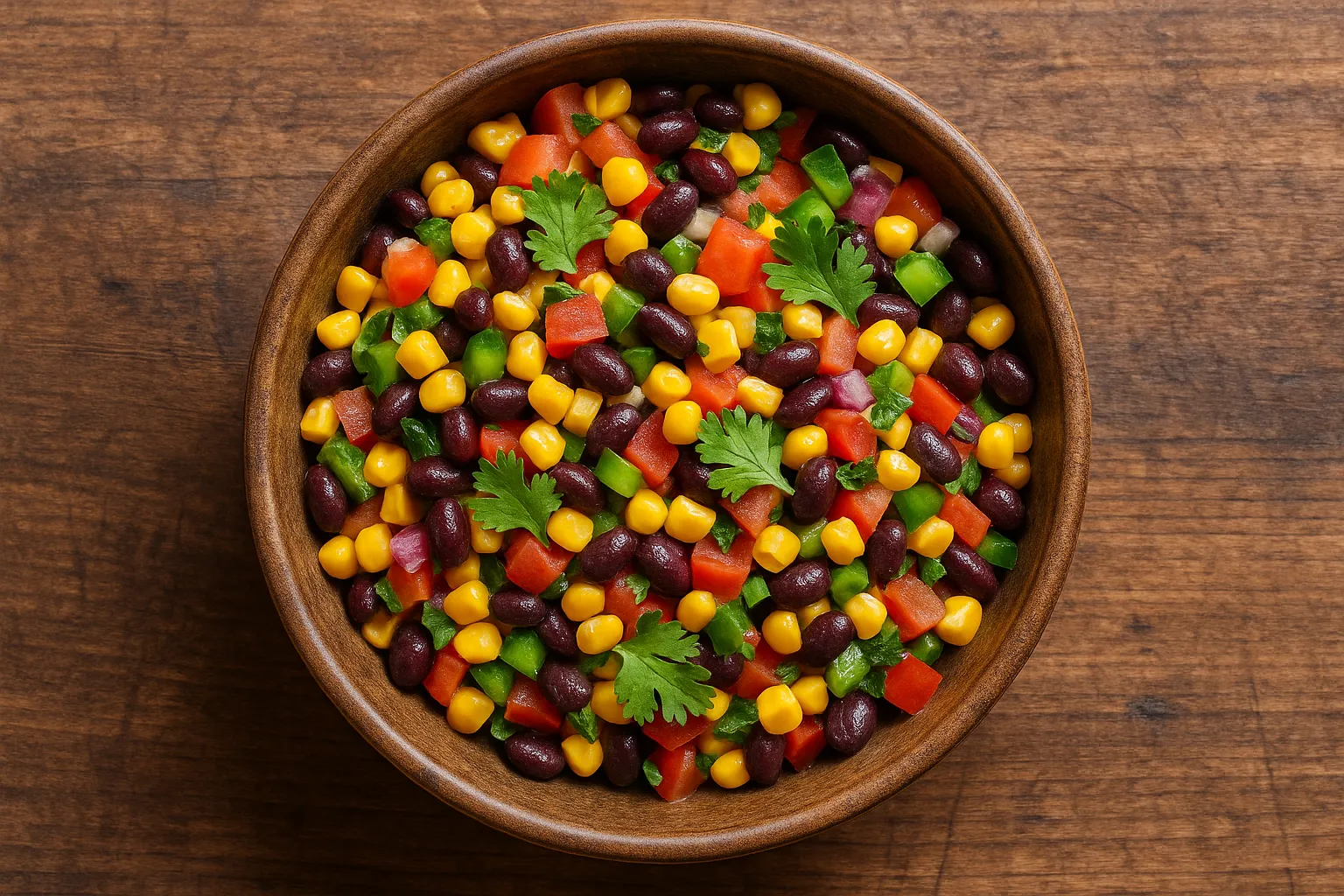
Quick Nutrition Facts
Per 1 Cup Mixed (200g)
| Nutrient | Amount |
|---|---|
| Calories | 220 kcal |
| Protein | 10g |
| Carbohydrates | 40g |
| Fiber | 11g |
| Sugars | 3g |
| Fat | 2.5g |
| Folate | 120mcg |
| Iron | 2.5mg |
| Magnesium | 75mg |
| Potassium | 450mg |
Macronutrient Breakdown
 ChatGPT
  Claude
  AI Mode
  Perplexity
NUTRITIONIST INSIGHT
Corn and black beans create a complete protein with all nine essential amino acids. The 11g fiber slows digestion, stabilizes blood sugar, and keeps you full for hours. The resistant starch in both foods supports fat burning and gut health.
Myth Busters
MYTH #1: Beans and Corn Are Too High in Carbs for Weight Loss
TRUTH: The 40g carbs come packaged with 11g fiber and 10g protein, creating high satiety per calorie. High-fiber foods enhance weight loss even with moderate carbs. Focus on total nutrition, not just carb count.
MYTH #2: Plant Proteins Are Inferior to Animal Proteins
TRUTH: Combining corn and beans provides all essential amino acids in ideal ratios, matching or exceeding animal protein quality. This combination has sustained civilizations for millennia.
MYTH #3: Canned Beans Are Unhealthy
TRUTH: Canned black beans retain 95% of nutrients and fiber. Rinsing reduces sodium by 40%. They're equally nutritious as dried beans and far more convenient, increasing consumption adherence.
MYTH #4: Corn Has No Nutritional Value
TRUTH: Corn provides resistant starch, antioxidants (lutein, zeaxanthin), B vitamins, and fiber. The "empty calories" myth ignores these nutrients and the complete protein created when paired with beans.
MYTH #5: Beans Cause Uncomfortable Bloating
TRUTH: Gas decreases with regular consumption as gut bacteria adapt. Starting with small portions and rinsing canned beans reduces discomfort. Gradual introduction prevents issues while building healthy microbiome.
MYTH #6: You Must Eat Corn and Beans Together in One Meal
TRUTH: Your body pools amino acids throughout the day. Eating beans at lunch and corn at dinner still creates complete protein. However, combining them in one meal maximizes convenience and satisfaction.
NutriScore by Health Goals
| Health Goal | NutriScore | Why This Score? |
|---|---|---|
| Weight Loss |  | 220 calories, 11g fiber promotes fullness, 10g protein preserves muscle, resistant starch aids fat burning. 1 cup per meal with vegetables. |
| Muscle Gain |  | Complete protein (10g) supports muscle synthesis, complex carbs (40g) fuel workouts. Add healthy fats (avocado, olive oil) for calorie density. |
| Diabetes Management | | Black beans' low GI (30) and high fiber improve insulin sensitivity. Corn's medium GI balanced by fiber. 1 cup per meal. |
| PCOS Management | | Low GI, high fiber reduces insulin resistance, plant protein supports hormonal balance. 1 cup daily with healthy fats. |
| Pregnancy Nutrition | | 120mcg folate (30% DV) prevents neural tube defects, iron supports blood volume, complete protein aids fetal development. |
| Viral/Flu Recovery | | Zinc and antioxidants boost immunity, easy-to-digest protein supports recovery, fiber feeds beneficial gut bacteria. |
PERSONALIZED NUTRITION
Track your meals with NutriScan for personalized NutriScores based on your specific health goals!
Blood Sugar Response to Corn & Black Beans
Understanding how this combination affects blood glucose helps optimize portions and meal timing.
Typical Glucose Response Curve
This chart shows typical blood glucose response for general healthy individuals. Individual responses may vary. Not medical advice.
How to Optimize Blood Sugar Control
The fiber and protein already stabilize glucose, but these additions further improve the response:
- 🥑 Avocado - Healthy fats slow carb absorption further
- 🍅 Salsa or pico de gallo - Adds volume without calories, vitamin C
- 🌱 Cilantro and lime - Antioxidants, minimal calories
- 🌶️ Hot sauce - Capsaicin may improve insulin sensitivity
This combination creates a nutrient-dense, blood-sugar-friendly meal under 350 calories.
Cultural Significance
Corn and black beans are foundational foods in Latin American cuisine with 7,000+ years of history.
In Latin America:
- Staple combination in Mexican, Central American, and Caribbean diets
- "The Three Sisters" - Traditional companion planting with squash
- Provided complete nutrition for Aztec, Maya, and Inca civilizations
- Symbol of agricultural heritage and food sovereignty
Regional Variations:
- Mexican: Frijoles negros with elote (street corn)
- Cuban: Moros y Cristianos (black beans and rice with corn)
- Costa Rican: Gallo pinto breakfast with corn tortillas
- Brazilian: Feijoada-style black beans with corn farofa
Global Impact:
- Template for plant-based complete proteins worldwide
- Sustainable agriculture: beans fix nitrogen, feeding corn
- Growing popularity in plant-based and flexitarian diets
- Model for climate-resilient food systems
Compare & Substitute
Corn & Black Beans vs Similar Plant Proteins (Per 100g)
| Nutrient | 🌽 Corn & Black Beans | 🫘 Chickpeas | 🍚 Rice & Lentils | 🫛 Edamame |
|---|---|---|---|---|
| Calories | 110 kcal | 164 kcal | 130 kcal | 121 kcal |
| Carbs | 20g | 27g | 25g | 9g |
| Fiber | 5.5g | 7.6g | 4g | 5g |
| Protein | 5g | 8.9g | 6g | 11g |
| Fat | 1.3g | 2.6g | 0.5g | 5g |
| Folate | 60mcg | 172mcg | 45mcg | 311mcg |
| Iron | 1.3mg | 2.9mg | 1.5mg | 2.3mg |
| Potassium | 225mg | 291mg | 180mg | 436mg |
| Best For | Complete protein, low calorie | Higher protein, Middle Eastern cuisine | Budget-friendly, mild flavor | Highest protein, Asian cuisine |
Frequently Asked Questions
Are corn and black beans good for weight loss?
Yes, corn and black beans are excellent for weight loss. One cup provides 220 calories with 11g fiber that promotes fullness and 10g protein to preserve muscle during calorie deficit. The resistant starch supports fat burning.
Best practices: Eat 1 cup per meal, add vegetables for volume, use lime juice instead of oil-heavy dressings, pair with salsa or pico de gallo, avoid added cheese or sour cream.
Can diabetics eat corn and black beans?
Diabetics can eat corn and black beans safely. Black beans have a low glycemic index (30), while corn is medium (52). Combined, the 11g fiber slows glucose absorption significantly.
Tips for diabetics:
- Limit to 1 cup per meal (track as 40g carbs)
- Add healthy fat (avocado) to slow digestion
- Choose fresh or frozen corn over canned for lower sodium
- Monitor blood sugar 2 hours after eating initially
- The fiber and resistant starch improve insulin sensitivity over time
Research shows beans improve blood sugar control in type 2 diabetes.
How much protein is in corn and black beans?
One cup (200g) of corn and black beans provides 10g of complete plant protein. Black beans contribute about 7-8g protein, corn adds 2-3g, and together they provide all nine essential amino acids.
Protein comparison: Equivalent to 1.5 eggs or 30g chicken breast, making it excellent for plant-based diets, weight management, or reducing animal product intake.
What are the main health benefits of corn and black beans?
Key Benefits:
- Complete Protein: All nine essential amino acids for muscle and tissue repair
- Digestive Health: 11g fiber (44% DV) supports regularity and gut bacteria
- Blood Sugar Control: Low GI, high fiber, resistant starch improve insulin sensitivity
- Heart Health: Fiber, potassium, folate reduce cardiovascular disease risk
- Weight Management: High satiety, preserves muscle, aids fat burning
- Pregnancy Support: Folate prevents neural tube defects, iron supports blood volume
Is corn and black beans a complete protein?
Yes, corn and black beans together create a complete protein with all nine essential amino acids. Corn is rich in methionine but low in lysine; black beans are high in lysine but lower in methionine. This complementary pairing has been recognized for thousands of years in traditional diets.
Science: Your body pools amino acids throughout the day, so eating them in separate meals works too. However, combining them maximizes convenience and creates a satisfying, balanced meal.
Are corn and black beans good for vegans and vegetarians?
Yes, corn and black beans are a vegan/vegetarian staple providing:
- Complete protein: 10g per cup with all essential amino acids
- Iron: 2.5mg (14% DV for women) - pair with vitamin C to enhance absorption
- Folate: 120mcg (30% DV) crucial for cell division
- Zinc: 1.5mg supports immunity and wound healing
- Magnesium: 75mg for energy and bone health
Tip: Add lime juice, tomatoes, or bell peppers (vitamin C) to maximize iron absorption from this plant-based meal.
How should I prepare corn and black beans?
Healthiest Preparation:
- Canned beans: Rinse thoroughly to reduce sodium by 40%
- Fresh/frozen corn: Higher nutrients than canned, lower sodium
- Seasonings: Cumin, chili powder, lime juice, cilantro, garlic
- Avoid: Excessive oil, cheese, sour cream for weight loss
Meal ideas:
- Burrito bowl with vegetables and salsa
- Taco filling with lettuce wraps
- Cold salad with lime vinaigrette
- Soup with tomatoes and peppers
How many servings of corn and black beans should I eat?
General Guidelines:
- 1 cup - Weight loss, diabetes, PCOS (220 calories, 40g carbs)
- 1-1.5 cups - Maintenance, general health (330 calories)
- 1.5-2 cups - Athletes, muscle gain, high energy needs (440 calories)
Always add vegetables for volume and additional nutrients. Pair with healthy fats (avocado, nuts, seeds) for satiety and nutrient absorption.


Similar Nutritious Foods
4505 Chicharrones Classic Chili Salt
7 Eleven Japan Crispy Corn Cheese
Explore More Nutrition Tools & Resources
AI Calorie Counter App - Snap a Photo, Get Macros
AI Nutritionist App That Reads Your Logged Meals
Best Protein Supplements for Women
Bulking Meal Plan App That Sets Your Surplus
ChatGPT Calorie Counter Alternative That Keeps the Total
ChatGPT Diet Plan Alternative That Tracks What You Eat
ChatGPT Weight Loss Coach Alternative With a Food Log
Fast Food Calorie Counter App That Reads the Tray
Free Calorie Tracker App with AI Photo Scans | NutriScan
Indian Diet Plan App With Veg and Non Veg Meals
Indian Food Calorie Calculator - Get Instant Nutrition Facts for Desi Meals — 2026
Intermittent Fasting for Women, Timer and Meal Log App
Intermittent Fasting Tracker App - Free Fasting Timer
Macro Tracker App That Fills the Numbers From a Photo
Mediterranean Diet Meal Plan App That Counts the Oil
Micronutrient Tracker App for Vitamins and Minerals
MyFitnessPal Alternative That Stays Free | NutriScan
NutriScore App: A Free Grade on Every Meal | NutriScan
Nutrition Label Scanner App for the Amount You Ate
Second Trimester Protein Guide
Vegetarian Meal Plan App With a Protein Target
Voice Calorie Counter - Speak to Track Meals Hands-Free
Water and Calorie Tracker App - Free Water Log