Crock-Pot Turkey Breast: Calories, Nutrition and Health Benefits
A lean, high-protein meal prep staple with exceptional nutritional value and virtually zero carbs.
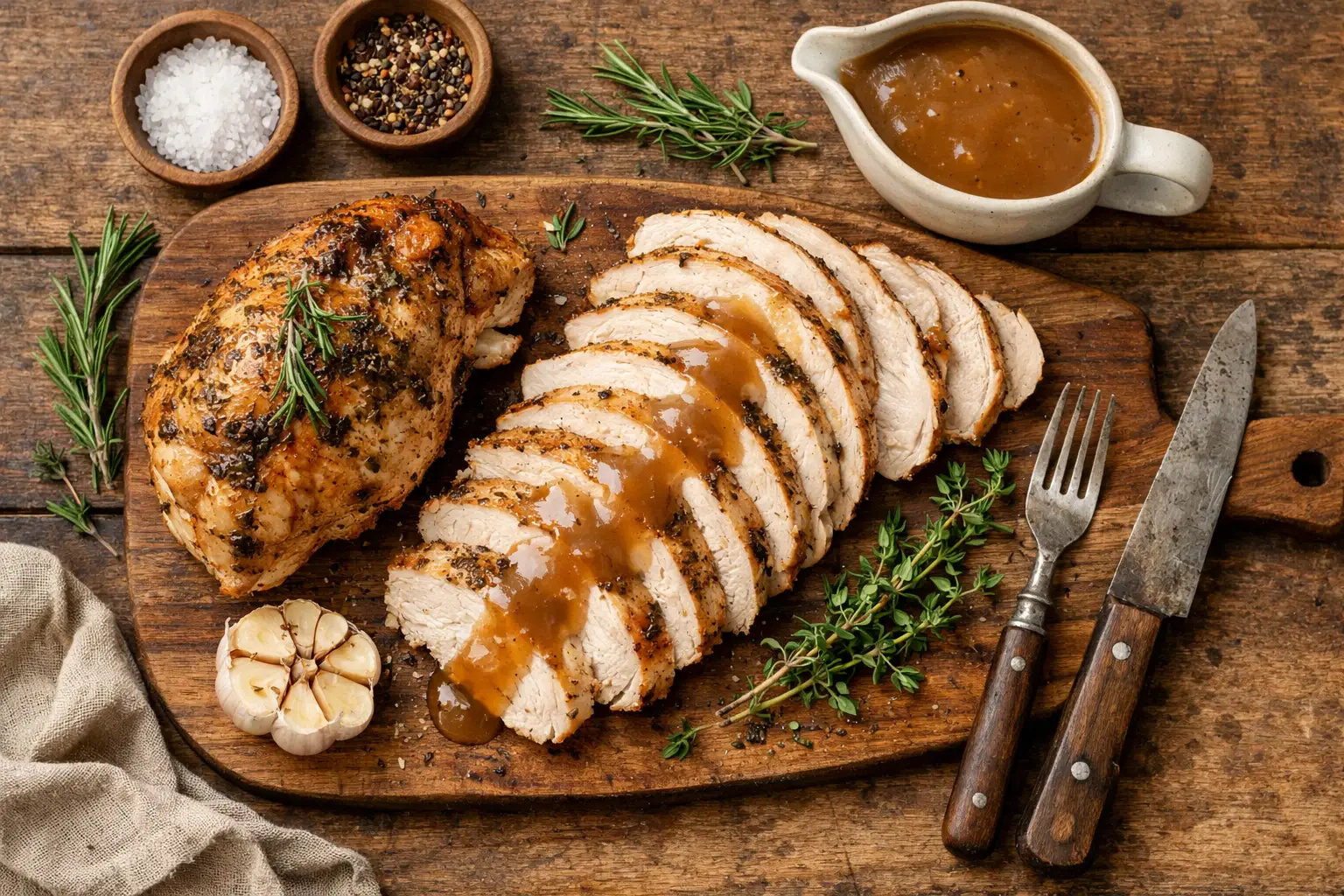
Quick Nutrition Facts
Per 100g Cooked Turkey Breast
| Nutrient | Amount |
|---|---|
| Calories | 135 kcal |
| Protein | 30g |
| Carbohydrates | 0g |
| Fiber | 0g |
| Sugars | 0g |
| Fat | 1g |
| Selenium | 27mcg |
| Vitamin B3 | 11.8mg |
| Vitamin B6 | 0.8mg |
| Phosphorus | 230mg |
Macronutrient Breakdown
 ChatGPT
  Claude
  AI Mode
  Perplexity
NUTRITIONIST INSIGHT
Turkey breast delivers 30g of complete protein per 100g while containing just 1g of fat. It's one of the highest protein-to-calorie ratio foods available, providing 61% of your daily niacin (vitamin B3) needs for energy metabolism.
Myth Busters
MYTH #1: Turkey Makes You Sleepy
TRUTH: The "turkey coma" myth is overblown. Turkey contains tryptophan, but no more than chicken or other meats. Post-meal sleepiness is usually from overeating carbs, not turkey protein.
MYTH #2: Slow Cooker Turkey Is Less Nutritious
TRUTH: Slow cooking actually preserves nutrients better than high-heat methods. The lower temperatures prevent vitamin degradation, and the closed environment retains water-soluble vitamins.
MYTH #3: Turkey Breast Is Dry and Bland
TRUTH: Crock-pot cooking produces exceptionally moist turkey breast. The slow, moist-heat environment breaks down collagen while keeping proteins tender. Dry turkey results from overcooking at high temperatures.
MYTH #4: Red Meat Has More Protein Than Turkey
TRUTH: Turkey breast actually has more protein per 100g (30g) than most red meats. Beef sirloin has ~27g, pork loin ~26g. Turkey wins on protein while having less saturated fat.
MYTH #5: Processed Turkey Deli Meat Is the Same
TRUTH: Processed turkey deli meat contains up to 75% of daily sodium in 100g. Homemade crock-pot turkey breast has just 50-70mg sodium naturally, unless you add salt.
NutriScore by Health Goals
| Health Goal | NutriScore | Why This Score? |
|---|---|---|
| Weight Loss |  | 135 calories with 30g protein provides maximum satiety per calorie. Zero carbs, minimal fat. |
| Muscle Gain | | Complete protein with all essential amino acids. Ideal for post-workout recovery and muscle protein synthesis. |
| Diabetes Management | | Zero carbohydrates means no blood sugar impact. Excellent protein source for stable glucose. |
| PCOS Management | | High protein supports insulin sensitivity. Low fat and zero carbs align with PCOS dietary recommendations. |
| Pregnancy Nutrition | | Excellent protein source for fetal development. Rich in B vitamins including B6 and B12. Ensure fully cooked to 165°F (74°C). |
| Viral/Flu Recovery | | Easy to digest, high-quality protein supports immune function. Selenium and zinc aid recovery. |
PERSONALIZED NUTRITION
Track your meals with NutriScan for personalized NutriScores based on your specific health goals!
Blood Sugar Response to Turkey Breast
Understanding how turkey breast affects your blood glucose helps optimize meal timing and composition.
Typical Glucose Response Curve
This chart shows typical blood glucose response for general healthy individuals. Turkey breast has virtually no glycemic impact due to zero carbohydrates. Individual responses may vary. Not medical advice.
Optimal Meal Pairing Tips
Pairing protein with fiber-rich vegetables creates a complete, blood-sugar-stable meal:
- 🥗 Leafy greens and non-starchy vegetables - Adds fiber without raising blood sugar
- 🥑 Avocado or olive oil - Healthy fats enhance nutrient absorption
- 🍠 Small portion of sweet potato - Controlled carbs for energy
- 🥒 Cucumber and tomato salad - Hydrating, low-calorie volume
Turkey breast's zero-carb profile makes it ideal as the protein anchor for any blood-sugar-conscious meal.
Cultural Significance
Turkey has deep cultural roots in American cuisine and is gaining global popularity as a lean protein.
In America:
- Thanksgiving centerpiece since the 1600s
- Consumed at over 88% of American households on Thanksgiving
- Turkey breast emerged as health-conscious cut in the 1980s-90s
- Slow cooker turkey gained popularity for convenient meal prep
Global Adoption:
- Second most consumed poultry meat worldwide after chicken
- Growing popularity in Europe and Asia as lean protein alternative
- Used in diverse cuisines from Mexican turkey mole to Turkish döner
- 537 million turkeys produced annually in the US alone
Meal Prep Culture:
- Crock-pot turkey breast became a fitness community staple
- Ideal for batch cooking: cook once, eat for 4-5 days
- High protein-to-calorie ratio makes it bodybuilding favorite
Compare & Substitute
Turkey Breast vs Other Lean Proteins (Per 100g)
| Nutrient | 🦃 Turkey Breast | 🐔 Chicken Breast | 🐟 Cod Fish | 🥩 Beef Sirloin |
|---|---|---|---|---|
| Calories | 135 kcal | 165 kcal | 82 kcal | 183 kcal |
| Carbs | 0g | 0g | 0g | 0g |
| Fiber | 0g | 0g | 0g | 0g |
| Protein | 30g | 31g | 18g | 27g |
| Fat | 1g | 3.6g | 0.7g | 8g |
| Selenium | 27mcg | 24mcg | 33mcg | 26mcg |
| B3 (Niacin) | 11.8mg | 14.8mg | 2.1mg | 7.3mg |
| Best For | Weight loss, muscle gain | Versatile, easy cooking | Lowest calorie, fish variety | Iron needs, beef flavor |
Frequently Asked Questions
How many calories are in crock-pot turkey breast?
Crock-pot turkey breast contains approximately 135 calories per 100g serving. A typical 3-ounce (85g) serving has about 115 calories, making it one of the leanest protein sources available.
Calorie breakdown: 89% protein, 7% fat, 0% carbohydrates.
Is crock-pot turkey breast good for weight loss?
Crock-pot turkey breast is excellent for weight loss. With 30g protein and only 1g fat per 100g, it provides maximum satiety with minimal calories.
Weight loss benefits:
- High thermic effect of protein (burns more calories during digestion)
- Zero carbs means no insulin spike
- Filling protein keeps you satisfied longer
- Easy meal prep prevents unhealthy food choices
How much protein is in slow cooker turkey breast?
Slow cooker turkey breast provides approximately 30g of complete protein per 100g serving, containing all essential amino acids.
Protein comparison:
- Turkey breast: 30g per 100g
- Chicken breast: 31g per 100g
- Greek yogurt: 10g per 100g
- Eggs: 13g per 100g
Turkey delivers protein comparable to chicken with slightly less fat.
Is turkey breast healthier than chicken breast?
Turkey and chicken breast are nutritionally similar. Turkey breast is marginally leaner (1g fat vs 3.6g) with comparable protein content.
Key differences:
- Turkey: Lower fat, higher selenium, stronger flavor
- Chicken: More versatile, cooks faster, widely available
- Both: Excellent lean protein sources
Choose based on taste preference and recipe requirements.
Can diabetics eat crock-pot turkey breast?
Crock-pot turkey breast is excellent for diabetics. It contains zero carbohydrates and has virtually no impact on blood sugar levels.
Diabetes-friendly tips:
- Pair with non-starchy vegetables
- Avoid sugary glazes or sauces
- Use herbs and spices for flavor
- Control sodium by making homemade rather than store-bought
How long can I store cooked turkey breast?
Storage guidelines:
- Refrigerator: 3-4 days in airtight container
- Freezer: 2-3 months for best quality
- Room temperature: Maximum 2 hours (food safety)
Meal prep tip: Slice and portion into containers immediately after cooling. Reheat to 165°F (74°C) before eating.


Similar High-Protein Foods
4505 Chicharrones Classic Chili Salt
7 Eleven Japan Crispy Corn Cheese
Explore More Nutrition Tools & Resources
AI Calorie Counter App - Snap a Photo, Get Macros
AI Nutritionist App That Reads Your Logged Meals
Best Protein Supplements for Women
Bulking Meal Plan App That Sets Your Surplus
ChatGPT Calorie Counter Alternative That Keeps the Total
ChatGPT Diet Plan Alternative That Tracks What You Eat
ChatGPT Weight Loss Coach Alternative With a Food Log
Fast Food Calorie Counter App That Reads the Tray
Free Calorie Tracker App with AI Photo Scans | NutriScan
Indian Diet Plan App With Veg and Non Veg Meals
Indian Food Calorie Calculator - Get Instant Nutrition Facts for Desi Meals — 2026
Intermittent Fasting for Women, Timer and Meal Log App
Intermittent Fasting Tracker App - Free Fasting Timer
Macro Tracker App That Fills the Numbers From a Photo
Mediterranean Diet Meal Plan App That Counts the Oil
Micronutrient Tracker App for Vitamins and Minerals
MyFitnessPal Alternative That Stays Free | NutriScan
NutriScore App: A Free Grade on Every Meal | NutriScan
Nutrition Label Scanner App for the Amount You Ate
Second Trimester Protein Guide
Vegetarian Meal Plan App With a Protein Target
Voice Calorie Counter - Speak to Track Meals Hands-Free
Water and Calorie Tracker App - Free Water Log