Croissant Cube: Calories, Nutrition and Health Benefits
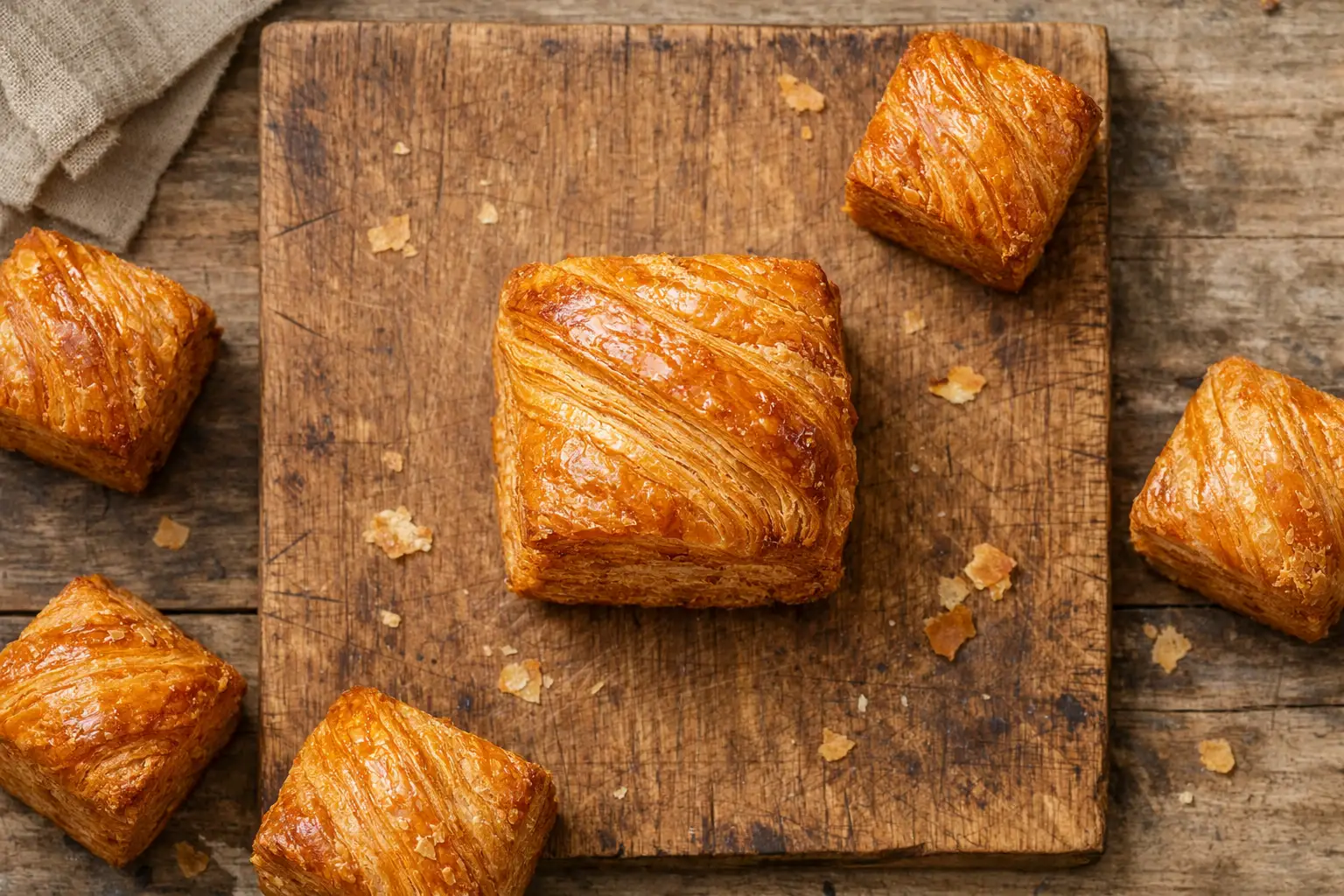
The viral cube-shaped croissant trend packs buttery laminated layers into a compact, crispy format with 280 calories per cube.
Quick Nutrition Facts
Per 1 Croissant Cube (~70g)
| Nutrient | Amount |
|---|---|
| Calories | 280 kcal |
| Protein | 5g |
| Carbohydrates | 30g |
| Fiber | 1.8g |
| Sugars | 8g |
| Fat | 16g |
| Saturated Fat | 9.4g |
| Cholesterol | 47mg |
| Sodium | 253mg |
| Iron | 1.5mg |
Macronutrient Breakdown
 ChatGPT
  Claude
  AI Mode
  Perplexity
NUTRITIONIST INSIGHT
Croissant cubes deliver nearly 40% of calories from fat, mostly saturated. Enjoying one occasionally is fine, but pair it with a protein-rich side like eggs or Greek yogurt to balance the meal and slow glucose absorption.
Myth Busters
MYTH #1: Croissant Cubes Have Fewer Calories Than Regular Croissants
TRUTH: The cube shape does not reduce calories. Per gram, croissant cubes have the same caloric density (~406 kcal/100g) as traditional croissants. The compact shape simply creates a crispier exterior from more caramelized butter layers.
MYTH #2: Butter in Croissant Cubes Is Always Bad for Your Heart
TRUTH: Moderate butter consumption is not the villain once thought. Recent research shows the relationship between saturated fat and cardiovascular disease is more nuanced than previously believed. The key is overall dietary pattern, not a single food.
MYTH #3: Croissant Cubes Are a Good Source of Protein
TRUTH: With only 5g protein per cube, croissant cubes are not a meaningful protein source. You'd need 4+ cubes (1,120 calories) to match a single chicken breast. Pairing with eggs or yogurt creates a more balanced meal.
MYTH #4: All Croissant Cubes Are the Same Nutritionally
TRUTH: Nutrition varies significantly by bakery. Cubes with chocolate, cream, or extra butter fillings can reach 350-450 calories. Always check the specific product's nutrition label when available.
MYTH #5: Eating a Croissant Cube Will Spike Your Blood Sugar Like Candy
TRUTH: While croissant cubes have a moderate-high GI (~67), the butter content actually slows glucose absorption compared to fat-free bread. The fat in laminated pastry moderates the glycemic response compared to plain refined carbs.
NutriScore by Health Goals
| Health Goal | NutriScore | Why This Score? |
|---|---|---|
| Weight Loss |  | 280 calories with high fat (16g) and low fiber (1.8g). Calorie-dense with poor satiety. Limit to half a cube occasionally. |
| Muscle Gain |  | Only 5g protein per cube. Useful as a quick carb source post-workout, but pair with a protein shake or eggs for muscle recovery. |
| Diabetes Management | | High GI (~67) and refined carbs raise blood sugar rapidly. Eat half portions paired with protein. Monitor glucose closely. |
| PCOS Management | | Refined carbs and saturated fat can worsen insulin resistance. Best avoided or limited to special occasions. |
| Pregnancy Nutrition | | Safe when fully baked but calorie-dense with few nutrients. Pregnant women should prioritize nutrient-dense foods. |
| Viral/Flu Recovery | | Provides quick energy (30g carbs) when appetite is low. Light on stomach but lacks immune-boosting vitamins. |
PERSONALIZED NUTRITION
Track your meals with NutriScan for personalized NutriScores based on your specific health goals!
Blood Sugar Response to Croissant Cube
Understanding how croissant cubes affect your blood glucose helps you make smarter choices about when and how to enjoy them.
Typical Glucose Response Curve
*This chart shows typical blood glucose response for general healthy individuals. Individual responses may vary. Not medical advice.*
How to Flatten the Spike
Pairing refined carbs with protein or fat slows glucose absorption and reduces the peak blood sugar level:
- 🥚 Scrambled eggs or omelet - Adds protein to balance the carb-heavy pastry
- 🥛 Greek yogurt - Provides protein and probiotics for better digestion
- 🥑 Avocado slices - Healthy fats further slow glucose absorption
- 🫐 Fresh berries - Add fiber and antioxidants with minimal extra sugar
Eating the croissant cube as part of a balanced meal rather than alone significantly reduces blood sugar impact.
Cultural Significance
The croissant cube emerged from the viral food trend movement of the 2020s, building on decades of pastry innovation.
Origins and Evolution:
- Traditional croissants trace back to Austrian kipferl, adapted in France in the 1800s
- The cube format appeared in trendy bakeries around 2023-2024, driven by social media
- Combines the appeal of laminated pastry with the novelty of geometric food shapes
- The compact cube creates extra-crispy edges with a soft, flaky interior
Global Trend:
- Popularized by artisan bakeries in New York, Paris, Seoul, and Tokyo
- Social media platforms fueled demand with viral videos of the cube's layered cross-section
- Variations include matcha-glazed, chocolate-filled, and savory cheese cubes
- Part of the broader "croissant remix" trend alongside flat croissants and cruffins
Compare & Substitute
Croissant Cube vs Similar Pastries (Per 100g)
| Nutrient | Croissant Cube | Regular Croissant | Danish Pastry | Pain au Chocolat |
|---|---|---|---|---|
| Calories | 406 kcal | 406 kcal | 374 kcal | 418 kcal |
| Carbs | 43g | 47g | 43g | 45g |
| Fiber | 2.0g | 2.6g | 1.9g | 2.3g |
| Protein | 7.1g | 8.2g | 7.5g | 8.0g |
| Fat | 23g | 21g | 19g | 24g |
| Sugar | 11g | 11.4g | 18g | 16g |
| Sodium | 361mg | 361mg | 322mg | 340mg |
| Best For | Crispy texture, treat meal | Classic breakfast, versatile | Sweeter option, fruit pairing | Chocolate craving, indulgent |
Frequently Asked Questions
How many calories are in a croissant cube?
A single croissant cube (~70g) contains approximately 280 calories, with 16g fat, 30g carbs, and 5g protein. Per 100g, croissant cubes provide about 406 calories, similar to a regular butter croissant.
Can diabetics eat croissant cubes?
Diabetics should limit croissant cubes due to the high glycemic index (~67) and refined carbohydrates.
Tips for diabetics:
- Eat half a cube at a time (15g carbs vs 30g)
- Always pair with protein like eggs or cheese
- Best timing: after a protein-rich meal, never on empty stomach
- Monitor blood sugar 2 hours after eating
Are croissant cubes different from regular croissants nutritionally?
Per gram, croissant cubes and regular croissants have nearly identical nutrition since they use the same laminated dough. The cube shape creates more surface area for caramelization, resulting in a slightly crispier texture but no significant caloric difference.
What makes croissant cubes so high in fat?
Laminated pastry dough requires multiple layers of butter folded between flour layers. A single croissant cube contains about 16g of fat (9.4g saturated), which accounts for roughly 51% of its total calories. The butter is what creates the signature flaky layers.
Are croissant cubes safe during pregnancy?
Croissant cubes are safe during pregnancy when fully baked. However, they are calorie-dense with limited nutritional value. Pregnant women should focus on nutrient-dense foods and enjoy croissant cubes only as an occasional treat.
How can I make croissant cubes healthier?
Practical tips:
- Eat half a cube instead of a full one (140 calories saved)
- Pair with protein: eggs, yogurt, or cheese
- Add fiber: enjoy with fresh fruit or a side salad
- Choose plain cubes over filled varieties (chocolate or cream add 70-170 extra calories)
Track your meals with NutriScan app to see how croissant cubes fit your personal nutrition goals.




Similar Nutritious Foods
4505 Chicharrones Classic Chili Salt
7 Eleven Japan Crispy Corn Cheese
Explore More Nutrition Tools & Resources
AI Calorie Counter App - Snap a Photo, Get Macros
AI Nutritionist App That Reads Your Logged Meals
Best Protein Supplements for Women
Bulking Meal Plan App That Sets Your Surplus
ChatGPT Calorie Counter Alternative That Keeps the Total
ChatGPT Diet Plan Alternative That Tracks What You Eat
ChatGPT Weight Loss Coach Alternative With a Food Log
Fast Food Calorie Counter App That Reads the Tray
Free Calorie Tracker App with AI Photo Scans | NutriScan
Indian Diet Plan App With Veg and Non Veg Meals
Indian Food Calorie Calculator - Get Instant Nutrition Facts for Desi Meals — 2026
Intermittent Fasting for Women, Timer and Meal Log App
Intermittent Fasting Tracker App - Free Fasting Timer
Macro Tracker App That Fills the Numbers From a Photo
Mediterranean Diet Meal Plan App That Counts the Oil
Micronutrient Tracker App for Vitamins and Minerals
MyFitnessPal Alternative That Stays Free | NutriScan
NutriScore App: A Free Grade on Every Meal | NutriScan
Nutrition Label Scanner App for the Amount You Ate
Second Trimester Protein Guide
Vegetarian Meal Plan App With a Protein Target
Voice Calorie Counter - Speak to Track Meals Hands-Free
Water and Calorie Tracker App - Free Water Log