Cucumber: Calories, Nutrition and Health Benefits
Nature's ultimate hydrator with 95% water content, minimal calories, and refreshing crunch for every health goal.
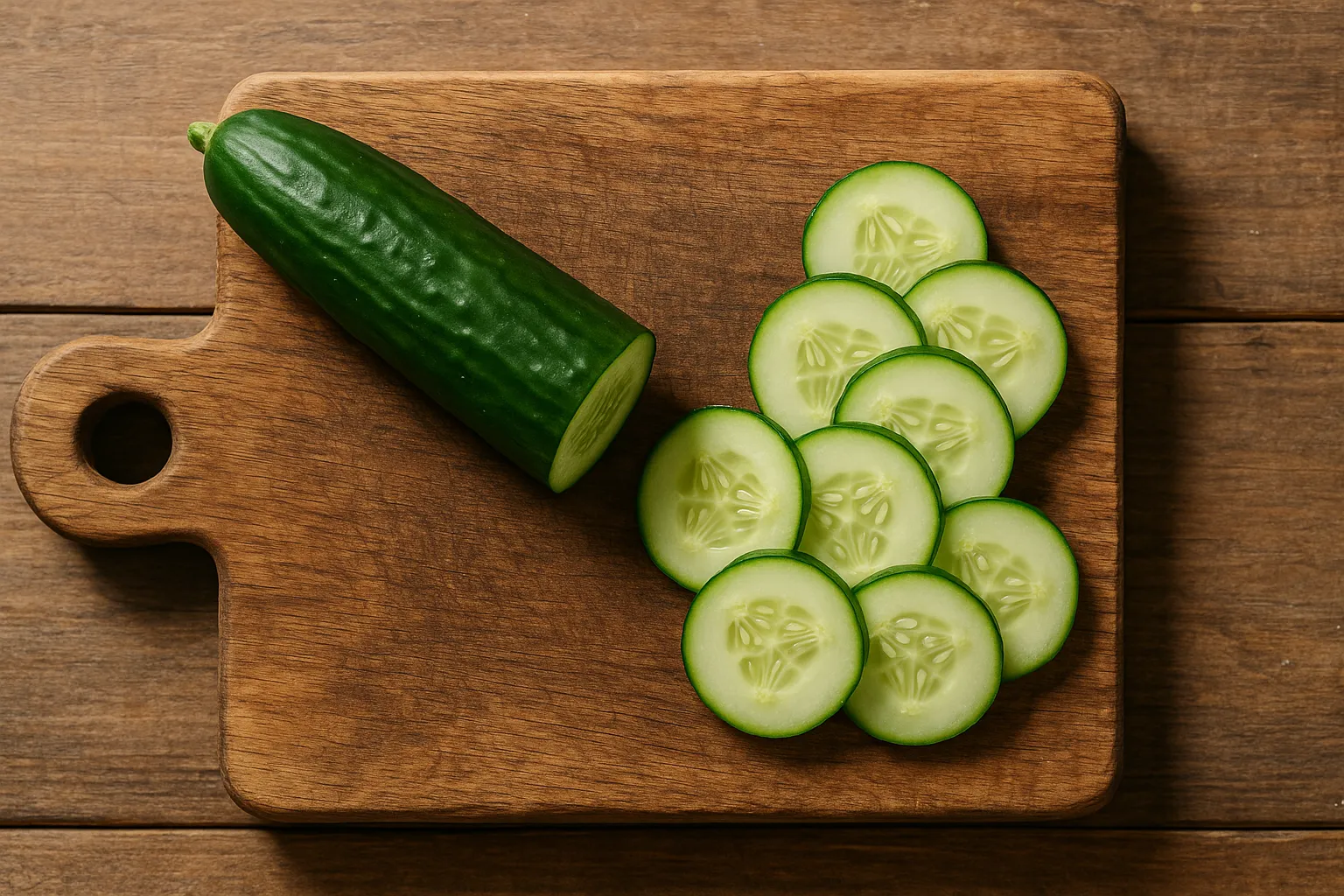
Quick Nutrition Facts
Per 100g (Raw, with peel)
| Nutrient | Amount |
|---|---|
| Calories | 15 kcal |
| Protein | 0.65g |
| Carbohydrates | 3.6g |
| Fiber | 0.5g |
| Sugars | 1.7g |
| Fat | 0.1g |
| Water | 95.2g |
| Potassium | 147mg |
| Vitamin K | 16.4µg |
| Vitamin C | 2.8mg |
Macronutrient Breakdown
 ChatGPT
  Claude
  AI Mode
  Perplexity
NUTRITIONIST INSIGHT
Cucumbers are 95% water, making them one of the most hydrating foods available. The peel contains most of the fiber and antioxidants, so eat them unpeeled for maximum benefits. Perfect zero-guilt snack for weight loss.
Myth Busters
MYTH #1: Cucumbers Have No Nutritional Value
TRUTH: While low in calories, cucumbers provide vitamin K (bone health), potassium (blood pressure), antioxidants (inflammation), and exceptional hydration. They're nutrient-efficient, not nutrient-empty.
MYTH #2: Cucumber Water Detoxifies Your Body
TRUTH: Your kidneys and liver handle detoxification naturally. However, cucumber water does support hydration, provides trace minerals, and can reduce water retention by promoting fluid balance.
MYTH #3: Eating Cucumber at Night Causes Bloating
TRUTH: Most people digest cucumbers easily. Bloating only occurs if you have FODMAP sensitivity or eat large quantities quickly. The 95% water content actually aids digestion for most people.
MYTH #4: Cucumber Burns Belly Fat
TRUTH: No food burns fat specifically. Cucumbers support weight loss through low calories (15 per 100g), high water content (promotes fullness), and fiber. Fat loss requires overall calorie deficit.
MYTH #5: English Cucumbers Are Healthier Than Regular
TRUTH: Nutritionally similar. English cucumbers have thinner skin (easier to digest) and fewer seeds, but regular cucumbers with peel contain slightly more fiber and vitamin K.
MYTH #6: You Should Avoid Cucumber If You Have Kidney Stones
TRUTH: Cucumbers are generally safe and can help prevent kidney stones by promoting hydration. Only avoid if you have specific oxalate-related kidney stones and your doctor advises it.
NutriScore by Health Goals
| Health Goal | NutriScore | Why This Score? |
|---|---|---|
| Weight Loss |  | Only 15 calories per 100g, 95% water promotes fullness, unlimited portions friendly. |
| Muscle Gain |  | Very low protein (0.65g), minimal calories. Use as side dish, not primary food. |
| Diabetes Management | | Glycemic index 15 (very low), negligible blood sugar impact, free food for diabetics. |
| PCOS Management | | Low carb (3.6g), anti-inflammatory antioxidants, supports hydration. |
| Pregnancy Nutrition |  | Excellent hydration, vitamin K for fetal bone development, low pesticides. |
| Viral/Flu Recovery | | Superior hydration (95% water), easy to digest, vitamin C for immunity, cooling effect. |
PERSONALIZED NUTRITION
Track your meals with NutriScan for personalized NutriScores based on your specific health goals!
Blood Sugar Response to Cucumber
Cucumber has one of the lowest glycemic impacts of any food, making it ideal for blood sugar control.
Typical Glucose Response Curve
This chart shows typical blood glucose response for general healthy individuals. Individual responses may vary. Not medical advice.
Diabetes-Friendly Combinations
Cucumber pairs well with protein and healthy fats for balanced meals:
- 🥛 Greek yogurt with cucumber - Protein-rich dip or raita for digestion
- 🥑 Avocado cucumber salad - Healthy fats with hydration
- 🥚 Boiled eggs with cucumber slices - Complete protein breakfast
- 🌰 Hummus with cucumber sticks - Fiber and plant protein
These combinations provide sustained energy without spiking blood sugar, perfect for diabetes or weight management.
Cultural Significance
Cucumbers have been cultivated for over 3,000 years, originating in South Asia.
In India:
- Essential in raita, koshimbir, and cooling summer salads
- Ayurveda values cucumber's cooling (pitta-balancing) properties
- Used in traditional face masks for skin brightening
- Common in religious fasting due to high water content
- Popular varieties: Indian cucumber (kakdi), English cucumber
Global Impact:
- Cultivated in nearly every country worldwide
- Fourth most cultivated vegetable globally
- Mediterranean cuisine: tzatziki, Greek salads
- Japanese cuisine: sunomono (vinegared cucumber)
- Pickled cucumbers (gherkins) in European traditions
Compare & Substitute
Cucumber vs Similar Low-Calorie Vegetables (Per 100g)
| Nutrient | 🥒 Cucumber | 🥬 Lettuce (Iceberg) | 🍅 Tomato | 🥒 Zucchini |
|---|---|---|---|---|
| Calories | 15 kcal | 14 kcal | 18 kcal | 17 kcal |
| Carbs | 3.6g | 3g | 3.9g | 3.1g |
| Fiber | 0.5g | 1.2g | 1.2g | 1g |
| Protein | 0.65g | 0.9g | 0.9g | 1.2g |
| Fat | 0.1g | 0.1g | 0.2g | 0.3g |
| Water | 95.2g | 96g | 94.5g | 94g |
| Vitamin K | 16.4µg | 24.1µg | 7.9µg | 4.3µg |
| Vitamin C | 2.8mg | 2.8mg | 13.7mg | 17.9mg |
| Best For | Hydration, GI | Volume eating | Lycopene, C | Cooking, bulk |
Frequently Asked Questions
Is cucumber good for weight loss?
Yes, cucumber is one of the best vegetables for weight loss. With only 15 calories per 100g and 95% water content, cucumbers provide volume and crunch without adding significant calories.
Weight loss benefits: Promotes fullness with minimal calories; high water content supports metabolism; fiber aids digestion; naturally hydrating reduces water retention; unlimited portions without guilt.
Best practices: Eat before meals to reduce appetite; use as low-calorie snack replacement; add to salads for volume; make cucumber water for hydration.
Can diabetics eat cucumber?
Absolutely yes! Cucumber is a "free food" for diabetics. With a glycemic index of 15 (very low) and only 3.6g carbs per 100g, cucumbers have virtually no impact on blood sugar.
Tips for diabetics: No portion restrictions needed; pair with protein (yogurt, hummus) for balanced meals; excellent replacement for high-carb snacks; helps with hydration without blood sugar spike.
Always monitor individual response, though cucumbers are universally well-tolerated.
How much protein is in a cucumber?
Cucumber contains 0.65g of protein per 100g. This is very low, so cucumbers aren't a protein source. However, they excel as a hydrating, low-calorie vegetable rich in water, vitamin K, and antioxidants.
For protein needs, combine cucumbers with protein-rich foods: Greek yogurt (raita), hummus, boiled eggs, or grilled chicken.
What are the main health benefits of cucumber?
Key Benefits:
- Superior Hydration: 95% water content supports fluid balance
- Weight Management: 15 calories per 100g aids calorie deficit
- Skin Health: Silica and vitamin C support collagen production
- Blood Pressure: Potassium helps regulate blood pressure
- Digestive Health: Fiber and water promote regular bowel movements
- Anti-Inflammatory: Flavonoids and tannins reduce inflammation
- Bone Health: Vitamin K supports bone strength
When is the best time to eat cucumber?
Depends on your goal:
- Weight Loss: Before meals (30 minutes) to reduce appetite; as snack replacement anytime.
- Hydration: Mid-morning or afternoon when water intake typically drops.
- Skin Health: Daily with meals for consistent vitamin C and silica intake.
- Diabetes: Anytime - no timing restrictions due to negligible blood sugar impact.
IMPORTANT NOTE
Most people tolerate cucumber well anytime. Avoid late night only if you have FODMAP sensitivity or frequent urination concerns.
Should I peel cucumber before eating?
Keep the peel for maximum nutrition. The peel contains most of the fiber, vitamin K, beta-carotene, and antioxidants.
When to peel:
- Using conventionally-grown cucumbers (pesticide concerns) and can't wash thoroughly
- You have digestive sensitivity or difficulty digesting fiber
- Making cucumber water (peel can add bitterness)
Best approach: Choose organic when possible; wash thoroughly with water; eat with peel for full nutritional benefits.
How many cucumbers should I eat per day?
General Guidelines:
- 1-2 medium cucumbers daily - Most people (hydration, weight loss)
- Unlimited - Weight loss, diabetes (truly free food)
- 1/2-1 cucumber - If you have FODMAP sensitivity
Avoid excess: More than 3-4 per day may cause frequent urination (high water content) or digestive discomfort in sensitive individuals.
Track your meals with NutriScan app to see how cucumbers fit your personal nutrition goals.
Can I eat cucumber on an empty stomach?
Generally safe and beneficial for most people - provides hydration, aids digestion, and is gentle on the stomach.
May want to avoid if you have:
- GERD/Acid Reflux: Rare, but some people report increased acid
- IBS/FODMAP sensitivity: May cause bloating in very sensitive individuals
Best approach: Most people benefit from eating cucumber on empty stomach for maximum hydration and digestive support. Listen to your body.


Similar Nutritious Fruits
4505 Chicharrones Classic Chili Salt
7 Eleven Japan Crispy Corn Cheese
Explore More Nutrition Tools & Resources
AI Calorie Counter App - Snap a Photo, Get Macros
AI Nutritionist App That Reads Your Logged Meals
Best Protein Supplements for Women
Bulking Meal Plan App That Sets Your Surplus
ChatGPT Calorie Counter Alternative That Keeps the Total
ChatGPT Diet Plan Alternative That Tracks What You Eat
ChatGPT Weight Loss Coach Alternative With a Food Log
Fast Food Calorie Counter App That Reads the Tray
Free Calorie Tracker App with AI Photo Scans | NutriScan
Indian Diet Plan App With Veg and Non Veg Meals
Indian Food Calorie Calculator - Get Instant Nutrition Facts for Desi Meals — 2026
Intermittent Fasting for Women, Timer and Meal Log App
Intermittent Fasting Tracker App - Free Fasting Timer
Macro Tracker App That Fills the Numbers From a Photo
Mediterranean Diet Meal Plan App That Counts the Oil
Micronutrient Tracker App for Vitamins and Minerals
MyFitnessPal Alternative That Stays Free | NutriScan
NutriScore App: A Free Grade on Every Meal | NutriScan
Nutrition Label Scanner App for the Amount You Ate
Second Trimester Protein Guide
Vegetarian Meal Plan App With a Protein Target
Voice Calorie Counter - Speak to Track Meals Hands-Free
Water and Calorie Tracker App - Free Water Log