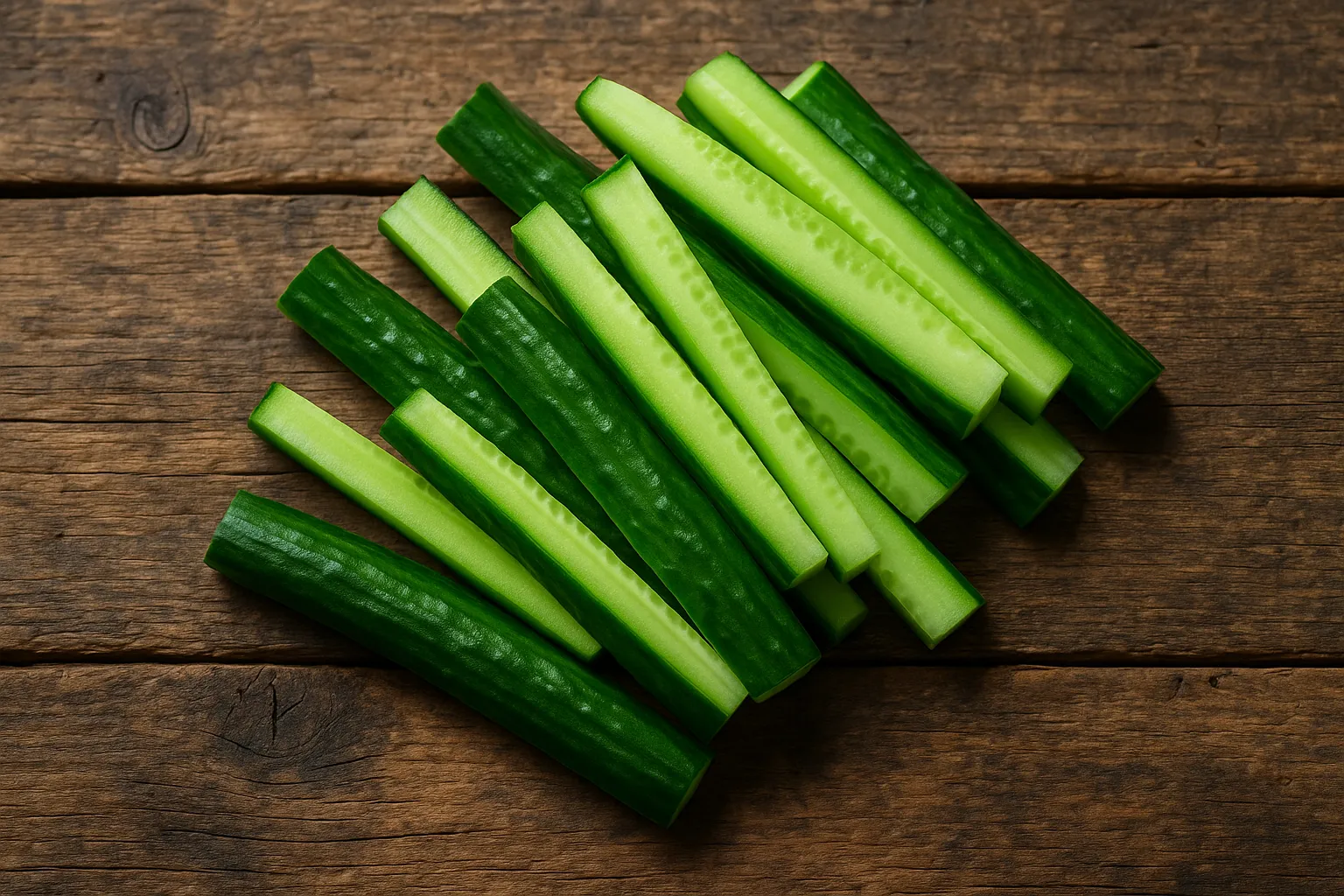
Cucumber Sticks: Calories, Nutrition and Health Benefits
Nature's ultimate low-calorie snack with 95% water content for hydration, crunch, and guilt-free munching.
Quick Nutrition Facts
Per 100g (about 1 cup sliced)
| Nutrient | Amount |
|---|---|
| Calories | 15 kcal |
| Protein | 0.7g |
| Carbohydrates | 3.6g |
| Fiber | 0.5g |
| Sugars | 1.7g |
| Fat | 0.1g |
| Water | 95.2g |
| Vitamin K | 16.4mcg |
| Potassium | 147mg |
| Vitamin C | 2.8mg |
Macronutrient Breakdown
 ChatGPT
  Claude
  AI Mode
  Perplexity
NUTRITIONIST INSIGHT
Cucumbers are 95% water, making them one of the most hydrating vegetables. At only 15 calories per 100g, they're the perfect unlimited snack for weight loss and blood sugar control.
Myth Busters
MYTH #1: Cucumbers Have No Nutritional Value
TRUTH: While low in calories, cucumbers provide vitamin K (20% DV), potassium, vitamin C, and beneficial antioxidants like cucurbitacins and flavonoids. The peel contains most nutrients and fiber.
MYTH #2: You Must Peel Cucumbers Before Eating
TRUTH: The peel contains most of the fiber, vitamin K, and antioxidants. Only peel if cucumbers are heavily waxed or not organic. Wash thoroughly and eat with peel for maximum nutrition.
MYTH #3: Cucumbers Cause Bloating and Gas
TRUTH: Cucumbers are low-FODMAP and rarely cause bloating in most people. If you experience discomfort, it may be from eating too quickly, not chewing thoroughly, or individual sensitivity. Remove seeds if needed.
MYTH #4: Eating Cucumber at Night Causes Water Retention
TRUTH: Despite being 95% water, cucumbers don't cause water retention. They're actually natural diuretics that help reduce bloating. Safe to eat any time, including evening.
MYTH #5: Cucumber Water Detoxes Your Body
TRUTH: Your liver and kidneys naturally detox your body. Cucumber water is simply hydrating with mild flavor and minimal nutrients. It's refreshing but doesn't "cleanse toxins" beyond normal hydration benefits.
MYTH #6: You Can't Eat Too Much Cucumber
TRUTH: While cucumbers are very safe, excessive amounts (1kg+ daily) can cause digestive issues or interfere with blood clotting in people on blood thinners due to vitamin K content. Moderate consumption is best.
NutriScore by Health Goals
| Health Goal | NutriScore | Why This Score? |
|---|---|---|
| Weight Loss |  | Only 15 calories per 100g with 95% water. Provides volume and crunch for satiety. Virtually unlimited consumption without calorie concern. |
| Muscle Gain |  | Low protein (0.7g) and calories make it poor for muscle gain as primary food. Use as side for hydration and micronutrients. |
| Diabetes Management | | GI of 15, only 3.6g carbs per 100g. Excellent unlimited vegetable that won't spike blood sugar. |
| PCOS Management | | Low calorie, low carb, hydrating. Perfect for PCOS meal plans. Anti-inflammatory compounds support hormonal balance. |
| Pregnancy Nutrition | | Hydrating, safe, provides folate and vitamin K. Helps with pregnancy swelling. |
| Viral/Flu Recovery | | Excellent for hydration when sick, easy to digest, mild flavor when appetite is low. Vitamin C supports immune function. |
PERSONALIZED NUTRITION
Track your meals with NutriScan for personalized NutriScores based on your specific health goals!
Blood Sugar Response to Cucumber
Understanding how cucumbers affect blood glucose shows why they're perfect for diabetes and weight management.
Typical Glucose Response Curve
This chart shows typical blood glucose response for general healthy individuals. Cucumbers cause virtually no blood sugar elevation. Individual responses may vary. Not medical advice.
Why Cucumbers Are Blood Sugar Friendly
With only 3.6g carbs per 100g and GI of 15, cucumbers provide:
- 🥗 Unlimited diabetes-friendly snacking - No blood sugar impact
- 💧 Hydration without sugar spike - 95% water content
- 🥒 Volume eating strategy - High volume, low calories and carbs
- 🍽️ Meal filler - Adds crunch and fullness to any meal without glucose elevation
This makes cucumbers one of the best vegetables for diabetes control and weight loss.
Cultural Significance
Cucumbers have been cultivated for over 3,000 years, originating in India and spreading globally through ancient trade routes.
In India:
- Essential ingredient in raita (yogurt side dish)
- Used in chaats, salads, and sandwiches
- Traditional cooling vegetable in Ayurveda
- Sliced cucumber in buttermilk for summer cooling
- Grown in every region across India
Global Impact:
- Mentioned in the Bible (Numbers 11:5)
- Ancient Egyptians placed cucumbers in tombs for the afterlife
- Romans used cucumbers for medicinal purposes
- China is the world's largest cucumber producer (80%+ of global supply)
- Essential in Mediterranean, Asian, and Middle Eastern cuisines
Modern Usage:
- Popular in spa treatments for skin care
- Key ingredient in tzatziki, gazpacho, and countless salads
- Cucumber water trend in wellness culture
- Pickles (fermented cucumbers) consumed worldwide
Compare & Substitute
Cucumber vs Other Low-Calorie Vegetables (Per 100g)
| Nutrient | 🥒 Cucumber | 🥬 Celery | 🥗 Lettuce (Romaine) | 🍅 Tomato |
|---|---|---|---|---|
| Calories | 15 kcal | 14 kcal | 17 kcal | 18 kcal |
| Carbs | 3.6g | 3g | 3.3g | 3.9g |
| Fiber | 0.5g | 1.6g | 2.1g | 1.2g |
| Protein | 0.7g | 0.7g | 1.2g | 0.9g |
| Fat | 0.1g | 0.2g | 0.3g | 0.2g |
| Water | 95.2% | 95.4% | 94.6% | 94.5% |
| Vitamin K | 16.4mcg | 29.3mcg | 102.5mcg | 7.9mcg |
| Potassium | 147mg | 260mg | 247mg | 237mg |
| Best For | Mild taste, crunch | Higher fiber, potassium | Higher vitamin K, fiber | Lycopene, vitamin C |
Frequently Asked Questions
Are cucumber sticks good for weight loss?
Cucumber sticks are exceptional for weight loss with only 15 calories per 100g (1 cup). The 95% water content and crunchy texture provide high satiety with virtually no calories.
Why cucumbers work for weight loss: Unlimited snacking without guilt; high water volume fills stomach; requires chewing, slowing eating pace; replaces high-calorie snacks; provides hydration for metabolism.
Best practices: Eat 1-3 cups daily as snacks; pair with protein (hummus, Greek yogurt) for balanced nutrition; keep pre-cut in fridge for convenience; use as meal filler to reduce calorie-dense foods.
Can diabetics eat cucumber?
Cucumbers are perfect for diabetics with glycemic index of 15 (very low) and only 3.6g carbs per 100g. They won't spike blood sugar and can be eaten freely.
Benefits for diabetics: Minimal carb impact; high water and fiber content supports blood sugar stability; provides volume without glucose elevation; may contain compounds that support insulin function.
Recommended: Unlimited consumption for diabetics. Add to every meal for volume and nutrients without blood sugar concern.
How many calories are in cucumber sticks?
Cucumber sticks contain approximately:
- 15 calories per 100g (about 1 cup sliced)
- 4 calories per ounce (28g, small handful)
- 8 calories per 1/2 cup sliced
- 45 calories in an entire medium cucumber (300g)
This makes cucumbers one of the lowest-calorie foods available and ideal for volume eating during weight loss.
What are the main health benefits of cucumber?
Key Health Benefits:
- Hydration: 95% water content supports fluid balance and metabolism
- Weight Management: Extreme low calories with high volume for satiety
- Blood Sugar Control: GI of 15, won't spike glucose levels
- Skin Health: Vitamin K and antioxidants support skin from inside out
- Digestive Health: Water and fiber support regular bowel movements
- Anti-Inflammatory: Cucurbitacins and flavonoids reduce inflammation
How much cucumber can I eat per day?
General Guidelines:
- Unlimited for weight loss - Cucumbers are so low in calories that portion control isn't necessary
- 1-2 cups (200-400g) - Typical daily consumption for most people
- 3-5 cups (600-1000g) - Acceptable for extreme low-calorie days
- Caution above 1kg daily - May cause digestive discomfort in sensitive individuals
Best approach: Eat cucumbers freely as snacks, in salads, and with meals. The 95% water content and minimal calories mean overconsumption is nearly impossible.
Should I peel cucumbers before eating?
Keep the peel on for maximum nutrition benefits:
Benefits of eating with peel:
- Contains most fiber (0.5g per 100g)
- Higher vitamin K content (20% DV)
- More antioxidants (cucurbitacins, flavonoids)
- Better texture and color
When to peel:
- Heavily waxed conventional cucumbers
- Non-organic cucumbers (to reduce pesticide exposure)
- Digestive sensitivity to cucumber skin
- Using in smoothies for smoother texture
Best practice: Buy organic cucumbers, wash thoroughly with vegetable brush, and eat with peel for complete nutrition.


Similar Nutritious Foods
4505 Chicharrones Classic Chili Salt
7 Eleven Japan Crispy Corn Cheese
Explore More Nutrition Tools & Resources
AI Calorie Counter App - Snap a Photo, Get Macros
AI Nutritionist App That Reads Your Logged Meals
Best Protein Supplements for Women
Bulking Meal Plan App That Sets Your Surplus
ChatGPT Calorie Counter Alternative That Keeps the Total
ChatGPT Diet Plan Alternative That Tracks What You Eat
ChatGPT Weight Loss Coach Alternative With a Food Log
Fast Food Calorie Counter App That Reads the Tray
Free Calorie Tracker App with AI Photo Scans | NutriScan
Indian Diet Plan App With Veg and Non Veg Meals
Indian Food Calorie Calculator - Get Instant Nutrition Facts for Desi Meals — 2026
Intermittent Fasting for Women, Timer and Meal Log App
Intermittent Fasting Tracker App - Free Fasting Timer
Macro Tracker App That Fills the Numbers From a Photo
Mediterranean Diet Meal Plan App That Counts the Oil
Micronutrient Tracker App for Vitamins and Minerals
MyFitnessPal Alternative That Stays Free | NutriScan
NutriScore App: A Free Grade on Every Meal | NutriScan
Nutrition Label Scanner App for the Amount You Ate
Second Trimester Protein Guide
Vegetarian Meal Plan App With a Protein Target
Voice Calorie Counter - Speak to Track Meals Hands-Free
Water and Calorie Tracker App - Free Water Log