Cultured Butter: Calories, Nutrition and Health Benefits
European-style fermented butter with distinctive tangy flavor, enhanced CLA from lactic acid fermentation, and rich creamy texture for gourmet cooking and baking.
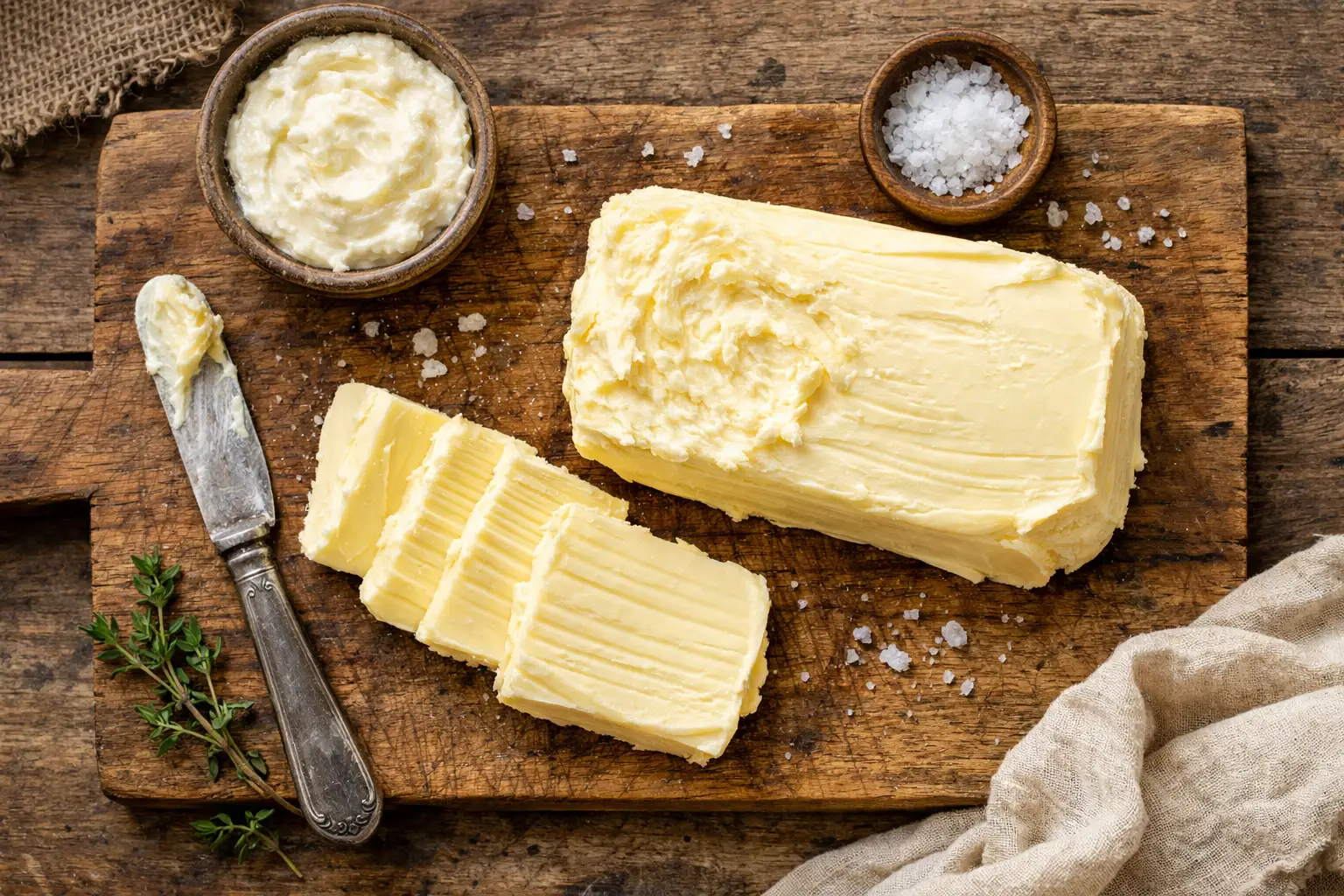
Quick Nutrition Facts
Per 1 Tablespoon (14g)
| Nutrient | Amount |
|---|---|
| Calories | 100 kcal |
| Protein | 0.1g |
| Carbohydrates | 0.1g |
| Fiber | 0g |
| Sugars | 0.1g |
| Total Fat | 11g |
| Saturated Fat | 7g |
| Cholesterol | 30mg |
| Sodium | 2mg (unsalted) |
| Vitamin A | 97µg (11% DV) |
Macronutrient Breakdown
 ChatGPT
  Claude
  AI Mode
  Perplexity
NUTRITIONIST INSIGHT
Cultured butter differs from regular butter through lactic acid fermentation, which creates its characteristic tangy flavor and increases conjugated linoleic acid (CLA) content. While CLA has shown anti-inflammatory properties in research, the amounts in typical butter portions are too small for significant health benefits. Use cultured butter for its superior flavor, not as a health food.
Myth Busters
MYTH #1: Cultured Butter Contains Live Probiotics
TRUTH: While cultured butter is made with live bacterial cultures, most commercial products are pasteurized after fermentation, killing beneficial bacteria. Only raw, unpasteurized cultured butter may retain live cultures. For probiotic benefits, yogurt (1 billion+ CFU) or kefir far outperform butter. The tangy flavor comes from lactic acid, not living bacteria.
MYTH #2: European-Style Butter is Significantly Healthier
TRUTH: European-style (cultured) butter has identical calories (717/100g) and saturated fat (51g/100g) as American sweet cream butter. Higher butterfat content (82-86% vs 80%) means slightly more fat per tablespoon, not better nutrition. The fermentation process enhances CLA slightly, but requires unrealistic portions (10+ tbsp daily) to reach studied benefit levels.
MYTH #3: The Tangy Flavor Means It's Going Bad
TRUTH: Cultured butter's tangy, slightly acidic taste is intentional, produced by lactic acid bacteria during fermentation. This is the same process that gives yogurt its tang. Fresh cultured butter should smell pleasantly sour, not rancid. Actual spoilage smells sharply unpleasant, with off-colors or mold. Properly stored, cultured butter lasts 2-3 months refrigerated.
MYTH #4: Cultured Butter is Lower in Saturated Fat
TRUTH: Fermentation doesn't change the fat composition. Cultured butter contains 51g saturated fat per 100g (7g per tablespoon), identical to regular butter. Both should be consumed in moderation for heart health. The AHA recommends limiting saturated fat to 13g daily (2000 cal diet) - just 2 tablespoons of any butter exceeds half this limit.
MYTH #5: Homemade Cultured Butter is Healthier Than Store-Bought
TRUTH: Homemade cultured butter may retain more live cultures if not heated, but contamination risks increase without commercial safety controls. Nutritional content is identical. Commercial cultured butter undergoes quality testing for pathogens. If making at home, use pasteurized cream and consume within 1-2 weeks.
NutriScore by Health Goals
| Health Goal | NutriScore | Why This Score? |
|---|---|---|
| Weight Loss |  | 100 cal per tbsp is extremely calorie-dense. Zero fiber or protein means no satiety. Use cooking spray (6 cal) or measure strictly to 1 tsp maximum. |
| Muscle Gain |  | Provides calorie surplus but negligible protein (0.1g). Enhanced CLA may support lean mass, but evidence is weak. Better fats: nut butters (3-4g protein), avocado (fiber + fats). |
| Diabetes Management | | Zero carbs won't spike blood sugar directly. However, high saturated fat worsens insulin resistance over time. Limit to 1 tbsp daily, prefer olive oil. |
| PCOS Management | | Saturated fat negatively impacts insulin sensitivity critical in PCOS. CLA benefits don't offset saturated fat risks. Substitute with olive oil or avocado oil whenever possible. |
| Pregnancy Nutrition | | Vitamin A (11% DV/tbsp) supports fetal development, but excess vitamin A from supplements is teratogenic. Food sources like butter are safe in moderation. 1-2 tbsp daily acceptable. |
| Viral/Flu Recovery |  | Easy to digest, calorie-dense for low appetite. Vitamin A supports immune mucosa. Tangy flavor may be more appealing when ill. Use on toast or in soup for gentle calories. |
PERSONALIZED NUTRITION
Track your cultured butter intake with NutriScan to monitor saturated fat and calorie goals!
Blood Sugar Response to Cultured Butter
Cultured butter contains virtually zero carbs (0.1g/tbsp), so it doesn't directly affect blood glucose. When combined with carb-rich foods, the fat content modulates glucose absorption.
Typical Glucose Response Curve (Bread + Cultured Butter)
*This chart shows blood glucose response when eating bread with cultured butter vs bread alone. Fat slows carb absorption. Individual responses vary. Not medical advice.*
How Cultured Butter Affects Blood Sugar in Mixed Meals
Fat slows gastric emptying and reduces glycemic response when combined with carbohydrates:
- 🥐 Croissant with cultured butter - Already high-fat pastry; adding butter increases calories dramatically without additional glucose buffering
- 🍞 Sourdough + cultured butter - Tangy flavors complement; slows glucose rise, but adds 100 cal/tbsp
- 🥔 Roasted potatoes + cultured butter - Reduces GI from 85 to ~68, but watch total calories
- 🌽 Fresh corn + cultured butter - Classic pairing; fat improves vitamin A absorption from corn
Diabetic strategy: Use cultured butter sparingly (1 tsp vs 1 tbsp) for flavor; rely on fiber and protein for glucose control, not fat.
Cultural Significance
Cultured butter represents centuries of dairy tradition, born from necessity before refrigeration.
Historical Origins:
- Ancient preservation: Cream naturally soured in warm climates; churning soured cream created longer-lasting butter
- Scandinavian tradition: "Smör" (butter) culture dates to Viking era; fermented butter survived sea voyages
- French refinement: Normandy and Brittany developed controlled fermentation for consistent tangy flavor by 17th century
- Modern revival: Artisan butter movement (2010s+) revived European-style production in North America
In India (Makkhan):
- Traditional makkhan is naturally cultured, made by churning dahi (yogurt) using wooden bilona method
- Higher CLA content than Western sweet cream butter due to extended fermentation
- Ayurvedic medicine values fresh makkhan as cooling, digestive, and nourishing
- Makhan Misri (butter with rock sugar) is traditional offering to Lord Krishna
- Festival significance: Janmashtami celebrates Krishna's love for makkhan
Global Renaissance:
- French AOC butters: Beurre d'Isigny, Beurre de Charentes - protected designation with mandatory culturing
- American craft: Vermont Creamery, Organic Valley pioneered US cultured butter market
- Scandinavian exports: Lurpak (Danish) and Kerrygold (Irish grass-fed) dominate premium global market
- Chef preference: Higher butterfat (82-86%) and tangy flavor preferred for laminated pastries, beurre blanc sauces
Compare & Substitute
Cultured Butter vs Other Fats (Per 100g)
| Nutrient | 🧈 Cultured Butter | 🧈 Regular Butter | 🫒 Olive Oil | 🥛 Ghee | 🧀 Cream Cheese |
|---|---|---|---|---|---|
| Calories | 717 kcal | 717 kcal | 884 kcal | 900 kcal | 342 kcal |
| Total Fat | 81g | 81g | 100g | 100g | 34g |
| Saturated Fat | 51g (63%) | 51g (63%) | 14g (14%) | 62g (62%) | 21g (62%) |
| CLA Content | Higher (fermented) | Lower | None | Similar to butter | Trace |
| Cholesterol | 215mg | 215mg | 0mg | 256mg | 110mg |
| Smoke Point | 350°F (177°C) | 350°F (177°C) | 375-405°F (191-207°C) | 485°F (252°C) | N/A (not for frying) |
| Flavor Profile | Tangy, complex | Sweet, creamy | Fruity, peppery | Nutty, clarified | Tangy, mild |
| Best For | Spreading, finishing, pastries | Baking, general cooking | Sautéing, salads | High-heat cooking | Spreading, dips |
Frequently Asked Questions
How many calories are in cultured butter?
One tablespoon (14g) of cultured butter contains 100 calories. Complete breakdown per tablespoon: 11g total fat (7g saturated), 0.1g protein, 0.1g carbs, 30mg cholesterol.
Per 100g (about 7 tablespoons): 717 calories, 81g fat (51g saturated), 215mg cholesterol.
Cultured vs regular butter: Identical calories. The only difference is flavor (tangy vs sweet) and slightly elevated CLA from fermentation.
What is the difference between cultured butter and regular butter?
Cultured (European-style) butter:
- Made by fermenting cream with lactic acid bacteria for 12-18 hours before churning
- Distinctive tangy, complex flavor from lactic acid production
- Higher butterfat (82-86%) vs American standard (80%)
- Enhanced conjugated linoleic acid (CLA) content
Regular (sweet cream) butter:
- Made from fresh, unfermented cream
- Mild, sweet, straightforward flavor
- 80% butterfat minimum (US standard)
- Lower CLA content
Nutritionally: Nearly identical calories, fat, and cholesterol. Choose based on flavor preference and application.
Is cultured butter healthier than regular butter?
Marginally, but not significantly. Cultured butter has slightly elevated conjugated linoleic acid (CLA) due to fermentation, with research suggesting anti-inflammatory and body composition benefits. However:
- CLA amounts in butter are far below studied therapeutic doses (3-5g daily would require 10+ tablespoons)
- Calories and saturated fat are identical to regular butter
- Live probiotics are killed by pasteurization in most commercial products
Bottom line: Choose cultured butter for superior flavor, not health benefits. Both butters require strict portion control.
Does cultured butter contain probiotics?
Most commercial cultured butter does not contain live probiotics. While made with bacterial cultures, the butter is typically pasteurized after production, killing beneficial bacteria.
Exceptions: Some artisan or raw butter producers may sell unpasteurized cultured butter with live cultures. Check labels for "contains live cultures" claims.
Better probiotic sources: Yogurt (billions of CFU), kefir, sauerkraut, kimchi provide vastly more beneficial bacteria per serving.
Can diabetics eat cultured butter?
Yes, with careful portion control. Cultured butter contains virtually zero carbs and won't directly spike blood sugar.
Considerations for diabetics:
- Saturated fat (7g/tbsp) can worsen insulin resistance over time
- Calorie density makes weight management harder; obesity worsens diabetes outcomes
- Limit to 1 tablespoon daily maximum
Better alternatives: Olive oil, avocado oil provide heart-healthy monounsaturated fats without the saturated fat concerns critical for diabetics.
What is the best way to use cultured butter?
Cultured butter's tangy flavor shines when featured, not hidden:
Best applications:
- Spreading: Crusty bread, croissants, scones where butter is star ingredient
- Finishing: Melted over vegetables, steamed fish, mashed potatoes
- Beurre blanc sauces: Tangy butter complements wine reduction
- Compound butter: Herb butter for steak where complex flavor desired
- Laminated pastries: Croissants, puff pastry benefit from higher butterfat
Avoid: High-heat sautéing (flavor nuances lost, same smoke point as regular butter). For frying, use clarified butter or ghee instead.




Similar Nutritious Foods
4505 Chicharrones Classic Chili Salt
7 Eleven Japan Crispy Corn Cheese
Explore More Nutrition Tools & Resources
AI Calorie Counter App - Snap a Photo, Get Macros
AI Nutritionist App That Reads Your Logged Meals
Best Protein Supplements for Women
Bulking Meal Plan App That Sets Your Surplus
ChatGPT Calorie Counter Alternative That Keeps the Total
ChatGPT Diet Plan Alternative That Tracks What You Eat
ChatGPT Weight Loss Coach Alternative With a Food Log
Fast Food Calorie Counter App That Reads the Tray
Free Calorie Tracker App with AI Photo Scans | NutriScan
Indian Diet Plan App With Veg and Non Veg Meals
Indian Food Calorie Calculator - Get Instant Nutrition Facts for Desi Meals — 2026
Intermittent Fasting for Women, Timer and Meal Log App
Intermittent Fasting Tracker App - Free Fasting Timer
Macro Tracker App That Fills the Numbers From a Photo
Mediterranean Diet Meal Plan App That Counts the Oil
Micronutrient Tracker App for Vitamins and Minerals
MyFitnessPal Alternative That Stays Free | NutriScan
NutriScore App: A Free Grade on Every Meal | NutriScan
Nutrition Label Scanner App for the Amount You Ate
Second Trimester Protein Guide
Vegetarian Meal Plan App With a Protein Target
Voice Calorie Counter - Speak to Track Meals Hands-Free
Water and Calorie Tracker App - Free Water Log