Watermelon & Dragon Fruit: Calories, Nutrition and Health Benefits
Nature's hydrating powerhouses with vibrant colors, minimal calories, and maximum antioxidants for every health goal.
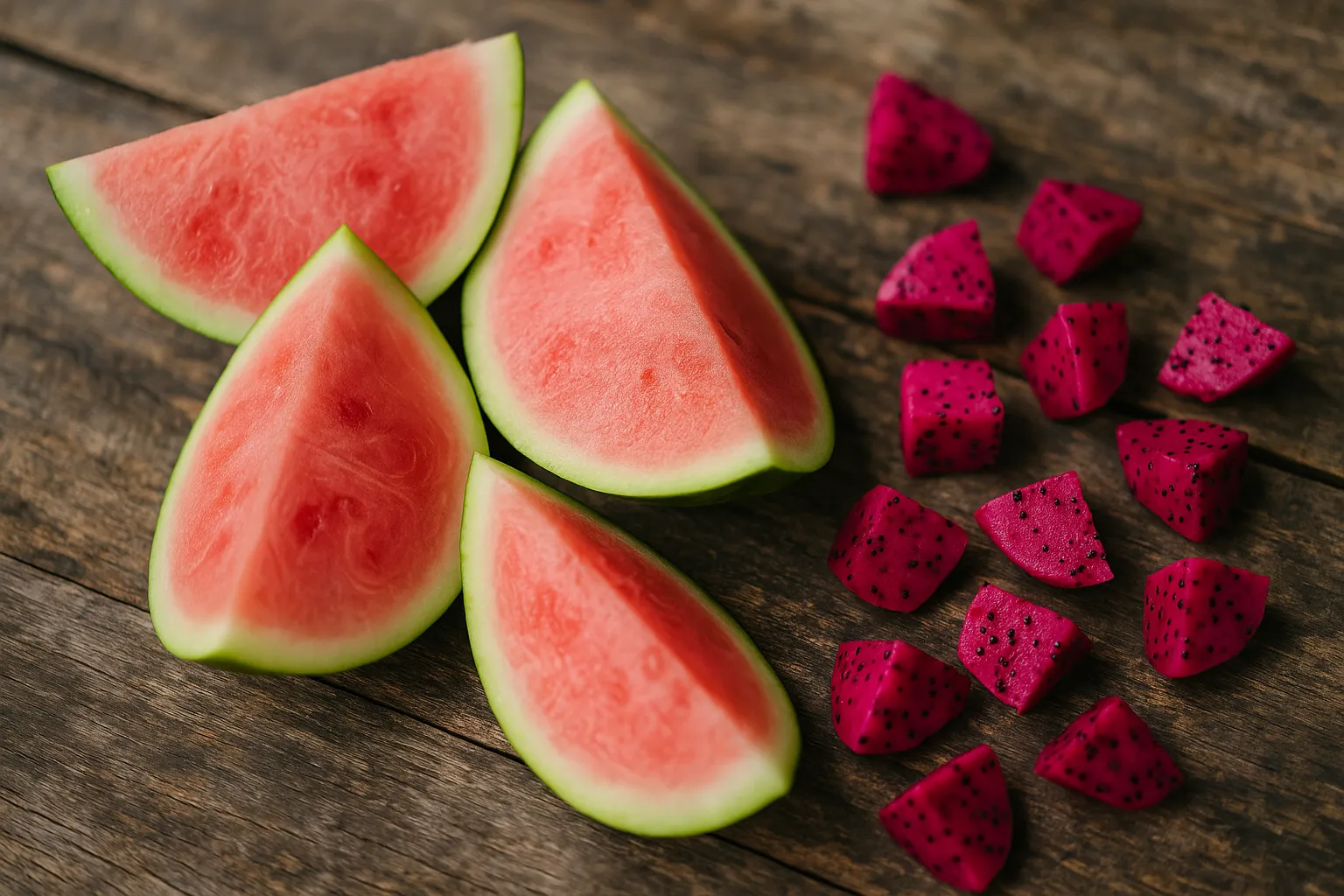
Quick Nutrition Facts
Per 100g Serving
| Nutrient | Watermelon | Dragon Fruit |
|---|---|---|
| Calories | 46 kcal | 60 kcal |
| Protein | 0.6g | 1.2g |
| Carbohydrates | 11.6g | 13.0g |
| Fiber | 1.2g | 1.5g |
| Sugars | 9.4g | 8.0g |
| Fat | 0.3g | 0.5g |
| Water | 92% | 85% |
| Potassium | 112mg | 290mg |
| Vitamin C | 12.3mg | 3.2mg |
| Lycopene | 4532mcg | — |
| Betalains | — | High |
Macronutrient Breakdown
 ChatGPT
  Claude
  AI Mode
  Perplexity
NUTRITIONIST INSIGHT
Watermelon's citrulline converts to arginine, supporting blood flow and cardiovascular health; dragon fruit's betalains and flavonoids offer potent antioxidant protection. Together, they deliver maximum nutrition with minimal calories—ideal for hydration-focused weight management.
Myth Busters
MYTH #1: Watermelon is Too High in Sugar
TRUTH: Watermelon has only 9.4g sugar per 100g (1 cup = 12g), easily digestible as fructose. The 92% water content and 1.2g fiber dilute glycemic impact; it's safe even for diabetics in portioned amounts.
MYTH #2: Dragon Fruit Has No Nutrition
TRUTH: Dragon fruit contains betalains (antioxidants like in beets), flavonoids, and prebiotic fiber supporting gut health and immunity. The seeds add crunch and plant fiber without added calories.
MYTH #3: Pink Watermelon is Unsafe
TRUTH: Pink color indicates lycopene ripeness (highest nutritional value). Modern watermelons are selectively bred for lycopene; no artificial dyes are used in commercial varieties. Ripe pink = peak nutrition.
MYTH #4: Dragon Fruit Seeds Can't Be Digested
TRUTH: Dragon fruit seeds (black or white) are small, soft, and fully digestible. They contain lignans and fiber that benefit gut bacteria. Eat them; they add texture and nutritional value.
MYTH #5: Watermelon at Night Causes Weight Gain
TRUTH: Watermelon's high water content means low caloric density. One cup (152g) = ~46 calories. Weight gain requires excess calories overall, not meal timing. Avoid late evening only if sleep disruption from water intake occurs.
MYTH #6: Dragon Fruit is Only Decorative
TRUTH: Dragon fruit provides 300+ mg potassium per 100g (more than banana), supports blood sugar stability via prebiotic fiber, and delivers 15x more antioxidants than other tropical fruits.
NutriScore by Health Goals
| Health Goal | NutriScore | Why This Score? |
|---|---|---|
| Weight Loss |  | 46-60 calories, 92% water, fiber promotes fullness. Unlimited portions fit any calorie deficit. Ideal pre-meal snack. |
| Muscle Gain |  | Low protein (0.6-1.2g), but high carbs restore glycogen post-workout. Dragon fruit's 290mg potassium prevents cramps. Pair with protein. |
| Diabetes Management | | Moderate GI (watermelon 72, dragon fruit 43). Portion control (1 cup) + protein pairing essential. Dragon fruit's prebiotic fiber aids blood sugar stability. |
| PCOS Management | | Low glycemic load, high fiber support hormonal balance. Dragon fruit's inositol content may improve insulin sensitivity. Limit watermelon to 1 cup due to moderate GI. |
| Pregnancy Nutrition | | High hydration supports amniotic fluid; potassium (112-290mg) aids circulation. Folate in watermelon supports fetal development. Easy to digest, natural electrolytes. |
| Viral/Flu Recovery | | 92% water provides essential hydration; vitamin C (watermelon 12mg) boosts immunity. Dragon fruit's antioxidants reduce inflammation. Easily digestible, cooling effect aids fever recovery. |
PERSONALIZED NUTRITION
Track your meals with NutriScan for personalized NutriScores based on your specific health goals!
Blood Sugar Response to Watermelon & Dragon Fruit
Understanding glycemic impact helps you time consumption for maximum benefit.
Typical Glucose Response Curve
*This chart compares typical blood glucose response for general healthy individuals consuming watermelon (moderate GI) vs dragon fruit (low GI). Individual responses vary; not medical advice.*
How to Flatten the Spike
Pairing with protein or healthy fat slows glucose absorption:
- 🥜 Almonds or peanut butter - Healthy fats stabilize blood sugar
- 🥛 Greek yogurt or cottage cheese - Protein slows carb digestion
- 🧀 Cheese cubes - Fat + protein combination
- 🥚 Hard-boiled eggs - Complete protein with minimal carbs
This strategy reduces glucose spikes while maintaining sustained energy.
Cultural Significance
Watermelon:
- Ancient origin in Africa; cultivated in Egypt 5,000+ years ago for hydration and preservation
- In India: summer staple in Hindu cuisine, offered in temples during monsoon season
- Seeds (magaz) used in Ayurveda for cooling (sheeta veerya) and digestive health
- Celebrated in festivals across South Asia as summer's quintessential fruit
Dragon Fruit:
- Native to Central America; cultivated widely across Southeast Asia and South America
- In Vietnamese and Thai cultures: symbol of exotic luxury; common in celebration dishes
- Growing popularity in India's metro cities as wellness fruit
- Rising cultivation in Telangana and Karnataka; sustainable farming potential
Compare & Substitute
Watermelon vs Dragon Fruit vs Similar Fruits (Per 100g)
| Nutrient | 🍉 Watermelon | 🐉 Dragon Fruit | 🍈 Cantaloupe | 🍊 Orange |
|---|---|---|---|---|
| Calories | 46 kcal | 60 kcal | 54 kcal | 47 kcal |
| Carbs | 11.6g | 13.0g | 12.8g | 11.8g |
| Fiber | 1.2g | 1.5g | 0.9g | 2.4g |
| Protein | 0.6g | 1.2g | 0.8g | 0.9g |
| Fat | 0.3g | 0.5g | 0.2g | 0.3g |
| Potassium | 112mg | 290mg | 267mg | 181mg |
| Vitamin C | 12.3mg | 3.2mg | 36.7mg | 53.2mg |
| Water | 92% | 85% | 89% | 87% |
| Best For | Hydration | Antioxidants | Vitamin C | Immunity |
Frequently Asked Questions
Are watermelon and dragon fruit good for weight loss?
Yes, both are excellent choices. Watermelon has only 46 calories per 100g with 92% water content promoting fullness; dragon fruit offers 60 calories with higher fiber (1.5g) for satiety. Consume as much as desired; caloric density is too low to impede weight loss.
Best practices: Eat whole with seeds for fiber, portion control mindful only for watermelon's moderate GI (pair with protein), consume mid-afternoon to avoid sleep disruption from water intake.
Can diabetics eat watermelon and dragon fruit?
Diabetics can eat both in moderation. Watermelon (GI 72) requires portion control (1 cup max) and protein pairing; dragon fruit (GI 43) is safer with prebiotic fiber supporting blood sugar stability. Monitor individual response 2 hours post-consumption.
Tips: Choose dragon fruit for daily consumption; limit watermelon to 1-2 times weekly; always pair with nuts, yogurt, or protein; test blood glucose to understand personal response.
What are the main health benefits?
Watermelon delivers lycopene for cardiovascular protection, citrulline for blood flow and sexual health, and 92% hydrating water. Dragon fruit provides betalains (potent antioxidants), prebiotic fiber for gut health, and 290mg potassium supporting electrolyte balance. Together they're nature's hydration + antioxidant powerhouse.
How much protein is in watermelon and dragon fruit?
Watermelon contains 0.6g protein per 100g; dragon fruit provides 1.2g per 100g. Neither is protein-rich, but dragon fruit edges ahead. Pair both with greek yogurt, cottage cheese, or nuts for complete macronutrient balance supporting muscle function.
When is the best time to eat these fruits?
Post-workout is ideal for hydration and glycogen replenishment; watermelon's citrulline supports blood flow recovery. Morning or afternoon suits weight loss goals. Avoid late evening if high water intake disrupts sleep. Pre-bedtime: choose dragon fruit (lower water) over watermelon.
What's the difference between watermelon and dragon fruit nutritionally?
Watermelon excels in lycopene (heart health), citrulline (blood flow), and hydration (92% water). Dragon fruit dominates in potassium (290mg vs 112mg), antioxidants (betalains), and prebiotic fiber for gut health. Choose watermelon for hydration; dragon fruit for antioxidant protection.




Similar Nutritious Fruits
4505 Chicharrones Classic Chili Salt
7 Eleven Japan Crispy Corn Cheese
Explore More Nutrition Tools & Resources
AI Calorie Counter App - Snap a Photo, Get Macros
AI Nutritionist App That Reads Your Logged Meals
Best Protein Supplements for Women
Bulking Meal Plan App That Sets Your Surplus
ChatGPT Calorie Counter Alternative That Keeps the Total
ChatGPT Diet Plan Alternative That Tracks What You Eat
ChatGPT Weight Loss Coach Alternative With a Food Log
Fast Food Calorie Counter App That Reads the Tray
Free Calorie Tracker App with AI Photo Scans | NutriScan
Indian Diet Plan App With Veg and Non Veg Meals
Indian Food Calorie Calculator - Get Instant Nutrition Facts for Desi Meals — 2026
Intermittent Fasting for Women, Timer and Meal Log App
Intermittent Fasting Tracker App - Free Fasting Timer
Macro Tracker App That Fills the Numbers From a Photo
Mediterranean Diet Meal Plan App That Counts the Oil
Micronutrient Tracker App for Vitamins and Minerals
MyFitnessPal Alternative That Stays Free | NutriScan
NutriScore App: A Free Grade on Every Meal | NutriScan
Nutrition Label Scanner App for the Amount You Ate
Second Trimester Protein Guide
Vegetarian Meal Plan App With a Protein Target
Voice Calorie Counter - Speak to Track Meals Hands-Free
Water and Calorie Tracker App - Free Water Log