Dairy Milk Chocolate Bar: Calories, Nutrition and Health Facts
Iconic milk chocolate treat with creamy texture, but packed with sugar and calories that demand mindful consumption.
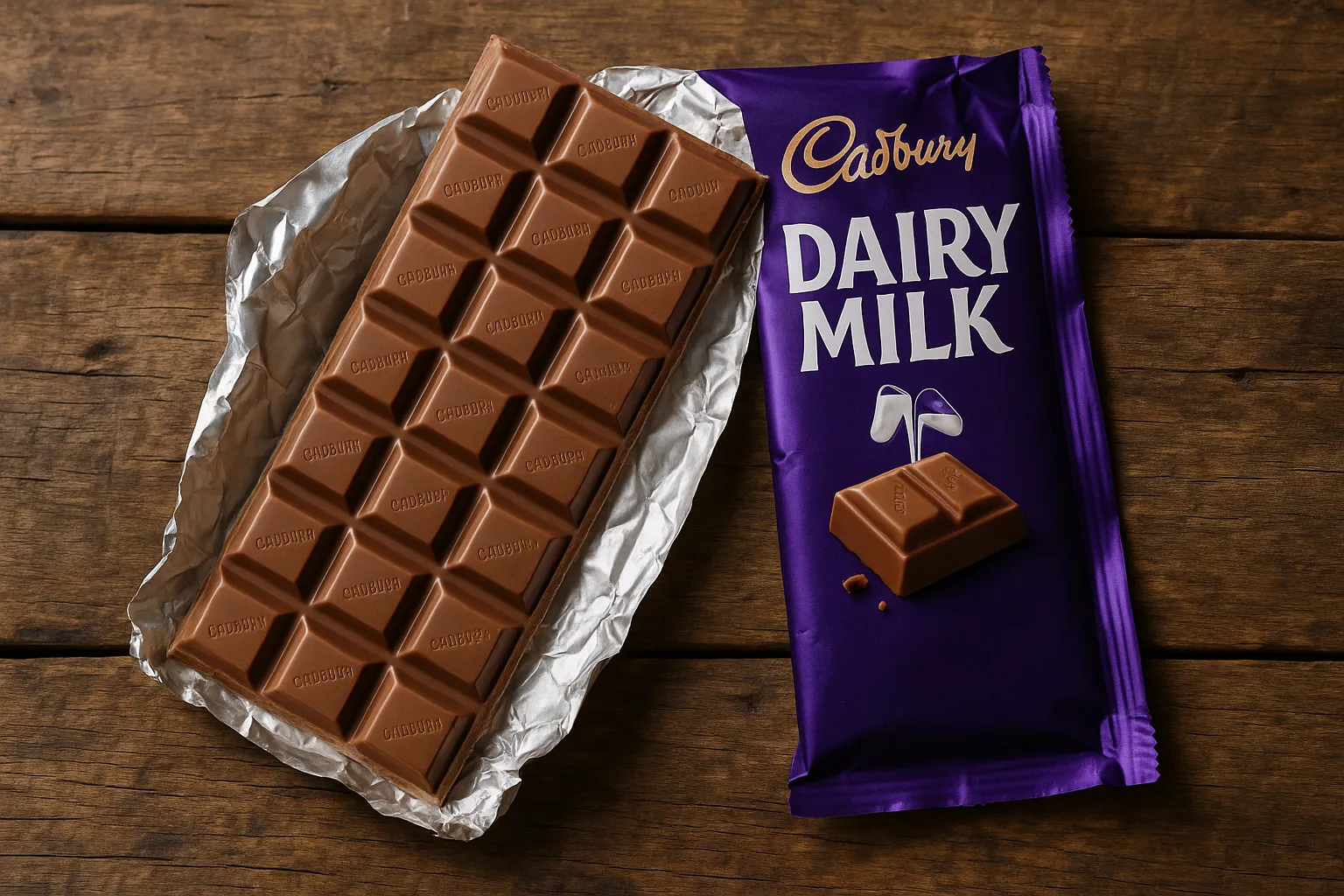
Quick Nutrition Facts
Per 1 Bar (45g)
| Nutrient | Amount |
|---|---|
| Calories | 238 kcal |
| Protein | 3.3g |
| Carbohydrates | 26.6g |
| Sugars | 24.8g |
| Fat | 13g |
| Saturated Fat | 8g |
| Calcium | 85mg |
| Sodium | 36mg |
| Fiber | 0.9g |
Per 100g: 530 kcal, 7.3g protein, 59g carbs, 55g sugar, 29g fat
Macronutrient Breakdown
 ChatGPT
  Claude
  AI Mode
  Perplexity
NUTRITIONIST INSIGHT
Dairy Milk chocolate contains 55g sugar per 100g—more than a can of soda. The 29% cocoa content provides minimal flavonoids compared to dark chocolate (70%+). Treat as occasional indulgence, not daily snack.
Myth Busters
MYTH #1: Chocolate Is a Good Source of Antioxidants
TRUTH: Dairy Milk has only 29% cocoa, drastically reducing flavonoid antioxidants compared to 70-85% dark chocolate. The high sugar and milk content diminish antioxidant absorption. For health benefits, choose dark chocolate with minimal added sugar.
MYTH #2: A Little Chocolate Every Day Is Healthy
TRUTH: FDA recognizes "very limited evidence" for heart benefits from chocolate, and those studies used high-flavanol dark chocolate, not milk chocolate. Daily Dairy Milk consumption adds 530 calories and 55g sugar per 100g, promoting weight gain and blood sugar spikes.
MYTH #3: Sugar-Free Chocolate Is Healthier
TRUTH: Sugar-free versions often contain sugar alcohols (maltitol, sorbitol) causing digestive distress and providing similar calories. Some studies show sugar alcohols may still impact blood glucose in diabetics. Check total carbs, not just sugar.
MYTH #4: Chocolate Gives You Energy
TRUTH: The "energy" is a short-lived sugar rush followed by a crash. The 55g sugar per 100g causes rapid blood glucose spike and insulin response, leading to fatigue 30-60 minutes later. For sustained energy, choose protein-rich snacks instead.
MYTH #5: Chocolate Helps with Period Cramps
TRUTH: The perceived relief is likely from sugar's temporary mood boost and cocoa's mild magnesium content (28mg per 100g). Dark chocolate has more magnesium (228mg), making it more effective. Better sources: nuts, seeds, leafy greens.
MYTH #6: Chocolate Is Protein-Rich
TRUTH: With only 7.3g protein per 100g (3.3g per bar), Dairy Milk is primarily a fat and sugar source. Compare to Greek yogurt (10g protein per 100g) or almonds (21g protein per 100g) for actual protein content.
NutriScore by Health Goals
| Health Goal | NutriScore | Why This Score? |
|---|---|---|
| Weight Loss |  | 530 calories and 55g sugar per 100g derail calorie deficits. High palatability triggers overeating. Limit to rare treat (10-20g) if tracked. |
| Muscle Gain |  | Only 7.3g protein per 100g makes it inefficient. Post-workout, choose protein shake or Greek yogurt instead. Excessive sugar promotes fat gain, not muscle. |
| Diabetes Management | | 55g sugar causes severe blood glucose spike despite moderate GI (40-50). ADA recommends limiting added sugars. Avoid. |
| PCOS Management | | High sugar worsens insulin resistance, a core PCOS driver. Contributes to hormonal imbalance and inflammation. Choose dark chocolate (70%+) sparingly instead. |
| Pregnancy Nutrition | | Provides calcium (189mg per 100g) but excessive sugar (55g) contributes to gestational diabetes risk. Limit to small portions. |
| Viral/Flu Recovery | | Sugar suppresses immune function. No meaningful vitamins or minerals for recovery. Choose fruits, nuts, or soups instead. |
PERSONALIZED NUTRITION
Track your meals with NutriScan for personalized NutriScores based on your specific health goals!
Blood Sugar Response to Dairy Milk Chocolate
Understanding how Dairy Milk chocolate affects your blood glucose helps you make informed decisions about consumption timing and pairing.
Typical Glucose Response Curve
This chart shows typical blood glucose response for general healthy individuals. Individual responses may vary. Not medical advice.
How to Minimize the Spike
Pairing chocolate with protein or healthy fat slows sugar absorption and reduces the blood glucose peak:
- 🥜 Handful of almonds or walnuts - Healthy fats and protein slow digestion
- 🧀 Small piece of cheese - Protein and fat combination
- 🥛 Greek yogurt (unsweetened) - High protein buffers sugar impact
- 🫘 Nut butter (1 tbsp) - Balanced fats and protein
However, the best strategy for blood sugar control is choosing dark chocolate (70-85% cacao) with significantly less sugar.
Cultural Significance
Dairy Milk chocolate, created by Cadbury in 1905, revolutionized the chocolate industry by introducing a higher proportion of milk than competitors.
In India:
- Cadbury dominates with 70% market share in chocolate confectionery
- Dairy Milk synonymous with celebrations: Raksha Bandhan, Diwali, birthdays
- "Kuch Meetha Ho Jaye" (Let's have something sweet) cultural tradition
- Premium gifting option despite high sugar content awareness
Global Impact:
- Sold in over 50 countries worldwide
- Part of Mondelez International (2012 Kraft Foods acquisition)
- Iconic purple packaging recognized globally
- Ethical sourcing initiatives: Cocoa Life program supporting farmers
Compare & Substitute
Dairy Milk Chocolate vs Healthier Alternatives (Per 100g)
| Nutrient | 🍫 Dairy Milk | 🍫 Dark Chocolate 70% | 🍫 Dark Chocolate 85% | 🥜 Almond Butter |
|---|---|---|---|---|
| Calories | 530 kcal | 598 kcal | 598 kcal | 614 kcal |
| Carbs | 59g | 46g | 24g | 20g |
| Sugars | 55g | 24g | 14g | 6g |
| Protein | 7.3g | 7.8g | 9.6g | 21g |
| Fat | 29g | 43g | 53g | 55g |
| Fiber | 2g | 11g | 15g | 10g |
| Calcium | 189mg | 73mg | 73mg | 347mg |
| Magnesium | 28mg | 228mg | 228mg | 279mg |
| Best For | Occasional indulgence | Heart health, antioxidants | Keto, low-sugar | Protein, sustained energy |
Frequently Asked Questions
How many calories are in a Dairy Milk chocolate bar?
A standard Dairy Milk bar (45g) contains 238 calories. Per 100g, it contains 530 calories—considered high-calorie with most from sugar (55g) and fat (29g).
Context: This is equivalent to 2 medium bananas or 1 cup of cooked rice. The small bar size makes overconsumption easy.
Is Dairy Milk chocolate bad for weight loss?
Yes, Dairy Milk is not ideal for weight loss due to high sugar (55g per 100g) and calories (530 kcal per 100g). The combination triggers cravings and provides minimal satiety.
Best practices: Occasional consumption (1-2 small squares = 10-20g) can fit a calorie deficit if tracked meticulously. Better alternatives: dark chocolate (70%+), fruits with nut butter, or Greek yogurt with berries for sweet cravings.
Can diabetics eat Dairy Milk chocolate?
Diabetics should limit or avoid Dairy Milk chocolate. The very high sugar content (55g per 100g) causes severe blood glucose spikes despite moderate GI (40-50).
If consumed:
- Choose dark chocolate (70%+) with <15g sugar per 100g instead
- Limit to 10-20g maximum
- Pair with protein or nuts
- Monitor blood glucose 1-2 hours after consumption
The ADA recommends limiting added sugars to <25g daily for diabetes management. One bar exceeds this.
Does Dairy Milk chocolate have any health benefits?
Dairy Milk provides minimal health benefits compared to dark chocolate. It contains small amounts of calcium (189mg per 100g) and trace cocoa flavonoids, but the high sugar content (55g per 100g) outweighs these.
Comparison: 70-85% dark chocolate has 3-5x more flavonoids, more magnesium (228mg vs 28mg), and significantly less sugar (14-24g vs 55g). For health, choose high-cacao dark chocolate.
What is healthier than Dairy Milk chocolate?
Dark chocolate (70-85% cacao) is substantially healthier:
- Fewer calories: 598 kcal vs 530 kcal per 100g (but comes from healthy fats, not sugar)
- Less sugar: 14-24g vs 55g per 100g
- More antioxidants: 3-5x higher flavonoid content
- Better minerals: 228mg magnesium vs 28mg; 11-15g fiber vs 2g
- Heart health benefits with evidence-based research
Other alternatives: Greek yogurt with berries, nut butter with apple slices, homemade energy balls with dates and nuts.
How much Dairy Milk chocolate is safe to eat?
General guidelines:
- Most people: 10-20g daily (2-4 squares) as occasional treat, 2-3 times weekly maximum
- Weight loss: Limit to once or twice weekly, track calories meticulously
- Diabetes: Avoid, or choose dark chocolate (70%+) instead in very small amounts (10g max)
- Children: Limit to small portions (10-15g) on special occasions to prevent sugar habit formation
Daily consumption of Dairy Milk (45g bar = 238 kcal, 24.8g sugar) contributes to weight gain, insulin resistance, and dental issues.
Is Dairy Milk chocolate safe during pregnancy?
Dairy Milk is safe in moderation during pregnancy but not nutritionally beneficial. One bar (45g) provides some calcium (85mg) but excessive sugar (24.8g) increases gestational diabetes risk.
Best practices:
- Limit to 10-20g daily (2-4 squares)
- Choose dark chocolate (70%+) for lower sugar and higher minerals
- Prioritize nutrient-dense sweets: dates, fruits, Greek yogurt with honey
- Total added sugars should be <25g daily during pregnancy
Consult your healthcare provider about sugar intake, especially with gestational diabetes concerns.


Similar Nutritious Foods
4505 Chicharrones Classic Chili Salt
7 Eleven Japan Crispy Corn Cheese
Explore More Nutrition Tools & Resources
AI Calorie Counter App - Snap a Photo, Get Macros
AI Nutritionist App That Reads Your Logged Meals
Best Protein Supplements for Women
Bulking Meal Plan App That Sets Your Surplus
ChatGPT Calorie Counter Alternative That Keeps the Total
ChatGPT Diet Plan Alternative That Tracks What You Eat
ChatGPT Weight Loss Coach Alternative With a Food Log
Fast Food Calorie Counter App That Reads the Tray
Free Calorie Tracker App with AI Photo Scans | NutriScan
Indian Diet Plan App With Veg and Non Veg Meals
Indian Food Calorie Calculator - Get Instant Nutrition Facts for Desi Meals — 2026
Intermittent Fasting for Women, Timer and Meal Log App
Intermittent Fasting Tracker App - Free Fasting Timer
Macro Tracker App That Fills the Numbers From a Photo
Mediterranean Diet Meal Plan App That Counts the Oil
Micronutrient Tracker App for Vitamins and Minerals
MyFitnessPal Alternative That Stays Free | NutriScan
NutriScore App: A Free Grade on Every Meal | NutriScan
Nutrition Label Scanner App for the Amount You Ate
Second Trimester Protein Guide
Vegetarian Meal Plan App With a Protein Target
Voice Calorie Counter - Speak to Track Meals Hands-Free
Water and Calorie Tracker App - Free Water Log