Dal Curry: Calories, Nutrition and Health Benefits
India's heartiest comfort food packed with plant-based protein, fiber, and iron—a nutritional powerhouse for every health goal.
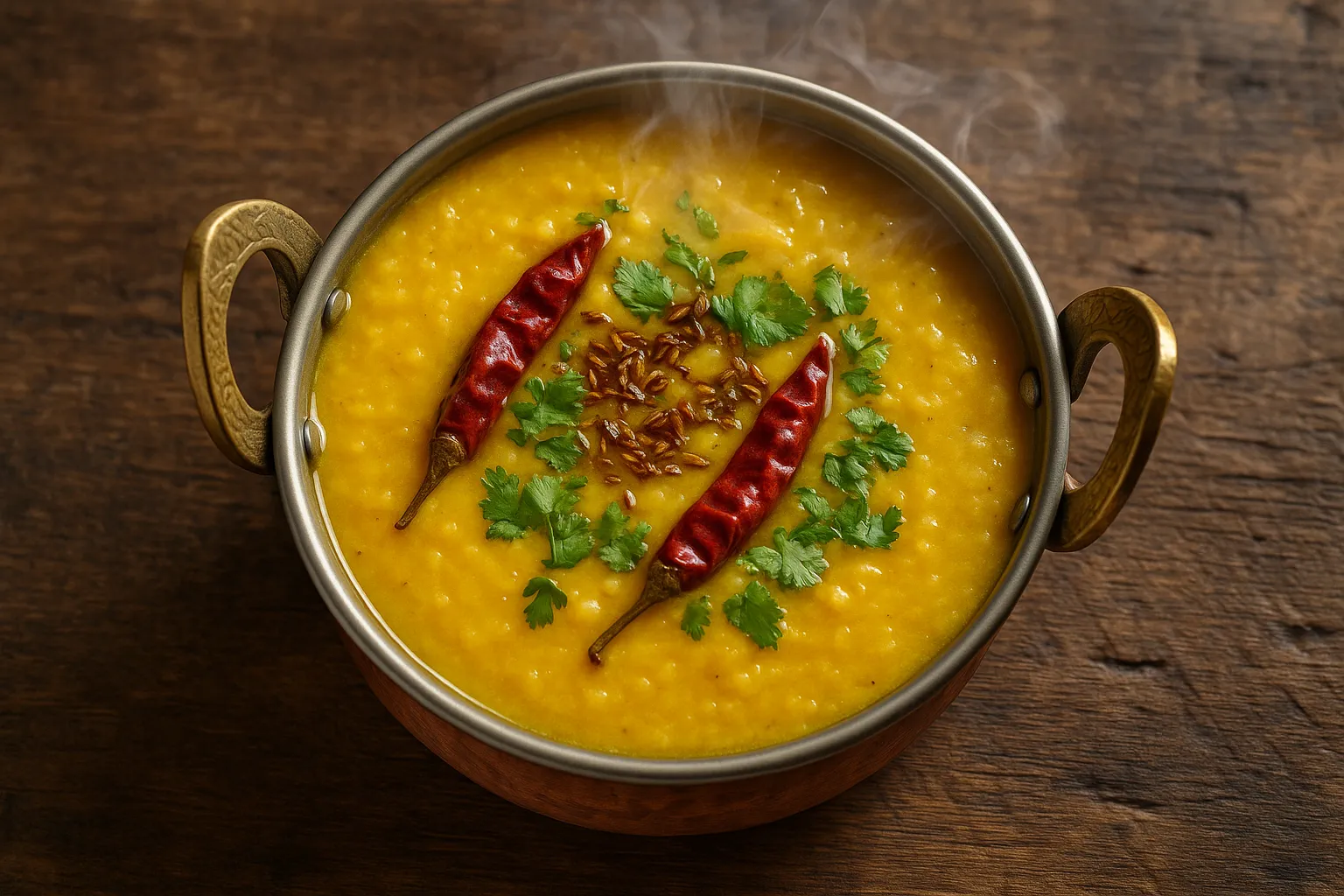
Quick Nutrition Facts
Per 1 Serving Dal Curry (250g cooked)
| Nutrient | Amount |
|---|---|
| Calories | 150 kcal |
| Protein | 9.5g |
| Carbohydrates | 24g |
| Fiber | 6.8g |
| Sugars | 2g |
| Fat | 2g |
| Iron | 3.2mg |
| Potassium | 560mg |
| Folate | 180mcg |
| Magnesium | 48mg |
Macronutrient Breakdown
 ChatGPT
  Claude
  AI Mode
  Perplexity
NUTRITIONIST INSIGHT
Dal provides 18% of your daily iron needs in one serving, making it a plant-based iron powerhouse. The soluble fiber in legumes slows glucose absorption, preventing blood sugar spikes and extending satiety for hours—ideal for weight management.
Myth Busters
MYTH #1: Dal is Too High in Calories for Weight Loss
TRUTH: At 150 calories per serving with 6.8g fiber, dal actually supports weight loss better than many proteins. The satiety effect means you eat less overall. Traditional preparation with minimal oil keeps calories controlled.
MYTH #2: Dal Causes Bloating and Digestive Issues
TRUTH: Soaking dal overnight and using a pressure cooker reduces oligosaccharides (bloating compounds). Cooked dal is easily digestible, especially moong dal. Individual tolerance varies; introduce slowly and stay hydrated.
MYTH #3: Diabetics Should Avoid Dal Due to Carbs
TRUTH: Dal's low glycemic index (20-25) means minimal blood sugar spike. The fiber and resistant starch actually improve insulin sensitivity. Diabetics benefit from 3-4 servings weekly when paired with vegetables.
MYTH #4: Plant Protein from Dal is Incomplete
TRUTH: While dal alone lacks methionine, combining with grains (rice, roti, wheat) creates a complete amino acid profile. This combination has sustained Indian populations for millennia and is recognized as nutritionally complete by WHO.
MYTH #5: Processed Dal Lacks Nutrition Compared to Whole Legumes
TRUTH: Split dal (moong, masoor, chana) retains 90% of whole legume nutrition while cooking 5x faster. Processing removes indigestible hulls, making nutrients more bioavailable.
MYTH #6: Dal Has Less Protein Than Meat
TRUTH: Cooked dal provides 9.5g protein per 250g serving (comparable to 1.5 eggs or 30g chicken). Dried dal contains 25g protein per 100g—higher than most meats by weight. The advantage: zero cholesterol and rich in fiber.
NutriScore by Health Goals
| Health Goal | NutriScore | Why This Score? |
|---|---|---|
| Weight Loss |  | 150 calories, 6.8g fiber promotes fullness, 9.5g protein preserves muscle. Sustained satiety from soluble fiber content. |
| Muscle Gain |  | Complete plant protein (with grains), iron for oxygen transport, potassium prevents muscle cramps. Pair with resistance training. |
| Diabetes Management | | GI 20-25 prevents blood sugar spikes, resistant starch improves insulin sensitivity, 6.8g fiber controls glucose response. |
| PCOS Management | | High protein (9.5g) supports hormone balance, low GI manages insulin resistance, polyphenols reduce inflammation. |
| Pregnancy Nutrition | | 180mcg folate (45% DV) supports fetal neural development, iron prevents anemia, complete plant protein for fetal growth. |
| Viral/Flu Recovery | | Easy to digest, iron supports immune function, polyphenols have antimicrobial properties, warm and comforting for recovery. |
PERSONALIZED NUTRITION
Track your meals with NutriScan for personalized NutriScores based on your specific health goals!
Blood Sugar Response to Dal Curry
Understanding how dal affects your blood glucose helps optimize meal timing and portion control.
Typical Glucose Response Curve
This chart shows typical blood glucose response for general healthy individuals. Individual responses may vary. Not medical advice.
How to Flatten the Spike
Pairing dal with vegetables and whole grains slows glucose absorption:
- 🥬 Leafy greens or broccoli - Adds fiber and chromium for glucose control
- 🥕 Carrots or pumpkin - Soluble fiber enhances satiety
- 🍚 Brown rice or whole wheat roti - Resistant starch extends energy
- 🥒 Pickled vegetables - Acetic acid slows carbohydrate absorption
This combination creates a sustained energy release, keeping blood sugar stable for 3+ hours and maintaining fullness.
Cultural Significance
Dal is the soul of Indian cuisine, consumed daily across India for over 4,000 years.
In India:
- Staple protein source for vegetarian and non-vegetarian households alike
- Regional variations: Sambhar (South), Thadal (West), Khichdi (comfort food), Rajma (North)
- Sacred in Hindu and Jain traditions; offered in temples during festivals
- Moong dal used in Ayurvedic medicine for detoxification and digestion
- Dal and rice together form the nutritional foundation of Indian nutrition culture
Global Impact:
- Exported globally; essential in Middle Eastern, African, and Caribbean cuisines
- UN declared 2016 as "International Year of the Pulses" recognizing dal's sustainability
- Low environmental impact: minimal water, no pesticides required, naturally nitrogen-fixing
- Feeds 1+ billion people daily across Asia and Africa
Compare & Substitute
Dal vs Similar Protein Sources (Per 100g dry weight)
| Nutrient | 🍲 Dal (Masoor) | 🥚 Chicken (Breast) | 🥬 Spinach | 🥜 Peanuts |
|---|---|---|---|---|
| Calories | 353 kcal | 165 kcal | 23 kcal | 567 kcal |
| Protein | 25g | 31g | 2.9g | 25.8g |
| Carbs | 63g | 0g | 3.6g | 16.1g |
| Fiber | 7.9g | 0g | 2.2g | 6.0g |
| Iron | 7.6mg | 0.8mg | 2.7mg | 1.7mg |
| Folate | 518mcg | 3mcg | 194mcg | 240mcg |
| Cost | Very Low | Moderate | Low | Moderate |
| Best For | Plant-based protein, fiber | Muscle gain, lean cooking | Micronutrients, weight loss | Healthy fats, satiety |
Frequently Asked Questions
Is dal curry good for weight loss?
Yes, dal curry supports weight loss effectively. At 150 calories per serving with 6.8g fiber, dal promotes satiety and sustained energy. The high protein (9.5g) preserves muscle during calorie reduction. Best practice: limit to 1 serving daily, prepare with minimal oil (1 teaspoon), and pair with vegetables.
Can diabetics eat dal curry?
Absolutely. Dal's low glycemic index (20-25) prevents blood sugar spikes, and soluble fiber slows glucose absorption. The resistant starch improves insulin sensitivity. Diabetics benefit from 3-4 servings weekly; pair with whole grains and vegetables, avoid refined flour breads.
How much protein is in dal curry?
Dal curry provides 9.5g protein per 250g serving. Combined with 100g rice or roti, you get 15-18g complete protein (all essential amino acids). For muscle gain, aim for 1.5-2 servings daily with strength training and ensure total daily protein: 1.6-2.2g per kg body weight.
What are the main health benefits of dal curry?
Dal delivers 6.8g fiber for digestive health, 3.2mg iron (18% DV) for oxygen transport, 180mcg folate (45% DV) for cell division, and polyphenols with strong antioxidant properties. The legumes support gut microbiome diversity and improve cholesterol profiles naturally.
When is the best time to eat dal curry?
For weight loss: lunch or early dinner for sustained afternoon energy. For muscle gain: post-workout with brown rice for glycogen replenishment. For diabetes: lunch with vegetables to buffer glucose. For energy: mid-morning when energy dips.
IMPORTANT NOTE
Avoid dal with refined flour breads (maida) for blood sugar control; use whole wheat roti or brown rice instead.
Which type of dal is healthiest?
All varieties offer unique benefits: Moong dal provides the easiest digestion and highest protein density (25g per 100g dry). Masoor dal (red lentils) offers maximum iron (7.6mg per 100g). Chana dal delivers most fiber (7.9g). Arhar dal provides balanced nutrition. Choose based on digestion tolerance; all deliver comparable nutrition.
How much dal should I eat per day?
General Guidelines:
- 1 serving (250g) - Most people (150 calories, 9.5g protein)
- 1/2 serving - Strict low-carb or calorie-restricted diets
- 1.5-2 servings - Athletes, muscle gain, pregnancy
Avoid excess: More than 2 servings daily can cause bloating in sensitive individuals. Introduce gradually; drink adequate water (8+ glasses) to aid digestion.
Can I eat dal on an empty stomach?
Safe for most people when prepared traditionally with oil. Avoid if you experience: acid reflux (consume with bread), IBS (introduce small portions gradually), or bloating (soak overnight before cooking).


Similar Nutritious Foods
4505 Chicharrones Classic Chili Salt
7 Eleven Japan Crispy Corn Cheese
Explore More Nutrition Tools & Resources
AI Calorie Counter App - Snap a Photo, Get Macros
AI Nutritionist App That Reads Your Logged Meals
Best Protein Supplements for Women
Bulking Meal Plan App That Sets Your Surplus
ChatGPT Calorie Counter Alternative That Keeps the Total
ChatGPT Diet Plan Alternative That Tracks What You Eat
ChatGPT Weight Loss Coach Alternative With a Food Log
Fast Food Calorie Counter App That Reads the Tray
Free Calorie Tracker App with AI Photo Scans | NutriScan
Indian Diet Plan App With Veg and Non Veg Meals
Indian Food Calorie Calculator - Get Instant Nutrition Facts for Desi Meals — 2026
Intermittent Fasting for Women, Timer and Meal Log App
Intermittent Fasting Tracker App - Free Fasting Timer
Macro Tracker App That Fills the Numbers From a Photo
Mediterranean Diet Meal Plan App That Counts the Oil
Micronutrient Tracker App for Vitamins and Minerals
MyFitnessPal Alternative That Stays Free | NutriScan
NutriScore App: A Free Grade on Every Meal | NutriScan
Nutrition Label Scanner App for the Amount You Ate
Second Trimester Protein Guide
Vegetarian Meal Plan App With a Protein Target
Voice Calorie Counter - Speak to Track Meals Hands-Free
Water and Calorie Tracker App - Free Water Log