Dal Tadka: Calories, Nutrition and Health Benefits
A protein-rich North Indian lentil curry with aromatic spice tempering, perfect for balanced nutrition and everyday wellness.
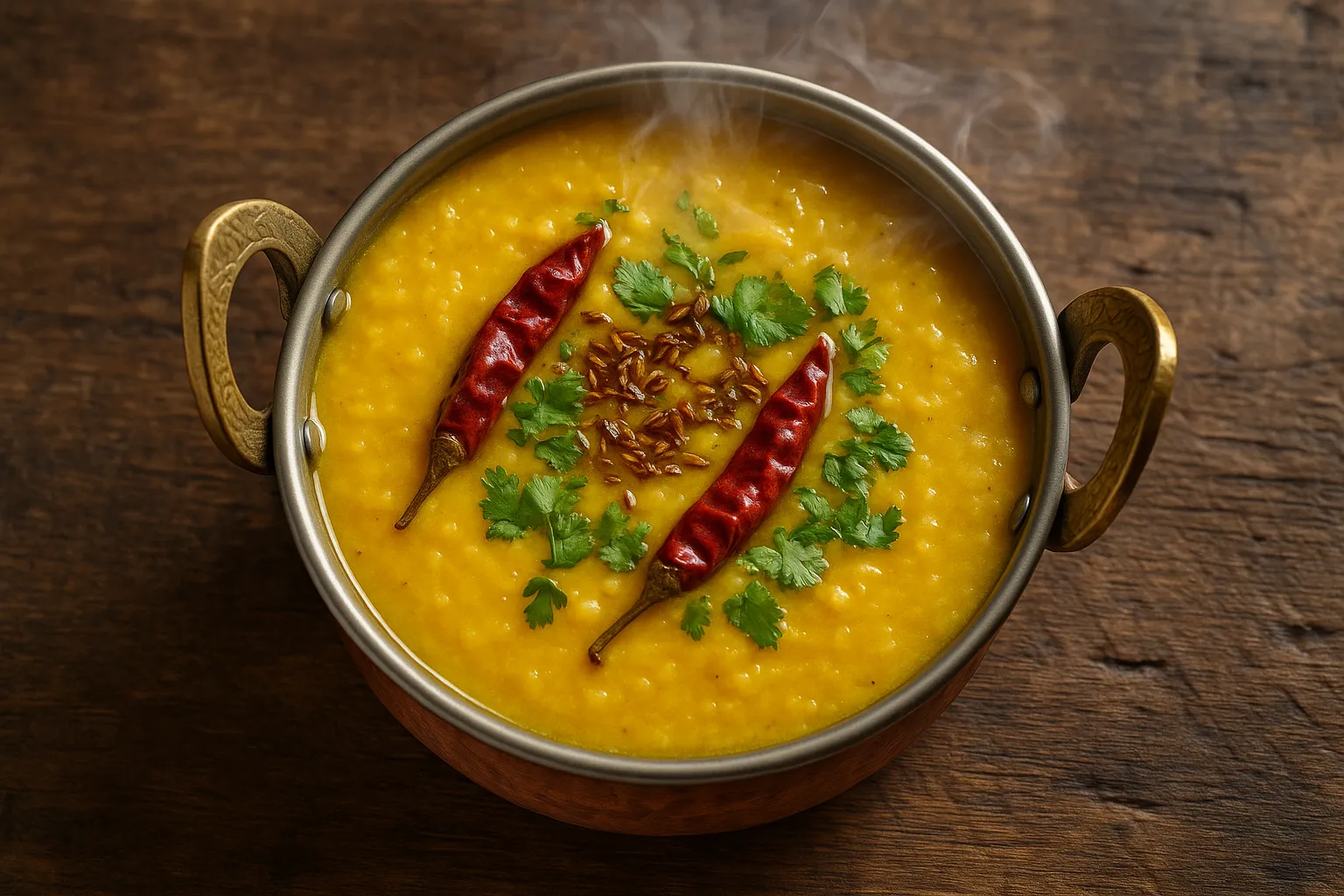
Quick Nutrition Facts
Per 1 Cup (240g)
| Nutrient | Amount |
|---|---|
| Calories | 182 kcal |
| Protein | 9.8g |
| Carbohydrates | 25.6g |
| Fiber | 7.8g |
| Sugars | 2.1g |
| Fat | 4.2g |
| Iron | 3.2mg |
| Folate | 178mcg |
| Magnesium | 48mg |
| Potassium | 369mg |
Macronutrient Breakdown
 ChatGPT
  Claude
  AI Mode
  Perplexity
NUTRITIONIST INSIGHT
Dal tadka provides complete plant-based protein when paired with rice or roti. The 7.8g fiber per cup promotes gut health, controls blood sugar, and keeps you full for hours - ideal for weight management.
Myth Busters
MYTH #1: Dal Tadka Is Too High in Calories for Weight Loss
TRUTH: At 182 calories per cup with 9.8g protein and 7.8g fiber, dal tadka is highly satiating and metabolism-boosting. High-protein, high-fiber meals promote greater weight loss than low-protein alternatives. Control added ghee to 1-2 teaspoons.
MYTH #2: Lentils Cause Bloating and Should Be Avoided
TRUTH: Proper preparation eliminates most bloating issues. Soaking lentils for 2-4 hours, rinsing thoroughly, and adding digestive spices (cumin, asafoetida) reduces gas-causing compounds. Start with smaller portions if new to lentils.
MYTH #3: Dal Tadka Lacks Complete Protein
TRUTH: While individual lentils are limiting in methionine, pairing dal with rice or roti creates a complete amino acid profile equivalent to animal proteins. Traditional dal-rice combinations are nutritionally brilliant.
MYTH #4: Diabetics Should Limit Dal Tadka
TRUTH: Dal tadka is ideal for diabetics. With a low glycemic index (30-35) and high fiber content, it slows glucose absorption and improves insulin sensitivity. Studies show regular lentil consumption reduces diabetes risk by 35%.
MYTH #5: Dal Tadka Has Too Many Carbs
TRUTH: The 25.6g carbs per cup are complex carbohydrates with 7.8g fiber, releasing energy slowly. Unlike refined carbs, these support sustained energy, stable blood sugar, and metabolic health. Perfect for active individuals and athletes.
MYTH #6: Only Yellow Dal Works for Tadka
TRUTH: Dal tadka works with any lentil variety: toor (pigeon peas), moong (mung beans), masoor (red lentils), or mixed dal. Each offers unique nutrients - moong is lighter and easier to digest; toor has more protein; masoor cooks fastest.
NutriScore by Health Goals
| Health Goal | NutriScore | Why This Score? |
|---|---|---|
| Weight Loss |  | High protein (9.8g) and fiber (7.8g) promote satiety, boost metabolism, control appetite. Low calorie density. Perfect daily meal. |
| Muscle Gain |  | Good plant protein source (9.8g per cup). Combine with rice for complete amino acids. Add 2 cups daily plus other protein sources for muscle building. |
| Diabetes Management | | Low GI (30-35), high fiber slows glucose absorption, protein stabilizes blood sugar. Highly recommended daily. |
| PCOS Management | | Low GI prevents insulin spikes, high fiber supports hormone balance, anti-inflammatory spices benefit PCOS. Excellent daily staple. |
| Pregnancy Nutrition | | Rich in folate (178mcg) for fetal neural development, iron prevents anemia, protein supports growth. Essential pregnancy food. |
| Viral/Flu Recovery | | Easy to digest, high protein for immune function, anti-inflammatory turmeric and spices. Comforting and nourishing during illness. |
PERSONALIZED NUTRITION
Track your meals with NutriScan for personalized NutriScores based on your specific health goals!
Blood Sugar Response to Dal Tadka
Understanding how dal tadka affects blood glucose demonstrates why it's recommended for diabetes management.
Typical Glucose Response Curve
This chart shows typical blood glucose response for general healthy individuals. Individual responses may vary. Not medical advice.
How Dal Tadka Stabilizes Blood Sugar
The combination of protein, fiber, and low GI carbohydrates creates minimal glucose spikes:
- 🍚 Pair with brown rice or quinoa - Complete nutrition with slower digestion
- 🥒 Add vegetable sides (cucumber raita, salad) - Extra fiber and volume
- 🧈 Moderate ghee (1-2 tsp) - Healthy fats slow carb absorption
- 🌶️ Include turmeric and cumin - Anti-inflammatory spices improve insulin sensitivity
This combination extends energy release, maintains stable blood sugar, and supports long-term metabolic health.
Cultural Significance
Dal tadka represents the heart of North Indian home cooking, with roots tracing back thousands of years to ancient Ayurvedic texts.
In Indian Culture:
- Daily staple across North India, served with roti or rice in nearly every household
- The "tadka" (tempering) technique dates back to Vedic cooking practices, enhancing digestibility and flavor
- Each region has unique variations: Punjabi dal tadka (with kasuri methi), Bengali dal (with panch phoron), Gujarati dal (with jaggery)
- Offered in gurudwaras (Sikh temples) as part of langar (community meal), symbolizing equality and nourishment
- Ayurveda recommends dal for "Agni" (digestive fire) and balancing Vata and Pitta doshas
Lentil Types Used:
- Toor dal (pigeon peas): Most common, protein-rich, slightly sweet
- Moong dal (split mung beans): Lighter, easier to digest, cooling properties
- Masoor dal (red lentils): Quick-cooking, earthy flavor, high in iron
- Mixed dal: Combination of 2-3 lentils for diverse nutrition
Global Recognition:
- UNESCO recognizes Indian dal as part of intangible cultural heritage
- Lentils are among humanity's oldest cultivated crops (8,000+ years)
- Dal dishes now popular in fusion cuisines worldwide
Compare & Substitute
Dal Tadka vs Similar Protein Foods (Per 1 Cup/240g)
| Nutrient | 🍛 Dal Tadka | 🥣 Dal Fry | 🍲 Chana Masala | 🍗 Chicken Curry |
|---|---|---|---|---|
| Calories | 182 kcal | 210 kcal | 246 kcal | 285 kcal |
| Carbs | 25.6g | 26.8g | 32.4g | 8.2g |
| Fiber | 7.8g | 7.2g | 9.6g | 2.1g |
| Protein | 9.8g | 9.2g | 12.4g | 28.6g |
| Fat | 4.2g | 7.8g | 10.2g | 18.4g |
| Iron | 3.2mg | 3.0mg | 4.2mg | 2.1mg |
| Folate | 178mcg | 165mcg | 282mcg | 12mcg |
| GI | 30-35 | 32-38 | 28-32 | <10 |
| Best For | Daily staple | Rich flavor | High protein | Muscle building |
Frequently Asked Questions
Is dal tadka good for weight loss?
Yes, dal tadka is excellent for weight loss. At 182 calories per cup with 9.8g protein and 7.8g fiber, it provides exceptional satiety that controls appetite and reduces overall calorie intake. The high protein content boosts metabolism through thermogenic effects.
Best practices: Consume 1-2 cups daily; limit added ghee or oil to 1-2 teaspoons per serving; pair with vegetables and moderate portions of rice or roti; eat for lunch or dinner when protein needs are highest.
Can diabetics eat dal tadka?
Dal tadka is highly recommended for diabetes management. With a low glycemic index (30-35) and 7.8g fiber per cup, it slows glucose absorption and prevents blood sugar spikes. Studies show regular lentil consumption improves insulin sensitivity and reduces diabetes risk.
Tips for diabetics: Pair with brown rice or whole wheat roti instead of white rice; add non-starchy vegetables for extra fiber; consume as main protein source at lunch and dinner; use minimal added fats; the combination of protein and fiber creates stable blood sugar for 4-5 hours.
How much protein is in dal tadka?
One cup (240g) of dal tadka contains 9.8g of high-quality plant protein. While lower than animal proteins, the amino acid profile is complete when combined with rice or roti (traditional Indian practice).
For muscle building or high-protein diets, consume 2 cups of dal daily (providing 19.6g protein) and supplement with paneer, Greek yogurt, eggs, or protein powder. Vegetarians can easily meet protein needs through dal-based meals.
What are the main health benefits of dal tadka?
Key benefits:
- Complete Plant Protein: 9.8g per cup with all essential amino acids when paired with grains
- Digestive Health: 7.8g fiber promotes regularity, feeds beneficial gut bacteria
- Iron for Energy: 3.2mg iron prevents anemia, supports oxygen transport
- Folate for Cell Growth: 178mcg supports DNA synthesis, critical during pregnancy
- Blood Sugar Control: Low GI and high fiber stabilize glucose levels
- Heart Health: Fiber, potassium, and magnesium support cardiovascular function
- Anti-inflammatory: Turmeric and spices reduce systemic inflammation
Is dal tadka good for muscle building?
Dal tadka supports muscle building but works best as part of a complete protein strategy. At 9.8g protein per cup, it provides quality plant protein with all essential amino acids when combined with rice.
For optimal muscle gain: Consume 2 cups dal daily (19.6g protein); pair with rice or roti for complete amino acids; add other protein sources (paneer, eggs, chicken, or whey protein) to reach 1.6-2.2g protein per kg body weight; time dal consumption post-workout for recovery; include the 4.2g fat for hormone production.
Can I eat dal tadka every day?
Yes, daily dal tadka consumption is highly beneficial and recommended in traditional Indian diets. It provides consistent protein, fiber, iron, and complex carbohydrates without adverse effects.
Daily consumption tips: Vary lentil types (toor, moong, masoor, mixed) for diverse nutrient profiles; keep added fats to 1-2 teaspoons per serving for heart health; pair with different vegetables for variety; consume 1-2 cups based on protein needs; those with gout should limit to 3-4 times weekly due to moderate purine content.
How do I make dal tadka less gassy?
Reduce gas and bloating from dal tadka through proper preparation: Soak lentils for 2-4 hours before cooking, discard soaking water; rinse thoroughly until water runs clear; add asafoetida (hing) during tempering - a powerful digestive aid; include cumin seeds in tadka; cook until very soft; start with smaller portions (1/2 cup) if new to lentils; avoid combining with gas-producing vegetables initially.
The spices in tadka (cumin, ginger, garlic, hing) specifically counteract lentil-induced gas. Digestive enzymes improve with regular consumption over 2-3 weeks.
What's the difference between dal tadka and dal fry?
Both use similar base ingredients but differ in preparation: Dal Tadka features a tempering (tadka) of spices added at the end, poured over cooked lentils, creating distinct spice layers and aromatics; typically lighter with less oil (4-5g fat per cup). Dal Fry involves frying onions, tomatoes, and spices first, then adding lentils to simmer together; results in richer, more integrated flavors; usually contains more oil (7-8g fat per cup).
Nutritionally similar, but dal tadka is slightly lower in calories and fat, making it preferable for weight loss.


Similar Nutritious Foods
4505 Chicharrones Classic Chili Salt
7 Eleven Japan Crispy Corn Cheese
Explore More Nutrition Tools & Resources
AI Calorie Counter App - Snap a Photo, Get Macros
AI Nutritionist App That Reads Your Logged Meals
Best Protein Supplements for Women
Bulking Meal Plan App That Sets Your Surplus
ChatGPT Calorie Counter Alternative That Keeps the Total
ChatGPT Diet Plan Alternative That Tracks What You Eat
ChatGPT Weight Loss Coach Alternative With a Food Log
Fast Food Calorie Counter App That Reads the Tray
Free Calorie Tracker App with AI Photo Scans | NutriScan
Indian Diet Plan App With Veg and Non Veg Meals
Indian Food Calorie Calculator - Get Instant Nutrition Facts for Desi Meals — 2026
Intermittent Fasting for Women, Timer and Meal Log App
Intermittent Fasting Tracker App - Free Fasting Timer
Macro Tracker App That Fills the Numbers From a Photo
Mediterranean Diet Meal Plan App That Counts the Oil
Micronutrient Tracker App for Vitamins and Minerals
MyFitnessPal Alternative That Stays Free | NutriScan
NutriScore App: A Free Grade on Every Meal | NutriScan
Nutrition Label Scanner App for the Amount You Ate
Second Trimester Protein Guide
Vegetarian Meal Plan App With a Protein Target
Voice Calorie Counter - Speak to Track Meals Hands-Free
Water and Calorie Tracker App - Free Water Log