Dark Sweet Cherry Compote: Calories, Nutrition and Health Benefits
A luscious dessert topping bursting with anthocyanins, natural sweetness, and surprising health benefits for sleep, inflammation, and recovery.
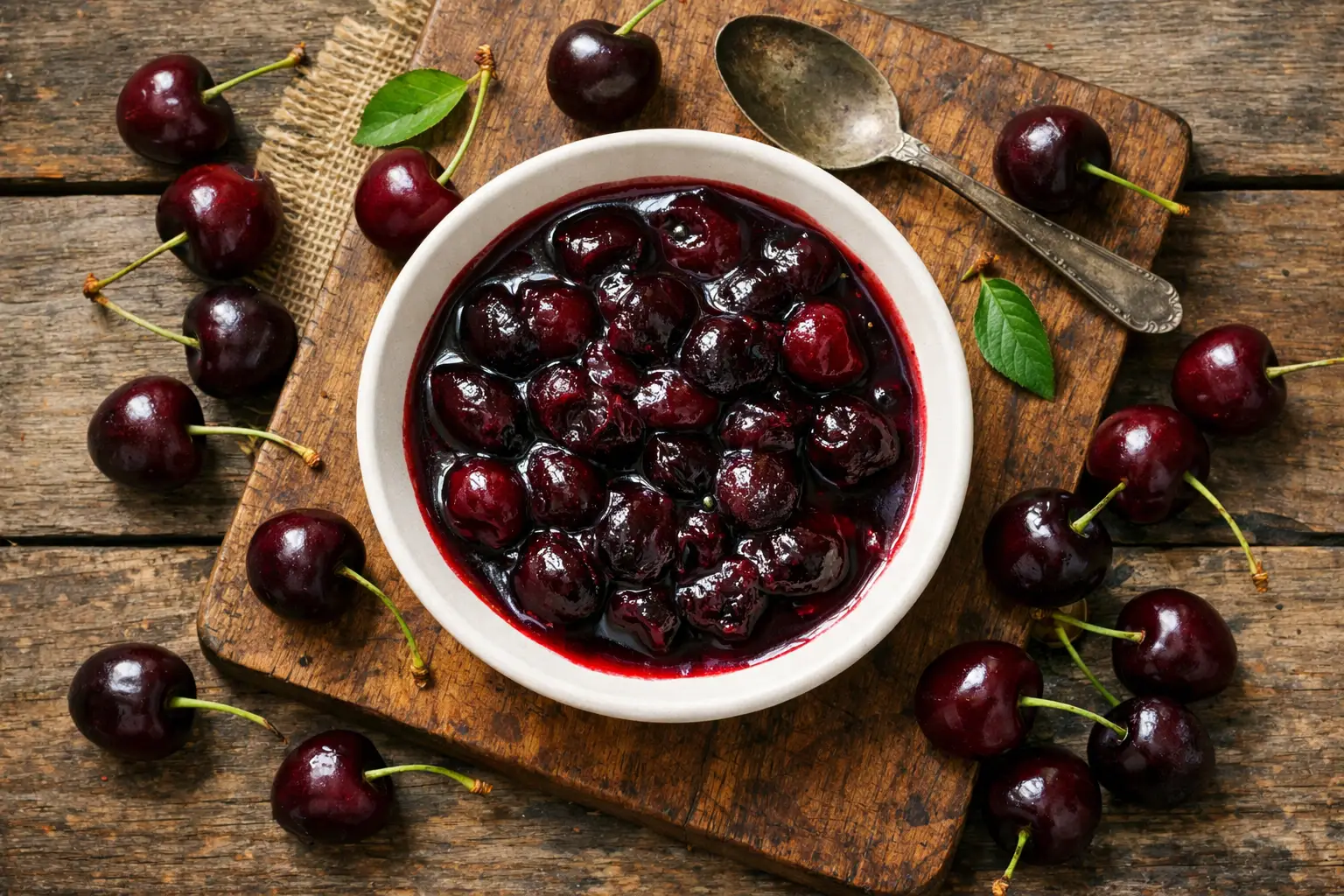
Quick Nutrition Facts
Per 50g Serving (typical dessert portion)
| Nutrient | Amount |
|---|---|
| Calories | 70 kcal |
| Protein | 0.5g |
| Carbohydrates | 17g |
| Fiber | 1g |
| Sugars | 15g |
| Fat | 0g |
| Potassium | 90mg |
| Vitamin C | 3mg |
| Vitamin A | 25 IU |
| Anthocyanins | 15-20mg |
Macronutrient Breakdown
 ChatGPT
  Claude
  AI Mode
  Perplexity
NUTRITIONIST INSIGHT
Dark sweet cherry compote delivers powerful anthocyanins that give cherries their deep red color. These compounds have been linked to reduced inflammation and improved sleep quality. The low glycemic index of sweet cherries (GI 22) makes compote a smarter dessert choice than many alternatives.
Myth Busters
MYTH #1: Cherry Compote Is Just Empty Sugar
TRUTH: While compote contains natural and added sugars, it retains beneficial anthocyanins from fresh cherries. Studies show sweet cherry polyphenols provide anti-inflammatory and antioxidant benefits even in processed forms. Choose low-sugar versions for maximum benefit.
MYTH #2: Cooking Destroys All Cherry Nutrients
TRUTH: While some vitamin C is lost during cooking, anthocyanins are relatively heat-stable. Cherry compote retains significant amounts of these protective compounds. The cooking process may even increase bioavailability of some nutrients.
MYTH #3: Diabetics Must Completely Avoid Cherry Compote
TRUTH: Sweet cherries have a low glycemic index of 22, making them diabetic-friendly in moderation. A small 25-30g portion paired with protein can fit into a diabetes management plan. Research shows cherry consumption may improve glucose regulation.
MYTH #4: Cherry Compote Has No Real Health Benefits
TRUTH: Cherries contain natural melatonin precursors that support sleep. Studies demonstrate sweet cherries reduce markers of inflammation, oxidative stress, and exercise-induced muscle damage. The anthocyanins may also support heart and joint health.
MYTH #5: All Cherry Compotes Are the Same
TRUTH: Nutritional content varies significantly based on added sugar, fruit-to-sugar ratio, and cooking method. Homemade or low-sugar commercial versions can have 30-50% fewer calories than heavily sweetened varieties. Always check labels.
NutriScore by Health Goals
| Health Goal | NutriScore | Why This Score? |
|---|---|---|
| Weight Loss |  | 70 calories per serving is moderate. Use as a flavor accent (1-2 tbsp) rather than main component. The fiber content is low. |
| Muscle Gain |  | Anthocyanins support post-workout recovery. Pair with Greek yogurt for protein. Research shows cherries reduce exercise-induced muscle damage. |
| Diabetes Management | | Low GI (22) of sweet cherries is favorable. Limit to 25-30g, pair with protein, choose no-sugar-added versions. |
| PCOS Management | | Natural sugars affect insulin. Small portions (1 tbsp) with protein-rich foods. Anti-inflammatory anthocyanins may help. |
| Pregnancy Nutrition | | Provides vitamin A and antioxidants. Anthocyanins support healthy inflammation response. Natural sweetness satisfies cravings safely. |
| Viral/Flu Recovery | | Vitamin C supports immunity. Anti-inflammatory compounds aid recovery. Easy to eat when appetite is low. |
PERSONALIZED NUTRITION
Track your meals with NutriScan for personalized NutriScores based on your specific health goals!
Blood Sugar Response to Cherry Compote
Understanding how cherry compote affects your blood glucose helps you enjoy it wisely.
Typical Glucose Response Curve
This chart shows typical blood glucose response for general healthy individuals. Individual responses may vary. Not medical advice.
How to Flatten the Spike
Pairing carbohydrates with protein or fat slows glucose absorption and reduces blood sugar peaks:
- Greek yogurt or skyr - Protein-rich base that slows sugar absorption
- Cottage cheese - High protein, low sugar pairing
- Nuts (almonds, walnuts) - Healthy fats and fiber
- Cheese plate - Savory protein complement
This combination extends energy release and keeps you satisfied longer.
Cultural Significance
Cherry compote has deep roots in European and American culinary traditions, evolving from preservation necessity to gourmet topping.
European Heritage:
- German Kirschkompott served warm with dumplings and pancakes
- French compote de cerises paired with creamy desserts
- Eastern European preserving tradition for winter months
- Danish risalamande topped with cherry sauce at Christmas
Modern Culinary Trends:
- Hasegawa's 2026 flavor of the year recognition
- Farm-to-table movement reviving artisanal compotes
- Craft cocktail garnish and mixer
- Gourmet cheese board accompaniment
Health Food Evolution:
- Shift toward low-sugar and no-sugar-added versions
- Functional food marketing highlighting sleep and recovery benefits
- Pairing with protein-rich foods like Greek yogurt
Compare & Substitute
Cherry Compote vs Similar Toppings (Per 50g)
| Nutrient | Cherry Compote | Strawberry Jam | Maple Syrup | Fresh Cherries |
|---|---|---|---|---|
| Calories | 70 kcal | 130 kcal | 130 kcal | 32 kcal |
| Carbs | 17g | 33g | 33g | 8g |
| Fiber | 1g | 0.5g | 0g | 1g |
| Protein | 0.5g | 0.2g | 0g | 0.5g |
| Fat | 0g | 0g | 0g | 0.2g |
| Sugar | 15g | 30g | 30g | 6g |
| Vitamin C | 3mg | 2mg | 0mg | 4mg |
| Best For | Balanced dessert topping | Sweet preservation | Pure sweetener | Fresh snacking, lowest cal |
Frequently Asked Questions
How many calories are in cherry compote?
A typical 50g serving of dark sweet cherry compote contains 70 calories. This includes 17g carbohydrates, 0.5g protein, and 0g fat. Calorie content varies based on added sugar - homemade versions with less sugar can have 50-60 calories per serving.
Is cherry compote healthy?
Cherry compote retains beneficial anthocyanins from fresh cherries, providing anti-inflammatory and antioxidant properties. While it contains sugar, the glycemic index remains relatively low. Choose versions with less added sugar and use as a flavor accent rather than main component.
Key benefits:
- Anthocyanins for inflammation and recovery
- Natural melatonin precursors for sleep
- Potassium for heart health
- Lower GI than many dessert toppings
Can diabetics eat cherry compote?
Yes, in moderation. Sweet cherries have a low glycemic index of 22, and research shows cherry consumption may support glucose regulation.
Tips for diabetics:
- Limit portions to 25-30g (about 1 tablespoon)
- Choose no-sugar-added versions
- Pair with protein (Greek yogurt, cottage cheese)
- Monitor blood sugar response
Does cherry compote help with sleep?
Cherries are one of the few natural food sources of melatonin and its precursors. Studies on tart cherry juice show improved sleep quality and duration. A small serving of cherry compote 1-2 hours before bed may support better sleep, though sweet cherry compote contains less melatonin than tart varieties.
How should I use cherry compote?
Best uses:
- Greek yogurt topping - Add 1-2 tablespoons for flavor and antioxidants
- Oatmeal or overnight oats - Swirl in for natural sweetness
- Cottage cheese pairing - Protein-rich snack with fruity notes
- Pancake/waffle topping - Healthier alternative to syrup
- Ice cream or cheesecake - Dessert enhancement
- Savory applications - Pairs well with duck, pork, or aged cheese
How long does cherry compote last?
Homemade cherry compote keeps 7-10 days refrigerated in an airtight container. Commercial versions typically last 2-3 weeks after opening. For longer storage, freeze in portions for up to 6 months. Always check for signs of spoilage before use.
Is fresh or compote cherries better?
Both have unique benefits. Fresh cherries have fewer calories (32 per 50g vs 70) and more vitamin C. Compote offers concentrated anthocyanins, longer shelf life, and easier incorporation into recipes. For weight loss, choose fresh. For convenience and versatility, compote works well.


Similar Nutritious Foods
4505 Chicharrones Classic Chili Salt
7 Eleven Japan Crispy Corn Cheese
Explore More Nutrition Tools & Resources
AI Calorie Counter App - Snap a Photo, Get Macros
AI Nutritionist App That Reads Your Logged Meals
Best Protein Supplements for Women
Bulking Meal Plan App That Sets Your Surplus
ChatGPT Calorie Counter Alternative That Keeps the Total
ChatGPT Diet Plan Alternative That Tracks What You Eat
ChatGPT Weight Loss Coach Alternative With a Food Log
Fast Food Calorie Counter App That Reads the Tray
Free Calorie Tracker App with AI Photo Scans | NutriScan
Indian Diet Plan App With Veg and Non Veg Meals
Indian Food Calorie Calculator - Get Instant Nutrition Facts for Desi Meals — 2026
Intermittent Fasting for Women, Timer and Meal Log App
Intermittent Fasting Tracker App - Free Fasting Timer
Macro Tracker App That Fills the Numbers From a Photo
Mediterranean Diet Meal Plan App That Counts the Oil
Micronutrient Tracker App for Vitamins and Minerals
MyFitnessPal Alternative That Stays Free | NutriScan
NutriScore App: A Free Grade on Every Meal | NutriScan
Nutrition Label Scanner App for the Amount You Ate
Second Trimester Protein Guide
Vegetarian Meal Plan App With a Protein Target
Voice Calorie Counter - Speak to Track Meals Hands-Free
Water and Calorie Tracker App - Free Water Log