Dashi: Calories, Nutrition and Health Benefits
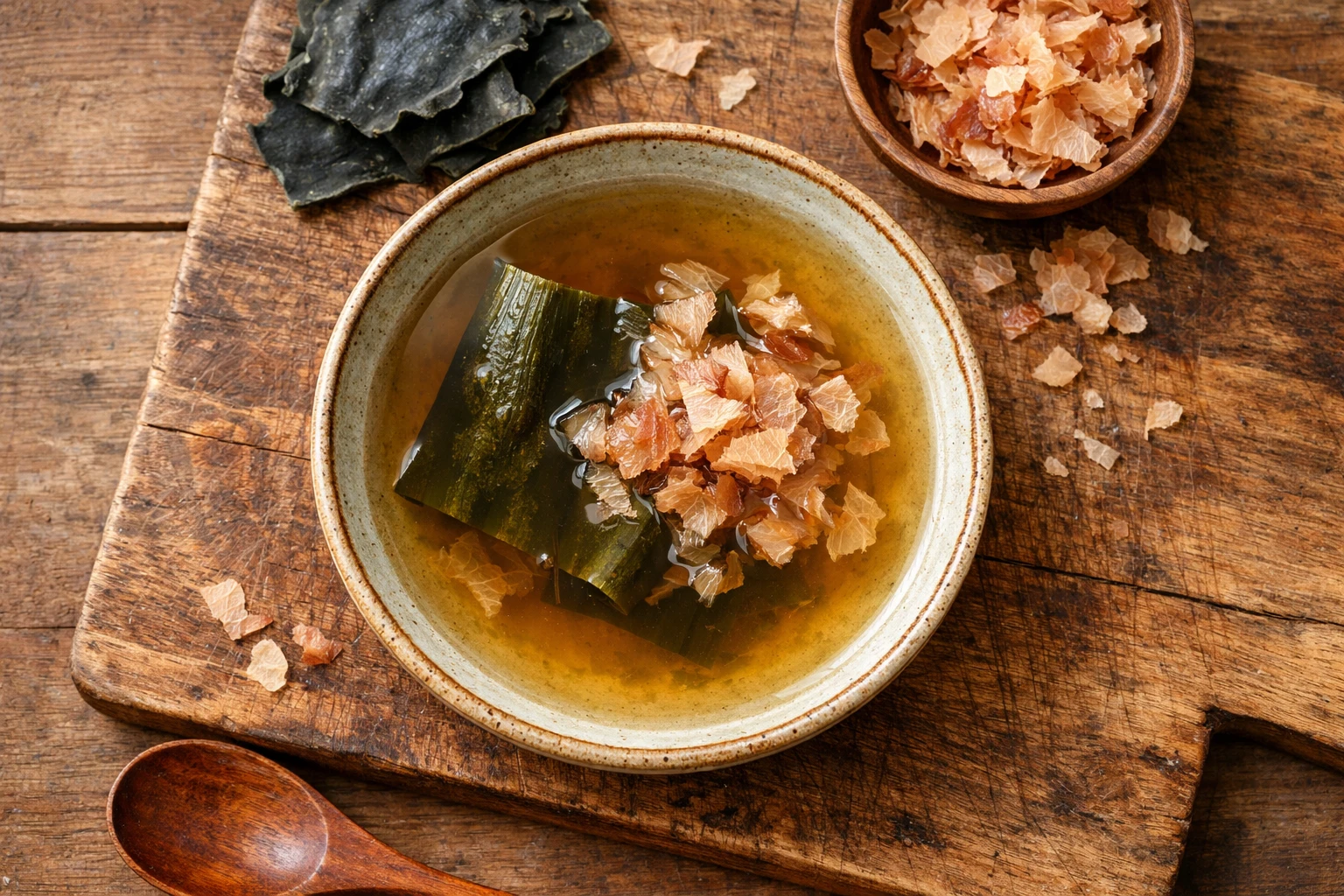
The foundation of Japanese cuisine - a clean, umami-rich broth that adds depth to dishes with virtually zero calories.
Quick Nutrition Facts
Per 1 Cup Prepared Dashi (240ml)
| Nutrient | Amount |
|---|---|
| Calories | 5 kcal |
| Protein | 0.5g |
| Carbohydrates | 1g |
| Fiber | 0g |
| Sugars | 0g |
| Fat | 0g |
| Sodium | 300mg |
| Iodine | 45mcg |
| Potassium | 50mg |
| Glutamate | 100mg |
Macronutrient Breakdown
 ChatGPT
  Claude
  AI Mode
  Perplexity
NUTRITIONIST INSIGHT
Dashi provides intense umami flavor with almost no calories, making it perfect for weight loss cooking. The glutamates in kombu and bonito enhance satiety signals, helping you feel satisfied with smaller portions.
Myth Busters
MYTH #1: Dashi Is Too High in Sodium
TRUTH: Homemade dashi contains about 300mg sodium per cup - less than most commercial broths (600-900mg). Making dashi from scratch with kombu gives you control over sodium while maximizing mineral content and umami.
MYTH #2: All Dashi Is the Same
TRUTH: Different dashi types have distinct nutrition profiles. Kombu dashi is vegetarian and iodine-rich, while bonito dashi adds protein and B vitamins. Shiitake dashi provides vitamin D and immune-supporting beta-glucans.
MYTH #3: Instant Dashi Is Just as Healthy
TRUTH: Many instant dashi powders contain MSG, added salt, and preservatives. Homemade dashi from kombu and bonito provides natural glutamates without additives, plus more minerals and cleaner flavor.
MYTH #4: Dashi Has No Nutritional Value
TRUTH: While low in calories, dashi provides iodine from kombu (essential for thyroid), minerals, and natural glutamates that support brain function. The bonito adds omega-3 fatty acids and B vitamins.
NutriScore by Health Goals
| Health Goal | NutriScore | Why This Score? |
|---|---|---|
| Weight Loss |  | Only 5 calories per cup with rich flavor. Use as soup base to increase meal volume without adding calories. |
| Muscle Gain |  | Low protein but excellent for cooking rice, grains, and proteins. Enhances palatability of high-protein meals. |
| Diabetes Management | | Zero carbs, no blood sugar impact. Perfect base for low-glycemic soups and sauces. |
| PCOS Management | | Zero sugar, supports insulin sensitivity. Use instead of high-sodium commercial broths. |
| Pregnancy Nutrition | | Good iodine source for fetal brain development. Watch sodium if hypertensive; limit to 2 cups daily. |
| Viral/Flu Recovery | | Warm broth supports hydration, provides electrolytes, and the umami aids appetite during illness. |
PERSONALIZED NUTRITION
Track your meals with NutriScan for personalized NutriScores based on your specific health goals!
Blood Sugar Response to Dashi
Dashi has virtually no impact on blood glucose due to near-zero carbohydrate content.
Typical Glucose Response Curve
This chart shows typical blood glucose response for general healthy individuals. Individual responses may vary. Not medical advice.
How to Maximize Dashi Benefits
Since dashi itself has no glucose impact, pair it strategically with other foods:
- Use as cooking liquid for rice - Adds flavor without extra calories
- Base for miso soup with tofu - Protein slows glucose absorption
- Poaching liquid for fish/chicken - Infuses umami while keeping meals lean
- Sauce base with vegetables - Increases vegetable palatability for picky eaters
Cultural Significance
Dashi is the soul of Japanese cuisine, dating back to the 7th century when kombu was first used as a flavoring.
In Japan:
- Foundation of washoku (traditional Japanese cuisine), UNESCO Intangible Cultural Heritage
- Three main types: kombu dashi (kelp), katsuo dashi (bonito), and awase dashi (combination)
- Used in miso soup, ramen, udon, rice dishes, simmered dishes (nimono), and sauces
- Ichiban dashi (first extraction) prized for clear soups; niban dashi for cooking
Global Impact:
- Umami (the fifth taste) was discovered studying dashi by Dr. Kikunae Ikeda in 1908
- Influenced global cuisine - chefs worldwide now use dashi techniques
- Growing popularity in plant-based cooking for deep flavor without meat
Compare & Substitute
Dashi vs Other Broths (Per 240ml/1 cup)
| Nutrient | Dashi | Chicken Broth | Beef Broth | Vegetable Broth |
|---|---|---|---|---|
| Calories | 5 kcal | 15 kcal | 17 kcal | 12 kcal |
| Protein | 0.5g | 2g | 2.7g | 0.5g |
| Carbs | 1g | 1g | 0g | 2g |
| Fat | 0g | 0.5g | 0.5g | 0g |
| Sodium | 300mg | 860mg | 890mg | 940mg |
| Best For | Clean umami, low-sodium | All-purpose Western | Rich savory dishes | Vegetarian cooking |
Frequently Asked Questions
Is dashi healthy?
Yes, dashi is exceptionally healthy with only 5 calories per cup and zero fat. Kombu provides iodine (45mcg) for thyroid function; bonito adds B vitamins and trace minerals. The natural glutamates enhance satiety without artificial additives.
Is dashi high in sodium?
Homemade dashi has 300mg sodium per cup - 50-65% less than commercial broths (600-900mg). For low-sodium needs, use kombu-only dashi or reduce soaking time. Avoid instant dashi powders which often exceed 500mg per serving.
What is the difference between kombu and bonito dashi?
Kombu dashi uses only kelp seaweed: vegetarian, milder umami, high iodine. Bonito dashi combines kombu with dried fish flakes: deeper umami, more protein, contains histidine and B vitamins. Awase dashi (combination) is most common in home cooking.
Can diabetics consume dashi?
Dashi is ideal for diabetics with zero carbs and no glycemic impact. Use it as soup base, cooking liquid, or sauce foundation to add flavor without affecting blood sugar. Choose homemade over instant to control sodium.
How long does dashi last?
Fresh dashi keeps 3-5 days refrigerated or 3 months frozen. Kombu can be reused once for second-extraction dashi (niban dashi). Signs of spoilage: cloudiness, off smell, or slimy texture.
Is dashi gluten-free?
Traditional homemade dashi from kombu and bonito is naturally gluten-free. Check instant dashi labels carefully - some contain wheat-based soy sauce or maltodextrin. For celiac-safe cooking, make dashi from scratch.


Similar Nutritious Foods
4505 Chicharrones Classic Chili Salt
7 Eleven Japan Crispy Corn Cheese
Explore More Nutrition Tools & Resources
AI Calorie Counter App - Snap a Photo, Get Macros
AI Nutritionist App That Reads Your Logged Meals
Best Protein Supplements for Women
Bulking Meal Plan App That Sets Your Surplus
ChatGPT Calorie Counter Alternative That Keeps the Total
ChatGPT Diet Plan Alternative That Tracks What You Eat
ChatGPT Weight Loss Coach Alternative With a Food Log
Fast Food Calorie Counter App That Reads the Tray
Free Calorie Tracker App with AI Photo Scans | NutriScan
Indian Diet Plan App With Veg and Non Veg Meals
Indian Food Calorie Calculator - Get Instant Nutrition Facts for Desi Meals — 2026
Intermittent Fasting for Women, Timer and Meal Log App
Intermittent Fasting Tracker App - Free Fasting Timer
Macro Tracker App That Fills the Numbers From a Photo
Mediterranean Diet Meal Plan App That Counts the Oil
Micronutrient Tracker App for Vitamins and Minerals
MyFitnessPal Alternative That Stays Free | NutriScan
NutriScore App: A Free Grade on Every Meal | NutriScan
Nutrition Label Scanner App for the Amount You Ate
Second Trimester Protein Guide
Vegetarian Meal Plan App With a Protein Target
Voice Calorie Counter - Speak to Track Meals Hands-Free
Water and Calorie Tracker App - Free Water Log