Döner Kebab: Calories, Nutrition and Health Benefits
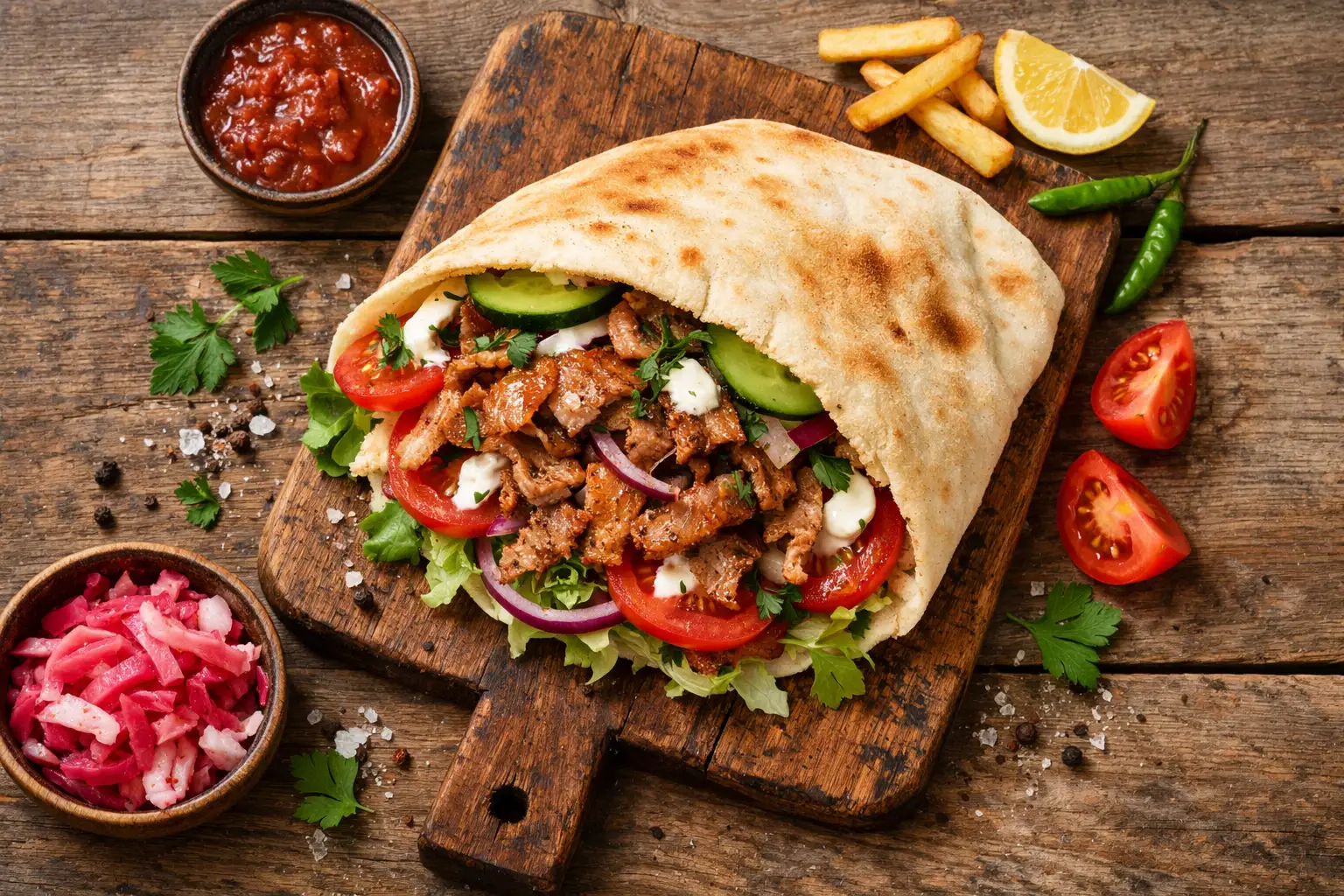
Iconic Turkish street food featuring vertical rotisserie meat wrapped in flatbread with fresh vegetables and savory sauces.
Quick Nutrition Facts
Per 1 Wrap (280g, standard serving)
| Nutrient | Amount |
|---|---|
| Calories | 450 kcal |
| Protein | 25g |
| Carbohydrates | 40g |
| Fiber | 3g |
| Sugars | 5g |
| Fat | 22g |
| Saturated Fat | 7g |
| Sodium | 950mg |
| Iron | 3.5mg |
| Vitamin C | 8mg |
Macronutrient Breakdown
 ChatGPT
  Claude
  AI Mode
  Perplexity
NUTRITIONIST INSIGHT
Döner Kebab provides 25g protein per wrap for sustained satiety. Choose lean chicken or beef, skip heavy mayo-based sauces, and add extra vegetables to boost nutrition while controlling calories.
Myth Busters
MYTH #1: All Döner Kebabs Are Unhealthy
TRUTH: Döner made with lean grilled meat and plenty of vegetables provides balanced nutrition. The key is choosing quality ingredients and controlling portion size; lean meat protein enhances satiety and supports weight management.
MYTH #2: Döner Has Too Much Fat
TRUTH: Fat content varies by meat choice. Chicken döner has 15-18g fat per wrap, while lamb can have 25-30g. Choosing lean cuts and limiting creamy sauces keeps fat moderate. The protein (25g) helps balance the meal.
MYTH #3: Street Food Can't Be Nutritious
TRUTH: Döner Kebab combines protein from meat, carbohydrates from flatbread, and vitamins from fresh vegetables (lettuce, tomatoes, onions, cabbage). When made fresh with quality ingredients, it provides a complete meal.
MYTH #4: Döner Is Too High in Sodium
TRUTH: While sodium is high (850-1000mg per wrap), this represents 40% of daily recommended intake, not excessive if balanced with low-sodium meals throughout the day. Managing sodium intake is important for blood pressure control, but occasional consumption fits balanced diets.
MYTH #5: You Can't Eat Döner on a Diet
TRUTH: Döner fits weight management when consumed mindfully. At 450 calories with 25g protein, it provides substantial satiety; choose whole wheat wrap, skip heavy sauces, add extra vegetables, and limit frequency to 1-2 times per week for best results.
NutriScore by Health Goals
| Health Goal | NutriScore | Why This Score? |
|---|---|---|
| Weight Loss |  | 450 calories with 25g protein promotes fullness. Choose lean chicken, skip mayo, add vegetables, limit to 1-2x weekly. |
| Muscle Gain |  | 25g protein per wrap supports muscle synthesis, moderate carbs (40g) for energy, ideal post-workout meal. |
| Diabetes Management | | Moderate carbs (40g) require portion control. Choose whole wheat wrap, eat half portion, skip sweet sauces, pair with salad. |
| PCOS Management | | Moderate calories and carbs. Choose lean protein, limit sauces, consume occasionally with blood sugar monitoring. |
| Pregnancy Nutrition | | Provides protein (25g), iron (3.5mg), and B vitamins. Iron absorption enhanced with vitamin C from vegetables and tomato sauces. |
| Heart Health | | High sodium (950mg) requires caution. Choose lean meat, limit salty sauces, balance with low-sodium meals throughout day for cardiovascular health. |
PERSONALIZED NUTRITION
Track your meals with NutriScan for personalized NutriScores based on your specific health goals!
Blood Sugar Response to Döner Kebab
Understanding how Döner Kebab affects your blood glucose helps you make informed choices about portion sizes and accompaniments.
Typical Glucose Response Curve
This chart shows typical blood glucose response for general healthy individuals. Individual responses may vary. Not medical advice.
How to Flatten the Spike
The high protein content in Döner Kebab helps moderate blood sugar response, but additional strategies improve glycemic control:
- 🥗 Side salad with olive oil - Fiber slows carbohydrate digestion
- 🥒 Extra vegetables in the wrap - Increases fiber and nutrient density
- 🍋 Skip sweet sauces - Avoid chili-mayo or ketchup-based sauces with added sugars
- 🌾 Choose whole wheat wrap - Lower GI than white flour flatbread
This combination balances the meal and provides sustained energy without sharp glucose peaks.
Cultural Significance
Döner Kebab originated in 19th century Ottoman Empire, evolving from traditional kebab cooking methods.
In Turkey:
- Invented in Bursa or Erzurum (disputed origins) in 1800s
- Vertical rotisserie technique revolutionized kebab preparation
- National street food symbol served at all hours
- Regional variations: İskender (with tomato sauce and yogurt), Dürüm (thin lavash wrap)
Global Spread:
- Turkish immigrants brought döner to Germany in 1970s (Berlin credited as döner wrap birthplace)
- Now found in 200+ countries with local adaptations
- Annual global sales exceed $3.5 billion
- Popular variations: Greek gyro, Arab shawarma, Mexican al pastor (influenced by Lebanese immigrants)
Modern Impact:
- Iconic street food in Europe, Middle East, and increasingly Asia
- Fast-casual döner chains expanding globally
- Fusion variations emerging (döner pizza, döner bowls)
- Symbol of multicultural urban food culture
Compare & Substitute
Döner Kebab vs Similar Street Foods (Per 100g)
| Nutrient | 🥙 Döner Kebab | 🌯 Shawarma | 🥙 Gyro | 🌮 Taco al Pastor |
|---|---|---|---|---|
| Calories | 161 kcal | 175 kcal | 215 kcal | 185 kcal |
| Carbs | 14g | 16g | 12g | 18g |
| Fiber | 1.1g | 1.3g | 0.9g | 1.5g |
| Protein | 9g | 10g | 11g | 9g |
| Fat | 8g | 9g | 13g | 9g |
| Sodium | 339mg | 420mg | 380mg | 310mg |
| Iron | 1.3mg | 1.5mg | 1.2mg | 1.4mg |
| Vitamin C | 3mg | 4mg | 2mg | 5mg |
| Best For | Balanced meal | Higher iron | Most protein | Lower sodium |
Frequently Asked Questions
Is Döner Kebab good for weight loss?
Döner Kebab can fit weight loss goals when consumed mindfully. A wrap has 450 calories with 25g protein that promotes satiety and helps control appetite. Choose lean chicken (not lamb), skip heavy mayo-based sauces (saves 100-150 calories), add extra vegetables for fiber and volume, and limit consumption to 1-2 times per week rather than daily.
Can diabetics eat Döner Kebab?
Diabetics can eat Döner Kebab with modifications. The flatbread provides 40g carbohydrates that impact blood sugar.
Tips for diabetics:
- Choose whole wheat wrap when available (lower GI)
- Eat half wrap only (20g carbs instead of 40g)
- Skip sweet sauces (chili sauce, ketchup-mayo blends)
- Request extra vegetables and lean protein
- Pair with side salad instead of fries
- Monitor blood sugar 2 hours after eating
The high protein content (25g) helps moderate blood sugar response. Always consult your healthcare provider.
How much protein is in Döner Kebab?
A typical Döner Kebab wrap (280g) contains 25g of protein from the rotisserie meat. Chicken döner provides 24-26g protein; beef/lamb döner provides 26-28g protein. This makes it a high-protein meal suitable for muscle maintenance, post-workout recovery, and sustained satiety.
What are the main health benefits of Döner Kebab?
Key Benefits:
- High Protein: 25g per wrap supports muscle maintenance and satiety
- Iron Source: Red meat provides 3.5mg iron for oxygen transport and energy
- B Vitamins: Meat supplies B12, B6, and niacin for energy metabolism
- Complete Meal: Combines protein, carbs, and vegetables in one serving
- Vegetable Nutrients: Lettuce, tomatoes, cabbage add vitamins C, K, and fiber
- Convenient Nutrition: Quick, filling meal alternative to processed fast food
When is the best time to eat Döner Kebab?
Depends on your goal:
- Weight Loss: Lunch only (avoid dinner to prevent late-day calories); pair with salad instead of fries.
- Muscle Gain: Post-workout lunch or dinner (protein aids recovery); choose beef/lamb for higher protein.
- Diabetes: Mid-day meal with half wrap and salad; skip evening to avoid bedtime blood sugar spikes.
- General Health: Lunch when metabolism is active; avoid late night (high sodium and calories disrupt sleep).
IMPORTANT NOTE
Avoid eating Döner Kebab late at night due to high sodium (950mg) and calories (450), which can affect sleep quality and morning hydration.
Is Döner Kebab healthy?
Döner Kebab can be part of a healthy diet when made with quality ingredients and consumed mindfully. Choose lean grilled chicken or beef (not fried or fatty cuts), limit creamy sauces to 1-2 tablespoons, add extra fresh vegetables for fiber and vitamins, watch sodium content by balancing with low-sodium meals throughout the day, and limit frequency to 1-2 times per week rather than daily consumption.
How can I make Döner Kebab healthier?
Healthier Döner Strategies:
- Choose lean chicken instead of lamb or mixed meat
- Whole wheat wrap instead of white flour flatbread
- Skip mayo-based sauces; use yogurt sauce or tahini instead
- Double the vegetables - request extra lettuce, tomatoes, cucumbers, cabbage
- No fries - choose side salad or skip sides entirely
- Share or save half - eat half wrap with salad for balanced 350-calorie meal
- Ask for less salt on the meat if possible
Track your meals with NutriScan app to see how Döner Kebab fits your personal nutrition goals.
What's the difference between Döner, Shawarma, and Gyro?
All three use vertical rotisserie cooking but differ in origin, spices, and serving style. Döner (Turkish) uses Turkish spices (cumin, paprika, oregano) and is served in flatbread or pita; Shawarma (Arab) uses Middle Eastern spices (cinnamon, cardamom, sumac) with tahini sauce and is wrapped in thin flatbread; Gyro (Greek) uses Mediterranean herbs (oregano, thyme) with tzatziki sauce and is served in pita bread. Nutritionally similar with 160-215 calories per 100g and 9-11g protein per 100g.


Similar Nutritious Foods
4505 Chicharrones Classic Chili Salt
7 Eleven Japan Crispy Corn Cheese
Explore More Nutrition Tools & Resources
AI Calorie Counter App - Snap a Photo, Get Macros
AI Nutritionist App That Reads Your Logged Meals
Best Protein Supplements for Women
Bulking Meal Plan App That Sets Your Surplus
ChatGPT Calorie Counter Alternative That Keeps the Total
ChatGPT Diet Plan Alternative That Tracks What You Eat
ChatGPT Weight Loss Coach Alternative With a Food Log
Fast Food Calorie Counter App That Reads the Tray
Free Calorie Tracker App with AI Photo Scans | NutriScan
Indian Diet Plan App With Veg and Non Veg Meals
Indian Food Calorie Calculator - Get Instant Nutrition Facts for Desi Meals — 2026
Intermittent Fasting for Women, Timer and Meal Log App
Intermittent Fasting Tracker App - Free Fasting Timer
Macro Tracker App That Fills the Numbers From a Photo
Mediterranean Diet Meal Plan App That Counts the Oil
Micronutrient Tracker App for Vitamins and Minerals
MyFitnessPal Alternative That Stays Free | NutriScan
NutriScore App: A Free Grade on Every Meal | NutriScan
Nutrition Label Scanner App for the Amount You Ate
Second Trimester Protein Guide
Vegetarian Meal Plan App With a Protein Target
Voice Calorie Counter - Speak to Track Meals Hands-Free
Water and Calorie Tracker App - Free Water Log