Dragon Fruit: Calories, Nutrition and Health Benefits
Exotic superfruit with vibrant pink exterior, mild sweet flavor, and prebiotic fiber for gut health and weight loss.
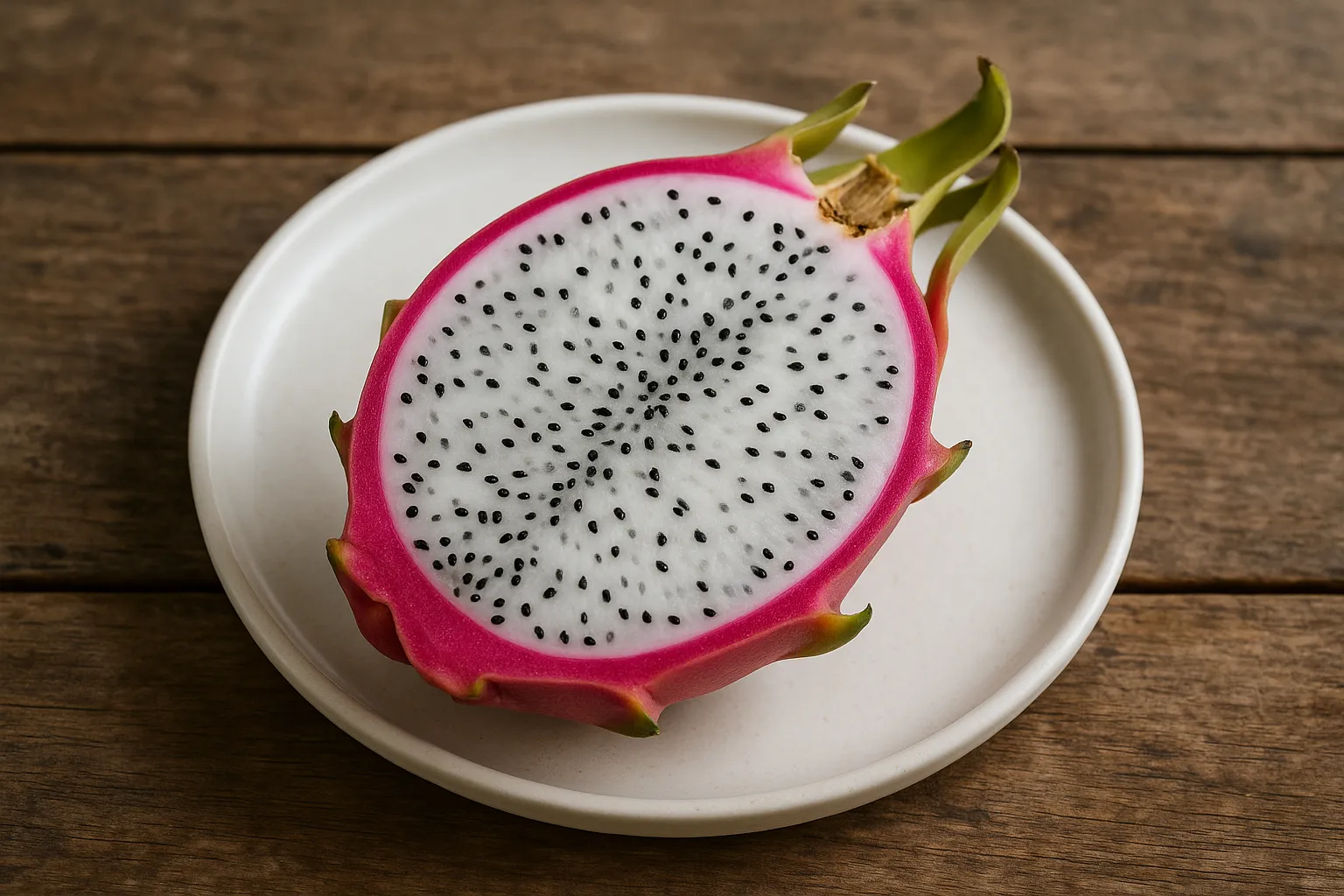
Quick Nutrition Facts
Per 1 Cup Diced Dragon Fruit (136g)
| Nutrient | Amount |
|---|---|
| Calories | 60 kcal |
| Protein | 1.2g |
| Carbohydrates | 13g |
| Fiber | 2.4g |
| Sugars | 8g |
| Fat | 0.3g |
| Vitamin C | 3mg |
| Magnesium | 32mg |
| Iron | 0.7mg |
| Water Content | 88% |
Macronutrient Breakdown
 ChatGPT
  Claude
  AI Mode
  Perplexity
NUTRITIONIST INSIGHT
Dragon fruit contains prebiotics—non-digestible fiber that feeds beneficial gut bacteria. This unique fiber profile supports digestive health, enhances immunity, and aids nutrient absorption better than many common fruits. The high water content (88%) provides satiety with minimal calories.
Myth Busters
MYTH #1: Dragon Fruit Is Too High in Sugar
TRUTH: At 8g natural sugar per cup, dragon fruit is moderate compared to mango (14g) and banana (12g). The 2.4g fiber slows glucose absorption and stabilizes blood sugar, preventing rapid insulin spikes. Pair with protein for optimal stability.
MYTH #2: Black Seeds in Dragon Fruit Are Indigestible
TRUTH: The small black seeds are nutrient-rich with omega-3 fatty acids and fiber. They're easily digested; their texture creates a pleasant eating experience. The seeds contribute significant micronutrient value.
MYTH #3: Dragon Fruit is Only a Tropical Fad
TRUTH: Dragon fruit (pitaya) has been cultivated in Southeast Asia and Mexico for centuries. Modern research validates its antioxidant (betalain) content and prebiotic fiber benefits, making it more than trend—it's functional nutrition.
MYTH #4: All Dragon Fruits Are the Same Nutritionally
TRUTH: Pink-fleshed dragon fruit has higher antioxidants (betalains); white-fleshed varieties have milder flavor. Red varieties contain lycopene-like compounds. Choose pink varieties for maximum phytonutrient content.
MYTH #5: Dragon Fruit Isn't Filling Enough as Snack
TRUTH: The 2.4g fiber per cup plus 88% water content creates significant satiety. Combined with protein (nuts, yogurt), dragon fruit becomes satisfying snack sustaining energy for 2-3 hours.
MYTH #6: Dragon Fruit Requires Special Preparation
TRUTH: Simply cut lengthwise and scoop flesh with spoon. The skin is inedible but skin extract has been studied for antioxidant benefits. Refrigerate until ready to eat; frozen dragon fruit works well in smoothies.
NutriScore by Health Goals
| Health Goal | NutriScore | Why This Score? |
|---|---|---|
| Weight Loss |  | Only 60 calories per cup with 2.4g fiber promoting fullness. High water content (88%) provides hydration without excess calories. Excellent low-calorie dessert alternative. |
| Muscle Gain |  | Post-workout carbs (13g) for glycogen replenishment, magnesium (32mg) for muscle function. Pair with protein shake for complete recovery meal. |
| Diabetes Management | | Low glycemic index, high fiber (2.4g) slows glucose absorption. Consume with protein or healthy fat to minimize blood sugar response. |
| PCOS Management | | Moderate glycemic load, prebiotic fiber supports metabolic health. Antioxidants reduce inflammation. Limit portion to 1 cup daily; pair with nuts or seeds. |
| Pregnancy Nutrition | | Vitamin C (3mg) supports immune system, fiber aids constipation relief common in pregnancy, magnesium helps muscle cramps. Low sugar impact and high satiety make it ideal snack. |
| Viral/Flu Recovery | | Vitamin C and antioxidants support immunity, hydrating nature aids fluid intake, easily digestible, gentle on stomach during recovery. |
PERSONALIZED NUTRITION
Track your meals with NutriScan for personalized NutriScores based on your specific health goals!
Blood Sugar Response to Dragon Fruit
Dragon fruit has a low glycemic index, making it suitable for blood sugar management across all health conditions.
Typical Glucose Response Curve
This chart shows typical blood glucose response for general healthy individuals. Individual responses may vary. Not medical advice.
How to Maximize Satiety
Pairing dragon fruit with protein and healthy fats extends satiety and nutrient absorption:
- 🥜 Mixed nuts - Healthy fats, vitamin E, sustained energy
- 🥛 Greek yogurt - Protein, probiotics, creaminess
- 🌰 Chia seeds - Omega-3s, additional fiber, gelatinous texture
- 🍯 Honey or almond butter - Sweet enhancement without refined sugar
This combination creates balanced snack with sustained energy release.
Cultural Significance
Dragon fruit originates from Mexico and Central America, now primarily cultivated in Southeast Asia and exported globally.
In India & Southeast Asia:
- Growing popularity as exotic fruit in urban wellness markets
- Often served chilled as summer dessert in tropical regions
- Increasingly used in smoothie bowls and açai-style breakfast dishes
- Premium positioning as superfruit in health-conscious restaurants
Global Impact:
- Instagram-famous vibrant pink color drives social media popularity
- Sustainability benefit: thrives in arid climates; drought-resistant crop
- Health food trend: featured in wellness retreats and detox programs
- Scientific interest: researchers study betalain compounds for anti-cancer potential
Compare & Substitute
Dragon Fruit vs Similar Tropical Fruits (Per 100g)
| Nutrient | 🐉 Dragon Fruit | 🥭 Mango | 🍌 Banana | 🧋 Açai Berry |
|---|---|---|---|---|
| Calories | 44 kcal | 60 kcal | 89 kcal | 70 kcal |
| Carbs | 9.4g | 15g | 23g | 4g |
| Fiber | 1.8g | 1.6g | 2.6g | 4.6g |
| Protein | 0.9g | 0.8g | 1.1g | 2g |
| Fat | 0.3g | 0.3g | 0.3g | 5.9g |
| Vitamin C | 2.2mg | 36.4mg | 8.7mg | 0.5mg |
| Magnesium | 23.5mg | 10mg | 27mg | 64mg |
| Fiber Type | Prebiotic (feeds good bugs) | Regular fiber | Resistant starch (green) | Antioxidant-rich fiber |
| Best For | Weight loss, gut health | Vitamin C, quick energy | Post-workout recovery, potassium | Antioxidants, satiety |
Frequently Asked Questions
Is dragon fruit good for weight loss?
Yes, dragon fruit is excellent for weight loss. At only 44 calories per 100g, it's low-calorie; the 1.8g fiber per 100g promotes fullness. The 88% water content provides hydration and satiety without excess calories. Eat 1 cup as mid-afternoon snack or dessert alternative to higher-calorie options.
Can diabetics eat dragon fruit?
Dragon fruit is ideal for diabetics. It has low glycemic index with moderate carbs (13g/cup) balanced by high fiber (2.4g) that slows glucose absorption. Pair with protein source (nuts, yogurt) to further stabilize blood sugar response and increase meal satiety.
How much protein is in dragon fruit?
Dragon fruit provides 0.9g protein per 100g (1.2g per cup). While not a protein source, combine with Greek yogurt (20g), nuts (6g), or seeds (5g) to create protein-rich snack meeting 15-25g daily goal for various health targets.
What are the health benefits of dragon fruit?
Dragon fruit delivers vitamin C for immunity, prebiotic fiber feeding healthy gut bacteria, antioxidants (betalains) reducing inflammation, magnesium for muscle function, iron for blood health, and lycopene-like compounds supporting eye health and cardiovascular wellness.
When is the best time to eat dragon fruit?
Ideal anytime: breakfast smoothie bowl for hydration and energy; mid-morning snack with nuts for sustained release; post-workout for quick carbs and vitamin C; afternoon dessert alternative providing sweetness without refined sugars. Serve chilled for maximum refreshment on hot days.
Is dragon fruit better than other tropical fruits?
Dragon fruit offers unique advantages over alternatives: higher fiber (1.8g/100g) than mango or papaya; lower calories (44/100g) than banana (89) or mango (60); prebiotic compounds unavailable in common fruits; lower sugar impact with sustained satiety. Choose based on specific nutritional goals.


Similar Nutritious Fruits
4505 Chicharrones Classic Chili Salt
7 Eleven Japan Crispy Corn Cheese
Explore More Nutrition Tools & Resources
AI Calorie Counter App - Snap a Photo, Get Macros
AI Nutritionist App That Reads Your Logged Meals
Best Protein Supplements for Women
Bulking Meal Plan App That Sets Your Surplus
ChatGPT Calorie Counter Alternative That Keeps the Total
ChatGPT Diet Plan Alternative That Tracks What You Eat
ChatGPT Weight Loss Coach Alternative With a Food Log
Fast Food Calorie Counter App That Reads the Tray
Free Calorie Tracker App with AI Photo Scans | NutriScan
Indian Diet Plan App With Veg and Non Veg Meals
Indian Food Calorie Calculator - Get Instant Nutrition Facts for Desi Meals — 2026
Intermittent Fasting for Women, Timer and Meal Log App
Intermittent Fasting Tracker App - Free Fasting Timer
Macro Tracker App That Fills the Numbers From a Photo
Mediterranean Diet Meal Plan App That Counts the Oil
Micronutrient Tracker App for Vitamins and Minerals
MyFitnessPal Alternative That Stays Free | NutriScan
NutriScore App: A Free Grade on Every Meal | NutriScan
Nutrition Label Scanner App for the Amount You Ate
Second Trimester Protein Guide
Vegetarian Meal Plan App With a Protein Target
Voice Calorie Counter - Speak to Track Meals Hands-Free
Water and Calorie Tracker App - Free Water Log