Edamame: Calories, Nutrition and Health Benefits
A powerhouse plant protein snack with complete amino acids, high fiber, and essential nutrients for every health goal.
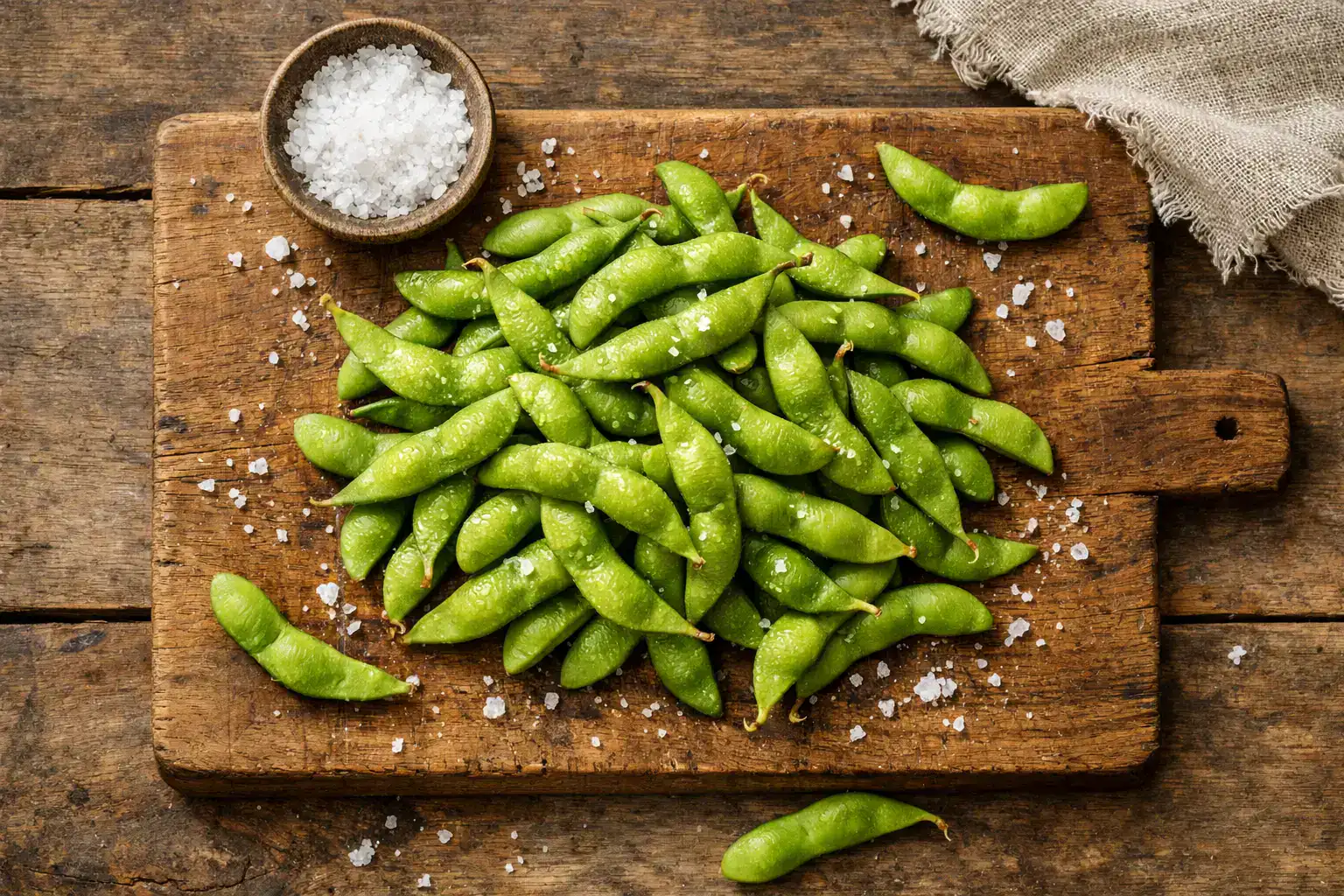
Quick Nutrition Facts
Per 1 Cup Shelled Edamame (155g)
| Nutrient | Amount |
|---|---|
| Calories | 188 kcal |
| Protein | 18.4g |
| Carbohydrates | 14g |
| Fiber | 8g |
| Sugars | 3.4g |
| Fat | 8g |
| Potassium | 676mg |
| Folate | 482mcg |
| Vitamin K | 41mcg |
| Iron | 3.5mg |
Macronutrient Breakdown
 ChatGPT
  Claude
  AI Mode
  Perplexity
NUTRITIONIST INSIGHT
Edamame is one of the few complete plant proteins, containing all nine essential amino acids. The combination of 18g protein and 8g fiber per cup makes it exceptionally satiating for weight management.
Edamame Nutrition Per 100 g
The card above uses a full cup of shelled beans. Per 100 g of cooked, shelled edamame the numbers look like this.
| Nutrient | Per 100 g |
|---|---|
| Calories | 121 kcal |
| Protein | 12 g |
| Carbohydrates | 9 g |
| Sugars | 2.2 g |
| Fiber | 5 g |
| Fat | 5 g |
| Iron | 2.3 mg |
| Folate | 311 mcg |
Edamame is a soybean harvested young, which is why it reads more like a legume than an oilseed. Protein is the standout at 12 g per 100 g, and it is a complete protein, so it carries all nine essential amino acids on its own. The 5 g of fiber slows digestion enough that the beans keep you full well past what their calorie count suggests.
Edamame next to two other soy and pulse staples, per 100 g
| Food | Calories | Protein | Fiber |
|---|---|---|---|
| Edamame | 121 kcal | 12 g | 5 g |
| Tofu | 80 kcal | 8 g | 1 g |
| Chickpeas | 164 kcal | 9 g | 8 g |
Tofu costs fewer calories but loses fiber in processing. Chickpeas bring more fiber and more calories. Edamame sits between them with the most protein per calorie of the three.
Myth Busters
MYTH #1: Soy Foods Like Edamame Cause Hormonal Issues in Men
TRUTH: Population studies show no effect of soy on testosterone or estrogen levels in men. The phytoestrogens in edamame are much weaker than human estrogen and do not feminize men.
MYTH #2: Edamame Is Bad for Thyroid Function
TRUTH: Meta-analysis of 18 studies found soy has no effect on actual thyroid hormone production in healthy individuals. Only those on thyroid medication should space soy intake from medication.
MYTH #3: Edamame Contains Too Much Estrogen
TRUTH: Edamame contains plant isoflavones, not estrogen. These phytoestrogens can actually block stronger human estrogens and may reduce breast cancer risk in some populations.
MYTH #4: Processed Soy Is the Same as Whole Edamame
TRUTH: Whole edamame retains fiber, protein, and nutrients that processed soy isolates lack. Studies on whole soy foods consistently show health benefits not seen with isolated soy supplements.
MYTH #5: Edamame Is High in Calories
TRUTH: One cup of edamame has only 188 calories while providing 18g protein and 8g fiber. This is far more nutrient-dense than most snacks and highly satiating per calorie.
MYTH #6: You Can't Get Enough Protein from Plant Sources Like Edamame
TRUTH: Edamame is a complete protein with all essential amino acids, comparable to animal proteins. One cup provides more protein than an egg (6g) or a glass of milk (8g).
NutriScore by Health Goals
| Health Goal | NutriScore | Why This Score? |
|---|---|---|
| Weight Loss |  | 188 calories, 18g protein, 8g fiber keeps you full. High satiety index, low energy density. |
| Muscle Gain | | Complete protein with all essential amino acids, 18g per cup. Also provides iron for oxygen transport to muscles. |
| Diabetes Management | | Very low GI (15-20). Soy consumption associated with reduced T2D risk. Protein + fiber stabilizes blood sugar. |
| PCOS Management |  | Low GI, high protein. Some concerns about isoflavones; limit to 1 serving daily. |
| Pregnancy Nutrition | | Excellent source of folate (482mcg, 120% DV) for neural tube development. Also provides iron and complete protein. 1-2 servings daily. |
| Viral/Flu Recovery | | Good protein for tissue repair, vitamin C for immunity. Easy to digest when steamed. |
PERSONALIZED NUTRITION
Track your meals with NutriScan for personalized NutriScores based on your specific health goals!
Blood Sugar Response to Edamame
Understanding how edamame affects your blood glucose can help you make informed decisions about when and how to eat it.
Typical Glucose Response Curve
This chart shows typical blood glucose response for general healthy individuals. Individual responses may vary. Not medical advice.
How to Flatten the Spike
Edamame already has minimal blood sugar impact due to its low GI. Pairing with additional fiber or healthy fats can further optimize glucose response:
- 🥑 Avocado - Adds healthy fats for even slower absorption
- 🥒 Fresh vegetables - Extra fiber with virtually no calories
- 🍋 Lemon juice or vinegar - May help reduce glycemic response
- 🌰 Sesame seeds - Healthy fats and extra minerals
This combination keeps blood sugar stable and extends satiety, making it perfect for diabetics or weight management.
Cultural Significance
Edamame (meaning "stem beans" in Japanese) has been cultivated in East Asia for over 2,000 years.
In Japan:
- Traditional izakaya appetizer served with sea salt and beer
- Eaten during summer festival season (natsu matsuri)
- Symbol of prosperity and good luck when served at New Year
- Often included in bento boxes for protein
Global Impact:
- Now grown in 35+ countries worldwide
- Third most produced legume globally after soybeans and peanuts
- Rising popularity as plant-based protein alternative
- Sustainable crop requiring less water than animal protein sources
Compare & Substitute
Edamame vs Similar Legumes (Per 100g)
| Nutrient | 🫛 Edamame | 🥜 Chickpeas | 🫘 Black Beans | 🥗 Lentils |
|---|---|---|---|---|
| Calories | 121 kcal | 164 kcal | 132 kcal | 116 kcal |
| Carbs | 9g | 27g | 24g | 20g |
| Fiber | 5g | 8g | 8g | 8g |
| Protein | 12g | 9g | 9g | 9g |
| Fat | 5g | 3g | 0.5g | 0.4g |
| Iron | 2.3mg | 2.9mg | 2.1mg | 3.3mg |
| Folate | 311mcg | 172mcg | 149mcg | 181mcg |
| Best For | Complete protein, quick snack | Hummus, salads | Soups, Mexican dishes | High iron, quick cooking |
Frequently Asked Questions
Is edamame good for weight loss?
Yes, edamame is excellent for weight loss. One cup has only 188 calories but provides 18g of protein and 8g of fiber that promote long-lasting satiety. The high protein content helps preserve muscle mass during calorie restriction.
Best practices: Enjoy as a mid-afternoon snack to prevent overeating at dinner, steam with sea salt for a satisfying 100-calorie portion (½ cup), pair with vegetables for volume without calories.
Can diabetics eat edamame?
Edamame is an excellent choice for diabetics. It has a very low glycemic index of 15-20, and research shows soy consumption is associated with reduced type 2 diabetes risk.
Tips for diabetics:
- The 8g fiber per cup slows glucose absorption
- 18g protein helps stabilize blood sugar
- Can be eaten as a between-meal snack without spiking glucose
- No need for portion control compared to higher-carb legumes
Studies show legumes are effective at reducing postprandial glucose response. Always consult your healthcare provider.
How much protein is in edamame?
One cup of shelled edamame contains 18.4g of complete protein with all nine essential amino acids. This makes edamame one of the best plant protein sources available.
For comparison: one cup of edamame has more protein than 3 eggs (18g vs 18g) or 2 cups of milk (18g vs 16g), making it ideal for vegetarians and vegans.
What are the main health benefits of edamame?
Key Benefits:
- Complete Protein: All essential amino acids for muscle building and repair
- Heart Health: May reduce LDL cholesterol and improve cardiovascular markers
- Blood Sugar Control: Low GI, high fiber stabilizes glucose
- Bone Health: Isoflavones may help maintain bone density
- Pregnancy Support: 120% DV folate per cup for neural development
- Weight Management: High satiety with moderate calories
Is edamame safe during pregnancy?
Moderate consumption of whole soy foods like edamame during pregnancy is considered safe. Research suggests dietary isoflavones do not have negative effects on fertility or fetal development.
Pregnancy benefits:
- 482mcg folate per cup (120% daily value) for neural tube development
- 3.5mg iron for preventing anemia
- Complete protein for fetal growth
- Easy to digest compared to other legumes
Recommended: 1-2 servings daily as part of a varied diet. Avoid soy supplements (isolated isoflavones).
How should I prepare edamame?
Popular Methods:
- Steamed with salt: Classic preparation, 5-7 minutes until tender
- Boiled: Add to boiling salted water for 3-5 minutes
- Roasted: Toss shelled edamame with oil and seasonings, bake at 400°F for 15-20 minutes
- Added to salads: Use shelled edamame as a protein boost
Storage: Fresh edamame lasts 1-2 days refrigerated. Frozen edamame keeps for 8-12 months and retains nutrition.
How much edamame should I eat per day?
General Guidelines:
- 1-2 cups daily - Most adults seeking plant protein
- 1 cup daily - Those with thyroid conditions (space from medication)
- 2-3 cups daily - Athletes and high-protein diets
- ½-1 cup daily - Those concerned about isoflavone intake
Edamame is nutrient-dense but caloric; track portions if monitoring calorie intake.
Track your meals with NutriScan app to see how edamame fits your personal nutrition goals.
Can children eat edamame?
Yes, edamame is safe and nutritious for children. It provides protein, fiber, and iron essential for growth. Introduce around 8-12 months of age, mashed or pureed initially.
Tips for kids:
- Fun finger food for toddlers (shells make eating interactive)
- Add to lunchboxes as a protein-rich snack
- Blend into smoothies or hummus for picky eaters
- Watch for soy allergies, especially if family history exists


Similar Nutritious Foods
4505 Chicharrones Classic Chili Salt
7 Eleven Japan Crispy Corn Cheese
Explore More Nutrition Tools & Resources
AI Calorie Counter App - Snap a Photo, Get Macros
AI Nutritionist App That Reads Your Logged Meals
Best Protein Supplements for Women
Bulking Meal Plan App That Sets Your Surplus
ChatGPT Calorie Counter Alternative That Keeps the Total
ChatGPT Diet Plan Alternative That Tracks What You Eat
ChatGPT Weight Loss Coach Alternative With a Food Log
Fast Food Calorie Counter App That Reads the Tray
Free Calorie Tracker App with AI Photo Scans | NutriScan
Indian Diet Plan App With Veg and Non Veg Meals
Indian Food Calorie Calculator - Get Instant Nutrition Facts for Desi Meals — 2026
Intermittent Fasting for Women, Timer and Meal Log App
Intermittent Fasting Tracker App - Free Fasting Timer
Macro Tracker App That Fills the Numbers From a Photo
Mediterranean Diet Meal Plan App That Counts the Oil
Micronutrient Tracker App for Vitamins and Minerals
MyFitnessPal Alternative That Stays Free | NutriScan
NutriScore App: A Free Grade on Every Meal | NutriScan
Nutrition Label Scanner App for the Amount You Ate
Second Trimester Protein Guide
Vegetarian Meal Plan App With a Protein Target
Voice Calorie Counter - Speak to Track Meals Hands-Free
Water and Calorie Tracker App - Free Water Log