Elote (Mexican Street Corn): Calories, Nutrition and Health Benefits
Mexico's beloved grilled corn covered in creamy mayo, tangy cotija cheese, zesty lime, and smoky chili - a flavorful street food with surprising nutritional benefits.
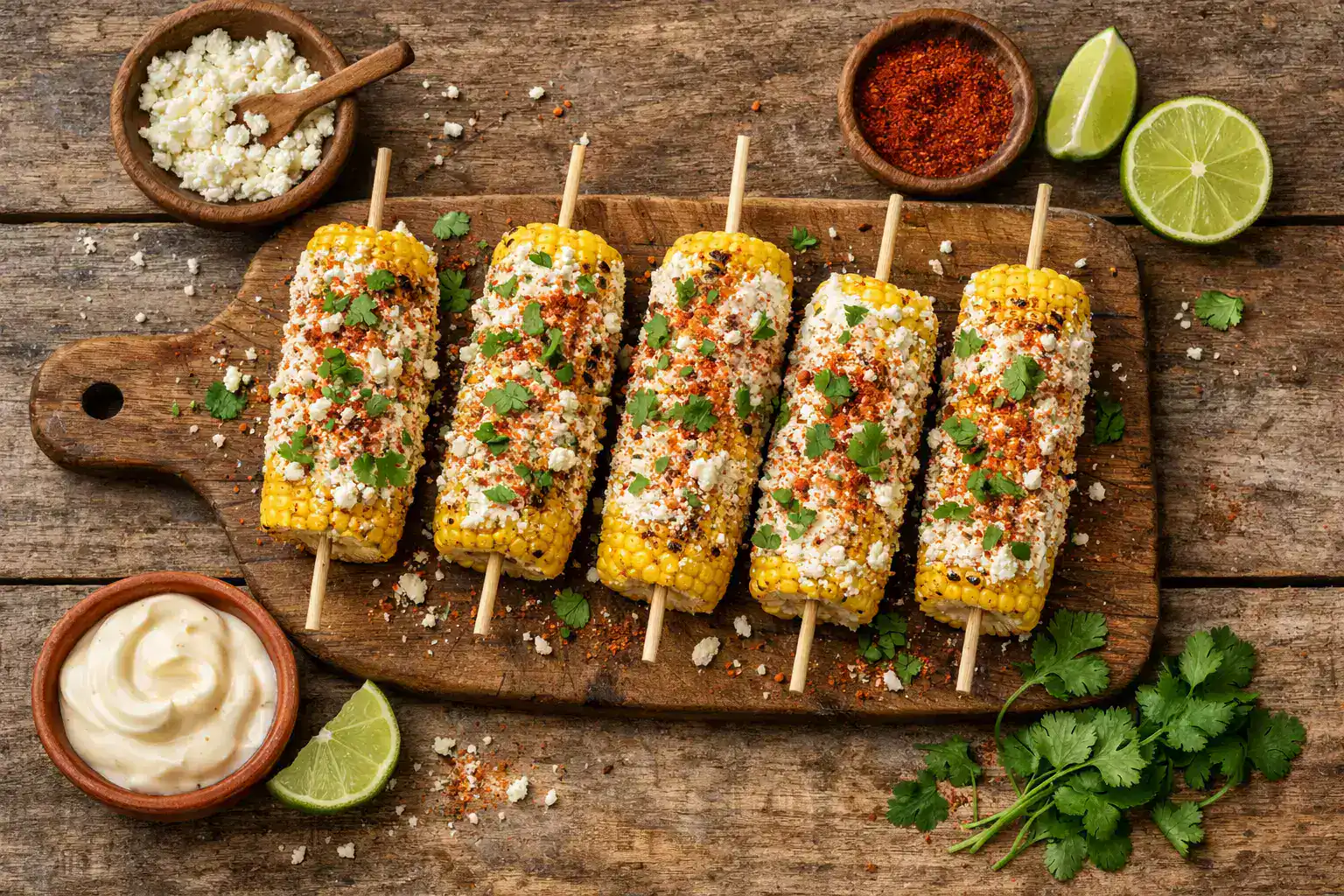
Quick Nutrition Facts
Per 1 Ear of Elote (150g)
| Nutrient | Amount |
|---|---|
| Calories | 280 kcal |
| Protein | 8g |
| Carbohydrates | 24g |
| Fiber | 3g |
| Sugars | 5g |
| Fat | 20g |
| Saturated Fat | 6g |
| Potassium | 300mg |
| Vitamin A | 150mcg |
| Calcium | 100mg |
Macronutrient Breakdown
 ChatGPT
  Claude
  AI Mode
  Perplexity
NUTRITIONIST INSIGHT
Elote combines the fiber benefits of whole corn with protein from cheese. The fat from mayo actually slows glucose absorption, making it more blood-sugar-friendly than plain corn with sugary toppings.
Myth Busters
MYTH #1: Elote Is Pure Junk Food
TRUTH: While not a diet food, elote provides 8g protein, 3g fiber, and corn's natural antioxidants (lutein, zeaxanthin). The fiber promotes satiety and digestive health. It's about portion control, not elimination.
MYTH #2: The Mayo Makes It Completely Unhealthy
TRUTH: Mayo adds fat (about 90 cal per serving), but fat slows carb absorption and improves satiety. For a lighter option, substitute Greek yogurt or use half the usual amount. The overall dish still provides valuable nutrients.
MYTH #3: Diabetics Can't Eat Corn
TRUTH: Corn has a moderate glycemic index of 52-55. The fat and protein in elote's toppings further reduce glycemic impact. Diabetics can enjoy half an ear paired with protein.
MYTH #4: Street Food Corn Has No Nutritional Value
TRUTH: Corn provides B vitamins (thiamin, folate), potassium, phosphorus, and plant compounds. One ear delivers 3g fiber (11% DV) and 300mg potassium (6% DV). The cheese adds calcium and protein.
MYTH #5: Elote Is Too High in Sodium
TRUTH: A typical ear has 310mg sodium (13% DV) - moderate for a satisfying snack. Compare to chips (170mg per oz) or fast food (1000+ mg per item). Make at home to control salt levels.
NutriScore by Health Goals
| Health Goal | NutriScore | Why This Score? |
|---|---|---|
| Weight Loss |  | 280 calories is moderate. Use Greek yogurt instead of mayo, reduce cheese. Fiber promotes fullness. |
| Muscle Gain |  | 8g protein, quality carbs for energy. Add extra cheese or pair with grilled chicken for post-workout meal. |
| Diabetes Management | | Corn's moderate GI (52-55) plus fat slows glucose absorption. Eat half portion, monitor response. |
| PCOS Management | | Moderate carbs affect insulin. Choose esquites for portion control, pair with protein-rich foods. |
| Pregnancy Nutrition | | Corn provides folate essential for fetal development. Calcium from cheese supports bone health. Ensure corn is fully cooked. |
| Viral/Flu Recovery | | Easy to eat, provides quick energy, vitamin A supports immune function. The warm preparation is soothing. |
PERSONALIZED NUTRITION
Track your meals with NutriScan for personalized NutriScores based on your specific health goals!
Blood Sugar Response to Elote
Understanding how elote affects your blood glucose helps optimize when and how to enjoy it.
Typical Glucose Response Curve
This chart shows typical blood glucose response for general healthy individuals. Individual responses may vary. Not medical advice.
How to Flatten the Spike
Pairing carbs with protein and fat slows glucose absorption:
- Already built in - Mayo and cheese provide fat and protein
- Add grilled chicken or carnitas - Extra protein reduces spike
- Choose esquites (corn in cup) - Better portion control
- Squeeze extra lime - Acidity may slightly reduce glycemic response
The traditional elote preparation naturally includes fat and protein, making it more blood-sugar-friendly than plain corn or corn with only sweet toppings.
Cultural Significance
Elote has deep roots in Mexican culinary tradition, dating back to ancient Mesoamerican civilizations where corn (maize) was considered sacred.
In Mexico:
- Street vendors (eloteros) are iconic figures in Mexican cities and towns
- Each region has unique variations - some add chamoy, hot sauce, or different cheeses
- Corn festivals (fiestas del elote) celebrate harvest seasons across Mexico
- Elote represents the fusion of indigenous corn culture with Spanish dairy products
In the United States:
- Popular at Mexican restaurants, food trucks, and street fairs
- "Elote style" has become a flavor profile applied to chips, dips, and other foods
- Represents authentic Mexican street food culture in immigrant communities
Global Spread:
- Adapted versions appear in fusion cuisines worldwide
- Social media has popularized creative elote variations
- Esquites (cup version) has gained popularity for its convenience
Compare & Substitute
Elote vs Similar Street Foods (Per Serving)
| Nutrient | Elote (1 ear) | Plain Corn (1 ear) | Corn Dog | Loaded Nachos |
|---|---|---|---|---|
| Calories | 280 kcal | 90 kcal | 330 kcal | 550 kcal |
| Carbs | 24g | 19g | 35g | 45g |
| Fiber | 3g | 2g | 1g | 4g |
| Protein | 8g | 3g | 7g | 12g |
| Fat | 20g | 1g | 18g | 35g |
| Sodium | 310mg | 15mg | 680mg | 890mg |
| Best For | Balanced street food snack | Low-calorie, diabetes-friendly | Quick indulgence | Sharing, high protein needs |
Frequently Asked Questions
How many calories are in elote?
One ear of traditional elote contains 280 calories. This breaks down to: grilled corn (90 cal), mayonnaise (90 cal), cotija cheese (50 cal), and seasonings (50 cal from butter/oil).
Lighter alternatives:
- Greek yogurt instead of mayo: 200 calories
- Lime and chili only: 100-120 calories
- Half mayo, full cheese: 240 calories
Is elote healthy?
Elote can fit into a healthy diet with mindful choices. The corn base provides 3g fiber, B vitamins, potassium, and antioxidants (lutein, zeaxanthin). Traditional toppings add fat and sodium but also protein and calcium.
Healthiest approach: Make at home to control portions, use Greek yogurt, and load up on lime and spices rather than extra cheese.
Can diabetics eat elote?
Diabetics can enjoy elote in moderation. Corn has a moderate glycemic index (52-55), and the fat from mayo and cheese actually slows glucose absorption.
Tips for diabetics:
- Eat half an ear (12g carbs instead of 24g)
- Pair with additional protein (grilled meat)
- Monitor blood sugar 2 hours after eating
- Choose esquites for easier portion control
What is the difference between elote and esquites?
Elote is served on the cob (whole ear on a stick). Esquites (or elote en vaso) is the same corn cut off the cob and served in a cup with the same toppings.
Key differences:
- Esquites allows better portion control
- Easier to eat and share
- Same flavors, similar nutrition per serving
- Esquites sometimes includes epazote herb or chicken broth
Is elote good for weight loss?
Traditional elote at 280 calories is moderate for weight loss - not ideal for strict diets but acceptable occasionally.
Weight loss modifications:
- Swap mayo for Greek yogurt (save 60+ calories)
- Use half the cheese
- Focus on lime, chili, and cilantro for flavor
- Choose esquites to control portion size
The 3g fiber promotes satiety, helping you feel full longer.
How do you make healthier elote at home?
Healthy homemade elote recipe:
- Grill corn until charred (no added fat)
- Mix 2 tbsp Greek yogurt + 1 tsp mayo (cuts calories in half)
- Add crumbled cotija (1-2 tbsp per ear)
- Generous lime juice and Tajin/chili powder
- Fresh cilantro for flavor
This version: ~180 calories, 6g protein, 2g fiber per ear.
What nutrients does corn provide?
One ear of corn offers:
- Fiber: 2-3g (supports digestive health)
- Potassium: 270mg (supports heart health)
- Folate: 42mcg (important for cell function)
- Vitamin C: 6mg (immune support)
- Lutein & Zeaxanthin: Eye health antioxidants
The toppings add calcium (from cheese), vitamin E (from mayo), and additional protein.


Similar Nutritious Foods
4505 Chicharrones Classic Chili Salt
7 Eleven Japan Crispy Corn Cheese
Explore More Nutrition Tools & Resources
AI Calorie Counter App - Snap a Photo, Get Macros
AI Nutritionist App That Reads Your Logged Meals
Best Protein Supplements for Women
Bulking Meal Plan App That Sets Your Surplus
ChatGPT Calorie Counter Alternative That Keeps the Total
ChatGPT Diet Plan Alternative That Tracks What You Eat
ChatGPT Weight Loss Coach Alternative With a Food Log
Fast Food Calorie Counter App That Reads the Tray
Free Calorie Tracker App with AI Photo Scans | NutriScan
Indian Diet Plan App With Veg and Non Veg Meals
Indian Food Calorie Calculator - Get Instant Nutrition Facts for Desi Meals — 2026
Intermittent Fasting for Women, Timer and Meal Log App
Intermittent Fasting Tracker App - Free Fasting Timer
Macro Tracker App That Fills the Numbers From a Photo
Mediterranean Diet Meal Plan App That Counts the Oil
Micronutrient Tracker App for Vitamins and Minerals
MyFitnessPal Alternative That Stays Free | NutriScan
NutriScore App: A Free Grade on Every Meal | NutriScan
Nutrition Label Scanner App for the Amount You Ate
Second Trimester Protein Guide
Vegetarian Meal Plan App With a Protein Target
Voice Calorie Counter - Speak to Track Meals Hands-Free
Water and Calorie Tracker App - Free Water Log