Erdnussflips: Calories, Nutrition and Health Facts
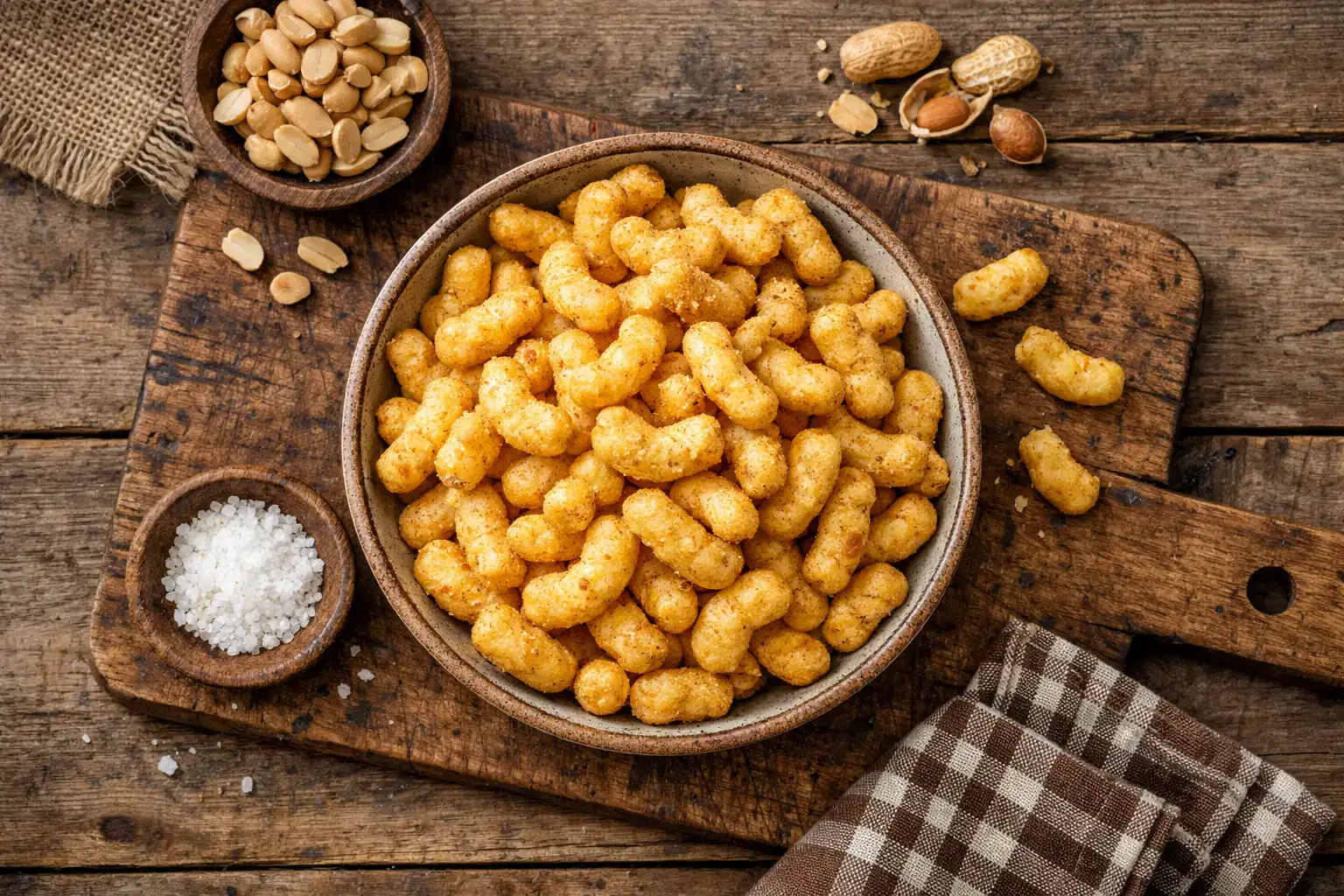
Germany's beloved crunchy peanut puffs delivering 13g protein per 100g with a satisfying crunch since 1963.
Quick Nutrition Facts
Per 30g Serving (about 1 handful)
| Nutrient | Amount |
|---|---|
| Calories | 140 kcal |
| Protein | 4g |
| Carbohydrates | 16g |
| Fiber | 0.6g |
| Sugars | 1.2g |
| Fat | 7g |
| Saturated Fat | 1.1g |
| Sodium | 210mg |
| Vitamin E | 1.5mg |
| Niacin (B3) | 2.1mg |
Macronutrient Breakdown
 ChatGPT
  Claude
  AI Mode
  Perplexity
NUTRITIONIST INSIGHT
Erdnussflips deliver 13g protein per 100g from real peanuts, but at 467 calories they are a calorie-dense snack. Stick to a 30g serving (about one handful) to enjoy the crunch without excess calories. The peanut content provides heart-healthy monounsaturated fats and niacin (B3).
Myth Busters
MYTH #1: Erdnussflips Are a Healthy Protein Snack
TRUTH: While they do contain 13g protein per 100g from peanuts, Erdnussflips are primarily a processed corn snack with 22g fat and 467 calories per 100g. Peanuts themselves offer cardiovascular benefits, but the processed puff format adds refined carbs and sodium.
MYTH #2: Peanut Puffs Are Better Than Potato Chips
TRUTH: Per 100g, Erdnussflips (467 cal, 13g protein) do offer more protein than standard potato chips (536 cal, 7g protein). However, they still contain significant sodium and fat. Nut consumption frequency matters more than the format for health benefits.
MYTH #3: A Whole Bag Is Just One Serving
TRUTH: A standard 150g bag contains over 700 calories. The recommended serving is 30g (about one handful, 140 cal). Portion control with calorie-dense snacks is critical for weight management.
MYTH #4: Erdnussflips Cause Peanut Allergies in Children
TRUTH: Eating peanut products does not cause allergies. In fact, early peanut exposure through puffed snacks like Bamba reduced peanut allergy prevalence by 81% in the LEAP study.
MYTH #5: All Erdnussflips Brands Have the Same Nutrition
TRUTH: Nutrition varies by brand. Lorenz, Funny-frisch, and store brands differ in peanut content (25-32%), oil type, and sodium levels. Always check the label for your specific brand.
NutriScore by Health Goals
| Health Goal | NutriScore | Why This Score? |
|---|---|---|
| Weight Loss |  | 467 cal/100g is very calorie-dense. Limit to 15-20g portions. Low fiber (2g) means poor satiety per calorie. |
| Muscle Gain |  | 13g protein per 100g is decent for a snack. Good post-workout carb source. Pair with a protein shake for better macro balance. |
| Diabetes Management | | 54g carbs per 100g with moderate GI. Peanut content helps blunt glucose spikes but portion control is critical. Limit to 15-20g. |
| PCOS Management | | High glycemic load from corn base affects insulin. Keep portions very small (15g max) and pair with fiber-rich foods. |
| Pregnancy Nutrition | | Peanut consumption during pregnancy is safe and does not increase childhood allergy risk. Watch sodium intake. Provides niacin and vitamin E. |
| Viral/Flu Recovery | | Easy to eat, provides quick energy and some protein. Sodium helps with electrolyte replacement. Not nutrient-dense enough as primary recovery food. |
PERSONALIZED NUTRITION
Track your meals with NutriScan for personalized NutriScores based on your specific health goals!
Blood Sugar Response to Erdnussflips
Understanding how Erdnussflips affect your blood glucose can help you make informed snacking decisions.
Typical Glucose Response Curve
This chart shows typical blood glucose response for general healthy individuals. Individual responses may vary. Not medical advice.
How to Flatten the Spike
Pairing peanut snacks with protein or fiber slows glucose absorption and reduces the peak blood sugar level:
- 🥒 Raw vegetable sticks (carrots, cucumber) - Adds fiber and volume with minimal calories
- 🧀 A slice of cheese - Protein and fat slow carb absorption
- 🥛 Glass of buttermilk or lassi - Protein and probiotics aid digestion
- 🍎 Apple slices - Fiber-rich fruit balances the refined carbs
This combination not only reduces the glucose spike but also extends energy release, keeping you fuller for longer.
Cultural Significance
Erdnussflips are one of Germany's most iconic snack foods, deeply embedded in the country's snacking culture since the 1960s.
In Germany:
- Launched by Bahlsen in 1963, becoming an instant classic
- Annual consumption exceeds 40,000 tonnes across German-speaking countries
- A staple at every Bundesliga match, house party, and Stammtisch gathering
- Major brands include Funny-frisch, Lorenz, and Aldi's Gut & Gunstig line
Global Connections:
- Similar to Israel's Bamba (which helped reduce peanut allergy rates by 81%)
- Comparable to American Cheetos Puffs but with real peanut coating
- Popular across Austria, Switzerland, and the Netherlands
- Increasingly found in international grocery stores and Amazon imports
Compare & Substitute
Erdnussflips vs Similar Snacks (Per 100g)
| Nutrient | 🥜 Erdnussflips | 🥨 Pretzel Sticks | 🥔 Potato Chips | 🥜 Roasted Peanuts |
|---|---|---|---|---|
| Calories | 467 kcal | 380 kcal | 536 kcal | 567 kcal |
| Carbs | 54g | 75g | 53g | 16g |
| Fiber | 2g | 3g | 4.4g | 8.5g |
| Protein | 13g | 10g | 7g | 26g |
| Fat | 22g | 4g | 35g | 49g |
| Sodium | 700mg | 1,200mg | 525mg | 410mg |
| Sugar | 4g | 3g | 0.5g | 4g |
| Best For | Protein snacking, game days | Low-fat crunchy option | Indulgent treat, occasional | High protein, heart health |
Frequently Asked Questions
How many calories are in Erdnussflips?
100g of Erdnussflips contains approximately 467 calories, with 22g fat, 54g carbs, and 13g protein. A recommended single serving of 30g has about 140 calories.
Per 100g breakdown: 42% of calories from fat, 46% from carbs, and 11% from protein. The calorie density is lower than pure peanuts (567 kcal) but higher than pretzels (380 kcal).
Are Erdnussflips healthy?
Erdnussflips are a processed snack best enjoyed in moderation. The peanut content provides some nutritional value including protein (13g/100g), niacin, and vitamin E.
Positives: Decent protein for a snack, contains heart-healthy monounsaturated fats from peanuts, lower calories than potato chips.
Watch out for: High sodium (700mg/100g), calorie-dense, low fiber (2g), processed corn base.
Can diabetics eat Erdnussflips?
Diabetics should limit Erdnussflips to small portions of 15-20g due to 54g carbs per 100g from the corn puff base.
Tips for diabetics:
- Keep portions to 15-20g (about 70-93 calories)
- Pair with protein-rich foods or vegetables
- Avoid eating on an empty stomach
- Monitor blood sugar 2 hours after eating
The peanut content provides some protein and fat that slow glucose absorption, but the corn base still causes a notable blood sugar response.
Are Erdnussflips safe during pregnancy?
Yes, Erdnussflips are safe during pregnancy unless you have a peanut allergy. Current medical guidelines confirm that eating peanut products during pregnancy does not increase childhood allergy risk.
Watch for: Sodium content (700mg/100g) can contribute to water retention. Stick to 30g servings and balance with nutrient-dense foods like fruits, vegetables, and whole grains.
What are Erdnussflips made of?
Erdnussflips are puffed corn crisps coated with peanut flavoring. Typical ingredients include corn grits (50-55%), peanuts (25-32%), vegetable oil (sunflower or palm), and salt.
The corn is extruded at high temperature to create the signature airy, crunchy texture, then coated with ground peanut paste and seasoning.
How many Erdnussflips should I eat per day?
General Guidelines:
- 30g (1 handful) - Standard serving for most people (140 cal)
- 15-20g - Diabetes, PCOS, or strict weight loss diets
- 50g max - Athletes or high-calorie needs
Avoid excess: A full 150g bag contains over 700 calories, 33g fat, and 1,050mg sodium. Always portion into a small bowl rather than eating from the bag.
Track your snacking with NutriScan app to see how Erdnussflips fit your daily nutrition goals.


Similar Nutritious Foods
4505 Chicharrones Classic Chili Salt
7 Eleven Japan Crispy Corn Cheese
Explore More Nutrition Tools & Resources
AI Calorie Counter App - Snap a Photo, Get Macros
AI Nutritionist App That Reads Your Logged Meals
Best Protein Supplements for Women
Bulking Meal Plan App That Sets Your Surplus
ChatGPT Calorie Counter Alternative That Keeps the Total
ChatGPT Diet Plan Alternative That Tracks What You Eat
ChatGPT Weight Loss Coach Alternative With a Food Log
Fast Food Calorie Counter App That Reads the Tray
Free Calorie Tracker App with AI Photo Scans | NutriScan
Indian Diet Plan App With Veg and Non Veg Meals
Indian Food Calorie Calculator - Get Instant Nutrition Facts for Desi Meals — 2026
Intermittent Fasting for Women, Timer and Meal Log App
Intermittent Fasting Tracker App - Free Fasting Timer
Macro Tracker App That Fills the Numbers From a Photo
Mediterranean Diet Meal Plan App That Counts the Oil
Micronutrient Tracker App for Vitamins and Minerals
MyFitnessPal Alternative That Stays Free | NutriScan
NutriScore App: A Free Grade on Every Meal | NutriScan
Nutrition Label Scanner App for the Amount You Ate
Second Trimester Protein Guide
Vegetarian Meal Plan App With a Protein Target
Voice Calorie Counter - Speak to Track Meals Hands-Free
Water and Calorie Tracker App - Free Water Log