FamilyMart Melon Pan: Calories, Nutrition and Health Benefits
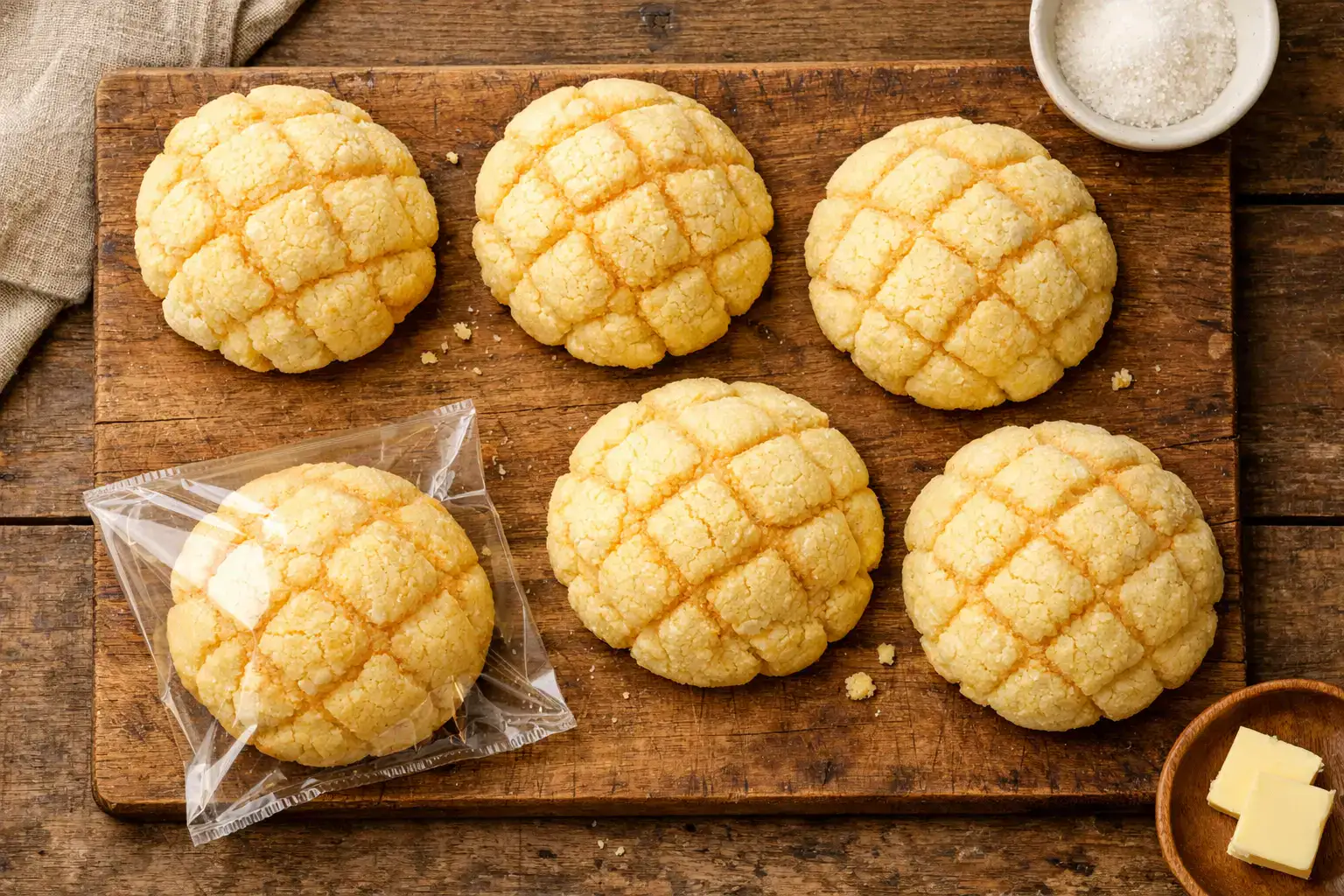
Japan's iconic konbini sweet bread with a crispy cookie crust, delivering 350 calories of quick energy in every bun.
Quick Nutrition Facts
Per 1 Melon Pan Bun (~95g)
| Nutrient | Amount |
|---|---|
| Calories | 350 kcal |
| Protein | 6g |
| Carbohydrates | 54g |
| Fiber | 1.5g |
| Sugars | 22g |
| Fat | 12g |
| Sodium | 195mg |
| Potassium | 90mg |
| Calcium | 30mg |
| Iron | 0.7mg |
Macronutrient Breakdown
 ChatGPT
  Claude
  AI Mode
  Perplexity
NUTRITIONIST INSIGHT
Melon pan delivers 350 calories mostly from refined carbs and sugar, making it a quick energy source but low in fiber and protein. Pair it with a protein-rich drink like milk or soy milk to slow glucose absorption and extend satiety.
Myth Busters
MYTH #1: Melon Pan Contains Real Melon
TRUTH: Traditional melon pan contains no melon fruit at all. The name comes from its appearance; the crackled cookie crust resembles the skin of a cantaloupe melon. Some modern variations add melon extract, but the classic recipe uses only flour, sugar, butter, and eggs.
MYTH #2: All Konbini Breads Are Equally Unhealthy
TRUTH: Nutrition varies significantly across konbini breads. Melon pan has 350 calories with 12g fat, while whole-grain options contain more fiber and fewer refined sugars. Choosing wisely and reading labels makes a real difference.
MYTH #3: Melon Pan Is Too Sugary for Anyone
TRUTH: At 22g sugar per bun, melon pan is comparable to many breakfast cereals. For active individuals or pre-workout fuel, the quick-digesting carbs provide useful energy. The key is portion control and timing, not total avoidance.
MYTH #4: Eating Melon Pan Always Spikes Blood Sugar Dangerously
TRUTH: While refined carbs do raise blood sugar, pairing bread with protein or fat significantly reduces the glucose spike. Eating melon pan with Greek yogurt or nuts creates a more balanced glycemic response.
MYTH #5: Melon Pan Has No Nutritional Value
TRUTH: Melon pan provides 6g protein, B vitamins from enriched flour, selenium (15mcg per bun), and quick-digesting energy. While not nutrient-dense, it is not nutritionally void either. Enriched wheat flour provides iron and B vitamins by fortification.
NutriScore by Health Goals
| Health Goal | NutriScore | Why This Score? |
|---|---|---|
| Weight Loss |  | 350 calories with low fiber (1.5g) and high refined carbs. Limit to half a bun or choose whole-grain alternatives. |
| Muscle Gain |  | Provides 54g fast carbs for glycogen replenishment post-workout, but only 6g protein. Pair with a protein shake. |
| Diabetes Management | | High GI refined carbs cause rapid blood sugar rise. Replacing refined bread with whole-grain reduces HbA1c and fasting glucose. Eat half portions with protein if at all. |
| PCOS Management | | Refined sugars and carbs worsen insulin resistance. Choose whole-grain bread alternatives instead. |
| Pregnancy Nutrition | | Provides quick energy and B vitamins from enriched flour. ACOG recommends choosing whole grains for most bread servings during pregnancy. Occasional treat is fine. |
| Viral/Flu Recovery |  | Easy to eat, gentle on stomach, provides quick energy when appetite is low. Good recovery snack in small portions. |
PERSONALIZED NUTRITION
Track your meals with NutriScan for personalized NutriScores based on your specific health goals!
Blood Sugar Response to Melon Pan
Understanding how melon pan affects your blood glucose helps you make smarter choices about when and how to enjoy it.
Typical Glucose Response Curve
This chart shows typical blood glucose response for general healthy individuals. Individual responses may vary. Not medical advice.
How to Flatten the Spike
Pairing refined bread with protein or healthy fat slows glucose absorption and reduces the peak blood sugar level:
- 🥛 Milk or soy milk - Protein and fat slow carb digestion
- 🧀 Cheese slices - Adds protein and healthy fats
- 🥜 A handful of almonds - Fiber and healthy fats blunt the spike
- 🥚 Boiled eggs - Complete protein for sustained energy
This combination not only reduces the glucose spike but also extends energy release, keeping you fuller for longer.
Cultural Significance
Melon pan (meronpan) is one of Japan's most beloved bakery items, originating in the early 20th century during Japan's adoption of Western-style bread baking.
In Japan:
- Staple of every konbini (convenience store) including FamilyMart, Lawson, and 7-Eleven
- Named for its cantaloupe-like crackled cookie crust appearance, not melon flavor
- Regional variations exist: Kobe's "sunrise" version, Hiroshima's custard-filled type
- Often ranked as Japan's #1 favorite bakery bread in consumer surveys
Global Impact:
- Popular across East and Southeast Asia through Japanese konbini expansion
- FamilyMart operates 16,000+ stores in Japan alone, selling millions of melon pan annually
- Inspired fusion desserts like melon pan ice cream sandwiches and melon pan toast
- Represents Japan's unique "yoshoku" tradition of adapting Western foods
Compare & Substitute
Melon Pan vs Similar Konbini Breads (Per 100g)
| Nutrient | 🍈 Melon Pan | 🫘 An-Pan (Red Bean) | 🍫 Choco Cornet | 🍞 Shokupan (White) |
|---|---|---|---|---|
| Calories | 338 kcal | 280 kcal | 380 kcal | 260 kcal |
| Carbs | 55g | 50g | 48g | 47g |
| Fiber | 1.7g | 2.5g | 1.2g | 2.3g |
| Protein | 7g | 8g | 6g | 9g |
| Fat | 10g | 4g | 18g | 4g |
| Sugar | 24g | 22g | 28g | 5g |
| Sodium | 205mg | 250mg | 220mg | 500mg |
| Best For | Quick energy, sweet snack | Fiber + protein balance | High-fat indulgent treat | Toast, sandwiches |
Frequently Asked Questions
How many calories are in a FamilyMart melon pan?
A standard FamilyMart melon pan bun contains approximately 350 calories with 54g carbohydrates, 12g fat, and 6g protein per bun (~95g).
Per 100g: 338 calories, making it a calorie-dense sweet bread comparable to other enriched bakery products.
Is melon pan healthy?
Melon pan is best enjoyed as an occasional treat rather than a daily staple. It provides quick energy from refined carbs but lacks significant fiber (1.5g), vitamins, or minerals.
To make it healthier: Eat half a bun, pair with protein (milk, yogurt, eggs), and choose it as pre-workout fuel rather than a sedentary snack.
Can diabetics eat melon pan?
Diabetics should exercise caution with melon pan due to its high refined carbohydrate content (54g per bun) and high glycemic index.
Tips for diabetics:
- Eat a quarter to half bun at a time (13-27g carbs)
- Always pair with protein or healthy fat
- Best timing: post-meal as a small dessert, never on an empty stomach
- Monitor blood sugar 2 hours after eating
Consult your healthcare provider for personalized advice.
What is melon pan made of?
Melon pan consists of two parts: a soft enriched bread dough interior and a crispy cookie dough exterior. The cookie layer contains flour, sugar, butter, and eggs, creating the distinctive crackled pattern. The bread dough uses enriched wheat flour, yeast, milk, and butter.
Does melon pan contain actual melon?
No, traditional melon pan does not contain melon fruit. The name refers to the bread's appearance; the crosshatch pattern on the cookie crust resembles the skin of a cantaloupe (musk melon). Some modern bakeries offer melon-flavored versions with melon extract or green coloring.
How does melon pan compare to other konbini breads?
Melon pan sits in the mid-range for konbini bread calories at 350 per bun. An-pan (red bean bun) has fewer calories (~280) with more fiber from azuki beans. Chocolate cornet is higher in fat and calories (~380). Plain shokupan (white bread) is the lowest calorie option (~260 per 100g) and most versatile.
IMPORTANT NOTE
Melon pan is a treat food. For daily bread needs, choose whole-grain options that provide more fiber, B vitamins, and sustained energy.


Similar Nutritious Foods
4505 Chicharrones Classic Chili Salt
7 Eleven Japan Crispy Corn Cheese
Explore More Nutrition Tools & Resources
AI Calorie Counter App - Snap a Photo, Get Macros
AI Nutritionist App That Reads Your Logged Meals
Best Protein Supplements for Women
Bulking Meal Plan App That Sets Your Surplus
ChatGPT Calorie Counter Alternative That Keeps the Total
ChatGPT Diet Plan Alternative That Tracks What You Eat
ChatGPT Weight Loss Coach Alternative With a Food Log
Fast Food Calorie Counter App That Reads the Tray
Free Calorie Tracker App with AI Photo Scans | NutriScan
Indian Diet Plan App With Veg and Non Veg Meals
Indian Food Calorie Calculator - Get Instant Nutrition Facts for Desi Meals — 2026
Intermittent Fasting for Women, Timer and Meal Log App
Intermittent Fasting Tracker App - Free Fasting Timer
Macro Tracker App That Fills the Numbers From a Photo
Mediterranean Diet Meal Plan App That Counts the Oil
Micronutrient Tracker App for Vitamins and Minerals
MyFitnessPal Alternative That Stays Free | NutriScan
NutriScore App: A Free Grade on Every Meal | NutriScan
Nutrition Label Scanner App for the Amount You Ate
Second Trimester Protein Guide
Vegetarian Meal Plan App With a Protein Target
Voice Calorie Counter - Speak to Track Meals Hands-Free
Water and Calorie Tracker App - Free Water Log