Fattoush Salad: Calories, Nutrition and Health Benefits
A vibrant Levantine bread salad combining crispy pita, fresh vegetables, tangy sumac, and lemon for Mediterranean wellness.
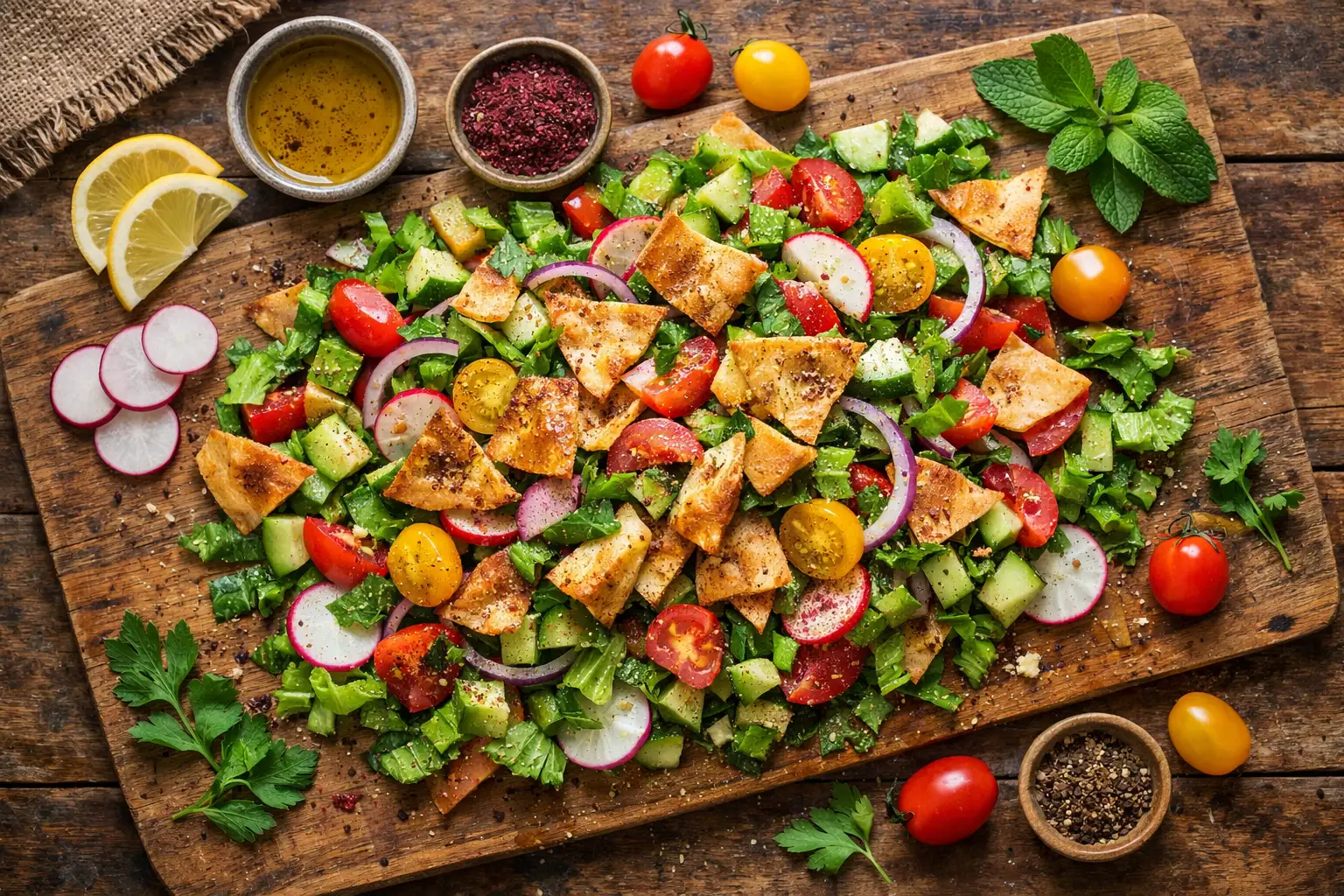
Quick Nutrition Facts
Per 1 Serving (200g)
| Nutrient | Amount |
|---|---|
| Calories | 180 kcal |
| Protein | 3g |
| Carbohydrates | 16g |
| Fiber | 3g |
| Sugars | 4g |
| Fat | 12g |
| Vitamin C | 25mg |
| Vitamin A | 350mcg |
| Iron | 1.5mg |
| Calcium | 45mg |
Macronutrient Breakdown
 ChatGPT
  Claude
  AI Mode
  Perplexity
NUTRITIONIST INSIGHT
Fattoush exemplifies the Mediterranean diet with fresh vegetables, heart-healthy olive oil, and whole grain pita. The sumac adds unique antioxidants while keeping calories low at just 180 per serving.
Myth Busters
MYTH #1: Fattoush Is Just a Regular Salad
TRUTH: Fattoush is a Mediterranean diet staple with unique health benefits. The sumac spice provides antioxidants, while the combination of vegetables and olive oil supports cardiovascular health.
MYTH #2: The Pita Chips Make It Unhealthy
TRUTH: The toasted pita adds only 60-80 calories while providing satisfying crunch and whole grain benefits. Portion control is key - stick to 1-2 small pieces mixed into the salad rather than eating them as a side.
MYTH #3: Fattoush Has Too Much Oil
TRUTH: The olive oil dressing (2-3 tablespoons) provides heart-healthy monounsaturated fats. Mediterranean diet studies show olive oil supports cardiovascular health and doesn't cause weight gain when consumed in appropriate portions.
MYTH #4: Diabetics Should Avoid Fattoush
TRUTH: Fattoush can fit into a diabetic diet. The fiber from fresh vegetables and moderate carbohydrate content (16g per serving) make it suitable. Add lean protein and control pita portions for better blood sugar management.
MYTH #5: Fattoush Isn't Filling Enough
TRUTH: The combination of fiber (3g), healthy fats from olive oil, and high water content from vegetables promotes satiety. Add grilled chicken or chickpeas to make it a complete, satisfying meal under 300 calories.
MYTH #6: Store-Bought Fattoush Is Just as Good
TRUTH: Restaurant and store versions often contain 2-3 times more oil and calories (300-400 kcal). Homemade fattoush lets you control oil quantity, pita portions, and vegetable ratios for optimal nutrition.
NutriScore by Health Goals
| Health Goal | NutriScore | Why This Score? |
|---|---|---|
| Weight Loss |  | Only 180 calories with 3g fiber and high water content. Fresh vegetables provide volume without excess calories. |
| Muscle Gain |  | Low protein (3g) requires pairing with grilled chicken or chickpeas. Good as a side dish, not a standalone muscle-building meal. |
| Diabetes Management |  | Moderate carbs (16g), high fiber, and olive oil help moderate blood sugar. Control pita portions and pair with lean protein. |
| PCOS Management | | Anti-inflammatory Mediterranean ingredients support hormone balance. Low glycemic load when pita is controlled. |
| Pregnancy Nutrition | | Rich in folate from leafy greens, vitamin C from tomatoes and lemon, and iron from parsley. Fresh ingredients support fetal development. |
| Viral/Flu Recovery | | High vitamin C (25mg), easy to digest fresh vegetables, and hydrating ingredients. Lemon and sumac provide immune-supporting antioxidants. |
PERSONALIZED NUTRITION
Track your meals with NutriScan for personalized NutriScores based on your specific health goals!
Blood Sugar Response to Fattoush
Understanding how fattoush affects your blood glucose can help you make informed decisions about portions and pairings.
Typical Glucose Response Curve
This chart shows typical blood glucose response for general healthy individuals. Individual responses may vary. Not medical advice.
How to Flatten the Spike
Pairing fattoush with protein slows glucose absorption and extends satiety:
- 🍗 Grilled chicken breast - Lean protein, 31g per 100g
- 🥚 Hard-boiled eggs - Complete protein source, portable
- 🧆 Chickpeas or falafel - Plant protein and additional fiber
- 🧀 Feta cheese - Traditional pairing, adds protein and calcium
This combination keeps blood sugar stable while making fattoush a complete balanced meal.
Cultural Significance
Fattoush is a cornerstone of Levantine cuisine, originating in Lebanon and Syria as a peasant dish to use leftover stale pita bread.
In the Middle East:
- Signature dish of mezze spreads at family gatherings
- Each region has variations: Lebanese uses purslane, Syrian adds more sumac
- The name comes from "fatteh" (crumbled bread) and "toush" (to moisten)
- Traditional summer dish when vegetables are freshest
- Part of Iftar meals during Ramadan for its refreshing, hydrating qualities
Global Adoption:
- Mediterranean restaurants worldwide feature fattoush as healthy option
- Popular in health-conscious communities for its fresh, plant-based ingredients
- Adapted by vegans and vegetarians as complete meal with added protein
- Featured in Mediterranean diet meal plans for weight management
Compare & Substitute
Fattoush vs Similar Salads (Per 100g)
| Nutrient | 🥗 Fattoush | 🥗 Tabbouleh | 🥗 Greek Salad | 🥗 Caesar Salad |
|---|---|---|---|---|
| Calories | 90 kcal | 95 kcal | 85 kcal | 165 kcal |
| Carbs | 8g | 11g | 6g | 5g |
| Fiber | 1.5g | 2g | 1.5g | 1g |
| Protein | 1.5g | 2g | 3g | 8g |
| Fat | 6g | 6g | 6g | 14g |
| Vitamin C | 12mg | 8mg | 15mg | 2mg |
| Best For | Weight loss, Mediterranean | High fiber, fresh herbs | Low carb, feta lovers | High protein, indulgent |
Frequently Asked Questions
Is fattoush salad good for weight loss?
Yes, fattoush supports weight loss with only 180 calories per serving and 3g of fiber. The fresh vegetables provide volume and satisfaction while the crispy pita adds satisfying texture. The olive oil dressing provides healthy fats that increase satiety.
Best practices: Use 2 tablespoons olive oil maximum, control pita portions to 1-2 small pieces, add grilled chicken for protein, eat as a main lunch meal.
Can diabetics eat fattoush salad?
Diabetics can enjoy fattoush salad. A standard serving has 16g carbohydrates, primarily from vegetables and pita. The fiber content and olive oil help moderate blood sugar response.
Tips for diabetics:
- Reduce pita to 1 small piece (8-10g carbs)
- Always pair with lean protein (chicken, fish, eggs)
- Best timing: lunch when insulin sensitivity is higher
- Monitor blood sugar 2 hours after eating
- The sumac and lemon may help with glucose management
Always consult your healthcare provider for personalized advice.
How much protein is in fattoush salad?
A standard fattoush salad contains 3g of protein per 200g serving. While not a high-protein dish, fattoush excels as a source of vegetables, fiber, and healthy fats.
To boost protein: Add grilled chicken (31g/100g), chickpeas (9g/100g), feta cheese (14g/100g), or hard-boiled eggs (13g/100g).
What are the main health benefits of fattoush salad?
Key Benefits:
- Heart Health: Olive oil and vegetables support cardiovascular function
- Weight Management: Low calorie density, high satiety from fiber and healthy fats
- Antioxidants: Sumac, tomatoes, and fresh vegetables provide protective compounds
- Digestive Health: 3g fiber supports gut health and regular bowel movements
- Anti-inflammatory: Mediterranean diet components reduce chronic inflammation
- Immune Support: High vitamin C (25mg) from tomatoes, cucumber, and lemon
When is the best time to eat fattoush salad?
Depends on your goal:
- Weight Loss: Lunch as a main meal (add protein). Light, filling, and energizing.
- Muscle Gain: Side dish with grilled protein. Not enough protein alone for muscle building.
- Diabetes: Lunch paired with lean protein. The fiber and fats help moderate afternoon blood sugar.
- General Health: Lunch or light dinner. Fresh vegetables are best consumed earlier in the day.
IMPORTANT NOTE
Avoid heavy oil-based dressings late at night as they may affect digestion and sleep quality.
What makes fattoush different from other salads?
Fattoush stands out for its unique combination of crispy toasted pita bread (fatteh), tangy sumac spice, and a bright lemon-olive oil dressing.
Distinctive Elements:
- Fatteh (Pita Chips): Toasted bread pieces add crunch and bulk
- Sumac: Tangy, lemony spice unique to Middle Eastern cuisine
- Purslane: Traditional leafy green (when available) high in omega-3s
- Mixed Fresh Herbs: Parsley, mint create aromatic complexity
- Pomegranate Molasses: Optional sweet-tart element in some versions
Recommendation: Make fresh at home to control oil and pita quantities. Tastes best within 30 minutes of assembly before pita softens.
How many servings of fattoush should I eat per day?
General Guidelines:
- 1 large serving (200g) - Most people as lunch or light dinner
- 1-2 servings daily - Weight loss, replacing higher-calorie meals
- 1 serving as a side - With protein for muscle gain or athletes
Avoid excess: More than 2 servings daily may provide excessive olive oil (calories) without enough protein and other nutrients for balanced nutrition.
Track your meals with NutriScan app to see how fattoush fits your personal nutrition goals.
Can I meal prep fattoush salad?
Yes, but with considerations:
What to prep ahead (3-4 days):
- Chop all vegetables and store separately
- Toast pita chips and store in airtight container
- Mix dressing ingredients (store separately)
Assemble just before eating:
- Pita chips get soggy within 1-2 hours
- Vegetables release water when pre-dressed
- Mix everything fresh for best texture and taste
Better approach: Prep components separately, assemble individual servings daily in under 5 minutes.


Similar Nutritious Foods
4505 Chicharrones Classic Chili Salt
7 Eleven Japan Crispy Corn Cheese
Explore More Nutrition Tools & Resources
AI Calorie Counter App - Snap a Photo, Get Macros
AI Nutritionist App That Reads Your Logged Meals
Best Protein Supplements for Women
Bulking Meal Plan App That Sets Your Surplus
ChatGPT Calorie Counter Alternative That Keeps the Total
ChatGPT Diet Plan Alternative That Tracks What You Eat
ChatGPT Weight Loss Coach Alternative With a Food Log
Fast Food Calorie Counter App That Reads the Tray
Free Calorie Tracker App with AI Photo Scans | NutriScan
Indian Diet Plan App With Veg and Non Veg Meals
Indian Food Calorie Calculator - Get Instant Nutrition Facts for Desi Meals — 2026
Intermittent Fasting for Women, Timer and Meal Log App
Intermittent Fasting Tracker App - Free Fasting Timer
Macro Tracker App That Fills the Numbers From a Photo
Mediterranean Diet Meal Plan App That Counts the Oil
Micronutrient Tracker App for Vitamins and Minerals
MyFitnessPal Alternative That Stays Free | NutriScan
NutriScore App: A Free Grade on Every Meal | NutriScan
Nutrition Label Scanner App for the Amount You Ate
Second Trimester Protein Guide
Vegetarian Meal Plan App With a Protein Target
Voice Calorie Counter - Speak to Track Meals Hands-Free
Water and Calorie Tracker App - Free Water Log