Fattoush Salad: Calories, Nutrition and Health Benefits
Vibrant Lebanese salad bursting with fresh vegetables, tangy sumac, crispy pita, and heart-healthy olive oil—a Mediterranean diet superstar packed with antioxidants.
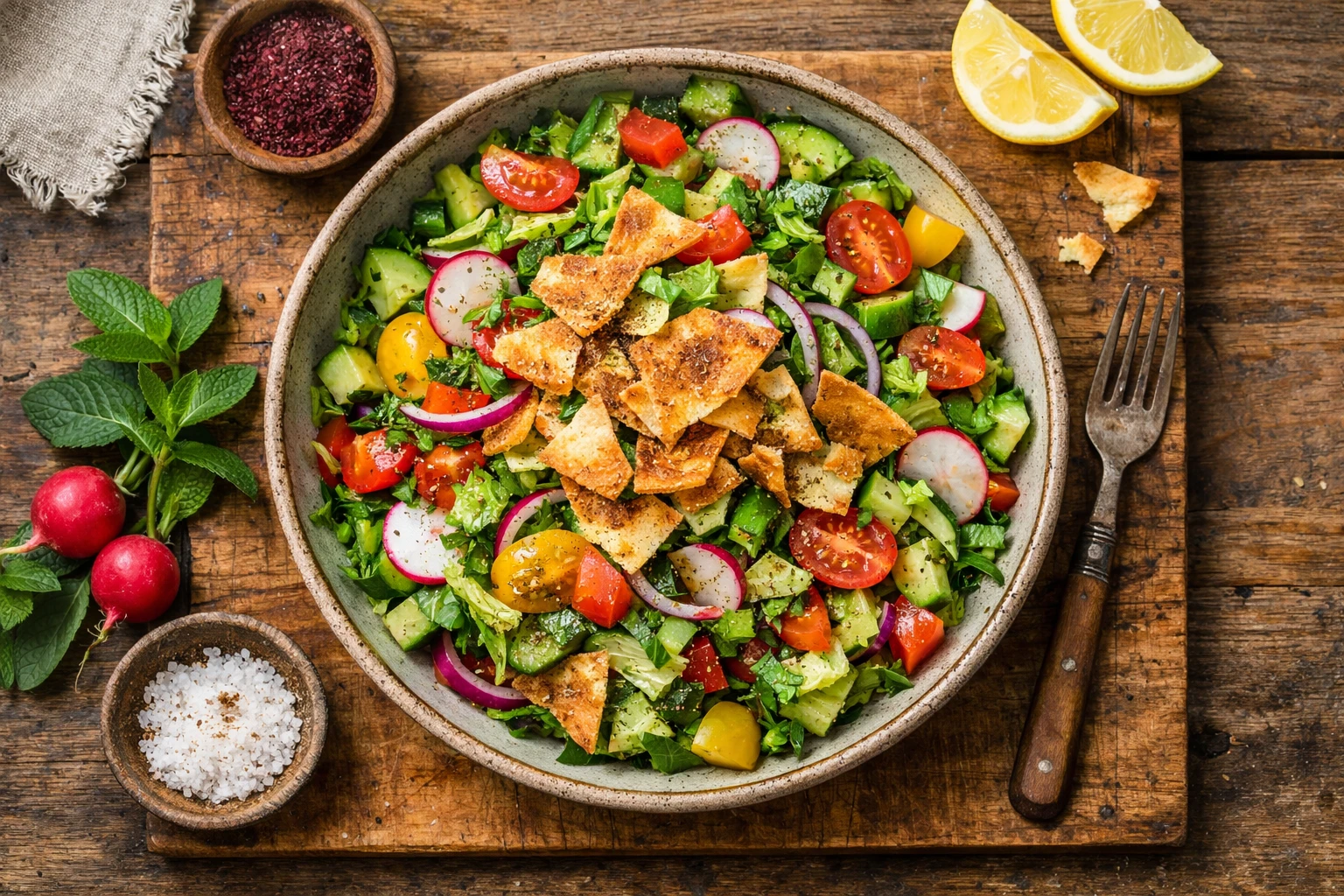
Quick Nutrition Facts
Per 1 Cup (200g)
| Nutrient | Amount |
|---|---|
| Calories | 316 kcal |
| Protein | 4.7g |
| Carbohydrates | 30g |
| Fiber | 2.8g |
| Sugars | 6.3g |
| Fat | 20g |
| Sodium | 330mg |
| Potassium | 352mg |
| Vitamin C | 28mg |
| Vitamin A | 450mcg |
Macronutrient Breakdown
 ChatGPT
  Claude
  AI Mode
  Perplexity
NUTRITIONIST INSIGHT
Sumac provides powerful antioxidants with therapeutic benefits for cardiovascular disease and diabetes. Eating vegetables before carbohydrates significantly reduces blood sugar spikes—fattoush is the perfect starter.
Myth Busters
MYTH #1: Salads Are Always Low-Calorie
TRUTH: While fattoush is nutrient-dense, it contains 316 calories per cup—mainly from heart-healthy olive oil (20g fat). The fats are monounsaturated fatty acids that reduce cardiovascular disease risk by up to 48%. Focus on nutrient quality over calorie counting; moderate portions control intake.
MYTH #2: The Fried Pita Makes It Unhealthy
TRUTH: Toasted pita adds texture and modest calories (50-70 per small piece). Traditional fattoush uses lightly toasted pita, not deep-fried. Control portions to 1-2 pieces; the crispy element enhances satisfaction without significantly impacting health when part of a vegetable-rich Mediterranean diet.
MYTH #3: Diabetics Should Avoid Pita Bread in Salads
TRUTH: Research shows eating vegetables before carbohydrates reduces glucose excursions comparable to diabetes medications. Start with fattoush vegetables, then add 1-2 small pita pieces. The fiber helps control blood sugar without causing spikes.
MYTH #4: Raw Vegetables Don't Provide Enough Nutrition
TRUTH: Fattoush vegetables are nutritional powerhouses. One medium tomato provides 20mg vitamin C (20% DV) plus lycopene, vitamin A, and potassium. Raw vegetables maintain maximum vitamin C and enzyme content. The olive oil enhances absorption of fat-soluble vitamins.
MYTH #5: Mediterranean Salads Are Too High in Fat
TRUTH: Mediterranean diet rich in olive oil reduces coronary heart disease, stroke, and total cardiovascular disease by 30%. The 20g fat in fattoush is predominantly monounsaturated—exactly the type associated with longevity and metabolic health. Quality of fat matters more than quantity.
NutriScore by Health Goals
| Health Goal | NutriScore | Why This Score? |
|---|---|---|
| Weight Loss |  | Only 316 calories per cup with 2.8g fiber for fullness; nutrient-dense vegetables; start meals with this to reduce overall intake by 20%. |
| Muscle Gain |  | Provides vitamins/minerals for recovery; pair with grilled chicken or falafel for protein boost (35g+ total protein). |
| Diabetes Management | | Vegetable fiber controls blood sugar; eating vegetables first reduces glucose spikes by 30%. |
| PCOS Management | | Low glycemic load; anti-inflammatory sumac and olive oil support hormone balance; fiber aids insulin sensitivity. |
| Pregnancy Nutrition | | Mediterranean diet supports healthy pregnancy outcomes; provides folate, vitamin C, potassium, and healthy fats for brain. |
| Viral/Flu Recovery | | Rich in vitamin C (28mg per cup), antioxidants from sumac, easy to digest, hydrating vegetables support immune function. |
PERSONALIZED NUTRITION
Track your meals with NutriScan for personalized NutriScores based on your specific health goals!
Blood Sugar Response to Fattoush Salad
Fattoush has minimal blood sugar impact and can actually reduce glucose spikes from other foods when eaten first.
Typical Glucose Response Curve
This chart shows minimal blood glucose response from fattoush salad. The fiber-rich vegetables stabilize blood sugar. Individual responses may vary. Not medical advice.
Strategic Meal Sequencing
Research demonstrates eating vegetables before carbohydrates reduces post-meal glucose and insulin levels with effects comparable to diabetes medications:
- 🥗 Start with fattoush - Eat the full salad before rice, bread, or pasta
- 🍗 Add protein second - Follow with grilled chicken, fish, or falafel
- 🍚 Finish with carbs - Save rice, bread, or potatoes for last
- ⏱️ 10-minute spacing - Allow 10 minutes between vegetable and carb courses
This simple meal sequencing strategy can reduce blood sugar spikes by 30-40% without medication or calorie restriction.
Cultural Significance
Fattoush is the iconic Levantine summer salad, celebrated across Lebanon, Syria, Palestine, and Jordan for its refreshing crunch and vibrant flavors.
In the Middle East:
- Traditional way to use leftover pita bread; embodies zero-waste cooking
- Summer staple when gardens overflow with fresh vegetables
- Every family has unique sumac ratios and herb combinations
- Served at mezze spreads, family gatherings, and breaking Ramadan fast
Global Impact:
- Lebanese diaspora introduced fattoush to over 60 countries worldwide
- Represents Mediterranean diet's vegetable-forward eating pattern
- Modern restaurants elevated it from peasant food to gourmet status
- Symbol of Middle Eastern culinary heritage and hospitality
Compare & Substitute
Fattoush Salad vs Similar Vegetable Salads (Per 100g)
| Nutrient | 🥗 Fattoush Salad | 🥗 Greek Salad | 🥗 Caesar Salad | 🥗 Tabbouleh |
|---|---|---|---|---|
| Calories | 158 kcal | 95 kcal | 190 kcal | 120 kcal |
| Carbs | 15g | 5g | 4g | 16g |
| Fiber | 1.4g | 1.6g | 0.8g | 2.5g |
| Protein | 2.4g | 3.5g | 4g | 3g |
| Fat | 10g | 7g | 18g | 6g |
| Sodium | 165mg | 421mg | 380mg | 210mg |
| Vitamin C | 14mg | 15mg | 2mg | 12mg |
| Best For | Antioxidants | Lower calorie | Protein | Fiber, parsley |
Frequently Asked Questions
Is fattoush salad healthy?
Yes, fattoush is exceptionally nutritious. Provides powerful antioxidants from sumac with therapeutic benefits for cardiovascular disease and diabetes; heart-healthy monounsaturated fats from olive oil (72% of fat content); fiber-rich vegetables for blood sugar control; vitamins C and A for immune function.
Research shows Mediterranean diet pattern including vegetable-rich salads like fattoush reduces major cardiovascular events by 48% and stroke by 37%.
Can diabetics eat fattoush salad?
Yes, fattoush is excellent for diabetics. Vegetable fiber helps control blood sugar without causing spikes; eating vegetables before carbohydrates significantly reduces glucose and insulin levels by 20-30%; low glycemic load from nonstarchy vegetables.
Diabetes tips: Start meals with full cup of fattoush; limit crispy pita to 1-2 small pieces; use lemon juice generously (may improve insulin sensitivity); monitor blood sugar to confirm individual response.
How many calories are in fattoush salad?
One cup (200g) contains 316 calories with 4.7g protein, 30g carbs, 2.8g fiber, and 20g fat. Calories vary based on olive oil amount and pita quantity; restaurant versions may contain 400-500 calories with extra oil and larger pita portions.
For weight management, request dressing on side and control to 1-2 tablespoons olive oil (240 calories saved).
What are the health benefits of sumac?
Key benefits: Powerful antioxidant capacity from flavonoids, tannins, and polyphenols; ameliorative effects on cardiovascular disease, diabetes, and cancer; decreases systolic blood pressure by 7-10 points; prevents triglyceride rises after meals; anti-inflammatory properties.
Sumac is the signature spice that elevates fattoush from simple salad to functional food with measurable health benefits.
Is fattoush salad good for weight loss?
Yes, fattoush supports weight loss effectively. Only 316 calories per cup with high nutrient density; 2.8g fiber promotes fullness and reduces hunger 3-4 hours; starting meals with vegetable salad reduces total meal calorie intake by 20%; Mediterranean diet pattern proven for sustainable weight loss.
Weight loss strategy: Eat fattoush as appetizer before main course; use 1 tablespoon olive oil vs 3 (saves 240 calories); add grilled protein for complete meal under 500 calories.
What vegetables are in fattoush salad?
Traditional fattoush contains romaine lettuce (base), tomatoes (vitamin C, lycopene), cucumbers (hydration, low-calorie), radishes (crunch, vitamin C), green onions (flavor, antioxidants), fresh parsley (vitamin K, iron), and mint (digestive aid).
Dressed with lemon juice, extra virgin olive oil, and sumac spice; topped with crispy toasted pita bread pieces. Some versions add purslane (omega-3s) or bell peppers.
When is the best time to eat fattoush salad?
Depends on your goal:
- Weight Loss: As appetizer before lunch/dinner; reduces main course intake by 20%; or as light lunch with protein.
- Diabetes: Start every meal with fattoush to blunt blood sugar spikes from carbs eaten after; most effective with 10-minute gap.
- Muscle Gain: Pair with grilled chicken, salmon, or falafel for post-workout recovery meal.
- General Health: Anytime; traditional lunch salad in Mediterranean culture; refreshing summer dinner.
Can I make fattoush salad healthier?
Yes, with smart modifications. Use whole wheat pita instead of white (more fiber, lower GI); bake pita pieces instead of frying (saves 100 calories); reduce oil to 1 tablespoon per serving (saves 240 calories); add more vegetables like bell peppers or purple cabbage (antioxidants); increase sumac for extra flavor without calories.
These changes reduce calories by 40% while maintaining authentic flavor and boosting nutrient density.


Similar Nutritious Fruits
4505 Chicharrones Classic Chili Salt
7 Eleven Japan Crispy Corn Cheese
Explore More Nutrition Tools & Resources
AI Calorie Counter App - Snap a Photo, Get Macros
AI Nutritionist App That Reads Your Logged Meals
Best Protein Supplements for Women
Bulking Meal Plan App That Sets Your Surplus
ChatGPT Calorie Counter Alternative That Keeps the Total
ChatGPT Diet Plan Alternative That Tracks What You Eat
ChatGPT Weight Loss Coach Alternative With a Food Log
Fast Food Calorie Counter App That Reads the Tray
Free Calorie Tracker App with AI Photo Scans | NutriScan
Indian Diet Plan App With Veg and Non Veg Meals
Indian Food Calorie Calculator - Get Instant Nutrition Facts for Desi Meals — 2026
Intermittent Fasting for Women, Timer and Meal Log App
Intermittent Fasting Tracker App - Free Fasting Timer
Macro Tracker App That Fills the Numbers From a Photo
Mediterranean Diet Meal Plan App That Counts the Oil
Micronutrient Tracker App for Vitamins and Minerals
MyFitnessPal Alternative That Stays Free | NutriScan
NutriScore App: A Free Grade on Every Meal | NutriScan
Nutrition Label Scanner App for the Amount You Ate
Second Trimester Protein Guide
Vegetarian Meal Plan App With a Protein Target
Voice Calorie Counter - Speak to Track Meals Hands-Free
Water and Calorie Tracker App - Free Water Log