Fava Bean Protein: Calories, Nutrition and Health Benefits
One of the only complete plant proteins with all nine essential amino acids, plus exceptional fiber, iron, and resistant starch for muscle gain and metabolic health.
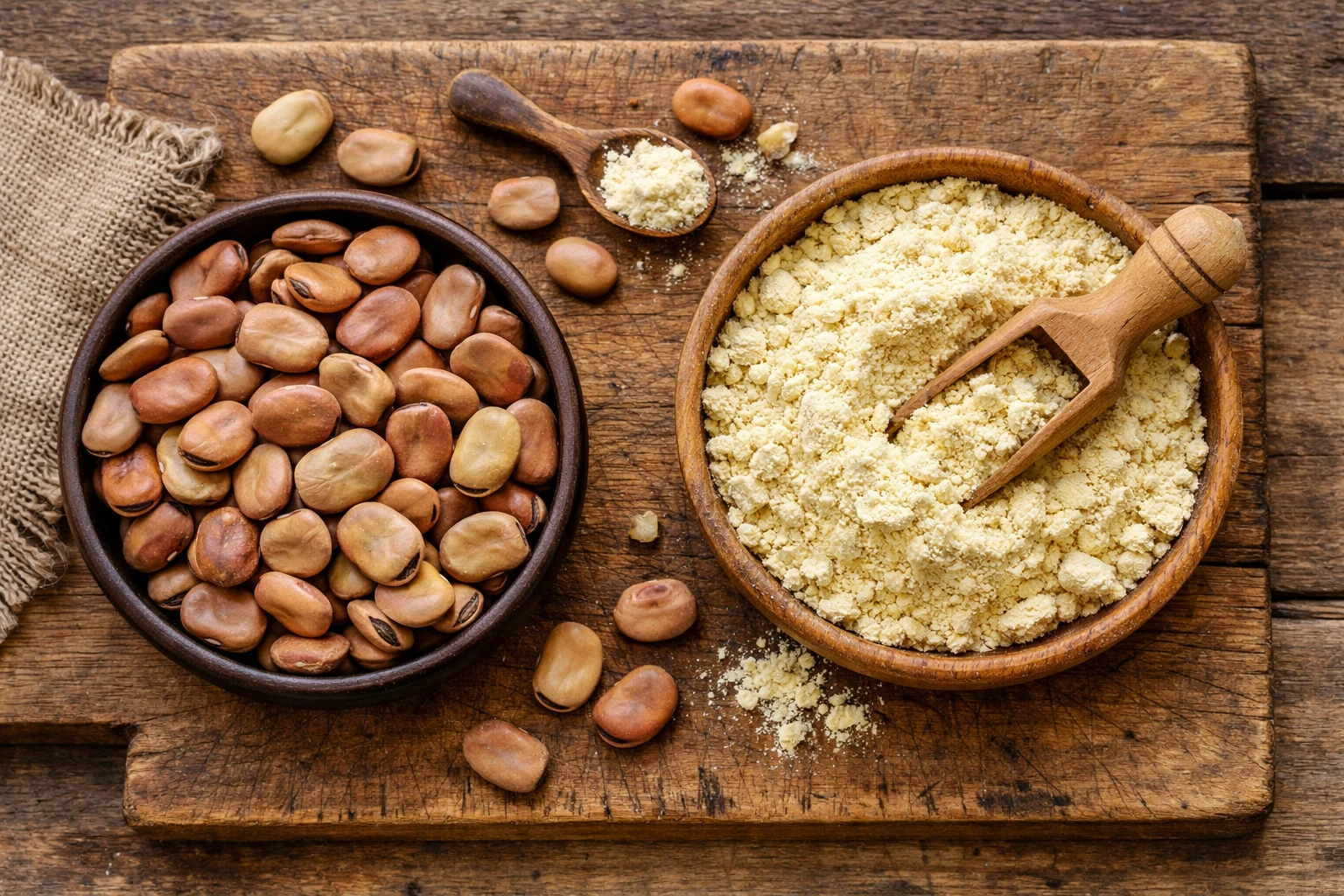
Quick Nutrition Facts
Per 100g Dried Fava Beans (~1 Cup Cooked)
| Nutrient | Amount |
|---|---|
| Calories | 341 kcal |
| Protein | 26g |
| Carbohydrates | 58g |
| Fiber | 9g |
| Sugars | 5g |
| Fat | 1.5g |
| Iron | 6.1mg |
| Folate | 423mcg |
| Potassium | 1062mg |
| Magnesium | 192mg |
Macronutrient Breakdown
 ChatGPT
  Claude
  AI Mode
  Perplexity
NUTRITIONIST INSIGHT
Fava beans are a rare complete plant protein containing all nine essential amino acids in balanced proportions. At 26g protein per 100g dried (5-6g cooked), they rival meat and dairy while offering 9g fiber per 100g dried. Cooled fava beans develop resistant starch that improves insulin sensitivity and fat oxidation.
Myth Busters
MYTH #1: Plant Proteins Are Incomplete
TRUTH: Fava beans contain all nine essential amino acids in adequate amounts, making them a complete plant protein. Unlike most legumes requiring grain pairing, fava beans alone support muscle protein synthesis. Combine with grains for optimal amino acid absorption and muscle building.
MYTH #2: Fava Bean Protein Has Too Much Carbs
TRUTH: Dried fava beans contain 58g carbs per 100g, but 9g is fiber, yielding 49g net carbs. Cooked fava beans (water-added) drop to ~15g net carbs per 100g. The carbs are complex with resistant starch, promoting stable blood sugar. Balanced with protein (26g dried, 5.6g cooked), they're suitable for most diets.
MYTH #3: Fava Beans Cause Stomach Issues
TRUTH: Soaking and cooking fava beans removes oligosaccharides that cause bloating. Start with small portions (1/4 cup cooked), cook thoroughly, and combine with spices (cumin, fennel) that aid digestion. Most people tolerate them well after proper prep.
MYTH #4: Fava Bean Powder Has No Nutritional Value
TRUTH: Fava bean flour/powder retains 26g protein, 9g fiber, 6.1mg iron, and 423mcg folate per 100g—identical to whole beans. It's allergen-friendly (unlike soy/peanuts), works in baking and pasta, and offers complete amino acid profiles superior to rice or wheat flour alone.
MYTH #5: Fava Beans Aren't Practical for Daily Eating
TRUTH: Canned fava beans offer identical nutrition to dried beans with convenience. Drain and use in soups, salads, or curries. Fava bean pasta, flour, and prepared dishes (falafel, hummus) make daily consumption easy. 1 cup cooked provides 7-9g protein with high satiety.
NutriScore by Health Goals
| Health Goal | NutriScore | Why This Score? |
|---|---|---|
| Muscle Gain |  | Complete plant protein (26g per 100g dried), all nine essential amino acids, 9g fiber, iron (6.1mg) for oxygen transport. Pair with grains for optimal muscle protein synthesis. |
| Weight Loss | | Cooked fava beans: 95 kcal, 5.6g protein, 5.6g fiber per 100g—exceptional satiety-to-calorie ratio. Resistant starch aids fat oxidation. 1 cup (150g) = 140 kcal + 8.4g fiber. |
| Diabetes Management |  | GI ~32 (low), 15g net carbs per 100g cooked, 5.6g fiber. Cooling increases resistant starch, improving postprandial glucose. Pair with healthy fat; monitor individual response. |
| PCOS Management | | Complete protein supports hormonal balance, low glycemic load, fiber for insulin sensitivity. High folate (423mcg) supports fertility. 1 cup (150g) cooked fits PCOS meal planning well. |
| Pregnancy Nutrition | | Exceptional folate (423mcg per 100g dried) prevents neural tube defects; 26g protein supports fetal development; iron (6.1mg) prevents anemia. Essential for vegetarian pregnancies. |
| Viral/Flu Recovery | | High protein and iron support immune recovery; folate aids white blood cell production; easily digestible when cooked soft. Light broths or mashed preparations work for sensitive digestion. |
PERSONALIZED NUTRITION
Track your meals with NutriScan for personalized NutriScores based on your specific health goals!
Blood Sugar Response to Fava Beans
Fava beans have a low glycemic index, especially when cooled to develop resistant starch.
Typical Glucose Response Curve
This chart shows typical blood glucose response for general healthy individuals. Individual responses may vary. Not medical advice.
How to Flatten the Spike
Pairing fava beans with healthy fat or protein further reduces glycemic response:
- 🥒 Olive oil or tahini - Add to fava salads for fat-soluble nutrient absorption
- 🥒 Vinegar or lemon - Acidic foods slow carbohydrate digestion
- 🧅 Onions and garlic - Enhance with spices that aid digestion
- 🥬 Leafy greens - Combine in bowls for additional fiber
Cooling cooked fava beans increases resistant starch, improving blood sugar stability.
Cultural Significance
Fava beans are among the oldest cultivated crops, dating back 8,000 years to the Mediterranean and Near East.
In India & South Asia:
- Cultivated in temperate regions; valued in North Indian cuisines
- Used in dhals, curries, and split bean preparations
- Growing in sustainable agriculture movements
- Allergen-friendly alternative to soy and peanuts in Indian markets
Global Impact:
- Major crop in Egypt, Middle East, Mediterranean regions
- Emerging as climate-resilient, sustainable plant protein alternative to soy
- Nitrogen-fixing crop reducing soil fertilizer dependency
- Supports smallholder farmers; high protein content addresses food security
- Gaining popularity in Western plant-based and vegan communities
Compare & Substitute
Fava Bean Protein vs Similar Plant Proteins (Per 100g Dried)
| Nutrient | 🫘 Fava Beans | 🫘 Chickpeas | 🫘 Lentils | 🌾 Quinoa |
|---|---|---|---|---|
| Calories | 341 kcal | 364 kcal | 353 kcal | 368 kcal |
| Carbs | 58g | 65g | 63g | 64g |
| Fiber | 9g | 12g | 11g | 7g |
| Protein | 26g | 19g | 25g | 14g |
| Fat | 1.5g | 6g | 1.1g | 6g |
| Iron | 6.1mg | 6.2mg | 8mg | 8.4mg |
| Best For | Complete AA | High fiber, versatile | Quick cooking, iron boost | Complete protein grains |
Frequently Asked Questions
Is fava bean protein a complete protein?
Yes; fava beans contain all nine essential amino acids in adequate amounts (histidine, isoleucine, leucine, lysine, methionine, phenylalanine, threonine, tryptophan, valine), making them a complete plant protein. At 26g protein per 100g dried with balanced amino acid ratios, they support muscle protein synthesis comparable to legume-grain combinations. Pair with whole grains for enhanced bioavailability.
How much protein is in fava beans?
Dried fava beans contain 26g protein per 100g, making them one of the highest-protein legumes. Cooked fava beans (fresh or canned) contain 5-6g protein per 100g due to water content. One cup (150g) cooked fava beans provides approximately 7.5-9g protein. For muscle gain, combine with grains (rice, quinoa) for complete amino acid profiles and 20-25g protein per meal.
Are fava beans good for weight loss?
Cooked fava beans are excellent for weight loss: ~95 calories per 100g, 5.6g fiber, and 5.6g protein per 100g create exceptional satiety relative to calories. The resistant starch in cooled fava beans improves fat oxidation and sustained energy. One cup cooked (150g) provides ~140 calories with 8.4g fiber and 8.4g protein, ideal for high-volume, low-calorie meals.
Can people with favism eat fava beans?
No; individuals with G6PD deficiency (favism) must avoid fava beans entirely. These beans contain vicine and convicine compounds that trigger hemolytic anemia in G6PD-deficient individuals. This genetic condition is more common in Mediterranean, North African, and Asian populations (1-500 million affected globally). If G6PD deficient, consult your healthcare provider before consuming fava beans.
What are the main health benefits of fava beans?
Fava beans provide complete plant protein (26g per 100g dried), exceptional fiber (9g per 100g) for digestive health, iron (6.1mg per 100g) for oxygen transport and energy, folate (423mcg per 100g) essential for pregnancy and fetal development, and polyphenols (kaempferol, quercetin) with antioxidant and anti-inflammatory properties supporting chronic disease prevention.
How do I cook fava beans?
Dried fava beans require soaking 12 hours, draining, then simmering 45-90 minutes until tender. Canned fava beans are convenient and nutritionally equivalent; drain and rinse if concerned about sodium. Cooling cooked fava beans develops resistant starch beneficial for blood sugar and gut health. Use in soups, curries, salads, or mashed preparations. Fava bean flour/powder works in baking, pasta, and prepared dishes, retaining full nutritional profile.
Is fava bean powder effective for muscle building?
Yes; fava bean flour/powder retains 26g protein per 100g with complete amino acid profiles. Mix into smoothies, pasta doughs, or baked goods for additional plant protein. One scoop (30g) provides ~8g protein comparable to whey isolate. Combine with grains or other proteins for optimal muscle protein synthesis; track total protein intake toward daily targets (0.8-1.0g per pound body weight for muscle gain).
How often should I eat fava beans?
For muscle gain: 1-2 cups (150-300g) cooked daily combined with grains/other proteins. For weight loss: 1 cup (150g) cooked once daily for satiety. For general health: 3-5 servings weekly is typical. Start with small portions (1/4 cup cooked) if new to legumes to allow gut flora adaptation. No strict limit; adjust based on total protein, fiber, and caloric goals.


Similar Nutritious Foods
4505 Chicharrones Classic Chili Salt
7 Eleven Japan Crispy Corn Cheese
Explore More Nutrition Tools & Resources
AI Calorie Counter App - Snap a Photo, Get Macros
AI Nutritionist App That Reads Your Logged Meals
Best Protein Supplements for Women
Bulking Meal Plan App That Sets Your Surplus
ChatGPT Calorie Counter Alternative That Keeps the Total
ChatGPT Diet Plan Alternative That Tracks What You Eat
ChatGPT Weight Loss Coach Alternative With a Food Log
Fast Food Calorie Counter App That Reads the Tray
Free Calorie Tracker App with AI Photo Scans | NutriScan
Indian Diet Plan App With Veg and Non Veg Meals
Indian Food Calorie Calculator - Get Instant Nutrition Facts for Desi Meals — 2026
Intermittent Fasting for Women, Timer and Meal Log App
Intermittent Fasting Tracker App - Free Fasting Timer
Macro Tracker App That Fills the Numbers From a Photo
Mediterranean Diet Meal Plan App That Counts the Oil
Micronutrient Tracker App for Vitamins and Minerals
MyFitnessPal Alternative That Stays Free | NutriScan
NutriScore App: A Free Grade on Every Meal | NutriScan
Nutrition Label Scanner App for the Amount You Ate
Second Trimester Protein Guide
Vegetarian Meal Plan App With a Protein Target
Voice Calorie Counter - Speak to Track Meals Hands-Free
Water and Calorie Tracker App - Free Water Log