Fiber-Fortified Frozen Meal: Calories, Nutrition and Health Benefits
Convenient, portion-controlled meals fortified with extra fiber for better digestion, blood sugar control, and sustained energy throughout the day.
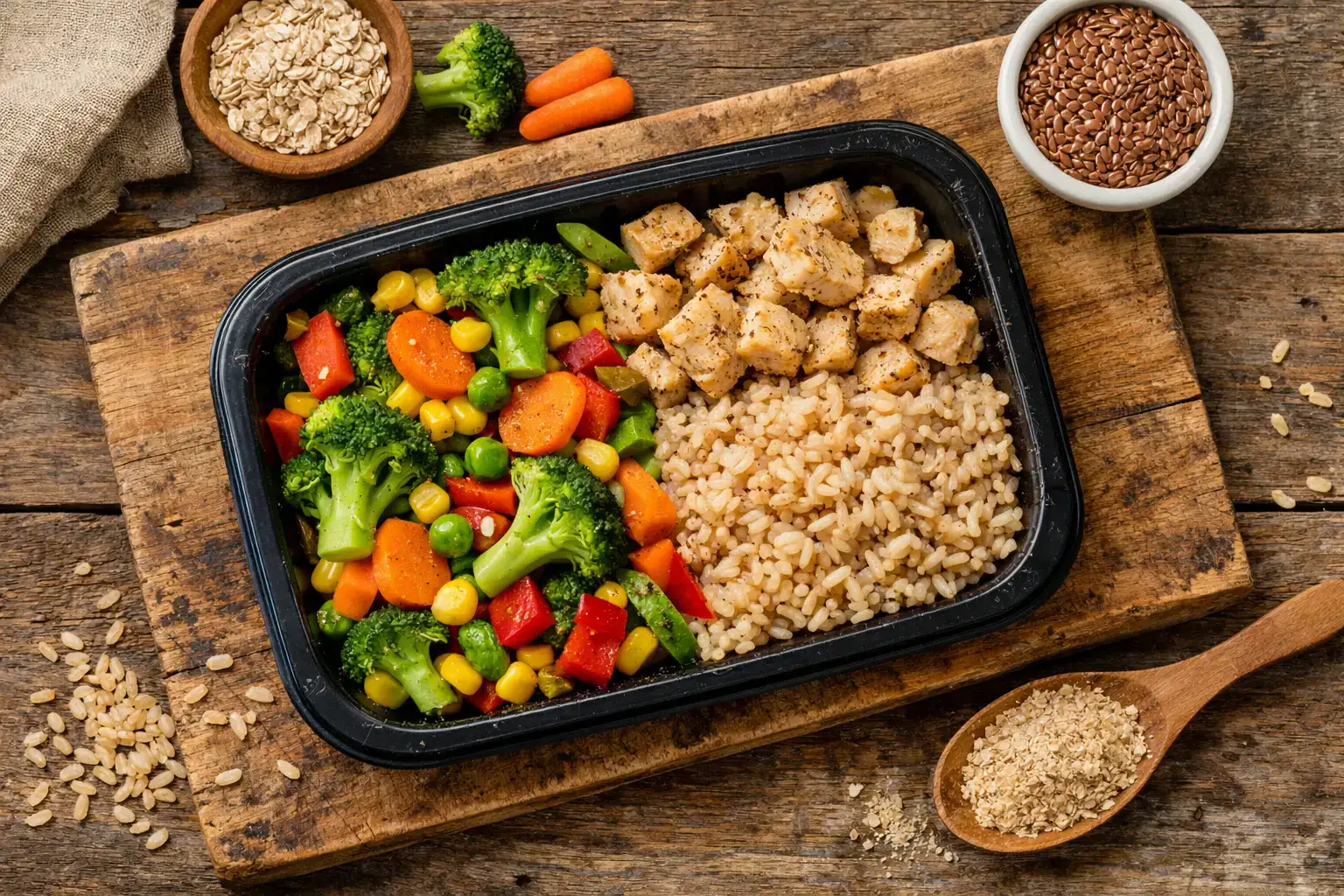
Quick Nutrition Facts
Per 1 Meal (280g)
| Nutrient | Amount |
|---|---|
| Calories | 300 kcal |
| Protein | 15g |
| Carbohydrates | 38g |
| Fiber | 8g |
| Sugars | 6g |
| Fat | 10g |
| Sodium | 540mg |
| Vitamin A | 120mcg |
| Iron | 2.5mg |
| Calcium | 80mg |
Macronutrient Breakdown
 ChatGPT
  Claude
  AI Mode
  Perplexity
NUTRITIONIST INSIGHT
Fiber-fortified frozen meals deliver 29% of your daily fiber needs in a single serving. The added fiber slows carbohydrate digestion, helping maintain steady blood sugar levels and keeping you fuller longer than standard frozen meals with only 2-3g fiber.
Myth Busters
MYTH #1: All Frozen Meals Are Unhealthy Junk Food
TRUTH: Fiber-fortified frozen meals provide 15g protein, 8g fiber, and balanced macros in 300 calories. Dietary fiber supports gut health by producing beneficial short-chain fatty acids and promoting digestive regularity. The key is choosing options with under 600mg sodium.
MYTH #2: Frozen Meals Have No Nutritional Value
TRUTH: Flash-freezing preserves most nutrients at peak freshness. Fiber-fortified versions add prebiotic fiber that supports beneficial gut bacteria growth and improves overall digestive health. Many provide more fiber per serving than typical home-cooked meals.
MYTH #3: Frozen Meals Always Spike Blood Sugar
TRUTH: Fiber-fortified frozen meals have a lower glycemic response. Research shows adding fiber to meals can reduce glycemic index significantly, with one study showing a drop from GI 55 to 41 when fiber was added to frozen dinners.
MYTH #4: You Can't Lose Weight Eating Frozen Meals
TRUTH: Portion-controlled 300-calorie meals with 8g fiber and 15g protein promote satiety. High-fiber foods slow digestion and reduce total energy intake, making them effective tools for calorie management when part of a balanced diet.
MYTH #5: Frozen Meals Are Too High in Sodium
TRUTH: While some frozen meals exceed 1000mg sodium, fiber-fortified options from brands like Healthy Choice keep sodium under 600mg. This stays well within the recommended daily limit of 2,300mg when balanced with fresh foods throughout the day.
NutriScore by Health Goals
| Health Goal | NutriScore | Why This Score? |
|---|---|---|
| Weight Loss |  | 300 calories with 8g fiber promotes fullness. Portion-controlled for easy calorie tracking. Limit to 1 per day alongside fresh vegetables. |
| Muscle Gain |  | 15g protein is moderate but not sufficient alone. Add a protein shake or Greek yogurt to reach 30g+ per meal for muscle synthesis. |
| Diabetes Management | | 8g fiber slows glucose absorption. ADA recommends 25-30g fiber daily for blood sugar control. Choose under 600mg sodium options. |
| PCOS Management | | Moderate carbs (38g) may affect insulin. Add extra vegetables and choose meals with whole grains. Limit to 1 per day. |
| Pregnancy Nutrition | | Convenient when fatigued but sodium content requires monitoring during pregnancy. Supplement with fresh fruits and prenatal vitamins. |
| Viral/Flu Recovery | | Easy to prepare when ill, provides balanced nutrition. Warm meal comforts sore throat. Add extra fluids alongside. |
PERSONALIZED NUTRITION
Track your meals with NutriScan for personalized NutriScores based on your specific health goals!
Blood Sugar Response to Fiber-Fortified Frozen Meal
Understanding how fiber-fortified frozen meals affect your blood glucose can help you make informed decisions about meal timing and pairings.
Typical Glucose Response Curve
This chart shows typical blood glucose response for general healthy individuals. Individual responses may vary. Not medical advice.
How to Flatten the Spike
Fiber slows carbohydrate breakdown and reduces post-meal blood sugar spikes when combined with protein and healthy fats:
- 🥗 Side salad with olive oil dressing - Adds extra fiber and healthy fats to slow absorption
- 🥒 Raw vegetables (cucumber, celery, bell pepper) - Extra fiber with virtually zero calories
- 🥚 Boiled egg on the side - Additional protein for better glucose control
- 🍵 Green tea or water - Skip sugary drinks that would spike blood sugar further
This combination not only reduces the glucose spike but also extends energy release, keeping you fuller for longer.
Cultural Significance
Frozen meals have transformed global eating habits since their introduction in the 1950s, evolving from basic TV dinners to nutritionally optimized convenience foods.
In America:
- Swanson introduced the first TV dinner in 1953, revolutionizing meal preparation
- The frozen food industry generates over $65 billion annually in the US
- Fiber-fortified options emerged in the 2010s as health-conscious demand grew
- Brands like Healthy Choice and Lean Cuisine pioneered ADA-approved frozen meals
Global Impact:
- Over 90% of US households purchase frozen meals regularly
- Asian and European markets increasingly adopt fiber-fortified convenience foods
- Sustainable packaging and clean-label ingredients are driving innovation
- Frozen meals reduce food waste by extending shelf life to 3-6 months
Compare & Substitute
Fiber-Fortified Frozen Meal vs Alternatives (Per Serving)
| Nutrient | 🍱 Fiber-Fortified Frozen Meal | 🍱 Standard Frozen Meal | 🥗 Fresh Prepared Meal | 🥡 Fast Food Meal |
|---|---|---|---|---|
| Calories | 300 kcal | 350 kcal | 400 kcal | 650 kcal |
| Carbs | 38g | 42g | 35g | 55g |
| Fiber | 8g | 2g | 6g | 3g |
| Protein | 15g | 12g | 25g | 28g |
| Fat | 10g | 14g | 15g | 32g |
| Sodium | 540mg | 800mg | 350mg | 1200mg |
| Sugar | 6g | 10g | 5g | 12g |
| Best For | Busy weeknights, portion control | Quick meals on a budget | Best nutrition overall | Occasional convenience |
Frequently Asked Questions
Are fiber-fortified frozen meals healthy?
Yes, fiber-fortified frozen meals can be a healthy convenience option when chosen wisely. A typical meal provides 300 calories, 15g protein, and 8g fiber, covering 29% of daily fiber needs.
Best practices: Choose meals with under 600mg sodium, at least 5g fiber, and 15g protein. Pair with a side of fresh vegetables or salad for a more complete meal.
Can diabetics eat fiber-fortified frozen meals?
Diabetics can benefit from fiber-fortified frozen meals. The 8g of fiber helps slow glucose absorption and reduce blood sugar spikes compared to standard frozen meals.
Tips for diabetics:
- Choose meals with 8g+ fiber and under 600mg sodium
- Eat a handful of raw vegetables 10 minutes before the meal
- Best timing: lunch when insulin sensitivity is higher
- Monitor blood sugar 2 hours after eating
The American Diabetes Association recommends 25-30g fiber daily for blood sugar management. Always consult your healthcare provider.
How much fiber is in a fortified frozen meal?
A fiber-fortified frozen meal typically contains 8g of fiber per serving, compared to just 2-3g in standard frozen meals. This provides about 29% of the recommended daily intake of 28g fiber.
For comparison, you would need to eat 3 standard frozen meals to match the fiber in one fortified version.
Are frozen meals good for weight loss?
Fiber-fortified frozen meals at 300 calories with 8g fiber can support weight loss through portion control and increased satiety.
Key Benefits:
- Portion Control: Pre-measured servings prevent overeating
- High Fiber: 8g fiber promotes fullness for 3-4 hours
- Calorie Tracking: Exact nutrition labels simplify calorie counting
- Convenience: Reduces temptation to order higher-calorie takeout
Limit to 1 frozen meal per day and supplement with fresh fruits, vegetables, and whole foods.
What should I look for in a healthy frozen meal?
Check these criteria:
- Fiber: 5g or more (8g+ for fortified options)
- Protein: 15g or more for satiety
- Sodium: Under 600mg per serving
- Calories: 300-400 per meal
- Ingredients: Whole grains, vegetables, lean protein listed first
Avoid meals with added sugars, partially hydrogenated oils, or artificial preservatives. Track your frozen meal intake with NutriScan app to ensure balanced daily nutrition.
How do frozen meals compare to fresh meals nutritionally?
Key Differences:
- Nutrients: Flash-freezing preserves 90%+ of vitamins and minerals
- Sodium: Frozen meals average 540-800mg vs 200-400mg for fresh
- Fiber: Fortified options (8g) can match or exceed fresh meals (4-6g)
- Protein: Fresh meals typically offer more (20-30g vs 12-18g)
Recommendation: Use fiber-fortified frozen meals for 3-4 meals per week maximum. Prioritize fresh, home-cooked meals when possible for lower sodium and higher protein content.


Similar Nutritious Foods
4505 Chicharrones Classic Chili Salt
7 Eleven Japan Crispy Corn Cheese
Explore More Nutrition Tools & Resources
AI Calorie Counter App - Snap a Photo, Get Macros
AI Nutritionist App That Reads Your Logged Meals
Best Protein Supplements for Women
Bulking Meal Plan App That Sets Your Surplus
ChatGPT Calorie Counter Alternative That Keeps the Total
ChatGPT Diet Plan Alternative That Tracks What You Eat
ChatGPT Weight Loss Coach Alternative With a Food Log
Fast Food Calorie Counter App That Reads the Tray
Free Calorie Tracker App with AI Photo Scans | NutriScan
Indian Diet Plan App With Veg and Non Veg Meals
Indian Food Calorie Calculator - Get Instant Nutrition Facts for Desi Meals — 2026
Intermittent Fasting for Women, Timer and Meal Log App
Intermittent Fasting Tracker App - Free Fasting Timer
Macro Tracker App That Fills the Numbers From a Photo
Mediterranean Diet Meal Plan App That Counts the Oil
Micronutrient Tracker App for Vitamins and Minerals
MyFitnessPal Alternative That Stays Free | NutriScan
NutriScore App: A Free Grade on Every Meal | NutriScan
Nutrition Label Scanner App for the Amount You Ate
Second Trimester Protein Guide
Vegetarian Meal Plan App With a Protein Target
Voice Calorie Counter - Speak to Track Meals Hands-Free
Water and Calorie Tracker App - Free Water Log