Fish and Chips: Calories, Nutrition and Health Benefits
Britain's beloved comfort food delivers satisfying protein and crispy indulgence - here's how to enjoy it wisely.
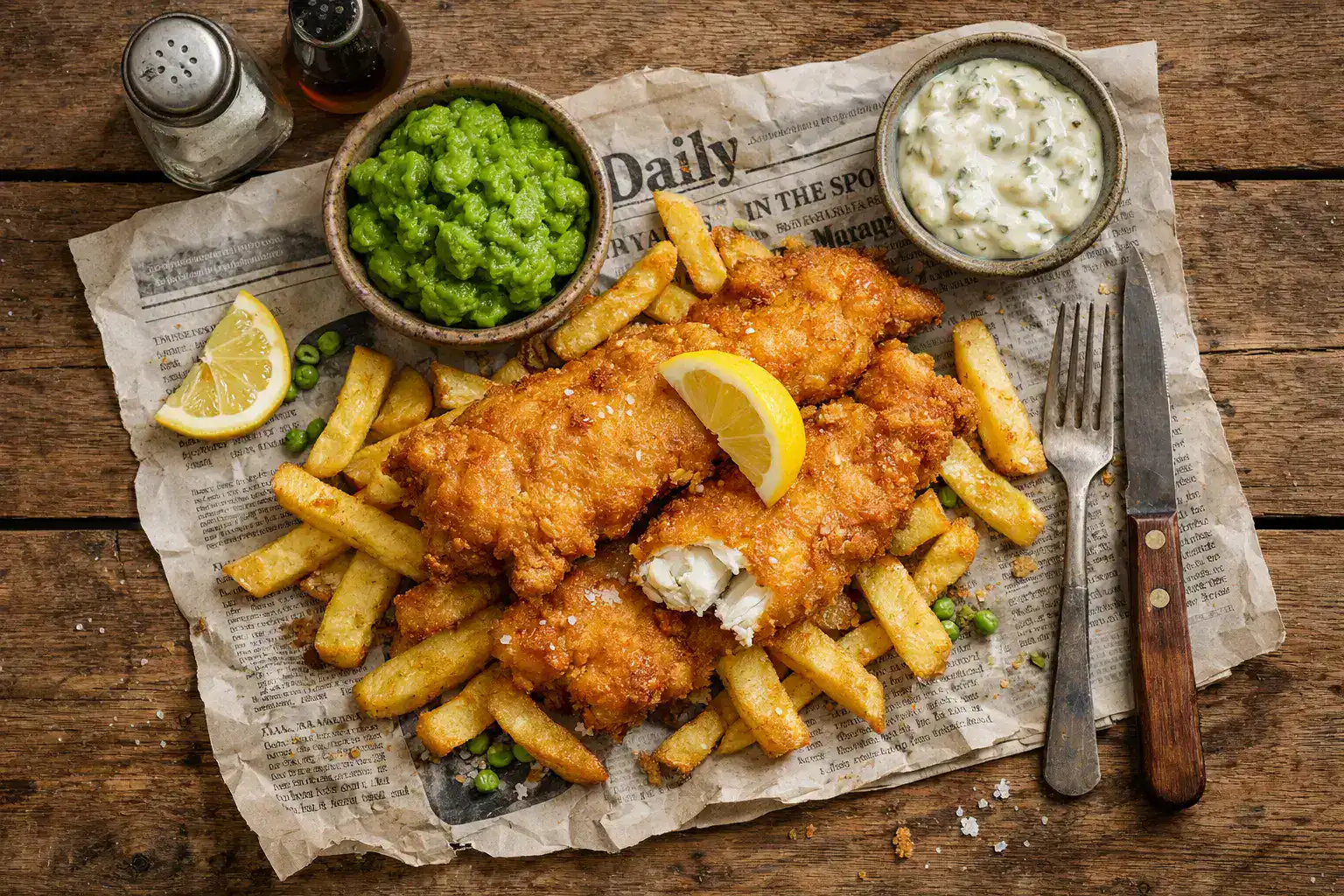
Quick Nutrition Facts
Per Standard Serving (400g)
| Nutrient | Amount |
|---|---|
| Calories | 850 kcal |
| Protein | 35g |
| Carbohydrates | 80g |
| Fiber | 5g |
| Sugars | 2g |
| Fat | 42g |
| Saturated Fat | 8g |
| Sodium | 1200mg |
| Omega-3 | 0.5g |
| Potassium | 850mg |
Macronutrient Breakdown
 ChatGPT
  Claude
  AI Mode
  Perplexity
NUTRITIONIST INSIGHT
While fish and chips is calorie-dense, the fish provides high-quality protein and omega-3 fatty acids. Enjoy occasionally, pair with mushy peas for added fiber, and consider sharing a portion to keep calories in check.
Myth Busters
MYTH #1: Fish and Chips Has No Nutritional Value
TRUTH: Despite being fried, fish and chips provides 35g protein per serving - about 70% of daily needs. The fish delivers omega-3 fatty acids that support heart and brain health. Adding mushy peas boosts fiber content significantly.
MYTH #2: All Fried Fish Is Equally Unhealthy
TRUTH: Not all fried fish is created equal. Fish cooked in fresh oil absorbs less fat than fish cooked in repeatedly used oil. Studies show frying method significantly impacts health outcomes - choose establishments that maintain fresh frying oil.
MYTH #3: You Should Never Eat Fish and Chips on a Diet
TRUTH: Occasional indulgence can actually support diet adherence by preventing feelings of deprivation. A half-portion (around 400 calories) with extra vegetables fits within most weight loss plans when planned properly.
MYTH #4: The Batter Removes All Fish Benefits
TRUTH: While batter adds calories and carbs, the fish inside retains its protein and omega-3 content. The key nutrients survive frying. For maximum benefits with fewer calories, peel back some of the batter before eating.
MYTH #5: Fish and Chips Causes Instant Weight Gain
TRUTH: Weight gain requires consistent calorie surplus, not single meals. One serving of fish and chips (850 calories) as an occasional treat won't cause weight gain if your overall weekly calories are balanced. It's frequency and portions that matter.
MYTH #6: Pregnant Women Must Avoid Fish and Chips Completely
TRUTH: Pregnant women can safely eat fish 2-3 times per week, including occasional fried fish. Choose fish lower in mercury (cod, haddock are safe choices). The omega-3s support fetal brain development.
NutriScore by Health Goals
| Health Goal | NutriScore | Why This Score? |
|---|---|---|
| Weight Loss |  | High calories (850) and fat (42g). Limit to occasional treat, choose half portions, or opt for grilled fish. |
| Muscle Gain |  | Excellent protein content (35g) with carbs for energy. Good post-workout option for those in muscle-building phase. |
| Diabetes Management | | High carbs (80g) cause significant blood sugar spikes. Fried foods linked to higher diabetes risk - choose grilled fish instead. |
| PCOS Management | | High glycemic load affects insulin sensitivity. Limit portions, skip the chips, choose grilled fish. |
| Pregnancy Nutrition |  | Fish provides beneficial omega-3s for fetal development. Limit fried foods; ensure fish is fully cooked. |
| Viral/Flu Recovery | | Protein supports immune function, but heavy fried food may be hard to digest. Consider lighter fish preparation when ill. |
PERSONALIZED NUTRITION
Track your meals with NutriScan for personalized NutriScores based on your specific health goals!
Blood Sugar Response to Fish and Chips
Understanding how fish and chips affects your blood glucose helps you make informed decisions about when and how to enjoy this comfort food.
Typical Glucose Response Curve
This chart shows typical blood glucose response for general healthy individuals. Individual responses may vary. Not medical advice.
How to Flatten the Spike
Adding fiber and protein to carbohydrate-rich meals slows glucose absorption and reduces blood sugar spikes:
- 🥗 Start with a side salad - Fiber before carbs slows absorption
- 🫛 Add mushy peas - Traditional side adds 5g fiber per serving
- 🍋 Use lemon and vinegar - Acid slows gastric emptying
- 🚶 Walk after eating - 15-minute walk helps lower glucose
This combination not only reduces the glucose spike but also improves satiety and digestion.
Cultural Significance
Fish and chips holds a special place in British culinary heritage, dating back to the 1860s when it became the first mass fast-food in Britain.
In the United Kingdom:
- National dish status alongside the Sunday roast
- Over 10,500 fish and chip shops across the UK (more than McDonald's and KFC combined)
- Friday fish tradition linked to Catholic fasting practices
- Wrapped in newspaper historically (now food-safe paper)
- Regional variations: curry sauce (North), gravy (Midlands), mushy peas (nationwide)
Global Spread:
- Australia and New Zealand adopted as national favorites
- Popular in Ireland, Canada, and coastal areas worldwide
- Adapted locally: lemon in Greece, malt vinegar in UK, ketchup in US
- Sustainable fishing now emphasized with MSC-certified options
Historical Note:
During World War II, fish and chips was one of the few foods not rationed in Britain, helping maintain public morale.
Compare & Substitute
Fish and Chips vs Similar Foods (Per Standard Serving)
| Nutrient | 🐟 Fish & Chips | 🍔 Burger & Fries | 🍗 Fried Chicken | 🐟 Grilled Fish & Salad |
|---|---|---|---|---|
| Calories | 850 kcal | 950 kcal | 780 kcal | 350 kcal |
| Carbs | 80g | 65g | 35g | 15g |
| Fiber | 5g | 4g | 2g | 6g |
| Protein | 35g | 40g | 45g | 38g |
| Fat | 42g | 55g | 45g | 12g |
| Sodium | 1200mg | 1400mg | 1800mg | 450mg |
| Omega-3 | 0.5g | 0.1g | 0.1g | 1.5g |
| Best For | Occasional treat, protein | Quick meal, protein | Protein, lower carbs | Weight loss, heart health |
Frequently Asked Questions
How many calories are in fish and chips?
A standard takeaway portion contains approximately 850 calories - 400 from battered fish and 450 from chips. Smaller "regular" portions average 600-700 calories, while large servings can exceed 1,000 calories.
Calorie breakdown by component:
- Battered cod/haddock (medium): 380-420 kcal
- Chips (regular portion): 400-450 kcal
- Mushy peas (serving): 80 kcal
- Tartar sauce (2 tbsp): 150 kcal
Is fish and chips healthy?
Fish and chips offers both benefits and drawbacks. The fish provides high-quality protein (35g) and omega-3 fatty acids supporting heart health. However, deep frying adds significant fat and calories.
To make it healthier:
- Share a portion or take half home
- Choose grilled fish when available
- Add mushy peas for fiber
- Skip heavy sauces
- Enjoy as occasional treat, not regular meal
Can diabetics eat fish and chips?
Diabetics should approach fish and chips cautiously due to high carbohydrate content (80g) causing significant blood sugar elevation.
Tips for diabetics:
- Choose smaller portions (aim for 40g carbs)
- Share the chips with someone
- Opt for grilled fish without batter
- Check blood sugar 2 hours after eating
- Save for special occasions rather than regular consumption
What fish is best for fish and chips?
Traditional choices:
- Cod - Mild flavor, large flakes, slightly more protein
- Haddock - Sweeter taste, firmer texture, traditional in Northern England
Sustainable alternatives:
- Pollock - Similar to cod, more sustainable
- Coley - Budget-friendly, good flavor
- Plaice - Delicate, sweet taste
All white fish options provide similar protein and omega-3 benefits.
How can I make fish and chips healthier at home?
Healthier preparation methods:
- Oven-bake the fish - Crispy panko coating, 400°F for 20 minutes
- Air fry the chips - 380°F, shake halfway, use minimal oil
- Sweet potato chips - Lower glycemic index, more fiber
- Skip the batter - Season fish with herbs and lemon
- Portion control - Weigh chips (150g is reasonable)
Homemade versions can reduce calories by 40-50% while maintaining flavor.
How often can I eat fish and chips?
General guidelines:
- Weight maintenance: Once per week as part of balanced diet
- Weight loss: Once every 2 weeks, half portion
- Heart health: Once weekly (fish benefits outweigh occasional fried food)
- Diabetes: Once monthly or less, with precautions
The NHS recommends eating fish (including occasional fried) 2 times per week for omega-3 benefits.
Is the fish or the chips worse for you?
The chips typically contribute more negatively due to:
- Higher calorie density per gram
- More saturated fat from frying
- Higher glycemic impact
- Less nutritional benefit
The fish, despite batter, retains protein and omega-3s. For a healthier meal, reduce chip portion rather than skipping fish entirely.
Can I eat fish and chips during pregnancy?
Yes, with precautions. Fish provides omega-3 fatty acids crucial for fetal brain development.
Safe practices:
- Ensure fish is fully cooked through
- Choose low-mercury fish (cod, haddock are safe)
- Limit to 1-2 portions monthly due to fried food
- Avoid fish from questionable sources


Similar Nutritious Foods
4505 Chicharrones Classic Chili Salt
7 Eleven Japan Crispy Corn Cheese
Explore More Nutrition Tools & Resources
AI Calorie Counter App - Snap a Photo, Get Macros
AI Nutritionist App That Reads Your Logged Meals
Best Protein Supplements for Women
Bulking Meal Plan App That Sets Your Surplus
ChatGPT Calorie Counter Alternative That Keeps the Total
ChatGPT Diet Plan Alternative That Tracks What You Eat
ChatGPT Weight Loss Coach Alternative With a Food Log
Fast Food Calorie Counter App That Reads the Tray
Free Calorie Tracker App with AI Photo Scans | NutriScan
Indian Diet Plan App With Veg and Non Veg Meals
Indian Food Calorie Calculator - Get Instant Nutrition Facts for Desi Meals — 2026
Intermittent Fasting for Women, Timer and Meal Log App
Intermittent Fasting Tracker App - Free Fasting Timer
Macro Tracker App That Fills the Numbers From a Photo
Mediterranean Diet Meal Plan App That Counts the Oil
Micronutrient Tracker App for Vitamins and Minerals
MyFitnessPal Alternative That Stays Free | NutriScan
NutriScore App: A Free Grade on Every Meal | NutriScan
Nutrition Label Scanner App for the Amount You Ate
Second Trimester Protein Guide
Vegetarian Meal Plan App With a Protein Target
Voice Calorie Counter - Speak to Track Meals Hands-Free
Water and Calorie Tracker App - Free Water Log