Fortified Soy Milk: Calories, Nutrition and Health Benefits
The most nutritionally complete plant-based milk with protein comparable to dairy, fortified with calcium, B12, and vitamin D for every health goal.
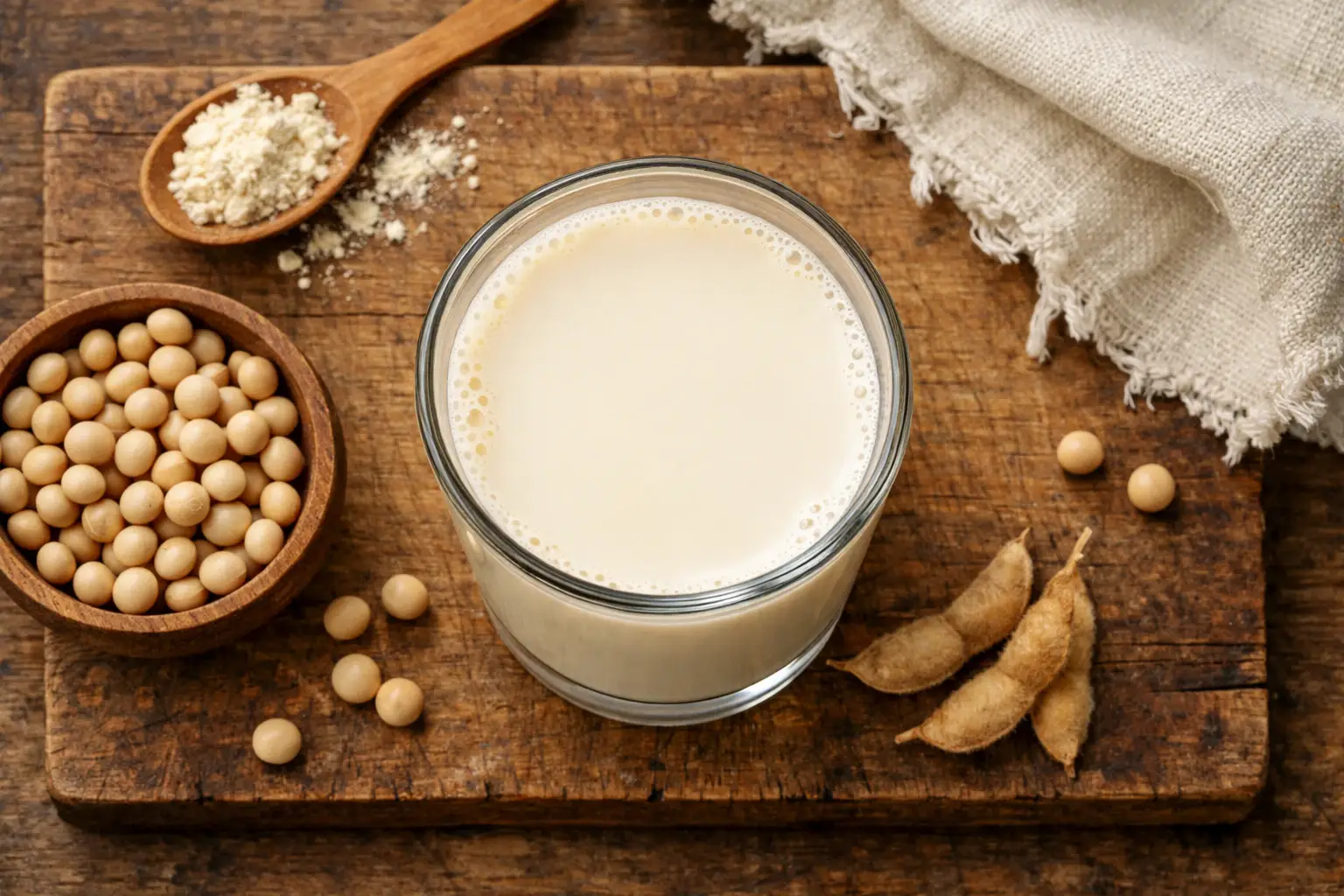
Quick Nutrition Facts
Per 1 Cup Unsweetened Fortified Soy Milk (243ml)
| Nutrient | Amount |
|---|---|
| Calories | 80 kcal |
| Protein | 7g |
| Carbohydrates | 4g |
| Fiber | 1g |
| Sugars | 1g |
| Fat | 4g |
| Calcium | 300mg |
| Vitamin D | 2.7mcg |
| Vitamin B12 | 2.1mcg |
| Isoflavones | 25mg |
Macronutrient Breakdown
 ChatGPT
  Claude
  AI Mode
  Perplexity
NUTRITIONIST INSIGHT
Fortified soy milk is the only plant-based milk nutritionally comparable to dairy milk, delivering 7g complete protein per cup with all essential amino acids. The added calcium (300mg) and B12 make it a reliable dairy substitute for vegans and lactose-intolerant individuals.
Myth Busters
MYTH #1: Soy Milk Causes Hormonal Imbalance
TRUTH: Soy isoflavones are phytoestrogens, not human estrogen. Population studies show soy has either beneficial or neutral effects on hormonal health. Moderate consumption (1-3 cups/day) is safe for both men and women.
MYTH #2: Soy Milk Is Bad for Thyroid Function
TRUTH: Research shows soy milk does not affect thyroid function in people with adequate iodine intake. If you take thyroid medication, space it 4 hours from soy milk to avoid absorption interference.
MYTH #3: Plant-Based Milk Has No Real Protein
TRUTH: Fortified soy milk provides 7g complete protein per cup, nearly matching dairy milk (8g). Soy protein is one of the few plant proteins containing all essential amino acids, making it superior to almond (1g), rice (1g), and oat milk (3g).
MYTH #4: Soy Milk Increases Breast Cancer Risk
TRUTH: Harvard research confirms moderate soy consumption does not increase breast cancer risk and may actually be protective. Population studies in Asian countries show lower breast cancer rates with regular soy intake.
MYTH #5: All Plant Milks Are Equally Nutritious
TRUTH: Soy milk is the clear nutritional leader among plant-based milks. Almond milk has only 1g protein and 30-40 calories but minimal nutrients without fortification. Only soy milk matches dairy in protein quality and quantity.
NutriScore by Health Goals
| Health Goal | NutriScore | Why This Score? |
|---|---|---|
| Weight Loss |  | Only 80 calories per cup with 7g protein for satiety. Low-fat, low-sugar profile ideal for calorie deficit. |
| Muscle Gain |  | 7g complete protein with all essential amino acids. Good post-workout recovery drink paired with fruit. |
| Diabetes Management | | Low GI (34), only 4g carbs per cup. Studies show improved insulin sensitivity with regular soy milk consumption. |
| PCOS Management | | Low glycemic impact, isoflavones may help regulate hormonal balance. Choose unsweetened varieties. |
| Pregnancy Nutrition | | ACOG lists soy as a safe protein and calcium source during pregnancy. Provides choline, B12, calcium, and vitamin D. |
| Viral/Flu Recovery | | Easy to digest, provides protein for immune support, hydrating, and gentle on sore throats. |
PERSONALIZED NUTRITION
Track your meals with NutriScan for personalized NutriScores based on your specific health goals!
Blood Sugar Response to Fortified Soy Milk
Understanding how fortified soy milk affects your blood glucose can help you make informed decisions about when and how to drink it.
Typical Glucose Response Curve
This chart shows typical blood glucose response for general healthy individuals. Individual responses may vary. Not medical advice.
How to Flatten the Spike
Pairing soy milk with fiber or healthy fat slows glucose absorption and reduces the peak blood sugar level:
- 🥣 Oatmeal or whole grain cereal - Adds fiber for slower digestion
- 🫐 Berries (blueberries, strawberries) - Low-GI fruit with antioxidants
- 🥜 Nut butter (almond, peanut) - Healthy fats and additional protein
- 🌾 Chia or flax seeds - Fiber-rich superfood pairing
This combination not only reduces the glucose spike but also extends energy release, keeping you fuller for longer.
Cultural Significance
Soy milk originated in China over 2,000 years ago and has been a dietary staple across East and Southeast Asia for centuries.
In Asia:
- Traditional breakfast beverage in China (doujiang), often served warm with fried dough (youtiao)
- Central to Japanese cuisine as the base for tofu and yuba (tofu skin)
- Korean duyu used in savory soups and stews
- Indonesian susu kedelai is a popular street drink
Global Adoption:
- Entered Western markets in the 1980s as a dairy alternative
- Now the most consumed plant-based milk globally
- First plant milk recognized by USDA Dietary Guidelines as a dairy equivalent
- Fortification technology made it nutritionally comparable to dairy milk
Compare & Substitute
Fortified Soy Milk vs Other Milks (Per 100ml)
| Nutrient | 🥛 Soy Milk (Fortified) | 🥛 Dairy Milk (Whole) | 🌰 Almond Milk (Fortified) | 🌾 Oat Milk (Fortified) |
|---|---|---|---|---|
| Calories | 33 kcal | 61 kcal | 15 kcal | 46 kcal |
| Carbs | 1.6g | 4.7g | 0.3g | 7g |
| Fiber | 0.4g | 0g | 0.2g | 0.8g |
| Protein | 2.9g | 3.3g | 0.4g | 1g |
| Fat | 1.6g | 3.3g | 1.1g | 1.5g |
| Calcium | 123mg | 120mg | 120mg | 120mg |
| Sugar | 0.4g | 5g | 0g | 3.3g |
| Vitamin D | 1.1mcg | 1.3mcg | 1mcg | 1mcg |
| Best For | Complete dairy substitute | Highest natural protein | Lowest calorie option | Creamiest plant-based taste |
Frequently Asked Questions
Is fortified soy milk good for weight loss?
Yes, unsweetened fortified soy milk has only 80 calories per cup with 7g protein that promotes satiety. It has fewer calories than whole dairy milk (149 cal/cup) and more protein than any other plant milk.
Best practices: Choose unsweetened varieties, use as a meal component (smoothies, cereal), limit to 2-3 cups per day. Track intake with NutriScan to ensure it fits your calorie goals.
Can diabetics drink soy milk?
Yes, soy milk is excellent for diabetics. It has a low glycemic index (GI 34) and only 4g carbs per cup unsweetened. Research shows regular soy milk consumption can improve insulin sensitivity.
Tips for diabetics:
- Always choose unsweetened varieties (1g sugar vs 6-12g in sweetened)
- Check labels for added sugars and carb content
- Pair with high-fiber foods for optimal blood sugar control
- Monitor blood sugar 2 hours after consuming
How much protein is in fortified soy milk?
Fortified soy milk contains 7g of complete protein per cup (243ml), making it the highest-protein plant-based milk and nearly matching dairy milk (8g per cup).
Soy protein contains all nine essential amino acids, unlike most plant proteins. For muscle gain or high-protein diets, combine with other protein sources like nuts or whole grains.
Is soy milk safe during pregnancy?
Yes, fortified soy milk is safe and recommended during pregnancy by both ACOG and Mayo Clinic. It provides calcium (300mg/cup), vitamin D, B12, and choline (important for fetal brain development).
Pregnancy tips: Choose calcium-and-vitamin-D-fortified varieties. Soy milk can help meet the recommended 1,000mg daily calcium and 450mg daily choline during pregnancy. Always consult your healthcare provider.
Is fortified soy milk better than almond milk?
Nutritionally, soy milk is superior to almond milk. Soy milk provides 7g protein per cup vs only 1g in almond milk, plus isoflavones with cardiovascular and bone health benefits.
Almond milk wins on calories (30-40 cal/cup vs 80 cal/cup), but offers minimal nutrition without heavy fortification. If protein and overall nutrient density matter, soy milk is the better choice.
How much soy milk should I drink per day?
General Guidelines:
- 1-2 cups daily - Most adults (160 cal, 14g protein)
- 2-3 cups daily - Vegans relying on soy as primary protein source
- 1 cup daily - Those with thyroid conditions (space from medication)
Note: Moderate soy consumption (1-3 servings/day) is considered safe. Track your intake with NutriScan app to see how soy milk fits your personal nutrition goals.


Similar Nutritious Foods
4505 Chicharrones Classic Chili Salt
7 Eleven Japan Crispy Corn Cheese
Explore More Nutrition Tools & Resources
AI Calorie Counter App - Snap a Photo, Get Macros
AI Nutritionist App That Reads Your Logged Meals
Best Protein Supplements for Women
Bulking Meal Plan App That Sets Your Surplus
ChatGPT Calorie Counter Alternative That Keeps the Total
ChatGPT Diet Plan Alternative That Tracks What You Eat
ChatGPT Weight Loss Coach Alternative With a Food Log
Fast Food Calorie Counter App That Reads the Tray
Free Calorie Tracker App with AI Photo Scans | NutriScan
Indian Diet Plan App With Veg and Non Veg Meals
Indian Food Calorie Calculator - Get Instant Nutrition Facts for Desi Meals — 2026
Intermittent Fasting for Women, Timer and Meal Log App
Intermittent Fasting Tracker App - Free Fasting Timer
Macro Tracker App That Fills the Numbers From a Photo
Mediterranean Diet Meal Plan App That Counts the Oil
Micronutrient Tracker App for Vitamins and Minerals
MyFitnessPal Alternative That Stays Free | NutriScan
NutriScore App: A Free Grade on Every Meal | NutriScan
Nutrition Label Scanner App for the Amount You Ate
Second Trimester Protein Guide
Vegetarian Meal Plan App With a Protein Target
Voice Calorie Counter - Speak to Track Meals Hands-Free
Water and Calorie Tracker App - Free Water Log