Freeze-Dried Fruit Snack: Calories, Nutrition and Health Benefits
Hiking-inspired portable crunchy fruit snack packed with concentrated vitamins, fiber, and natural energy in every lightweight bite.
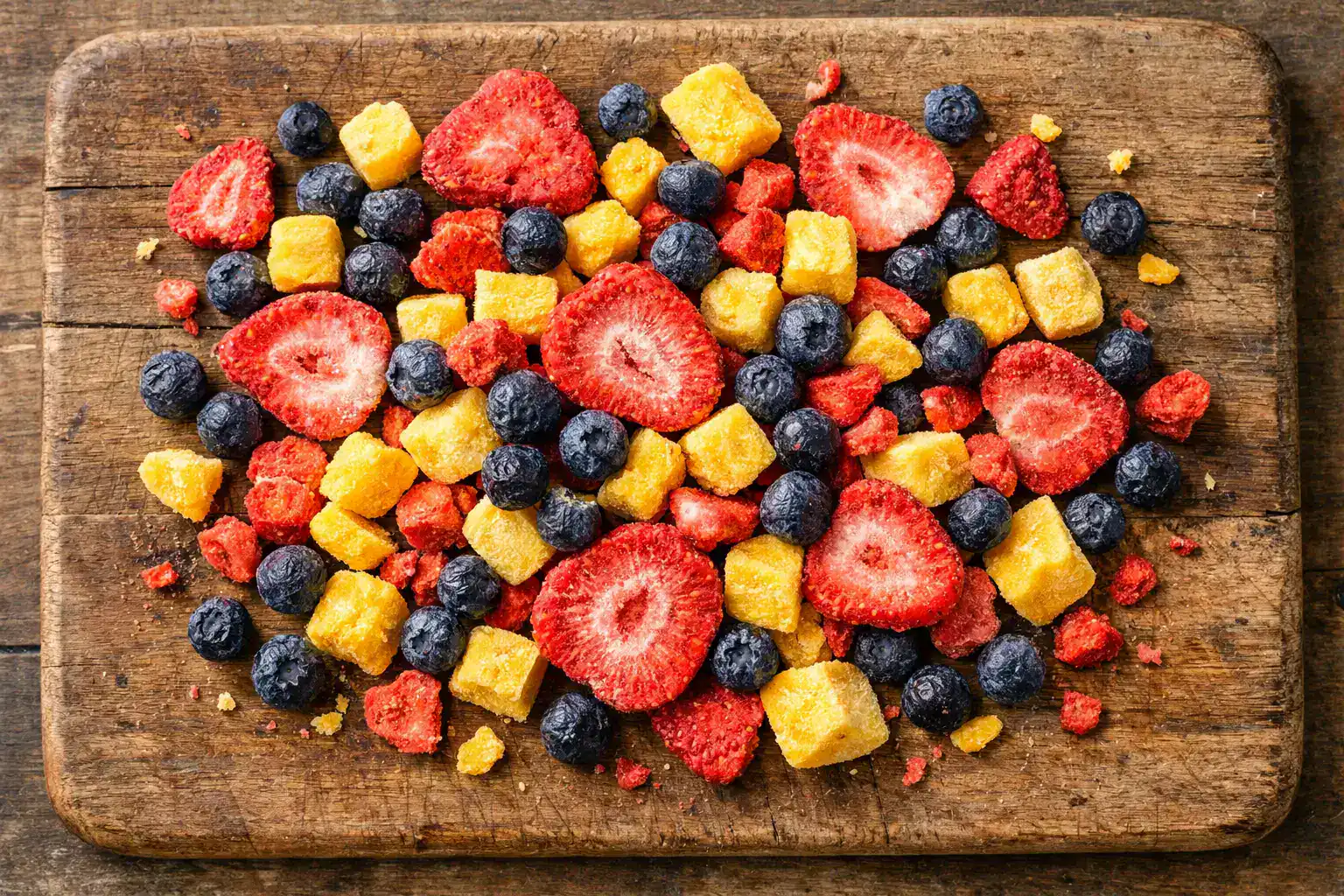
Quick Nutrition Facts
Per 1 Serving (15g)
| Nutrient | Amount |
|---|---|
| Calories | 60 kcal |
| Protein | 1g |
| Carbohydrates | 14g |
| Fiber | 2.5g |
| Sugars | 10g |
| Fat | 0.2g |
| Vitamin C | 15mg |
| Potassium | 120mg |
| Iron | 0.5mg |
| Vitamin A | 45mcg |
Macronutrient Breakdown
 ChatGPT
  Claude
  AI Mode
  Perplexity
NUTRITIONIST INSIGHT
Freeze-dried fruit retains 93% more carotenoids and 34% more vitamin C than heat-dried alternatives. The lightweight, shelf-stable format makes it ideal for hiking, travel, and portion-controlled snacking with no added sugars.
Myth Busters
MYTH #1: Freeze-Dried Fruit Is Just Candy
TRUTH: Unlike candy, freeze-dried fruit contains no added sugars, oils, or preservatives. It retains the fiber, vitamins, and antioxidants of fresh fruit. The crunchy texture comes from water removal, not sugar coating.
MYTH #2: Freeze-Dried Fruit Has No Nutritional Value
TRUTH: Freeze-drying preserves nutrients better than any other drying method. Studies show it retains 63% of vitamin C compared to only 25% with heat drying, plus nearly all fiber and minerals remain intact.
MYTH #3: Freeze-Dried Fruit Causes Weight Gain
TRUTH: A 15g serving has only 60 calories. Weight gain happens from overeating any food. The concentrated fiber promotes fullness and helps control appetite when eaten in proper portions.
MYTH #4: Freeze-Dried and Dehydrated Fruit Are the Same
TRUTH: Freeze-drying uses sublimation (ice to vapor) at low temperatures, preserving cell structure and nutrients. Dehydration uses heat, which destroys more vitamins and creates a chewy, sometimes leathery texture instead of a crunchy one.
MYTH #5: You Can Eat Unlimited Freeze-Dried Fruit
TRUTH: While nutritious, freeze-dried fruit is calorie-dense (350-400 cal per 100g) because 90% of water is removed. Stick to 15-30g servings. Without the water, your brain receives fewer fullness signals, making overeating easy.
NutriScore by Health Goals
| Health Goal | NutriScore | Why This Score? |
|---|---|---|
| Weight Loss |  | Only 60 cal per 15g serving, 2.5g fiber promotes fullness. Portion control is key due to calorie density. |
| Muscle Gain |  | Good portable carb source (14g) for energy, but low in protein (1g). Pair with nuts or protein shake. |
| Diabetes Management | | Dried fruits generally have low to medium GI. Stick to 10-15g portions, pair with protein or nuts. |
| PCOS Management | | Concentrated natural sugars affect insulin. Limit to 15g daily, pair with healthy fats. |
| Pregnancy Nutrition |  | Safe during pregnancy per ACOG guidelines. Rich in vitamin C, folate, and fiber. Convenient for managing nausea. |
| Viral/Flu Recovery | | Easy to eat when sick, vitamin C for immunity, quick natural energy, shelf-stable and requires no preparation. |
PERSONALIZED NUTRITION
Track your meals with NutriScan for personalized NutriScores based on your specific health goals!
Blood Sugar Response to Freeze-Dried Fruit
Understanding how freeze-dried fruit affects your blood glucose can help you make informed decisions about portion size and food pairings.
Typical Glucose Response Curve
This chart shows typical blood glucose response for general healthy individuals. Individual responses may vary. Not medical advice.
How to Flatten the Spike
Pairing dried fruit with protein or healthy fat slows glucose absorption and reduces the peak blood sugar level:
- 🥜 Mixed nuts or trail mix - Adds healthy fats, protein, and fiber
- 🥛 Greek yogurt - Provides protein and probiotics for better digestion
- 🧀 Cheese cubes or string cheese - Fat and protein slow sugar absorption
- 🥚 Hard-boiled eggs - Portable protein pairs perfectly for hiking snacks
This combination not only reduces the glucose spike but also extends energy release, keeping you fueled longer during hikes and outdoor activities.
Cultural Significance
Freeze-drying has roots in ancient preservation techniques and has evolved into a modern snacking revolution.
Historical Origins:
- Inca civilization freeze-dried potatoes (chuño) at high altitude over 1,000 years ago
- Modern freeze-drying developed during World War II for preserving blood serum and penicillin
- NASA adopted freeze-dried food for space missions in the 1960s, popularizing the concept
Modern Snacking Culture:
- Hiking and backpacking communities drove mainstream adoption for lightweight nutrition
- Asian markets pioneered commercial freeze-dried fruit snacks, especially in Japan and South Korea
- Growing popularity in school lunches and office snacking as a healthy alternative to chips
- Sustainability appeal: reduces food waste by extending shelf life to 25+ years
Compare & Substitute
Freeze-Dried Fruit vs Similar Snacks (Per 100g)
| Nutrient | 🍓 Freeze-Dried Fruit | 🍇 Raisins | 🥭 Dried Mango | 🍌 Banana Chips |
|---|---|---|---|---|
| Calories | 357 kcal | 299 kcal | 319 kcal | 519 kcal |
| Carbs | 82g | 79g | 78g | 59g |
| Fiber | 21g | 3.7g | 2.4g | 7.7g |
| Protein | 3.5g | 3.1g | 1.2g | 2.3g |
| Fat | 0.5g | 0.5g | 0.8g | 34g |
| Vitamin C | 55mg | 2.3mg | 12mg | 0mg |
| Sugar | 52g | 59g | 73g | 35g |
| Best For | Hiking, nutrient retention | Quick energy, iron-rich snack | Sweet treat, tropical flavor | Crunchy texture, high energy |
Frequently Asked Questions
Are freeze-dried fruit snacks healthy?
Yes, freeze-dried fruit snacks retain most vitamins, minerals, and fiber from fresh fruit. The process preserves 93% more carotenoids and 34% more vitamin C than heat drying. No added sugars, oils, or preservatives in pure freeze-dried fruit.
Best practices: Stick to 15-30g servings (60-120 calories), check labels for added sugar in flavored varieties, and pair with protein for balanced snacking.
How many calories are in freeze-dried fruit?
A typical 15g serving contains about 60 calories. Per 100g, freeze-dried fruit averages 350-400 calories because water removal concentrates all nutrients and sugars.
Serving comparison:
- 15g freeze-dried strawberries = 54 calories (equivalent to ~150g fresh strawberries)
- 15g freeze-dried mango = 60 calories (equivalent to ~90g fresh mango)
- 15g freeze-dried banana = 53 calories (equivalent to ~45g fresh banana)
Is freeze-dried fruit better than dried fruit?
Freeze-dried fruit preserves more nutrients, has a crunchier texture, and typically contains no added sugars or oils. Conventionally dried fruit often has added sugar, sulfur dioxide preservatives, and loses more vitamins during heat processing.
Key differences:
- Vitamin C retention: 63% (freeze-dried) vs 25% (heat-dried)
- Texture: crunchy and airy vs chewy and dense
- Shelf life: 25+ years vs 6-12 months
- Additives: none vs often sugar/oil/sulfites added
Can diabetics eat freeze-dried fruit?
Diabetics can eat freeze-dried fruit in moderation. Research shows dried fruits generally have a low to medium glycemic index (GI 55 or below for many varieties).
Tips for diabetics:
- Limit to 10-15g per serving (about 1 tablespoon)
- Always pair with protein or healthy fat (nuts, cheese)
- Choose berry-based varieties (lower GI than tropical fruits)
- Monitor blood sugar 2 hours after eating
Is freeze-dried fruit good for hiking and outdoor activities?
Freeze-dried fruit is one of the best hiking snacks available. It weighs 90% less than fresh fruit, provides concentrated carbohydrate energy, requires no refrigeration, and delivers essential vitamins and minerals.
Trail snack benefits:
- Ultralight - 15g serves the nutritional equivalent of 100-150g fresh fruit
- Shelf-stable - Lasts months to years without refrigeration
- Quick energy - Natural sugars provide immediate fuel
- Compact - Takes minimal pack space
Does freeze-dried fruit have added sugar?
Pure freeze-dried fruit contains zero added sugar. All sweetness comes from concentrated natural fruit sugars. However, some commercial brands add sugar coating, chocolate, or yogurt coatings.
How to check: Read the ingredient list. Pure freeze-dried fruit should list only the fruit name (e.g., "strawberries"). Avoid products listing sugar, corn syrup, or sweeteners.
Track your snacking with NutriScan app to monitor your daily fruit and calorie intake.


Similar Nutritious Foods
4505 Chicharrones Classic Chili Salt
7 Eleven Japan Crispy Corn Cheese
Explore More Nutrition Tools & Resources
AI Calorie Counter App - Snap a Photo, Get Macros
AI Nutritionist App That Reads Your Logged Meals
Best Protein Supplements for Women
Bulking Meal Plan App That Sets Your Surplus
ChatGPT Calorie Counter Alternative That Keeps the Total
ChatGPT Diet Plan Alternative That Tracks What You Eat
ChatGPT Weight Loss Coach Alternative With a Food Log
Fast Food Calorie Counter App That Reads the Tray
Free Calorie Tracker App with AI Photo Scans | NutriScan
Indian Diet Plan App With Veg and Non Veg Meals
Indian Food Calorie Calculator - Get Instant Nutrition Facts for Desi Meals — 2026
Intermittent Fasting for Women, Timer and Meal Log App
Intermittent Fasting Tracker App - Free Fasting Timer
Macro Tracker App That Fills the Numbers From a Photo
Mediterranean Diet Meal Plan App That Counts the Oil
Micronutrient Tracker App for Vitamins and Minerals
MyFitnessPal Alternative That Stays Free | NutriScan
NutriScore App: A Free Grade on Every Meal | NutriScan
Nutrition Label Scanner App for the Amount You Ate
Second Trimester Protein Guide
Vegetarian Meal Plan App With a Protein Target
Voice Calorie Counter - Speak to Track Meals Hands-Free
Water and Calorie Tracker App - Free Water Log