Fresh Salsa (Homemade): Calories, Nutrition and Health Benefits
A vibrant, virtually zero-fat condiment loaded with lycopene, vitamin C, and capsaicin — bold flavor at just 10 calories per serving.
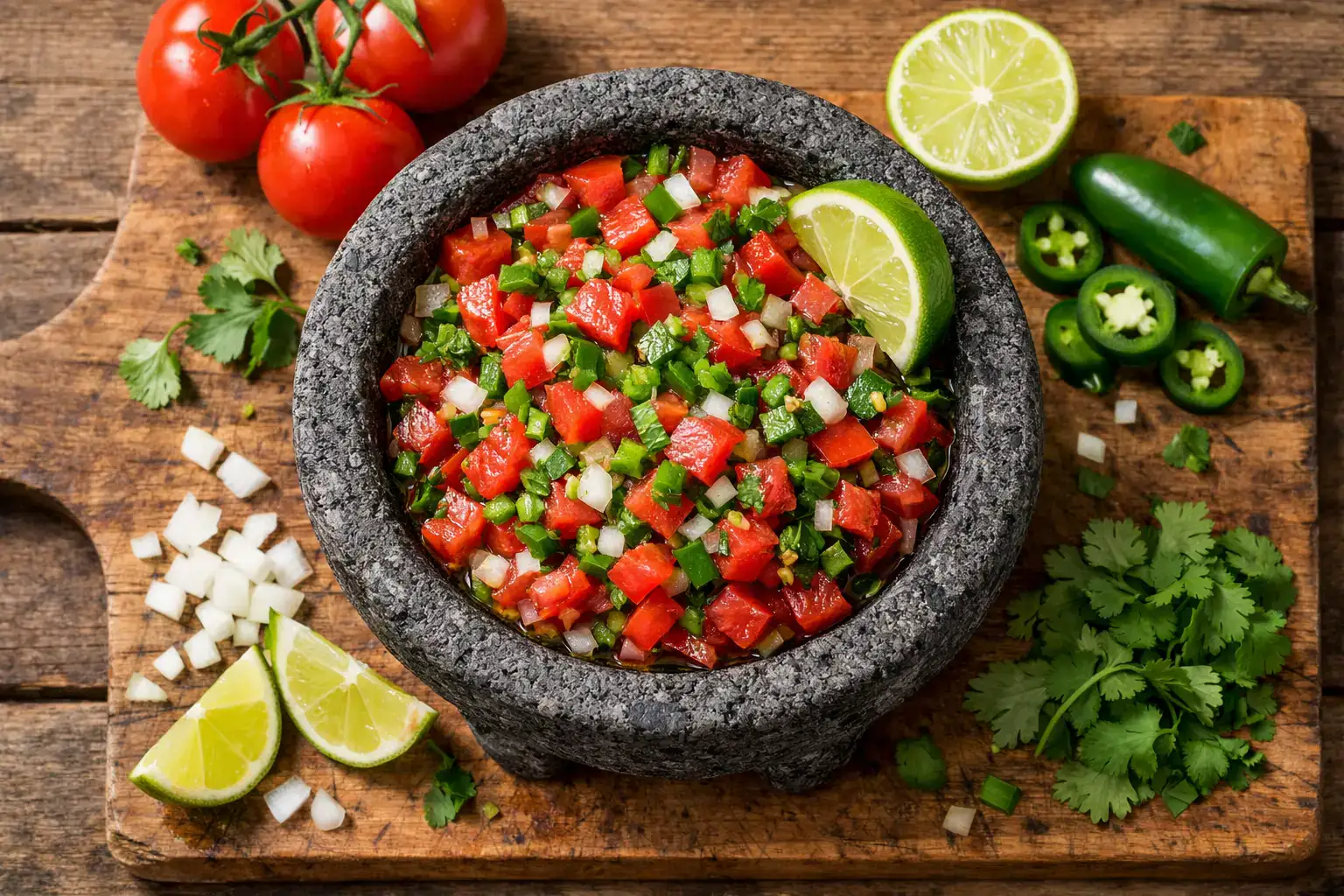
Quick Nutrition Facts
Per 2 Tablespoons (32g) — Homemade Fresh Salsa
| Nutrient | Amount |
|---|---|
| Calories | 10 kcal |
| Protein | 0.5g |
| Carbohydrates | 2g |
| Fiber | 0.5g |
| Sugars | 1.2g |
| Fat | 0g |
| Sodium | 40mg |
| Vitamin C | 4.5mg |
| Potassium | 80mg |
| Lycopene | ~1.5mg |
Macronutrient Breakdown
 ChatGPT
  Claude
  AI Mode
  Perplexity
NUTRITIONIST INSIGHT
Fresh homemade salsa delivers more vitamin C per calorie than almost any other condiment. The lycopene in tomatoes is better absorbed when combined with the small amount of fat from avocado or chips, making salsa a surprisingly powerful antioxidant delivery system.
Myth Busters
MYTH #1: Salsa Is Too Spicy for Everyday Use
TRUTH: Fresh salsa heat is fully adjustable. Remove jalapeño seeds and membranes for mild salsa, or skip peppers entirely. The capsaicin in peppers actually boosts metabolism and reduces appetite, making spicy salsa beneficial for weight management.
MYTH #2: Salsa Is High in Sodium
TRUTH: Homemade fresh salsa contains only 30-50mg sodium per serving — that is 80-90% less than store-bought versions (200-400mg). You control the salt, making it one of the lowest-sodium condiments available.
MYTH #3: Salsa Has No Real Nutritional Value
TRUTH: Fresh salsa is packed with lycopene from tomatoes, linked to reduced cardiovascular disease and cancer risk. It also provides vitamin C, potassium, and antioxidants from onions, cilantro, and peppers.
MYTH #4: Fresh and Jarred Salsa Are the Same
TRUTH: Fresh salsa retains significantly more vitamin C and enzymes than heat-processed jarred versions. Cooking destroys up to 30% of vitamin C content. However, cooked tomatoes release more bioavailable lycopene, so both have unique benefits.
MYTH #5: Salsa Will Upset Your Stomach
TRUTH: For most people, fresh salsa is easily digestible. The fiber from vegetables supports gut health. Only those with active GERD or gastritis may need to limit acidic and spicy ingredients.
NutriScore by Health Goals
| Health Goal | NutriScore | Why This Score? |
|---|---|---|
| Weight Loss |  | Only 10 calories per serving, zero fat, fiber promotes fullness. Capsaicin may boost metabolism. |
| Muscle Gain |  | Low protein but excellent as a flavor booster on high-protein meals. Potassium supports muscle function. |
| Diabetes Management | | Virtually no glycemic impact with only 2g carbs. The fiber and acidity help moderate blood sugar response when paired with meals. |
| PCOS Management | | Zero fat, minimal sugars, anti-inflammatory compounds from tomatoes and onions help manage insulin resistance. |
| Pregnancy Nutrition | | Rich in vitamin C and folate from fresh vegetables. Wash all produce thoroughly. Avoid excess spice if nauseous. |
| Viral/Flu Recovery | | Vitamin C for immunity, capsaicin clears congestion, hydrating ingredients, easy to eat when appetite is low. |
PERSONALIZED NUTRITION
Track your meals with NutriScan for personalized NutriScores based on your specific health goals!
Blood Sugar Response to Fresh Salsa
Understanding how fresh salsa affects your blood glucose can help you make informed decisions about condiment choices.
Typical Glucose Response Curve
This chart shows typical blood glucose response for general healthy individuals. Individual responses may vary. Not medical advice.
How to Flatten the Spike
Fresh salsa already has minimal glycemic impact, but when eaten with higher-carb foods like chips or rice, these pairings help:
- 🥑 Avocado or guacamole - Healthy fats slow glucose absorption
- 🫘 Black beans - Protein and fiber create a balanced snack
- 🥚 Scrambled eggs - Complete protein stabilizes blood sugar
- 🧀 Cheese or Greek yogurt - Adds protein and healthy fats
This combination not only reduces the glucose spike from accompanying carbs but also extends energy release, keeping you fuller for longer.
Cultural Significance
Salsa has deep roots in Mesoamerican cuisine dating back to the Aztec civilization, who combined tomatoes (tomatl), chilies, and ground squash seeds over 500 years ago.
In Mexico:
- Salsa is considered a fundamental part of every meal, not just a condiment
- Regional varieties include salsa verde (tomatillo-based), pico de gallo, and salsa roja
- Traditional preparation in a molcajete (stone mortar) is believed to produce superior flavor
- UNESCO recognized Mexican cuisine as Intangible Cultural Heritage in 2010
In India:
- Fresh salsa parallels Indian chutneys in concept — fresh, raw condiments with vegetables and spices
- Tomato-based salsas complement Indian dishes like tikka, grilled paneer, and dal
- Growing popularity in urban Indian fusion cuisine
Global Impact:
- Salsa overtook ketchup as the top-selling condiment in the United States in the 1990s
- Over $2 billion annual market in the US alone
- Found in cuisines across Latin America, each with distinct regional variations
Compare & Substitute
Fresh Salsa vs Similar Condiments (Per 100g)
| Nutrient | 🍅 Fresh Salsa | 🥫 Ketchup | 🌶️ Hot Sauce | 🥑 Guacamole |
|---|---|---|---|---|
| Calories | 36 kcal | 112 kcal | 11 kcal | 160 kcal |
| Carbs | 7g | 28g | 1.8g | 9g |
| Fiber | 1.5g | 0.3g | 0.3g | 7g |
| Protein | 1.5g | 1.3g | 0.5g | 2g |
| Fat | 0.2g | 0.1g | 0.4g | 15g |
| Sodium | 125mg | 1,114mg | 2,643mg | 375mg |
| Sugar | 4g | 22g | 0.2g | 0.7g |
| Vitamin C | 14mg | 4mg | 3.5mg | 10mg |
| Best For | Low-cal flavor, antioxidants | Sweet condiment, limited use | Zero-calorie heat | Healthy fats, filling dip |
Frequently Asked Questions
Is fresh salsa good for weight loss?
Fresh salsa is one of the best condiments for weight loss. At only 10 calories per 2 tablespoons, it delivers maximum flavor with minimal caloric impact. The capsaicin from jalapeños may boost metabolism by 5-8% temporarily, and the fiber promotes satiety.
Best practices: Use as a topping for grilled chicken, eggs, or salads instead of calorie-dense dressings. Pair with vegetables instead of chips for the lowest calorie option.
Can diabetics eat fresh salsa?
Fresh homemade salsa is an excellent choice for diabetics. With only 2g of carbs per serving and virtually no glycemic impact, it adds flavor without affecting blood sugar.
Tips for diabetics:
- Choose homemade over store-bought to control sodium and added sugars
- Use as a topping for lean proteins and vegetables
- The acidity from lime and tomatoes may help moderate glycemic response of other foods
- Monitor portion size if eating with chips or tortillas (the carbs come from the vehicle, not the salsa)
How many calories are in fresh salsa?
Fresh homemade salsa contains approximately 10 calories per 2 tablespoons (32g). Per 100g, it has about 36 calories. This makes it one of the lowest-calorie condiments available — roughly 70% fewer calories than ketchup and 98% fewer than mayonnaise.
What are the main health benefits of fresh salsa?
Key Benefits:
- Heart Health: Lycopene from tomatoes reduces cardiovascular disease risk
- Immune Support: Vitamin C from tomatoes, peppers, and lime boosts immunity
- Metabolism Boost: Capsaicin from jalapeños supports thermogenesis
- Digestive Health: Fiber from vegetables supports regular digestion
- Anti-Inflammatory: Onions and garlic contain quercetin and allicin
- Low Sodium: Homemade versions contain 80-90% less sodium than commercial condiments
Is homemade salsa healthier than store-bought?
Homemade fresh salsa is significantly healthier than store-bought for several reasons:
- Sodium: 30-50mg vs 200-400mg per serving in commercial brands
- Vitamin C: Fresh ingredients retain more vitamin C (cooking destroys 20-30%)
- No preservatives: No citric acid, calcium chloride, or artificial additives
- No added sugars: Many jarred salsas add sugar for shelf stability
- Fresher taste: Better flavor means you use it more as a healthy condiment
How long does fresh salsa last?
Storage Guidelines:
- Refrigerator: 5-7 days in an airtight glass container
- Freezer: Up to 2 months (texture softens slightly)
- Room temperature: Maximum 2 hours (food safety)
Tips: Add lime juice to extend freshness. Store in glass rather than plastic to prevent flavor absorption. If salsa becomes watery, drain excess liquid before serving.
Can I eat salsa every day?
Yes — fresh salsa is safe and beneficial for daily consumption.
- 1-2 servings daily (2-4 tbsp) is ideal for most people
- Caution with GERD: Tomato acidity and capsaicin may trigger symptoms
- Pregnancy: Safe when produce is thoroughly washed; moderate spice level if nauseous
- Kidney concerns: Homemade salsa's low sodium makes it suitable even for sodium-restricted diets
Track your condiment intake with NutriScan app to see how salsa fits your personal nutrition goals.


Similar Nutritious Foods
4505 Chicharrones Classic Chili Salt
7 Eleven Japan Crispy Corn Cheese
Explore More Nutrition Tools & Resources
AI Calorie Counter App - Snap a Photo, Get Macros
AI Nutritionist App That Reads Your Logged Meals
Best Protein Supplements for Women
Bulking Meal Plan App That Sets Your Surplus
ChatGPT Calorie Counter Alternative That Keeps the Total
ChatGPT Diet Plan Alternative That Tracks What You Eat
ChatGPT Weight Loss Coach Alternative With a Food Log
Fast Food Calorie Counter App That Reads the Tray
Free Calorie Tracker App with AI Photo Scans | NutriScan
Indian Diet Plan App With Veg and Non Veg Meals
Indian Food Calorie Calculator - Get Instant Nutrition Facts for Desi Meals — 2026
Intermittent Fasting for Women, Timer and Meal Log App
Intermittent Fasting Tracker App - Free Fasting Timer
Macro Tracker App That Fills the Numbers From a Photo
Mediterranean Diet Meal Plan App That Counts the Oil
Micronutrient Tracker App for Vitamins and Minerals
MyFitnessPal Alternative That Stays Free | NutriScan
NutriScore App: A Free Grade on Every Meal | NutriScan
Nutrition Label Scanner App for the Amount You Ate
Second Trimester Protein Guide
Vegetarian Meal Plan App With a Protein Target
Voice Calorie Counter - Speak to Track Meals Hands-Free
Water and Calorie Tracker App - Free Water Log