Fresh Vegetable Salad: Calories, Nutrition and Health Benefits
Nature's nutrient powerhouse—packed with vitamins, minerals, and fiber while remaining one of the lowest-calorie meals you can eat.
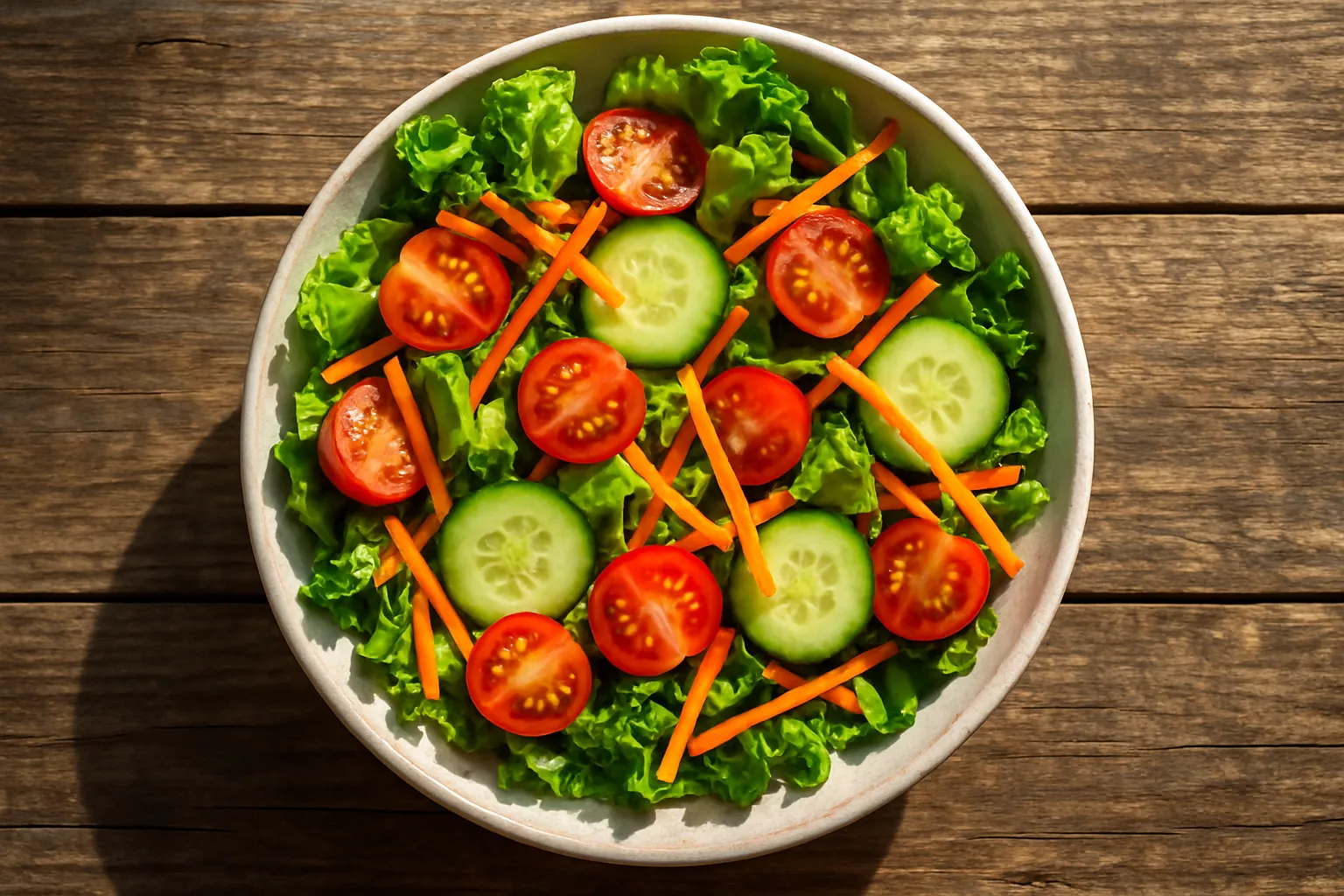
Quick Nutrition Facts
Per 1 Cup Fresh Vegetables (100g)
| Nutrient | Amount |
|---|---|
| Calories | 25 kcal |
| Protein | 1.5g |
| Carbohydrates | 5g |
| Fiber | 1g |
| Sugars | 2.5g |
| Fat | 0.2g |
| Potassium | 250mg |
| Vitamin C | 15mg |
| Vitamin K | 60mcg |
| Folate | 30mcg |
Macronutrient Breakdown
 ChatGPT
  Claude
  AI Mode
  Perplexity
NUTRITIONIST INSIGHT
Fresh vegetable salads are nutrient-dense and calorie-sparse—meaning maximum nutrition with minimal calories. The high water content (95% in lettuce) and fiber promote fullness for hours, making salads ideal for sustainable weight management and blood sugar control.
Myth Busters
MYTH #1: Salad is Just Rabbit Food with No Real Nutrition
TRUTH: Raw vegetables contain bioavailable vitamins, minerals, and phytonutrients that processed foods lose. Studies show salad eaters have better vitamin C, K, folate, and potassium levels. The fiber supports gut microbiota diversity.
MYTH #2: Salads Don't Keep You Full
TRUTH: Combining vegetables with protein and fat creates sustainable satiety. Add 2 tbsp nuts, olive oil dressing, or grilled chicken to a salad and you'll stay fuller longer than with a candy bar—despite similar calories.
MYTH #3: Raw Vegetables Are Less Nutritious Than Cooked
TRUTH: Raw vegetables retain heat-sensitive vitamins (C, folate). Some nutrients (lycopene in tomatoes) actually increase with cooking, but raw versions still provide meaningful amounts. Include both raw and lightly cooked vegetables.
MYTH #4: You Need Lots of Dressing to Make Salad Tasty
TRUTH: Vinegar-based dressings (lemon, balsamic) add flavor with minimal calories. Just 1 tbsp olive oil (120 cal) plus herbs, vinegar, and spices creates satisfying taste without excess calories.
MYTH #5: Salads Are Too Expensive to Eat Daily
TRUTH: Seasonal vegetables and basic greens are affordable. Buy loose lettuce (cheaper than bagged), add affordable vegetables like tomatoes and cucumbers, and batch-prep on weekends. Costs <$2 per serving.
MYTH #6: All Salads Are Healthy
TRUTH: Creamy dressings, fried croutons, and processed meats can turn healthy vegetables into calorie-bombs. Choose oil-based dressings, grilled proteins, and whole grains. Read labels—ranch dressing can have 10x more calories than vinaigrette.
NutriScore by Health Goals
| Health Goal | NutriScore | Why This Score? |
|---|---|---|
| Weight Loss |  | 25 calories, 1g fiber, 95% water promotes fullness. Unlimited portions. Combine with protein source for complete meal. |
| Muscle Gain |  | Low in calories/protein alone. Pairs well with chicken, tofu, or legumes (add 20g+ protein). Provides micronutrients for recovery. |
| Diabetes Management | | Virtually zero glycemic load; polyphenols improve insulin sensitivity. Unlimited quantities. Include protein + fat for balanced meal. |
| PCOS Management | | Low glycemic impact, high in antioxidants. Supports hormonal balance. Add olive oil and nuts for anti-inflammatory benefits. |
| Pregnancy Nutrition | | Rich in folate (essential for fetal development), vitamin K, and minerals. Raw vegetables retain folate better than cooked. Include variety for diverse micronutrient intake. |
| Viral/Flu Recovery | | High in vitamin C (supports immune function), easily digestible, hydrating. Gentle on sensitive stomach during illness. Add broth-based dressing for mineral replenishment. |
PERSONALIZED NUTRITION
Track your meals with NutriScan for personalized NutriScores based on your specific health goals!
Blood Sugar Response to Fresh Vegetable Salad
Raw vegetables have virtually no impact on blood glucose due to their high fiber, low carbs, and polyphenol content.
Typical Glucose Response Curve
This chart shows typical blood glucose response for general healthy individuals. Individual responses may vary. Not medical advice.
How to Maximize Satiety
Pairing salad with protein and healthy fat turns a light snack into a complete meal:
- 🥜 Nuts and seeds (almonds, walnuts, pumpkin seeds) - Healthy fats, protein, mineral density
- 🍗 Grilled chicken or tofu - Lean protein for muscle support
- 🫘 Legumes (chickpeas, lentils, beans) - Complete protein + fiber
- 🥣 Whole grains (quinoa, farro) - Sustained energy and B vitamins
This combination extends satiety for 3-4 hours, stabilizes energy, and supports muscle maintenance.
Cultural Significance
Fresh vegetable salads are eaten globally but have distinct regional traditions.
In India:
- Salad vegetables (tomato, cucumber, lettuce) combined with chutneys (mint, coconut) since ancient times
- Kachumber salad (tomato-cucumber-onion) standard in every meal
- Ayurvedic tradition emphasizes raw vegetables for digestive fire and detoxification
- Modern salad popularity growing with increasing focus on preventive nutrition
Global Impact:
- Mediterranean diet centers on fresh vegetable dishes; populations show superior heart health
- Japanese sunomono (vinegared salads) emphasize fermented vegetables
- Mexican ensalada fresca (tomato, cilantro, lime) provides nutrient density in hot climates
- WHO recommends 400g (5 portions) vegetables daily for disease prevention
Compare & Substitute
Fresh Vegetable Salad vs Similar Low-Calorie Foods (Per 100g)
| Nutrient | 🥗 Salad (Raw) | 🥕 Steamed Vegetables | 🍲 Vegetable Soup | 🥬 Spinach (Raw) |
|---|---|---|---|---|
| Calories | 25 kcal | 35 kcal | 40 kcal | 23 kcal |
| Carbs | 5g | 7g | 8g | 3.6g |
| Fiber | 1g | 2g | 1.5g | 2.2g |
| Protein | 1.5g | 2g | 1.5g | 2.9g |
| Fat | 0.2g | 0.5g | 0.2g | 0.4g |
| Vitamin C | 15mg | 8mg (reduced by heat) | 5mg | 28mg |
| Vitamin K | 60mcg | 90mcg (increased by heat) | 30mcg | 145mcg |
| Best For | Raw nutrients, maximum enzymes | Easier digestion, warm meal | Hydration, comfort food | Iron, antioxidants, raw power |
Frequently Asked Questions
Is fresh vegetable salad good for weight loss?
Yes, salads are excellent for weight loss due to high volume, low calories, and fiber. One cup (100g) contains only 25 calories but provides sustained fullness through water and roughage.
Best practices: Make salad the base of your meal, add protein (chicken, tofu, legumes), use oil-based dressing (1-2 tbsp), and eat before other foods to fill up on nutrients first.
Can diabetics eat fresh vegetable salad?
Absolutely. Raw vegetables have minimal glycemic impact. Polyphenols and fiber in vegetables improve insulin sensitivity and help regulate blood sugar.
Tips for diabetics: Unlimited raw vegetables; include variety; combine with protein and healthy fat; avoid starchy additions like regular dressing; monitor total meal carbs from other components.
How much protein is in a salad?
A plain vegetable salad (100g) contains 1.5g protein. While not significant alone, combine with 100g grilled chicken (35g), tofu (8g), or a handful of nuts (6g) to create protein-complete meals.
High-protein salad example: 100g vegetables + 150g grilled chicken + 2 tbsp olive oil dressing = 45g protein, 250 calories.
What are the main health benefits of fresh vegetable salad?
Key benefits: Essential vitamins (C for immunity, K for bones, folate for cell division); minerals (potassium for heart, magnesium for muscles); fiber for digestive health; phytonutrients (lycopene, beta-carotene) that reduce inflammation and chronic disease risk.
Regular salad consumption is associated with better cardiovascular health, lower cholesterol, and improved blood pressure.
When is the best time to eat a salad?
Depends on your goal:
- Weight Loss: Lunch or dinner as the first course to fill up on nutrients before other foods
- Diabetes: With protein and healthy fat to slow carb absorption; mid-afternoon for stable blood sugar
- Energy: Pre-workout with nuts/seeds for hydration and sustained energy
- General Health: Any meal; variety throughout day ensures consistent micronutrient intake
What vegetables are best for salads?
Nutrient-dense choices: Spinach (iron, folate), kale (vitamin K, calcium), mixed greens (variety of antioxidants), tomatoes (lycopene), cucumbers (hydration), bell peppers (vitamin C), carrots (beta-carotene), beets (folate, betalains).
Rule: Eat the rainbow. Different colored vegetables contain different phytonutrients. Include red (lycopene), orange (carotenoids), green (chlorophyll), purple (anthocyanins), yellow (lutein).
How should I dress my salad?
Best options: Oil-based vinaigrettes (1-2 tbsp olive oil + vinegar + herbs); lemon juice dressings; tahini-based dressings. Keep dressing separate if meal prepping.
Avoid: Creamy dressings (ranch, Caesar can have 200+ calories per 2 tbsp); store-bought versions with added sugars.
Can I eat salad every day?
Yes, absolutely. Eating salad daily supports consistent vitamin and fiber intake. Vary vegetables weekly to maximize phytonutrient diversity.
Daily salad recommendation: 1-2 cups per day as a base for meals, supplemented with protein and whole grains for complete nutrition.


Similar Nutritious Vegetables
4505 Chicharrones Classic Chili Salt
7 Eleven Japan Crispy Corn Cheese
Explore More Nutrition Tools & Resources
AI Calorie Counter App - Snap a Photo, Get Macros
AI Nutritionist App That Reads Your Logged Meals
Best Protein Supplements for Women
Bulking Meal Plan App That Sets Your Surplus
ChatGPT Calorie Counter Alternative That Keeps the Total
ChatGPT Diet Plan Alternative That Tracks What You Eat
ChatGPT Weight Loss Coach Alternative With a Food Log
Fast Food Calorie Counter App That Reads the Tray
Free Calorie Tracker App with AI Photo Scans | NutriScan
Indian Diet Plan App With Veg and Non Veg Meals
Indian Food Calorie Calculator - Get Instant Nutrition Facts for Desi Meals — 2026
Intermittent Fasting for Women, Timer and Meal Log App
Intermittent Fasting Tracker App - Free Fasting Timer
Macro Tracker App That Fills the Numbers From a Photo
Mediterranean Diet Meal Plan App That Counts the Oil
Micronutrient Tracker App for Vitamins and Minerals
MyFitnessPal Alternative That Stays Free | NutriScan
NutriScore App: A Free Grade on Every Meal | NutriScan
Nutrition Label Scanner App for the Amount You Ate
Second Trimester Protein Guide
Vegetarian Meal Plan App With a Protein Target
Voice Calorie Counter - Speak to Track Meals Hands-Free
Water and Calorie Tracker App - Free Water Log