Frozen Pupusas (Salvadoran): Calories, Nutrition and Health Benefits
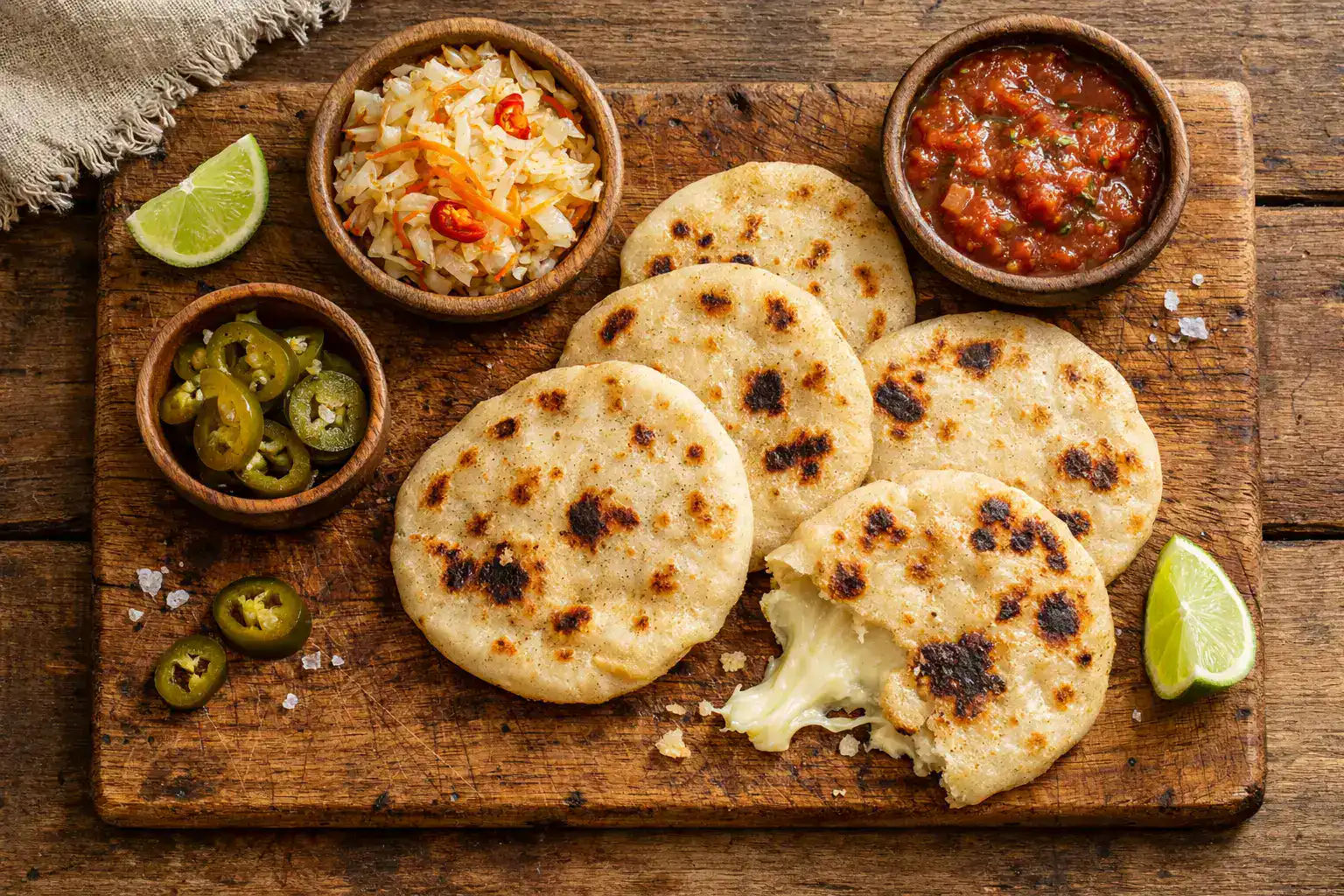
El Salvador's national dish - thick corn masa cakes stuffed with cheese, beans, or pork, now conveniently available frozen for authentic flavor at home.
Quick Nutrition Facts
Per 1 Cheese Pupusa (122g)
| Nutrient | Amount |
|---|---|
| Calories | 220 kcal |
| Protein | 7g |
| Carbohydrates | 28g |
| Fiber | 3g |
| Sugars | 2g |
| Fat | 9g |
| Sodium | 426mg |
| Calcium | 49mg |
| Iron | 1.3mg |
| Potassium | 255mg |
Macronutrient Breakdown
 ChatGPT
  Claude
  AI Mode
  Perplexity
NUTRITIONIST INSIGHT
Pupusas made with nixtamalized corn masa have enhanced B vitamin bioavailability compared to regular corn products. The cheese filling adds calcium and protein, making this a more balanced meal than many quick-service options.
Myth Busters
MYTH #1: Pupusas Are Just Empty Carbs
TRUTH: Pupusas provide quality nutrition beyond carbohydrates. One pupusa delivers 7g protein, 3g fiber, and significant B vitamins from nixtamalized corn masa. The cheese adds calcium (49mg) and complete proteins.
MYTH #2: Frozen Pupusas Are Unhealthy Processed Food
TRUTH: Quality frozen pupusas contain simple ingredients: corn masa, cheese, and beans. They're flash-frozen to preserve nutrients without excessive preservatives. Check labels for minimal additives and reasonable sodium levels.
MYTH #3: Diabetics Can't Eat Pupusas
TRUTH: Diabetics can enjoy pupusas in moderation. The moderate glycemic index (55-65) from nixtamalized corn, combined with protein and fat from cheese, helps moderate blood sugar response. Limit to one pupusa and pair with non-starchy vegetables.
MYTH #4: Pupusas Are Too High in Fat
TRUTH: A cheese pupusa contains about 9g fat, with only 3-4g saturated fat. This is comparable to a slice of cheese pizza but with more fiber and B vitamins. The fat content helps with satiety and nutrient absorption.
MYTH #5: All Pupusa Fillings Are Equal Nutritionally
TRUTH: Filling choices significantly affect nutrition. Bean pupusas offer more fiber (5g vs 3g) and plant protein. Pork pupusas have more protein (12g) but also more saturated fat. Cheese pupusas balance protein and calcium.
NutriScore by Health Goals
| Health Goal | NutriScore | Why This Score? |
|---|---|---|
| Weight Loss |  | 220 calories per pupusa is moderate. Limit to 1-2 per meal, skip oily cooking, and pair with salad to increase volume. |
| Muscle Gain |  | Good carb source (28g) for post-workout recovery. Add extra protein (eggs, chicken) to boost muscle-building potential. |
| Diabetes Management | | Moderate GI (55-65). Nixtamalized corn has better glucose response than regular corn. Limit to 1 pupusa, pair with fiber-rich sides. |
| PCOS Management | | Moderate carb load affects insulin response. Choose bean-filled for extra fiber, limit portions, and balance with protein. |
| Pregnancy Nutrition | | Provides calcium (49mg) and iron (1.3mg). Dairy supports fetal bone development. Ensure thoroughly cooked. |
| Viral/Flu Recovery | | Easy to digest, provides steady energy, and the warm comfort food aspect supports recovery appetite. |
PERSONALIZED NUTRITION
Track your meals with NutriScan for personalized NutriScores based on your specific health goals!
Blood Sugar Response to Frozen Pupusas
Understanding how pupusas affect your blood glucose can help you make informed decisions about when and how to eat them.
Typical Glucose Response Curve
This chart shows typical blood glucose response for general healthy individuals. Individual responses may vary. Not medical advice.
How to Flatten the Spike
Pairing carbohydrates with protein and fiber slows glucose absorption and reduces the peak blood sugar level:
- 🥗 Curtido (fermented cabbage slaw) - Traditional accompaniment adds fiber and probiotics
- 🥬 Side salad with vinegar dressing - Vinegar may help moderate glucose response
- 🥚 Fried or scrambled eggs - Complete protein and healthy fats
- 🫘 Extra bean filling - Choose bean and cheese pupusas for more fiber
This combination not only reduces the glucose spike but also extends energy release, keeping you fuller for longer.
Cultural Significance
Pupusas are the national dish of El Salvador, with roots dating back to the Pipil indigenous people over 2,000 years ago.
In El Salvador:
- National Pupusa Day celebrated every second Sunday of November
- Each region has signature fillings (loroco flower, chicharrón, ayote)
- Traditionally served with curtido (pickled cabbage) and salsa roja
- Street vendors called "pupuserías" are cultural gathering spots
Global Spread:
- Salvadoran diaspora brought pupusas to the US, especially Los Angeles and Washington D.C.
- Frozen pupusas now available in major supermarkets worldwide
- Growing popularity as an alternative to tacos and burritos
- Variations emerging with fusion fillings (pizza pupusa, breakfast pupusa)
Compare & Substitute
Pupusa vs Similar Foods (Per 100g)
| Nutrient | 🫓 Pupusa | 🌮 Taco | 🫔 Tamale | 🥟 Empanada |
|---|---|---|---|---|
| Calories | 180 kcal | 226 kcal | 174 kcal | 335 kcal |
| Carbs | 23g | 15g | 18g | 29g |
| Fiber | 2.6g | 1.8g | 2.1g | 1.5g |
| Protein | 7g | 10g | 7g | 8g |
| Fat | 8g | 14g | 8g | 22g |
| Sodium | 350mg | 480mg | 390mg | 420mg |
| Best For | Balanced meal, comfort food | Quick protein, varied toppings | Steamed option, lower fat | Higher energy needs |
Frequently Asked Questions
How many calories are in a frozen pupusa?
A typical frozen cheese pupusa (122g) contains 220-280 calories depending on filling. Bean and cheese has about 230 calories, while pork pupusas have around 280 calories per piece.
Calorie comparison by filling:
- Cheese only: 220 calories
- Bean and cheese: 230 calories
- Pork (chicharrón): 280 calories
- Loroco and cheese: 210 calories
Are frozen pupusas healthy?
Frozen pupusas can be part of a healthy diet when eaten in moderation. They provide balanced macronutrients (7g protein, 28g carbs, 9g fat), fiber, and B vitamins from nixtamalized corn.
Health considerations:
- Choose brands with minimal ingredients
- Watch sodium content (400-500mg per pupusa)
- Bean fillings add fiber and plant protein
- Bake or griddle-cook instead of deep-frying
Can diabetics eat pupusas?
Diabetics can enjoy pupusas in moderation. The moderate glycemic index (55-65) from nixtamalized corn, combined with protein and fat, helps moderate blood sugar response.
Tips for diabetics:
- Limit to 1 pupusa per meal (28g carbs)
- Choose bean and cheese filling for extra fiber
- Pair with non-starchy vegetables
- Monitor blood sugar 2 hours after eating
- Avoid adding sweet salsas
What is the best way to cook frozen pupusas?
Griddle method (recommended):
- Heat a lightly oiled comal or skillet over medium heat
- Place frozen pupusas directly on griddle (no thawing needed)
- Cook 4-5 minutes per side until golden brown and heated through
- Internal temperature should reach 165°F (74°C)
Avoid microwaving - makes pupusas soggy. Air fryer at 375°F for 8-10 minutes also works well.
Are pupusas gluten-free?
Traditional pupusas are naturally gluten-free since they're made from corn masa (nixtamalized corn flour), not wheat. However, check frozen brand labels as some may contain wheat additives or be processed in facilities with gluten cross-contamination.
How do pupusas compare to tortillas nutritionally?
One pupusa (122g) provides more complete nutrition than corn tortillas:
- More protein: 7g vs 1.5g per tortilla
- More fiber: 3g vs 1g per tortilla
- More calcium: 49mg vs 20mg from cheese filling
- More satisfying: Stuffed filling provides satiety
However, pupusas have more calories (220 vs 50 per tortilla), so portion control matters.


Similar Nutritious Foods
4505 Chicharrones Classic Chili Salt
7 Eleven Japan Crispy Corn Cheese
Explore More Nutrition Tools & Resources
AI Calorie Counter App - Snap a Photo, Get Macros
AI Nutritionist App That Reads Your Logged Meals
Best Protein Supplements for Women
Bulking Meal Plan App That Sets Your Surplus
ChatGPT Calorie Counter Alternative That Keeps the Total
ChatGPT Diet Plan Alternative That Tracks What You Eat
ChatGPT Weight Loss Coach Alternative With a Food Log
Fast Food Calorie Counter App That Reads the Tray
Free Calorie Tracker App with AI Photo Scans | NutriScan
Indian Diet Plan App With Veg and Non Veg Meals
Indian Food Calorie Calculator - Get Instant Nutrition Facts for Desi Meals — 2026
Intermittent Fasting for Women, Timer and Meal Log App
Intermittent Fasting Tracker App - Free Fasting Timer
Macro Tracker App That Fills the Numbers From a Photo
Mediterranean Diet Meal Plan App That Counts the Oil
Micronutrient Tracker App for Vitamins and Minerals
MyFitnessPal Alternative That Stays Free | NutriScan
NutriScore App: A Free Grade on Every Meal | NutriScan
Nutrition Label Scanner App for the Amount You Ate
Second Trimester Protein Guide
Vegetarian Meal Plan App With a Protein Target
Voice Calorie Counter - Speak to Track Meals Hands-Free
Water and Calorie Tracker App - Free Water Log