Full Cream Milk: Calories, Nutrition and Health Benefits
A nutrient-dense powerhouse providing complete protein, calcium, and essential vitamins for strong bones, muscle growth, and overall health.
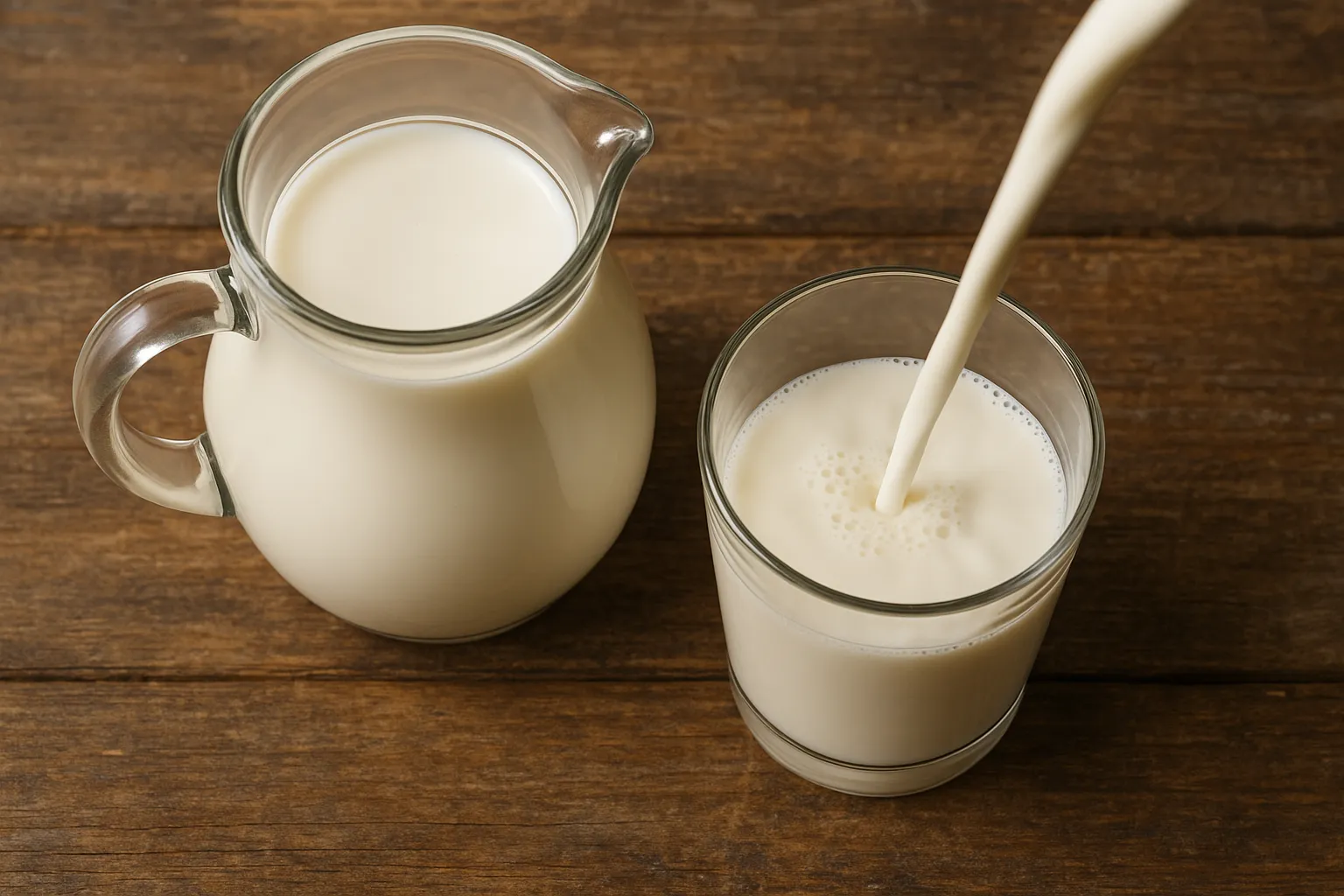
Quick Nutrition Facts
Per 100ml Full Cream Milk
| Nutrient | Amount |
|---|---|
| Calories | 61 kcal |
| Protein | 3.2g |
| Carbohydrates | 4.8g |
| Sugars | 4.8g |
| Fat | 3.3g |
| Saturated Fat | 2.1g |
| Calcium | 113mg |
| Vitamin D | 1.3mcg |
| Vitamin B12 | 0.45mcg |
| Phosphorus | 84mg |
| Potassium | 143mg |
Macronutrient Breakdown
 ChatGPT
  Claude
  AI Mode
  Perplexity
NUTRITIONIST INSIGHT
Full cream milk provides complete protein with all 9 essential amino acids, making it ideal for muscle building. One cup delivers 25% of your daily calcium needs for strong bones.
Myth Busters
MYTH #1: Full Cream Milk Causes Weight Gain
TRUTH: Weight gain comes from excess overall calories, not milk alone. At 61 calories per 100ml, full cream milk can fit into weight management diets. The fat content increases satiety, potentially reducing overall calorie intake. Moderation is key.
MYTH #2: Adults Don't Need Milk
TRUTH: While not essential, milk provides valuable nutrition for adults. It's one of the best calcium sources (113mg per 100ml) and helps prevent osteoporosis, especially in women over 50. Adults benefit from milk's complete protein and vitamin D.
MYTH #3: Low-Fat Milk is Always Healthier Than Full Cream
TRUTH: Full cream milk has advantages: better vitamin absorption (A, D, E, K are fat-soluble), increased satiety, and improved taste. For weight loss, low-fat saves calories; for muscle gain and kids' growth, full cream is superior. Choose based on your goals.
MYTH #4: Milk Causes Diabetes
TRUTH: Research shows no causal link between milk consumption and diabetes. In fact, dairy intake is associated with lower type 2 diabetes risk. The protein and fat in full cream milk actually slow sugar absorption, reducing glycemic impact.
MYTH #5: You Can't Drink Milk at Night
TRUTH: Drinking milk at night is not only safe but beneficial. Milk contains tryptophan, which promotes sleep. Warm milk before bed can improve sleep quality and doesn't cause weight gain if it fits your daily calorie budget.
NutriScore by Health Goals
| Health Goal | NutriScore | Why This Score? |
|---|---|---|
| Weight Loss |  | 61 calories per 100ml, higher than low-fat alternatives. Can fit in moderation (1 cup daily), but consider low-fat milk for aggressive weight loss. |
| Muscle Gain |  | Complete protein (8g per cup), leucine-rich for muscle protein synthesis, post-workout recovery, supports muscle building. |
| Diabetes Management |  | Moderate GI (37-40), fat slows sugar absorption, provides sustained energy. Limit to 1 cup daily, consume with meals. |
| PCOS Management | | Dairy can affect some women with PCOS due to hormones. Monitor individual response, consider organic milk, limit to 1 cup daily. |
| Pregnancy Nutrition | | Essential calcium for fetal bone development, protein for growth, vitamin D for immunity. Recommended: 2-3 cups daily. |
| Kids Growth | | Optimal for growing children: calcium for bones, protein for development, healthy fats for brain, vitamin D for growth. Recommended: 2-3 cups daily for ages 4-18. |
PERSONALIZED NUTRITION
Track your meals with NutriScan for personalized NutriScores based on your specific health goals!
Blood Sugar Response to Full Cream Milk
Understanding how milk affects blood glucose can help you time consumption and pair it appropriately for stable energy.
Typical Glucose Response Curve
This chart shows typical blood glucose response for general healthy individuals. Individual responses may vary. Not medical advice.
How to Optimize with Milk
Full cream milk's natural protein and fat content already moderates blood sugar. Further optimize by pairing with:
- 🥣 Oats or whole grain cereal - Fiber + protein combination
- 🥜 Almonds or walnuts - Healthy fats reduce glycemic response
- 🍌 Banana or berries - Natural sweetness with added fiber
- 🍪 Whole wheat biscuits - Complex carbs + milk protein
These combinations create balanced nutrition with minimal glucose spikes and extended energy release.
Cultural Significance
Milk has been central to human nutrition for over 10,000 years, since the domestication of cattle in Mesopotamia and the Indus Valley.
In India:
- Sacred in Hindu culture, offered to deities (especially Krishna)
- Ayurveda considers milk a complete food (sattvic)
- Base of traditional drinks: lassi, haldi doodh (turmeric milk), thandai
- Essential in sweets: kheer, rasgulla, barfi, gulab jamun
- India is world's largest milk producer (22% of global production)
Global Impact:
- 6 billion people worldwide consume milk and dairy products
- Critical protein source in developing countries
- Cultural staple in Mediterranean, Nordic, and Central Asian diets
- Modern fortification adds vitamin D, reducing deficiency globally
Compare & Substitute
Full Cream Milk vs Alternatives (Per 100ml)
| Nutrient | 🥛 Full Cream Milk | 🥛 Low-Fat Milk (1%) | 🥛 Skim Milk | 🥥 Coconut Milk |
|---|---|---|---|---|
| Calories | 61 kcal | 42 kcal | 34 kcal | 230 kcal |
| Carbs | 4.8g | 5.0g | 5.0g | 6g |
| Protein | 3.2g | 3.4g | 3.4g | 2.3g |
| Fat | 3.3g | 1.0g | 0.1g | 24g |
| Calcium | 113mg | 125mg | 125mg | 16mg |
| Vitamin D | 1.3mcg | 1.2mcg | 1.2mcg | 0mcg |
| Vitamin B12 | 0.45mcg | 0.47mcg | 0.47mcg | 0mcg |
| Best For | Muscle gain, kids | Balance calories/nutrition | Weight loss, low-fat diet | Lactose-free, vegan |
Frequently Asked Questions
Is full cream milk good for weight loss?
Full cream milk can fit into weight loss diets when consumed in moderation. While it has 61 calories per 100ml (compared to 34 for skim), the higher fat content increases satiety and may reduce overall snacking.
Weight loss strategy:
- Limit to 1 cup (250ml) daily = 152 calories
- Drink with meals, not as a snack
- Consider low-fat milk for aggressive calorie restriction
- Track total daily calories with NutriScan app
The protein and fat help preserve muscle during weight loss and improve vitamin absorption.
Can diabetics drink full cream milk?
Yes, diabetics can consume full cream milk in moderation. The fat content actually slows carbohydrate absorption, resulting in a lower and more gradual blood sugar rise than low-fat or skim milk.
Best practices for diabetics:
- Limit to 1 cup (250ml) daily
- Consume with meals, not alone
- Pair with high-fiber foods (oats, nuts)
- Monitor blood sugar 2 hours after drinking
- Choose unsweetened milk (no added sugars)
Milk's glycemic index (37-40) is relatively low. Always consult your healthcare provider about individual needs.
How much protein is in full cream milk?
Full cream milk contains 3.2g protein per 100ml or 8g per cup (250ml). This is complete protein, meaning it contains all 9 essential amino acids in optimal ratios.
Protein quality:
- 80% casein (slow-digesting)
- 20% whey (fast-digesting)
- Rich in leucine (key for muscle protein synthesis)
- Biological value: 91 (high-quality protein)
For muscle gain, consume 2-3 cups daily (16-24g protein). Pair with other protein sources for optimal nutrition.
What are the main health benefits of full cream milk?
Key Benefits:
- Bone Health: 113mg calcium per 100ml supports bone density and prevents osteoporosis
- Muscle Building: Complete protein (8g per cup) aids muscle growth and repair
- Vitamin D: Supports immunity, calcium absorption, and mood regulation
- Heart Health: Potassium (143mg) helps regulate blood pressure
- Energy Production: B12 essential for red blood cell formation and energy metabolism
- Satiety: Fat content promotes fullness and reduces snacking
Is full cream milk better than low-fat milk?
It depends on your health goals and nutritional needs:
Choose Full Cream Milk for:
- Muscle gain and athletic performance
- Growing children and teenagers
- Pregnancy and breastfeeding
- Underweight individuals needing calories
- Better taste and cooking applications
- Improved fat-soluble vitamin absorption
Choose Low-Fat Milk for:
- Weight loss and calorie restriction
- Heart disease or high cholesterol
- Reducing saturated fat intake
- When milk consumption is high (3+ cups daily)
Both provide similar calcium, protein, and vitamin D. Full cream has 80% more calories due to fat content.
How much milk should adults drink daily?
General Guidelines:
- 1-2 cups (250-500ml) daily - Most adults (150-300 calories)
- 2-3 cups daily - Athletes, muscle building, physically active
- 1 cup daily - Weight loss, older adults
- 0-1 cups daily - Lactose intolerance (try lactose-free options)
Maximum: 3 cups daily for most adults (750ml). Excessive intake can displace other important foods and provide too many calories.
Balance milk with other calcium sources: leafy greens, almonds, fortified foods, curd/yogurt.
Can I drink milk at night before bed?
Yes, drinking milk before bed is safe and can be beneficial. Milk contains tryptophan, an amino acid that promotes sleep by increasing serotonin and melatonin production.
Bedtime milk benefits:
- Improves sleep quality
- Provides overnight muscle recovery (casein protein)
- Reduces nighttime hunger
- Warm milk has calming psychological effect
Avoid if:
- You have acid reflux or GERD (lying down after drinking)
- It causes bloating or discomfort
- You're lactose intolerant
One cup (250ml) before bed won't cause weight gain if it fits your daily calorie budget.


Similar Nutritious Foods
4505 Chicharrones Classic Chili Salt
7 Eleven Japan Crispy Corn Cheese
Explore More Nutrition Tools & Resources
AI Calorie Counter App - Snap a Photo, Get Macros
AI Nutritionist App That Reads Your Logged Meals
Best Protein Supplements for Women
Bulking Meal Plan App That Sets Your Surplus
ChatGPT Calorie Counter Alternative That Keeps the Total
ChatGPT Diet Plan Alternative That Tracks What You Eat
ChatGPT Weight Loss Coach Alternative With a Food Log
Fast Food Calorie Counter App That Reads the Tray
Free Calorie Tracker App with AI Photo Scans | NutriScan
Indian Diet Plan App With Veg and Non Veg Meals
Indian Food Calorie Calculator - Get Instant Nutrition Facts for Desi Meals — 2026
Intermittent Fasting for Women, Timer and Meal Log App
Intermittent Fasting Tracker App - Free Fasting Timer
Macro Tracker App That Fills the Numbers From a Photo
Mediterranean Diet Meal Plan App That Counts the Oil
Micronutrient Tracker App for Vitamins and Minerals
MyFitnessPal Alternative That Stays Free | NutriScan
NutriScore App: A Free Grade on Every Meal | NutriScan
Nutrition Label Scanner App for the Amount You Ate
Second Trimester Protein Guide
Vegetarian Meal Plan App With a Protein Target
Voice Calorie Counter - Speak to Track Meals Hands-Free
Water and Calorie Tracker App - Free Water Log