Gajak (Sesame Jaggery Brittle): Calories, Nutrition and Health Benefits
A traditional North Indian winter sweet made from sesame seeds and jaggery, packed with calcium, iron, and healthy fats in every flaky bite.
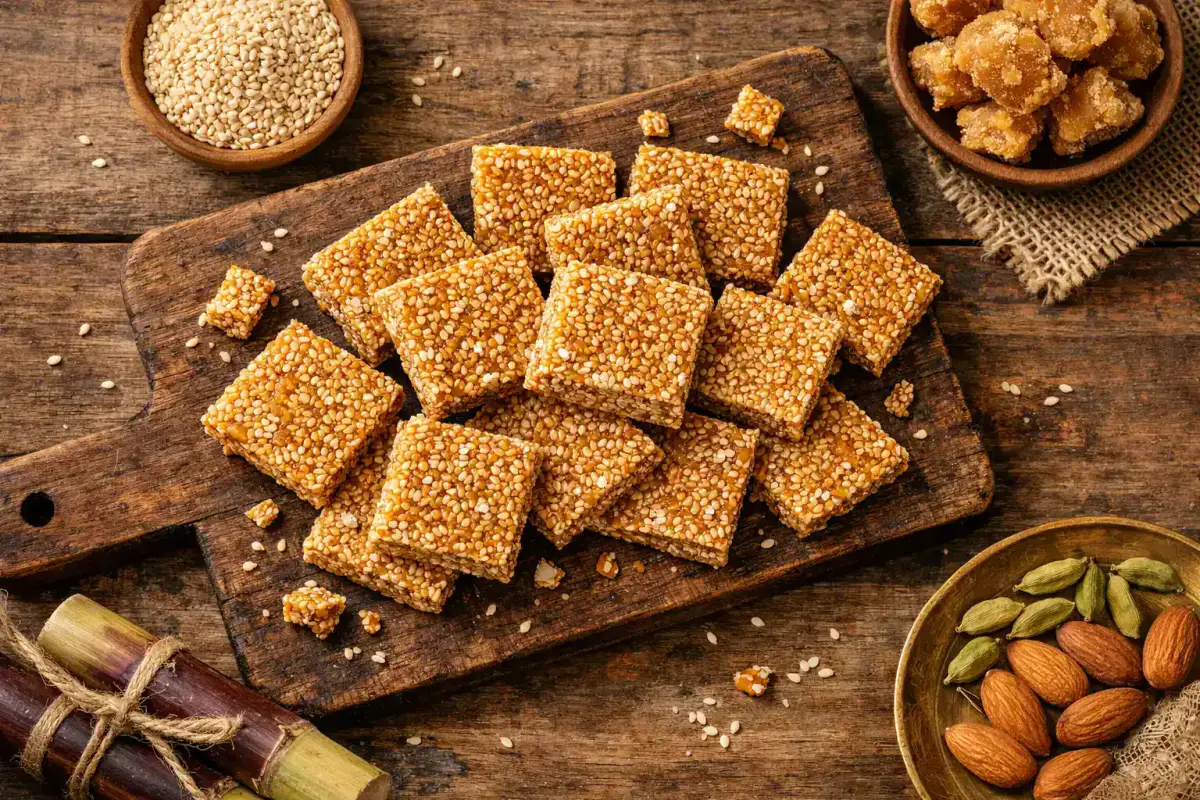
Quick Nutrition Facts
Per 1 Piece of Gajak (30g)
| Nutrient | Amount |
|---|---|
| Calories | 135 kcal |
| Protein | 3g |
| Carbohydrates | 19g |
| Fiber | 1g |
| Sugars | 16g |
| Fat | 6g |
| Calcium | 120mg |
| Iron | 1.8mg |
| Magnesium | 25mg |
| Phosphorus | 45mg |
Macronutrient Breakdown
 ChatGPT
  Claude
  AI Mode
  Perplexity
NUTRITIONIST INSIGHT
Gajak combines two nutritional powerhouses: sesame seeds provide up to 975mg calcium per 100g (one of the highest plant sources), while jaggery contributes iron and trace minerals lost in refined sugar processing. One piece delivers a meaningful dose of both.
Myth Busters
MYTH #1: Gajak Is Just Empty-Calorie Junk Food
TRUTH: Unlike refined sugar sweets, gajak provides calcium, iron, and healthy fats from sesame seeds. Sesame seeds contain lignans (sesamin, sesamolin) with proven antioxidant and cholesterol-lowering properties.
MYTH #2: Jaggery in Gajak Is the Same as White Sugar
TRUTH: Jaggery retains iron (11mg/100g), calcium, magnesium, and potassium lost during sugar refining. Research confirms jaggery contains essential amino acids, antioxidants, and minerals absent in refined sugar.
MYTH #3: Gajak Causes Instant Blood Sugar Spikes Like Candy
TRUTH: Jaggery is digested slower than refined sugar due to its complex sucrose chains. The healthy fats and protein in sesame seeds further slow glucose absorption, resulting in a more moderate glycemic response than pure sugar confections.
MYTH #4: You Should Avoid Gajak During Winter Illness
TRUTH: Gajak is traditionally eaten in winter for good reason. Sesame seeds generate body heat (considered "warming" in Ayurveda) and provide zinc and selenium for immune support. Jaggery soothes sore throats and aids respiratory health.
MYTH #5: Gajak Has No Protein Value
TRUTH: Sesame seeds contain approximately 18g protein per 100g. A single piece of gajak provides about 3g of protein along with all essential amino acids, making it a more nutritious snack than many refined flour sweets.
NutriScore by Health Goals
| Health Goal | NutriScore | Why This Score? |
|---|---|---|
| Weight Loss |  | 450 cal/100g is calorie-dense. Limit to 1 small piece (30g, 135 cal). Sesame fats provide satiety but portions must be controlled. |
| Muscle Gain |  | Provides quick energy carbs (19g) and moderate protein (3g per piece). Good post-workout snack with calcium for bone support. |
| Diabetes Management | | High sugar from jaggery (16g per piece). Sesame may improve glycemic markers but limit to half a piece and pair with protein. |
| PCOS Management | | Sugar content affects insulin sensitivity. Limit to half a piece (15g) maximum. The sesame lignans may offer mild hormonal benefits. |
| Pregnancy Nutrition |  | Excellent iron and calcium source for fetal bone development. 1-2 pieces daily provides meaningful mineral intake. Consult your doctor. |
| Viral/Flu Recovery | | Warming food, quick energy, iron for recovery. Jaggery soothes throat. Sesame zinc supports immune function. |
PERSONALIZED NUTRITION
Track your meals with NutriScan for personalized NutriScores based on your specific health goals!
Blood Sugar Response to Gajak
Understanding how gajak affects your blood glucose can help you manage portions and pairings effectively.
Typical Glucose Response Curve
*This chart shows typical blood glucose response for general healthy individuals. Individual responses may vary. Not medical advice.*
How to Flatten the Spike
Pairing high-sugar foods with protein and fat slows glucose absorption and reduces the peak blood sugar level:
- 🥛 A glass of warm milk - Adds protein and further calcium boost
- 🥜 A handful of almonds or walnuts - Healthy fats slow sugar absorption
- 🫖 Unsweetened green tea - Catechins may help moderate glucose response
- 🧀 A small piece of paneer - Protein and fat buffer the sugar spike
Eating gajak after a balanced meal rather than on an empty stomach also significantly reduces the glucose spike.
Cultural Significance
Gajak is one of India's most beloved winter confections, with roots tracing back centuries to the kitchens of Agra and Mathura in Uttar Pradesh.
In India:
- Traditionally made during Makar Sankranti (January 14) and Lohri festivals celebrating the winter harvest
- Agra is the undisputed capital of gajak, with families passing down recipes for generations
- Sesame (til) holds religious significance in Hindu traditions, symbolizing immortality and offered during Sankranti prayers
- Ayurveda recommends sesame-jaggery combinations in winter to generate body heat and strengthen bones
Regional Variations:
- Agra Gajak: Flaky, layered, uses ghee for a crumbly melt-in-mouth texture
- Morena Gajak (Madhya Pradesh): Slightly harder, with distinct sesame crunch
- Rewri: Ball-shaped cousin made with similar ingredients but different technique
- Til Patti: Thinner, crispier sesame brittle variant popular across North India
Compare & Substitute
Gajak vs Similar Indian Sweets (Per 100g)
| Nutrient | Gajak (Til) | Chikki (Peanut) | Rewri | Til Ladoo |
|---|---|---|---|---|
| Calories | 450 kcal | 460 kcal | 420 kcal | 430 kcal |
| Carbs | 62g | 55g | 60g | 58g |
| Fiber | 3.5g | 2.8g | 2g | 4g |
| Protein | 10g | 14g | 8g | 11g |
| Fat | 18g | 22g | 16g | 19g |
| Calcium | 200mg | 45mg | 180mg | 220mg |
| Iron | 5mg | 2.5mg | 4mg | 5.5mg |
| Sugar | 52g | 42g | 50g | 48g |
| Best For | Calcium, iron, winter warmth | Higher protein, post-workout | Lighter option, festivals | Highest calcium, fiber |
Frequently Asked Questions
How many calories are in one piece of gajak?
One standard piece of gajak (30g) contains approximately 135 calories. Per 100g, gajak provides about 450 calories. The calories come primarily from jaggery sugars (62g carbs) and sesame fats (18g fat per 100g).
Portion guidance: 1-2 pieces (30-60g) is a reasonable serving, providing 135-270 calories.
Is gajak healthy to eat?
Gajak offers genuine nutritional benefits from its two main ingredients. Sesame seeds provide calcium (975mg/100g), iron, healthy fats, and lignans with antioxidant properties. Jaggery retains iron and minerals absent in refined sugar.
Best practices: Enjoy 1-2 pieces as a nutrient-rich winter snack rather than eating large quantities. Pair with protein-rich foods for balanced nutrition.
Can diabetics eat gajak?
Diabetics should exercise caution with gajak due to its high sugar content from jaggery (16g sugar per 30g piece). While jaggery has a slightly lower glycemic index than refined sugar, it still raises blood sugar significantly.
Tips for diabetics:
- Limit to half a piece (15g) at a time
- Always eat after a protein-rich meal, not on an empty stomach
- Monitor blood sugar 2 hours after consumption
- Choose gajak over refined sugar sweets when craving something sweet
Is gajak good for bones?
Sesame seeds are among the richest plant-based calcium sources at 975mg per 100g. A single piece of gajak provides approximately 120mg of calcium, contributing meaningfully to the daily requirement of 1000mg.
Regular moderate consumption during winter, combined with adequate vitamin D, supports bone mineral density.
Is gajak safe during pregnancy?
Gajak can be beneficial during pregnancy in moderation. It provides iron from both jaggery and sesame, calcium for fetal bone development, and energy-dense nutrition. ACOG recommends adequate calcium and iron intake during pregnancy.
Guidance: 1-2 pieces daily is reasonable. Consult your healthcare provider, especially if you have gestational diabetes.
What is the difference between gajak and chikki?
Gajak is a flaky, layered sesame-jaggery brittle from Agra, made with ghee that gives it a crumbly, melt-in-mouth texture. Chikki is a hard, flat peanut-jaggery brittle from Maharashtra with a crunchy snap.
Key differences:
- Primary ingredient: Gajak = sesame seeds; Chikki = peanuts
- Texture: Gajak = flaky/layered; Chikki = hard/crunchy
- Region: Gajak = North India (Agra); Chikki = West India (Lonavala)
- Calcium: Gajak has significantly more calcium from sesame




Similar Nutritious Foods
4505 Chicharrones Classic Chili Salt
7 Eleven Japan Crispy Corn Cheese
Explore More Nutrition Tools & Resources
AI Calorie Counter App - Snap a Photo, Get Macros
AI Nutritionist App That Reads Your Logged Meals
Best Protein Supplements for Women
Bulking Meal Plan App That Sets Your Surplus
ChatGPT Calorie Counter Alternative That Keeps the Total
ChatGPT Diet Plan Alternative That Tracks What You Eat
ChatGPT Weight Loss Coach Alternative With a Food Log
Fast Food Calorie Counter App That Reads the Tray
Free Calorie Tracker App with AI Photo Scans | NutriScan
Indian Diet Plan App With Veg and Non Veg Meals
Indian Food Calorie Calculator - Get Instant Nutrition Facts for Desi Meals — 2026
Intermittent Fasting for Women, Timer and Meal Log App
Intermittent Fasting Tracker App - Free Fasting Timer
Macro Tracker App That Fills the Numbers From a Photo
Mediterranean Diet Meal Plan App That Counts the Oil
Micronutrient Tracker App for Vitamins and Minerals
MyFitnessPal Alternative That Stays Free | NutriScan
NutriScore App: A Free Grade on Every Meal | NutriScan
Nutrition Label Scanner App for the Amount You Ate
Second Trimester Protein Guide
Vegetarian Meal Plan App With a Protein Target
Voice Calorie Counter - Speak to Track Meals Hands-Free
Water and Calorie Tracker App - Free Water Log