Garum (Ancient Fermented Fish Sauce): Calories, Nutrition and Health Benefits
Ancient Rome's legendary umami condiment: ultra-low calorie, protein-rich, and packed with beneficial amino acids from months of natural fermentation.
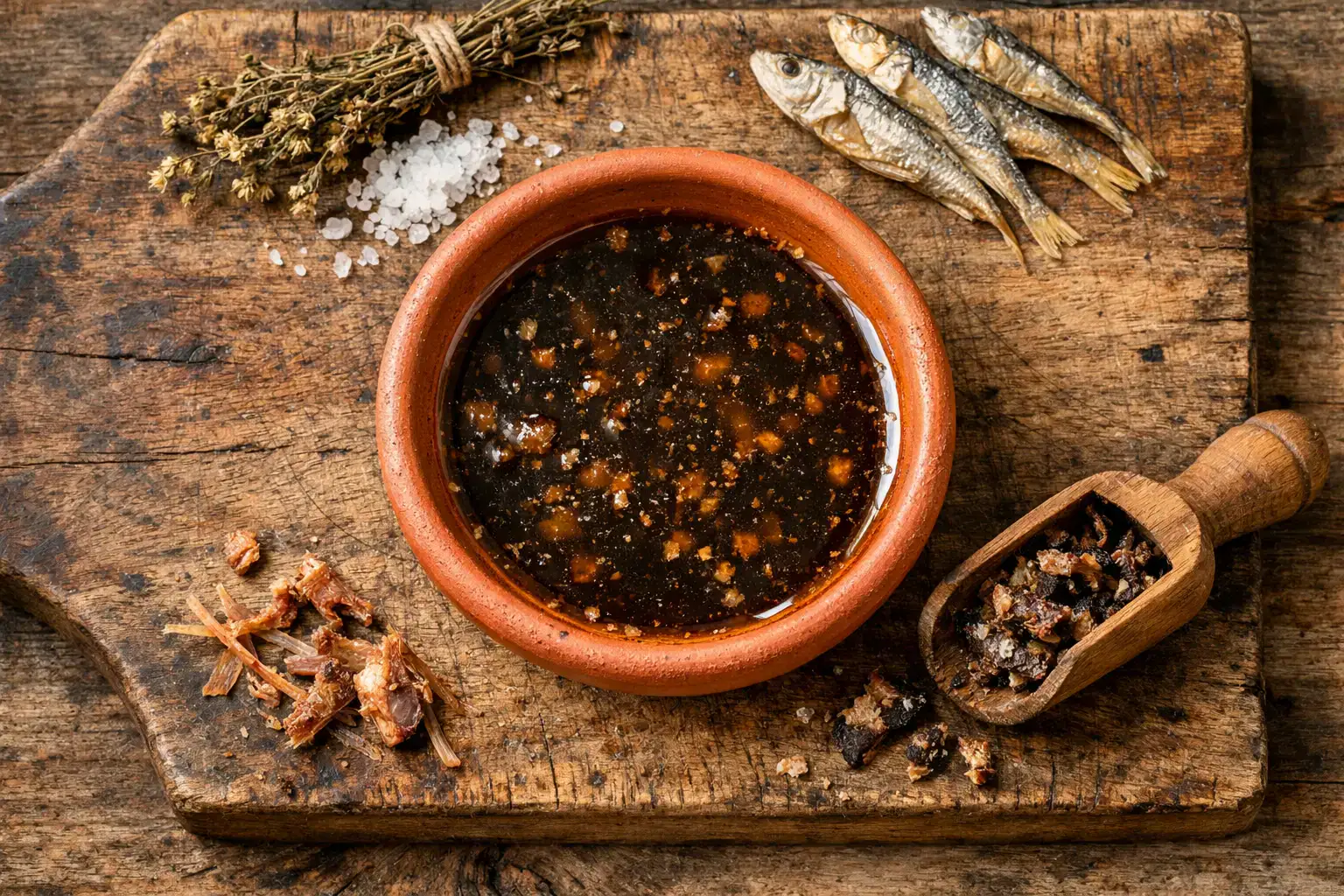
Quick Nutrition Facts
Per 1 Tablespoon (18g) | Per 100g in parentheses
| Nutrient | Amount |
|---|---|
| Calories | 6 kcal (33 kcal) |
| Protein | 0.9g (5.1g) |
| Carbohydrates | 0.7g (3.6g) |
| Fiber | 0g (0g) |
| Sugars | 0.5g (2.6g) |
| Fat | 0g (0.01g) |
| Sodium | 1413mg (7851mg) |
| Iron | 0.2mg (0.9mg) |
| Potassium | 36mg (201mg) |
| Niacin (B3) | 0.4mg (2.3mg) |
Macronutrient Breakdown
 ChatGPT
  Claude
  AI Mode
  Perplexity
NUTRITIONIST INSIGHT
Garum delivers intense umami flavor at just 6 calories per tablespoon. Its naturally occurring glutamic acid can help you reduce added salt and fat in cooking while boosting meal satisfaction. The fermentation process also produces beneficial amino acids and probiotics.
Myth Busters
MYTH #1: Garum Is Just Rotten Fish
TRUTH: Garum is a carefully controlled fermentation product, not decomposition. Enzymatic hydrolysis breaks down fish proteins into amino acids over weeks to months, similar to how cheese or yogurt are made. The high salt content prevents harmful bacterial growth.
MYTH #2: Fish Sauce Is Too High in Sodium to Be Healthy
TRUTH: While garum is high in sodium per 100g, typical serving sizes (1 tbsp) provide about 1413mg, roughly 60% of daily value. Used as a seasoning replacement for table salt, it can actually reduce total sodium intake because less is needed for equivalent flavor impact.
MYTH #3: Fermented Fish Sauce Has No Nutritional Value
TRUTH: Garum contains 5.1g protein per 100g, primarily free amino acids including glutamic acid and aspartic acid that increase significantly during fermentation. It also provides iron, niacin, and beneficial probiotics.
MYTH #4: Umami Foods Like Garum Cause MSG-Like Reactions
TRUTH: The glutamate in garum is naturally occurring, identical to that in tomatoes, parmesan, and mushrooms. Research shows umami ingredients can improve nutrition intake and reduce sodium consumption without adverse effects in typical dietary amounts.
MYTH #5: Ancient Garum Was Unsafe to Consume
TRUTH: Analysis of garum remnants from Pompeii revealed rich amino acid profiles and mineral content, confirming it was a nutritious, safe condiment. The high salt concentration (15-20%) creates a hostile environment for pathogens.
NutriScore by Health Goals
| Health Goal | NutriScore | Why This Score? |
|---|---|---|
| Weight Loss |  | Only 6 calories per tablespoon. Umami richness boosts meal satisfaction, potentially reducing overall calorie intake. |
| Muscle Gain |  | Provides free amino acids for easy absorption. Use as flavor enhancer in high-protein meals. |
| Diabetes Management | | Near-zero carbohydrates and sugar mean minimal blood glucose impact. Monitor sodium if managing blood pressure too. |
| PCOS Management | | Very low calorie, no sugar impact on insulin. Use as a flavor booster in balanced meals. |
| Pregnancy Nutrition |  | High sodium is a concern during pregnancy. Limit sodium-rich condiments and use sparingly. Provides iron and amino acids. |
| Viral/Flu Recovery | | Easy to digest, provides electrolytes and amino acids. Add to broths for enhanced nutrition during illness. |
PERSONALIZED NUTRITION
Track your meals with NutriScan for personalized NutriScores based on your specific health goals!
Blood Sugar Response to Garum
Garum has virtually no carbohydrates, so its direct impact on blood glucose is negligible. This makes it an excellent seasoning choice for blood sugar management.
Typical Glucose Response Curve
This chart shows typical blood glucose response for general healthy individuals. Individual responses may vary. Not medical advice.
Smart Pairing Tips for Balanced Meals
Adding umami-rich condiments to meals can improve satiety and reduce excess calorie intake:
- 🍚 Rice or grain bowls - A few drops transform plain grains into flavorful meals
- 🥗 Salad dressings - Mix with olive oil and citrus for a low-calorie umami dressing
- 🍲 Soups and broths - Enhances depth without adding calories or sugar
- 🥩 Marinades for protein - Tenderizes meat while adding amino acids
Using garum as a seasoning reduces the need for added salt and high-calorie sauces, supporting both blood sugar and weight goals.
Cultural Significance
Garum was the most prized condiment in Ancient Rome, produced on an industrial scale across the Mediterranean from the 5th century BCE to the fall of the Roman Empire.
In Ancient Rome:
- Garum factories found in Pompeii, Spain, and North Africa
- Premium garum (garum sociorum) was as expensive as perfume
- Used in nearly every Roman recipe recorded by Apicius
- Made from fish intestines, blood, and salt fermented in stone vats for months
Global Connections:
- Modern descendants include Thai nam pla, Vietnamese nuoc mam, and Korean jeotgal
- 2026 culinary trend: artisanal garum revival by craft fermenters worldwide
- Used in high-end restaurants as an umami booster and salt alternative
- Growing interest in sustainable, zero-waste food traditions
Compare & Substitute
Garum vs Similar Condiments (Per 100g)
| Nutrient | 🏺 Garum (Fish Sauce) | 🫘 Soy Sauce | 🧂 Worcestershire Sauce | 🍅 Miso Paste |
|---|---|---|---|---|
| Calories | 33 kcal | 53 kcal | 78 kcal | 199 kcal |
| Carbs | 3.6g | 4.9g | 19.5g | 26.5g |
| Fiber | 0g | 0.8g | 0g | 5.4g |
| Protein | 5.1g | 8.1g | 0g | 12.8g |
| Fat | 0.01g | 0.1g | 0g | 6g |
| Sodium | 7851mg | 5493mg | 980mg | 3728mg |
| Sugar | 2.6g | 0.4g | 10.3g | 6g |
| Best For | Umami depth, low-cal flavor | Stir-fry, marinades | Western dishes, glazes | Soups, gut health |
Frequently Asked Questions
How many calories are in garum fish sauce?
33 calories per 100g, or about 6 calories per tablespoon (18g). This makes garum one of the lowest-calorie flavor enhancers available, delivering maximum umami impact with minimal caloric cost.
Is garum safe for diabetics?
Yes, garum is suitable for diabetics. It contains virtually no carbohydrates or sugar, so it has negligible effect on blood glucose levels. The main concern is sodium: use sparingly if also managing blood pressure, and monitor total daily sodium from all sources.
How much garum should I use per day?
General guidelines: 1-2 tablespoons daily provides flavor without excessive sodium. Those with hypertension should limit to 1 teaspoon. Athletes may tolerate more due to sodium losses from sweat.
Sodium context: 1 tablespoon contains approximately 1413mg sodium (about 60% of the 2300mg daily limit recommended by the American Heart Association).
What does garum taste like?
Intensely savory and umami-rich with a complex, slightly briny flavor. Quality garum is not overly fishy but rather delivers deep, meaty savoriness similar to aged parmesan or soy sauce. The fermentation converts fish proteins into free amino acids, particularly glutamic acid.
Can I make garum at home?
Yes, traditional garum requires only fish and salt (roughly 3:1 ratio by weight), fermented in a warm place for 2-6 months. Modern shortcuts use fish guts and anchovies with enzymatic acceleration. Always maintain at least 15% salt concentration for food safety.
Is garum the same as modern fish sauce?
Garum and modern fish sauce share the same fundamental process: salt-fermented fish. The main differences are fish species (garum used Mediterranean anchovies and mackerel) and fermentation time (garum was often aged longer). Nutritionally they are very similar.


Similar Nutritious Foods
4505 Chicharrones Classic Chili Salt
7 Eleven Japan Crispy Corn Cheese
Explore More Nutrition Tools & Resources
AI Calorie Counter App - Snap a Photo, Get Macros
AI Nutritionist App That Reads Your Logged Meals
Best Protein Supplements for Women
Bulking Meal Plan App That Sets Your Surplus
ChatGPT Calorie Counter Alternative That Keeps the Total
ChatGPT Diet Plan Alternative That Tracks What You Eat
ChatGPT Weight Loss Coach Alternative With a Food Log
Fast Food Calorie Counter App That Reads the Tray
Free Calorie Tracker App with AI Photo Scans | NutriScan
Indian Diet Plan App With Veg and Non Veg Meals
Indian Food Calorie Calculator - Get Instant Nutrition Facts for Desi Meals — 2026
Intermittent Fasting for Women, Timer and Meal Log App
Intermittent Fasting Tracker App - Free Fasting Timer
Macro Tracker App That Fills the Numbers From a Photo
Mediterranean Diet Meal Plan App That Counts the Oil
Micronutrient Tracker App for Vitamins and Minerals
MyFitnessPal Alternative That Stays Free | NutriScan
NutriScore App: A Free Grade on Every Meal | NutriScan
Nutrition Label Scanner App for the Amount You Ate
Second Trimester Protein Guide
Vegetarian Meal Plan App With a Protein Target
Voice Calorie Counter - Speak to Track Meals Hands-Free
Water and Calorie Tracker App - Free Water Log