Ghormeh Sabzi: Calories, Nutrition and Health Benefits
Iran's beloved national dish - a fragrant herb stew with tender lamb, kidney beans, and tangy dried limes packed with protein, iron, and traditional healing herbs.
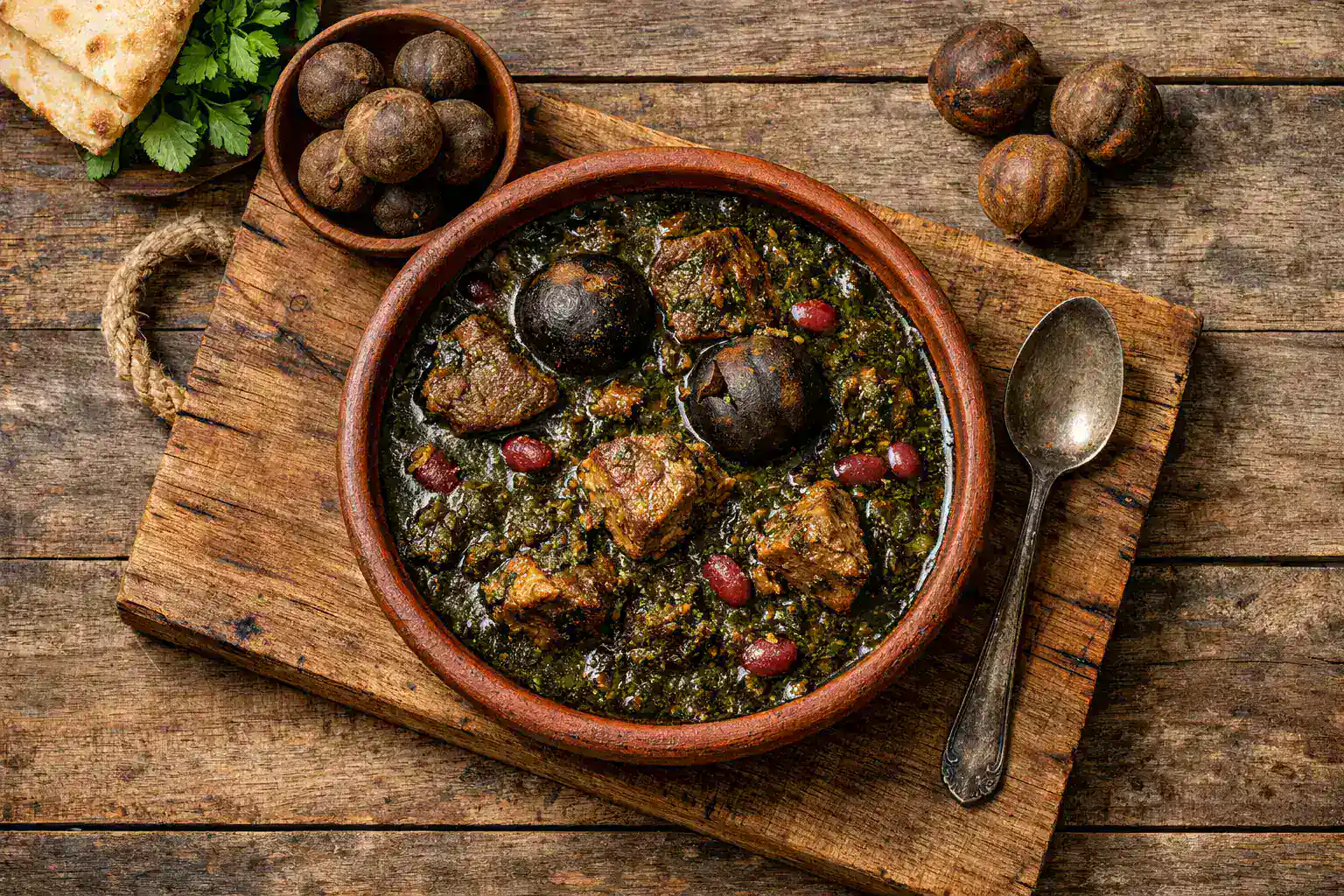
Quick Nutrition Facts
Per 1 Serving (250g)
| Nutrient | Amount |
|---|---|
| Calories | 320 kcal |
| Protein | 25g |
| Carbohydrates | 20g |
| Fiber | 6g |
| Sugars | 3g |
| Fat | 15g |
| Iron | 4.5mg |
| Potassium | 580mg |
| Vitamin C | 18mg |
| Vitamin A | 2800 IU |
Macronutrient Breakdown
 ChatGPT
  Claude
  AI Mode
  Perplexity
NUTRITIONIST INSIGHT
Ghormeh sabzi delivers 25% of your daily iron needs per serving. The fenugreek in this dish contains soluble fiber (galactomannan) that may help improve glycemic control by slowing carbohydrate absorption.
Myth Busters
MYTH #1: Ghormeh Sabzi Is Too Fatty to Be Healthy
TRUTH: While ghormeh sabzi contains 15g fat per serving, much comes from the herbs sautéed in oil which provides fat-soluble vitamin absorption. The protein (25g) and fiber (6g) promote satiety and help control overall calorie intake.
MYTH #2: Diabetics Should Avoid Persian Stews
TRUTH: Ghormeh sabzi's fenugreek content may actually benefit blood sugar. Studies show fenugreek can significantly reduce fasting blood glucose by delaying intestinal sugar absorption. Serve with cauliflower rice instead of white rice.
MYTH #3: Dried Limes Have No Nutritional Value
TRUTH: Dried limes (limoo amani) retain vitamin C and citric acid that aid digestion and add tangy flavor without extra sodium. They're a traditional Persian ingredient that enhances both taste and nutrition.
MYTH #4: The Herbs Lose Nutrients When Cooked
TRUTH: While some vitamin C is lost during cooking, the fat-soluble vitamins A and K become more bioavailable. The slow-cooked herbs release beneficial compounds including apigenin found in parsley and cilantro with antioxidant properties.
MYTH #5: Kidney Beans Make It Too High in Carbs
TRUTH: Kidney beans add only 7g carbs per serving while providing 7.5g fiber per 100g. They're a rich source of plant protein and iron that complement the lamb. The fiber helps slow glucose absorption.
NutriScore by Health Goals
| Health Goal | NutriScore | Why This Score? |
|---|---|---|
| Weight Loss |  | 320 calories with 25g protein and 6g fiber keeps you full. Skip rice or use half portion for best results. |
| Muscle Gain |  | Excellent protein source (25g) with complete amino acids from lamb plus complementary plant protein from beans. |
| Diabetes Management | | Fenugreek may improve glycemic control. Moderate carbs (20g). Pair with cauliflower rice, not white rice. |
| PCOS Management | | High protein, moderate carbs, fenugreek benefits. Control portion size and avoid rice. |
| Pregnancy Nutrition | | Excellent iron source (4.5mg, 25% DV) - pregnant women need 27mg daily. High protein (25g) supports fetal growth. Ensure lamb is fully cooked. |
| Viral/Flu Recovery | | Warm, easily digestible, rich in vitamin A (2800 IU) for immunity, protein for recovery, and hydrating broth. |
PERSONALIZED NUTRITION
Track your meals with NutriScan for personalized NutriScores based on your specific health goals!
Blood Sugar Response to Ghormeh Sabzi
Understanding how ghormeh sabzi affects your blood glucose can help you make informed decisions about portion sizes and accompaniments.
Typical Glucose Response Curve
This chart shows typical blood glucose response for ghormeh sabzi alone (without rice). Individual responses may vary. Not medical advice.
How to Flatten the Spike
Pairing protein-rich foods with fiber slows glucose absorption and reduces the peak blood sugar level:
- 🥦 Cauliflower rice - Low-carb alternative to white rice
- 🥗 Side salad with olive oil - Adds fiber and healthy fats
- 🫓 Small portion of whole grain bread - Better than white rice
- 🥒 Fresh herbs and sabzi khordan - Traditional herb platter adds fiber
This combination not only reduces the glucose spike but also extends energy release, keeping you fuller for longer.
Cultural Significance
Ghormeh sabzi is widely considered Iran's national dish, representing centuries of Persian culinary heritage.
In Iran:
- Served at Nowruz (Persian New Year) and family gatherings
- Each family has their own treasured recipe variation
- The herb blend (sabzi) varies by region - some add leek, others spinach
- Traditionally slow-cooked for hours to develop deep flavors
- Dried limes (limoo amani) give the distinctive tangy taste
Key Ingredients:
- Fresh herbs: parsley (jafari), cilantro (geshniz), fenugreek (shanbalileh)
- Kidney beans (loobia ghermez) for protein and fiber
- Lamb or beef for rich flavor and complete protein
- Dried limes for signature sour notes
Global Impact:
- Popular in Iranian diaspora communities worldwide
- Featured in Persian restaurants across Europe and North America
- Increasingly recognized as a nutritious, flavorful world cuisine
Compare & Substitute
Ghormeh Sabzi vs Similar Stews (Per Serving ~250g)
| Nutrient | 🇮🇷 Ghormeh Sabzi | 🇮🇳 Palak Gosht | 🇲🇦 Lamb Tagine | 🇬🇷 Lamb Stifado |
|---|---|---|---|---|
| Calories | 320 kcal | 350 kcal | 380 kcal | 340 kcal |
| Carbs | 20g | 12g | 35g | 18g |
| Fiber | 6g | 4g | 5g | 3g |
| Protein | 25g | 28g | 22g | 26g |
| Fat | 15g | 18g | 16g | 14g |
| Iron | 4.5mg | 4mg | 3.5mg | 3mg |
| Best For | Iron boost, balanced meal | High protein, low carb | Energy needs, runners | Mediterranean diet |
Frequently Asked Questions
Is ghormeh sabzi good for weight loss?
Yes, ghormeh sabzi can support weight loss when eaten with portion control. One serving provides 320 calories with 25g protein and 6g fiber that promote fullness and reduce overall calorie intake.
Best practices: Skip the rice or use half portion, add extra vegetables, choose lean lamb cuts, and limit to one serving per meal.
Can diabetics eat ghormeh sabzi?
Diabetics can eat ghormeh sabzi in moderation. The stew contains fenugreek which studies show may help improve glycemic control.
Tips for diabetics:
- Serve with cauliflower rice instead of white rice
- Limit portion to one serving (250g)
- Monitor blood sugar 2 hours after eating
- The kidney beans provide slow-release carbs
Consult your healthcare provider for personalized advice.
How much protein is in ghormeh sabzi?
One serving of ghormeh sabzi (250g) contains 25g of protein - about 50% of daily needs for most adults. The protein comes from lamb (complete amino acids) and kidney beans (plant protein with fiber).
For muscle building, pair with Greek yogurt or add extra beans.
What are the main health benefits of ghormeh sabzi?
Key Benefits:
- Iron-Rich: 4.5mg iron (25% DV) from lamb and beans supports oxygen transport
- High Protein: 25g for muscle maintenance and satiety
- Fiber: 6g from beans and herbs aids digestion
- Fenugreek: May support blood sugar regulation
- Vitamin A: 2800 IU from herbs supports immune function and vision
- Anti-inflammatory: Parsley and cilantro contain antioxidant compounds
Is ghormeh sabzi safe during pregnancy?
Ghormeh sabzi is generally nutritious during pregnancy, providing iron (25% DV) crucial for increased blood volume and protein (25g) for fetal development.
Precautions:
- Ensure lamb is fully cooked (internal temp 145°F/63°C)
- Moderate fenugreek intake - excessive amounts are not recommended during pregnancy
- Great source of iron - pregnant women need 27mg daily
Always consult your healthcare provider about specific dietary needs.
What makes ghormeh sabzi Iran's national dish?
Ghormeh sabzi represents Persian culinary heritage through its unique combination of fresh herbs, tangy dried limes, and slow-cooked meat. It's served at major celebrations including Nowruz and embodies family traditions passed down through generations.
IMPORTANT NOTE
Always ensure lamb is thoroughly cooked. Store leftovers properly and consume within 3-4 days refrigerated.


Similar Nutritious Foods
4505 Chicharrones Classic Chili Salt
7 Eleven Japan Crispy Corn Cheese
Explore More Nutrition Tools & Resources
AI Calorie Counter App - Snap a Photo, Get Macros
AI Nutritionist App That Reads Your Logged Meals
Best Protein Supplements for Women
Bulking Meal Plan App That Sets Your Surplus
ChatGPT Calorie Counter Alternative That Keeps the Total
ChatGPT Diet Plan Alternative That Tracks What You Eat
ChatGPT Weight Loss Coach Alternative With a Food Log
Fast Food Calorie Counter App That Reads the Tray
Free Calorie Tracker App with AI Photo Scans | NutriScan
Indian Diet Plan App With Veg and Non Veg Meals
Indian Food Calorie Calculator - Get Instant Nutrition Facts for Desi Meals — 2026
Intermittent Fasting for Women, Timer and Meal Log App
Intermittent Fasting Tracker App - Free Fasting Timer
Macro Tracker App That Fills the Numbers From a Photo
Mediterranean Diet Meal Plan App That Counts the Oil
Micronutrient Tracker App for Vitamins and Minerals
MyFitnessPal Alternative That Stays Free | NutriScan
NutriScore App: A Free Grade on Every Meal | NutriScan
Nutrition Label Scanner App for the Amount You Ate
Second Trimester Protein Guide
Vegetarian Meal Plan App With a Protein Target
Voice Calorie Counter - Speak to Track Meals Hands-Free
Water and Calorie Tracker App - Free Water Log