Gochujang: Calories, Nutrition and Health Benefits
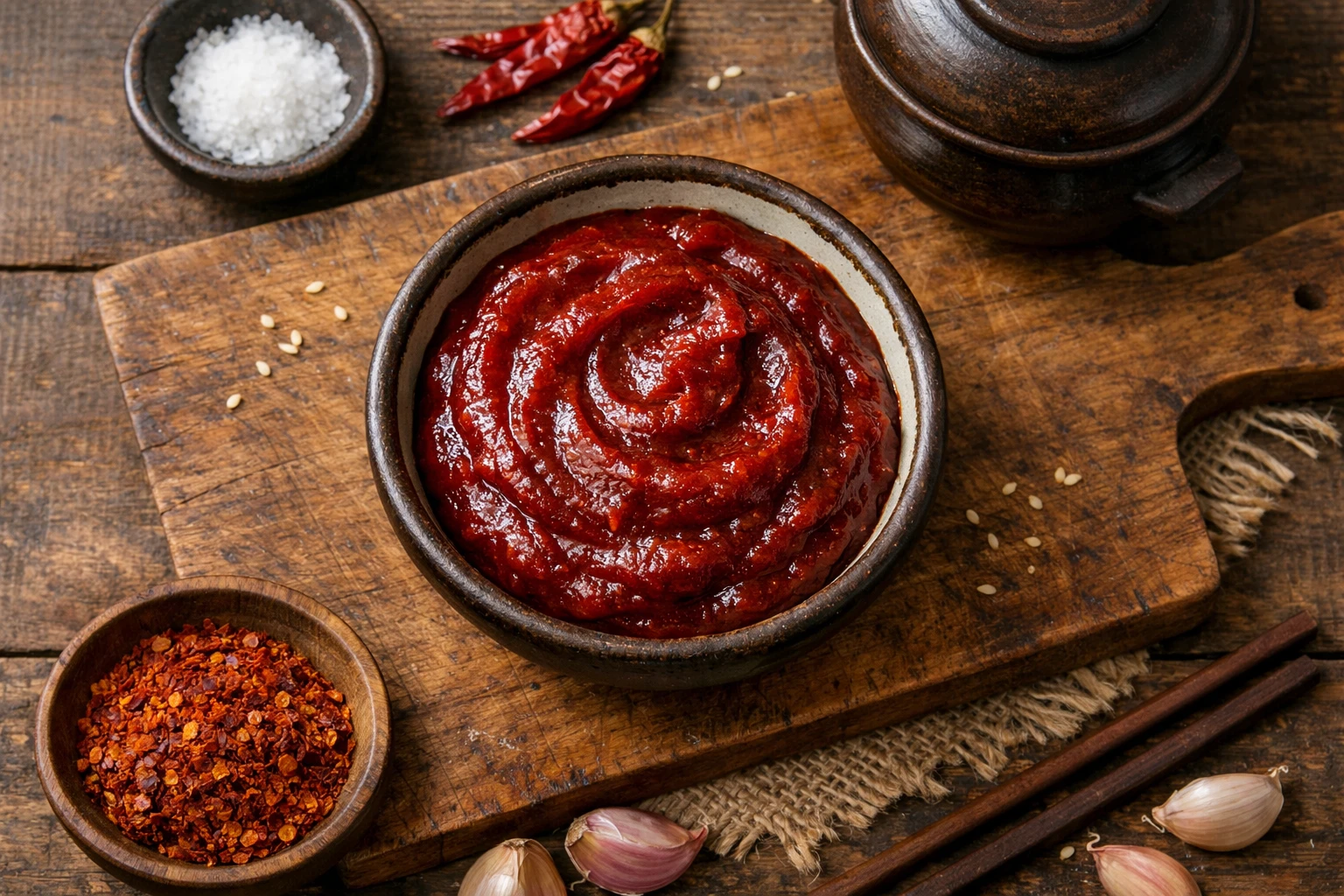
Korea's iconic fermented chili paste delivering bold umami-spicy flavor with metabolism-boosting capsaicin and gut-friendly probiotics.
Quick Nutrition Facts
Per 1 Tablespoon (17g)
| Nutrient | Amount |
|---|---|
| Calories | 40 kcal |
| Protein | 1g |
| Carbohydrates | 8g |
| Fiber | 1g |
| Sugars | 5g |
| Fat | 0g |
| Sodium | 400mg |
| Iron | 0.4mg |
| Vitamin A | 150 IU |
| Capsaicin | ~3mg |
Macronutrient Breakdown
 ChatGPT
  Claude
  AI Mode
  Perplexity
NUTRITIONIST INSIGHT
Gochujang's fermentation process creates beneficial probiotics while capsaicin from Korean chilies has been shown to boost metabolism and reduce fat accumulation. Use 1-2 tablespoons daily as a flavor enhancer rather than a main ingredient to manage sodium intake.
Myth Busters
MYTH #1: Gochujang Is Just Another Hot Sauce
TRUTH: Unlike simple hot sauces, gochujang is a complex fermented paste made from glutinous rice, soybeans, and chilies aged for months. It provides umami depth, probiotics, and bioactive compounds beyond just heat.
MYTH #2: Fermented Foods Like Gochujang Are Bad for Blood Pressure
TRUTH: While gochujang is high in sodium, studies show fermented foods can have neutral or positive cardiovascular effects due to bioactive peptides. Monitor portions if hypertensive, but don't avoid entirely.
MYTH #3: All Commercial Gochujang Has Probiotics
TRUTH: Traditional homemade gochujang contains live cultures, but most commercial versions are pasteurized, reducing probiotic content. Look for "unpasteurized" or "contains live cultures" labels for gut benefits.
MYTH #4: Spicy Foods Like Gochujang Cause Ulcers
TRUTH: Capsaicin doesn't cause ulcers; H. pylori bacteria and NSAIDs do. In fact, capsaicin may have gastroprotective effects by increasing mucus production. Avoid only if you have existing ulcers or GERD.
MYTH #5: Gochujang Is Too High in Sugar to Be Healthy
TRUTH: While it contains 5g sugar per tablespoon from rice and added sweeteners, this amount is manageable in a 1-2 tbsp serving. The metabolic benefits from capsaicin and fermentation compounds offset moderate sugar when used as a condiment.
NutriScore by Health Goals
| Health Goal | NutriScore | Why This Score? |
|---|---|---|
| Weight Loss |  | Capsaicin boosts metabolism and reduces fat synthesis. Use 1 tbsp as flavor enhancer to limit calories. |
| Muscle Gain |  | Low protein content; best as marinade for lean proteins. High sodium requires adequate hydration. |
| Diabetes Management | | Contains 5g sugar per tbsp. Capsaicin may improve insulin sensitivity; limit to 1 tbsp and pair with protein. |
| PCOS Management | | Sugar content affects insulin; anti-inflammatory capsaicin may help. Use sparingly as marinade, not sauce. |
| Pregnancy Nutrition | | High sodium may worsen swelling; spicy foods are safe but may trigger heartburn. Limit to 1 tsp if tolerated. |
| Gut Health |  | Traditional versions provide probiotics; fermentation supports intestinal barrier function. |
PERSONALIZED NUTRITION
Track your meals with NutriScan for personalized NutriScores based on your specific health goals!
Blood Sugar Response to Gochujang
Understanding how gochujang affects your blood glucose helps inform portion decisions, especially for those managing diabetes.
Typical Glucose Response Curve
This chart shows typical blood glucose response for 1 tbsp gochujang in healthy individuals. Individual responses vary. Not medical advice.
How to Minimize Blood Sugar Impact
Pairing gochujang with protein and fiber slows glucose absorption:
- 🥩 Grilled chicken or beef - Use as marinade; protein slows digestion
- 🥬 Stir-fried vegetables - Fiber buffers sugar absorption
- 🥚 Bibimbap with egg - Protein and fat moderate the response
- 🍚 Brown rice over white - Lower GI carb pairing
This combination provides flavor without significant blood sugar spikes when kept to 1-2 tablespoons.
Cultural Significance
Gochujang has been central to Korean cuisine for over 500 years, first documented in the 16th century after chili peppers arrived from the Americas via trade routes.
In Korea:
- Essential in bibimbap, tteokbokki, and Korean fried chicken
- Traditionally fermented in onggi clay pots outdoors for 1-5 years
- Symbol of Korean identity; each region has unique recipes
- Jang (fermented paste) making designated as cultural heritage
Global Impact:
- Korean Wave (Hallyu) drove 300%+ export growth since 2010
- Now mainstream in US/Europe supermarkets
- Fusion applications: gochujang mayo, pizza, tacos, burgers
- Part of UNESCO-recognized Korean fermentation culture
Compare & Substitute
Gochujang vs Similar Condiments (Per 1 Tablespoon)
| Nutrient | 🌶️ Gochujang | 🔥 Sriracha | 🫘 Miso Paste | 🌶️ Harissa |
|---|---|---|---|---|
| Calories | 40 kcal | 15 kcal | 35 kcal | 20 kcal |
| Carbs | 8g | 3g | 4g | 2g |
| Sugar | 5g | 2g | 2g | 0.5g |
| Protein | 1g | 0g | 2g | 0.5g |
| Fat | 0g | 0g | 1g | 1.5g |
| Sodium | 400mg | 200mg | 630mg | 65mg |
| Probiotics | Yes (traditional) | No | Yes | No |
| Best For | Marinades, bibimbap, depth | Quick heat, dipping | Soups, dressings, umami | North African, grilled meats |
Frequently Asked Questions
Is gochujang healthy?
Yes, gochujang offers multiple health benefits from its fermented nature. Probiotics support gut health; capsaicin boosts metabolism and has anti-inflammatory properties; antioxidants from chilies protect cells. Balance benefits against 400mg sodium and 5g sugar per tablespoon by limiting portions to 1-2 tbsp daily.
How many calories are in gochujang?
One tablespoon (17g) contains 40 calories with 8g carbs, 5g sugar, 1g protein, and 0g fat. Per 100g, approximately 200 calories. Most recipes use 1-3 tablespoons, adding 40-120 calories to dishes.
Is gochujang good for weight loss?
Gochujang can support weight loss when used as a low-calorie flavor enhancer. Capsaicin increases thermogenesis and fat oxidation. Studies show it downregulates fat synthesis genes while boosting energy expenditure. Keep portions to 1 tablespoon and use as marinade rather than dipping sauce.
Is gochujang high in sodium?
Yes, with 400mg sodium per tablespoon (17% daily value). Those with hypertension or kidney issues should limit to 1 tablespoon daily or seek low-sodium versions. Balance with potassium-rich foods like vegetables and drink adequate water.
Does gochujang have probiotics?
Traditional fermented gochujang contains live probiotic cultures from months of fermentation. However, most commercial products are pasteurized, killing beneficial bacteria. For probiotic benefits, choose unpasteurized versions labeled "contains live cultures" or traditionally-made artisan products.
What is gochujang made of?
Gochujang combines Korean red chili flakes (gochugaru), glutinous rice (provides sweetness and body), fermented soybean powder (meju), salt, and sometimes rice syrup or honey. These ferment together for months to years, developing complex umami, sweet, and spicy flavors unique to Korean cuisine.
How spicy is gochujang?
Gochujang ranks mild-to-medium on the spice scale (1,000-2,500 Scoville units), much milder than sriracha or habanero sauces. The fermentation and rice mellow the heat, creating a sweet-savory-spicy balance. Most people who tolerate mild spice can enjoy gochujang.


Similar Nutritious Foods
4505 Chicharrones Classic Chili Salt
7 Eleven Japan Crispy Corn Cheese
Explore More Nutrition Tools & Resources
AI Calorie Counter App - Snap a Photo, Get Macros
AI Nutritionist App That Reads Your Logged Meals
Best Protein Supplements for Women
Bulking Meal Plan App That Sets Your Surplus
ChatGPT Calorie Counter Alternative That Keeps the Total
ChatGPT Diet Plan Alternative That Tracks What You Eat
ChatGPT Weight Loss Coach Alternative With a Food Log
Fast Food Calorie Counter App That Reads the Tray
Free Calorie Tracker App with AI Photo Scans | NutriScan
Indian Diet Plan App With Veg and Non Veg Meals
Indian Food Calorie Calculator - Get Instant Nutrition Facts for Desi Meals — 2026
Intermittent Fasting for Women, Timer and Meal Log App
Intermittent Fasting Tracker App - Free Fasting Timer
Macro Tracker App That Fills the Numbers From a Photo
Mediterranean Diet Meal Plan App That Counts the Oil
Micronutrient Tracker App for Vitamins and Minerals
MyFitnessPal Alternative That Stays Free | NutriScan
NutriScore App: A Free Grade on Every Meal | NutriScan
Nutrition Label Scanner App for the Amount You Ate
Second Trimester Protein Guide
Vegetarian Meal Plan App With a Protein Target
Voice Calorie Counter - Speak to Track Meals Hands-Free
Water and Calorie Tracker App - Free Water Log