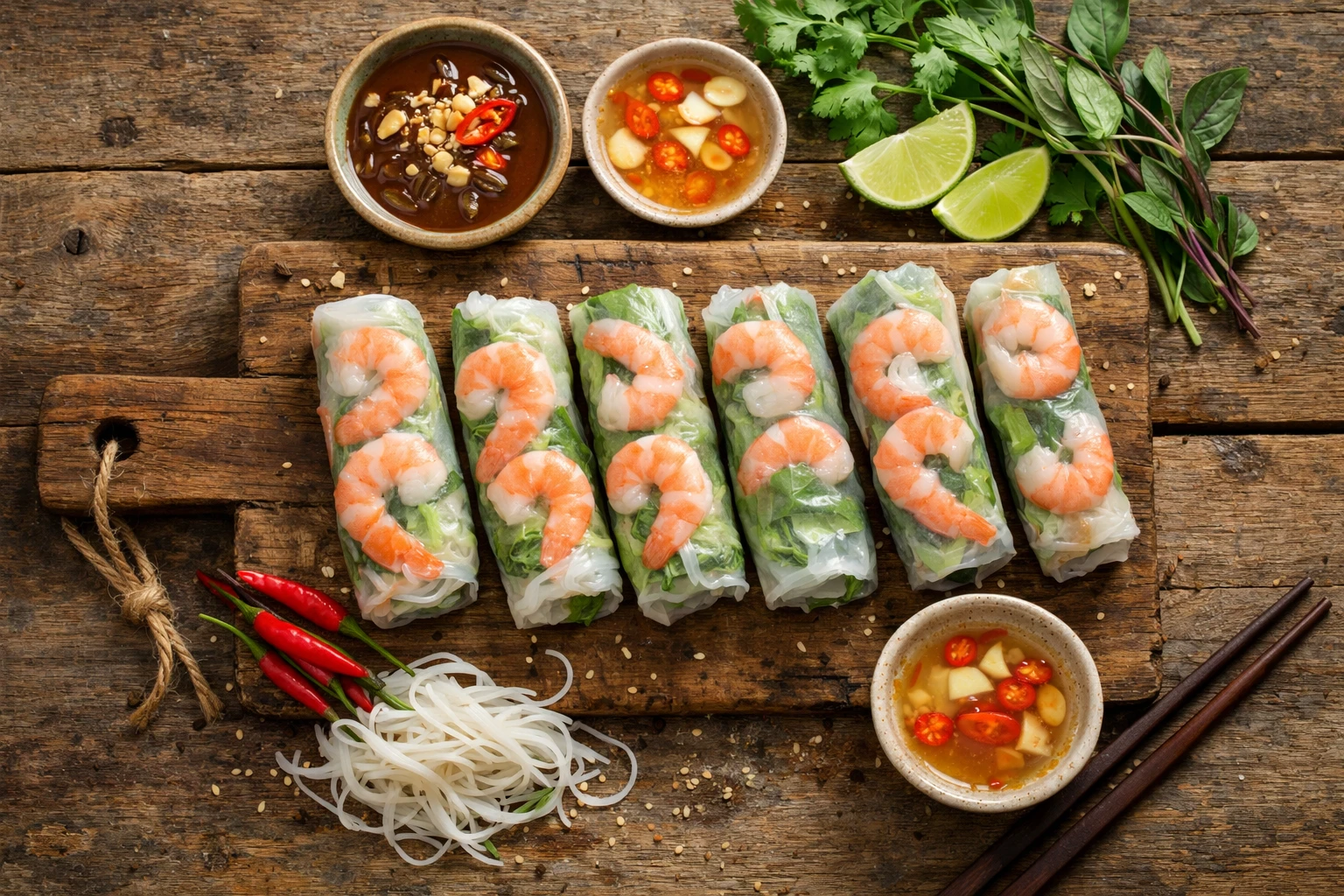
Goi Cuon (Vietnamese Spring Rolls): Calories, Nutrition and Health Benefits
Fresh, light, and nutrient-packed Vietnamese rice paper rolls filled with crisp vegetables, herbs, and lean protein for health-conscious eating.
Quick Nutrition Facts
Per 2 Rolls (110g)
| Nutrient | Amount |
|---|---|
| Calories | 110 kcal |
| Protein | 8g |
| Carbohydrates | 15g |
| Fiber | 2g |
| Sugars | 1g |
| Fat | 2g |
| Sodium | 180mg |
| Vitamin A | 450 IU |
| Vitamin C | 8mg |
| Iron | 1.2mg |
Macronutrient Breakdown
 ChatGPT
  Claude
  AI Mode
  Perplexity
NUTRITIONIST INSIGHT
Vietnamese spring rolls provide a perfect balance of lean protein, fresh vegetables, and complex carbohydrates with minimal fat. The raw herbs like cilantro, mint, and basil deliver antioxidants and anti-inflammatory compounds that support gut health and immunity.
Myth Busters
MYTH #1: All Spring Rolls Are Healthy
TRUTH: Fresh Vietnamese spring rolls (Goi Cuon) are healthy at 55 calories per roll, but deep-fried egg rolls contain 200-250 calories each due to oil absorption. Always choose fresh rice paper rolls over fried versions for weight management.
MYTH #2: Rice Paper Is Too High in Carbs for Diets
TRUTH: Each rice paper sheet contains only 7-8g carbs, similar to a slice of bread. Combined with protein from shrimp and fiber from vegetables, the glycemic impact is moderate (GI 55-60), making it suitable for balanced diets and portion-controlled diabetes management.
MYTH #3: Spring Rolls Lack Protein
TRUTH: Two standard spring rolls with shrimp provide 8g protein, equivalent to one large egg. Shrimp delivers all essential amino acids and is low in saturated fat, making Goi Cuon an excellent lean protein source for muscle maintenance and satiety.
MYTH #4: Spring Rolls Are Just Appetizers with No Nutritional Value
TRUTH: Goi Cuon packs lettuce, carrots, cucumber, herbs (mint, cilantro, basil), vermicelli, and shrimp into one roll. This provides vitamins A and C, folate, fiber, and antioxidants. Two rolls can serve as a complete light meal with balanced macros.
MYTH #5: The Peanut Sauce Ruins the Healthy Profile
TRUTH: Traditional peanut sauce (2 tablespoons) adds 35-50 calories but provides healthy monounsaturated fats, vitamin E, and enhances satiety. Fish sauce (nuoc cham) is even lower at 10-15 calories. Avoid only sweet chili sauce loaded with sugar (70+ calories).
MYTH #6: Spring Rolls Are Not Filling Enough
TRUTH: The combination of protein from shrimp, complex carbs from rice paper and vermicelli, plus fiber from vegetables creates a balanced macronutrient profile that promotes satiety for 2-3 hours, similar to a light sandwich.
NutriScore by Health Goals
| Health Goal | NutriScore | Why This Score? |
|---|---|---|
| Weight Loss |  | 55 calories per roll, 2g fiber, high water content, lean protein. Perfect for calorie deficit without hunger. |
| Muscle Gain |  | 8g protein per 2 rolls provides amino acids for recovery; add extra shrimp or chicken for higher protein needs. |
| Diabetes Management | | Moderate GI (55-60) with protein and fiber slowing glucose absorption. Limit to 2-3 rolls, pair with protein-rich peanut sauce. |
| PCOS Management | | Low glycemic load, anti-inflammatory herbs, minimal fat. Shrimp provides selenium that supports thyroid function in PCOS. |
| Pregnancy Nutrition | | Rich in folate from herbs (40-60mcg per serving), protein for fetal development, vitamin A for vision. Ensure shrimp is fully cooked. |
| Viral/Flu Recovery | | Easy to digest, hydrating vegetables, vitamin C from herbs, protein for immune recovery. Fresh herbs provide antimicrobial properties. |
PERSONALIZED NUTRITION
Track your meals with NutriScan for personalized NutriScores based on your specific health goals!
Blood Sugar Response to Goi Cuon
Understanding how Vietnamese spring rolls affect blood glucose helps with portion control and meal timing.
Typical Glucose Response Curve
This chart shows typical blood glucose response for general healthy individuals. Individual responses may vary. Not medical advice.
How to Flatten the Spike
Pairing spring rolls with protein-rich dipping sauce and healthy fats reduces glucose peaks:
- 🥜 Peanut sauce (nuoc leo) - Adds healthy fats and protein to slow absorption
- 🥑 Avocado slices on the side - Provides monounsaturated fats
- 🥚 Add extra protein - Choose chicken or tofu spring rolls for higher protein content
- 🌿 Fish sauce (nuoc cham) with chili - Low-calorie, no sugar option
This combination extends energy release and maintains stable blood sugar for 3-4 hours.
Cultural Significance
Vietnamese spring rolls (Goi Cuon) originated in Southern Vietnam as a fresh, portable meal for farmers and street vendors in the Mekong Delta region.
In Vietnam:
- Goi Cuon means "salad rolls" reflecting the fresh vegetable emphasis
- Traditionally eaten during Tet (Lunar New Year) as a symbol of renewal and freshness
- Rice paper production dates back 1,000+ years to ancient Vietnamese rice cultivation
- Different regions have variations: Northern Vietnam adds more herbs; Southern Vietnam uses more vegetables and vermicelli
Global Impact:
- Recognized as one of the world's healthiest fast foods by nutrition experts
- Popularized in Western countries during the Vietnamese diaspora post-1975
- Gluten-free and adaptable to vegan, vegetarian, and pescatarian diets
- Featured in UNESCO's discussions on intangible cultural heritage of Vietnamese cuisine
Compare & Substitute
Goi Cuon vs Similar Wraps (Per 100g / ~2 rolls)
| Nutrient | 🥬 Goi Cuon (Vietnamese) | 🌯 Egg Rolls (Fried) | 🌮 Chicken Wrap | 🍣 California Roll |
|---|---|---|---|---|
| Calories | 100 kcal | 220 kcal | 180 kcal | 130 kcal |
| Carbs | 14g | 25g | 20g | 22g |
| Fiber | 2g | 1.5g | 2g | 1g |
| Protein | 7g | 5g | 12g | 5g |
| Fat | 2g | 12g | 7g | 3g |
| Sodium | 164mg | 450mg | 380mg | 280mg |
| Prep | Fresh, no cooking | Deep-fried | Grilled | Fresh, raw |
| Best For | Weight loss, low-calorie | Occasional treat, flavor | Muscle gain, high protein | Low-fat, sushi lovers |
Frequently Asked Questions
Are Vietnamese spring rolls healthy for weight loss?
Yes, Goi Cuon are excellent for weight loss with only 55 calories per roll, 2g fiber promoting fullness, and fresh vegetables providing volume without excess calories. Unlike deep-fried egg rolls, fresh spring rolls contain no oil and provide lean protein from shrimp.
Best practices: Consume 2-3 rolls as a light meal; use peanut sauce sparingly (1-2 tablespoons); pair with a side salad or soup; choose grilled chicken or tofu variants for variety.
Can diabetics eat Vietnamese spring rolls?
Diabetics can safely eat Goi Cuon in moderation. Rice paper has a moderate glycemic index (55-60), but protein from shrimp and fiber from vegetables help slow glucose absorption.
Tips for diabetics:
- Limit to 2-3 rolls per meal (15-22g total carbs)
- Pair with protein-rich peanut sauce or fish sauce (not sweet chili sauce)
- Best timing: lunch or early dinner, not late night
- Monitor blood sugar 2 hours after eating
How much protein is in Vietnamese spring rolls?
Two Vietnamese spring rolls contain 8 grams of protein, primarily from shrimp (5-6g), with additional protein from rice paper and vermicelli (1-2g). Each roll typically includes 2-3 medium shrimp.
For muscle gain or higher protein needs, opt for chicken or tofu spring rolls that can provide 10-12g protein per serving.
What is the difference between spring rolls and egg rolls?
Vietnamese spring rolls (Goi Cuon): Fresh, not fried; wrapped in translucent rice paper; filled with raw vegetables, herbs, vermicelli, and shrimp; 55 calories per roll; gluten-free.
Egg rolls: Deep-fried; wrapped in wheat flour dough; filled with cooked cabbage, carrots, and meat; 200-250 calories per roll due to frying oil; contains gluten.
Fresh spring rolls are significantly healthier for weight management and provide more vitamins from raw vegetables.
Can pregnant women eat Vietnamese spring rolls?
Pregnant women can eat Goi Cuon if prepared safely. Ensure shrimp is fully cooked (not raw), vegetables are thoroughly washed, and rice paper is from reputable sources. Avoid raw fish variants; opt for cooked shrimp, grilled chicken, or tofu.
Pregnancy benefits: Rich in folate from herbs (40-60mcg per serving), protein for fetal development, vitamin A for vision, low mercury from shrimp compared to larger fish.
What dipping sauce is healthiest for spring rolls?
Peanut sauce (nuoc leo): 35-50 calories per 2 tablespoons; provides healthy monounsaturated fats, vitamin E, and protein; enhances satiety.
Fish sauce (nuoc cham): 10-15 calories per 2 tablespoons; made with fish sauce, lime juice, garlic, and chili; lowest calorie option.
Avoid: Sweet chili sauce with 70+ calories and high sugar content (8-10g per serving); hoisin sauce alone is also high in sugar.
How many spring rolls should I eat per meal?
General Guidelines:
- 2-3 rolls - Light meal or snack (110-165 calories)
- 4-6 rolls - Full meal with side salad or soup (220-330 calories)
- Diabetics: 2-3 rolls maximum (15-22g carbs)
- Weight loss: 2-4 rolls as meal replacement (110-220 calories)
- Athletes/muscle gain: 4-6 rolls with extra protein (add grilled chicken or tofu)
Track your meals with NutriScan app to see how spring rolls fit your personal nutrition goals.
Can I make spring rolls at home?
Yes, homemade spring rolls are easy and customizable. Basic ingredients: rice paper sheets, cooked shrimp or protein, lettuce, carrots, cucumber, vermicelli noodles, fresh herbs (mint, cilantro, basil).
Assembly: Dip rice paper in warm water for 5-10 seconds until pliable; lay flat, add fillings in center; fold sides in, then roll tightly from bottom to top. Serve immediately or refrigerate up to 4 hours covered with damp towel.


Similar Nutritious Fruits
4505 Chicharrones Classic Chili Salt
7 Eleven Japan Crispy Corn Cheese
Explore More Nutrition Tools & Resources
AI Calorie Counter App - Snap a Photo, Get Macros
AI Nutritionist App That Reads Your Logged Meals
Best Protein Supplements for Women
Bulking Meal Plan App That Sets Your Surplus
ChatGPT Calorie Counter Alternative That Keeps the Total
ChatGPT Diet Plan Alternative That Tracks What You Eat
ChatGPT Weight Loss Coach Alternative With a Food Log
Fast Food Calorie Counter App That Reads the Tray
Free Calorie Tracker App with AI Photo Scans | NutriScan
Indian Diet Plan App With Veg and Non Veg Meals
Indian Food Calorie Calculator - Get Instant Nutrition Facts for Desi Meals — 2026
Intermittent Fasting for Women, Timer and Meal Log App
Intermittent Fasting Tracker App - Free Fasting Timer
Macro Tracker App That Fills the Numbers From a Photo
Mediterranean Diet Meal Plan App That Counts the Oil
Micronutrient Tracker App for Vitamins and Minerals
MyFitnessPal Alternative That Stays Free | NutriScan
NutriScore App: A Free Grade on Every Meal | NutriScan
Nutrition Label Scanner App for the Amount You Ate
Second Trimester Protein Guide
Vegetarian Meal Plan App With a Protein Target
Voice Calorie Counter - Speak to Track Meals Hands-Free
Water and Calorie Tracker App - Free Water Log