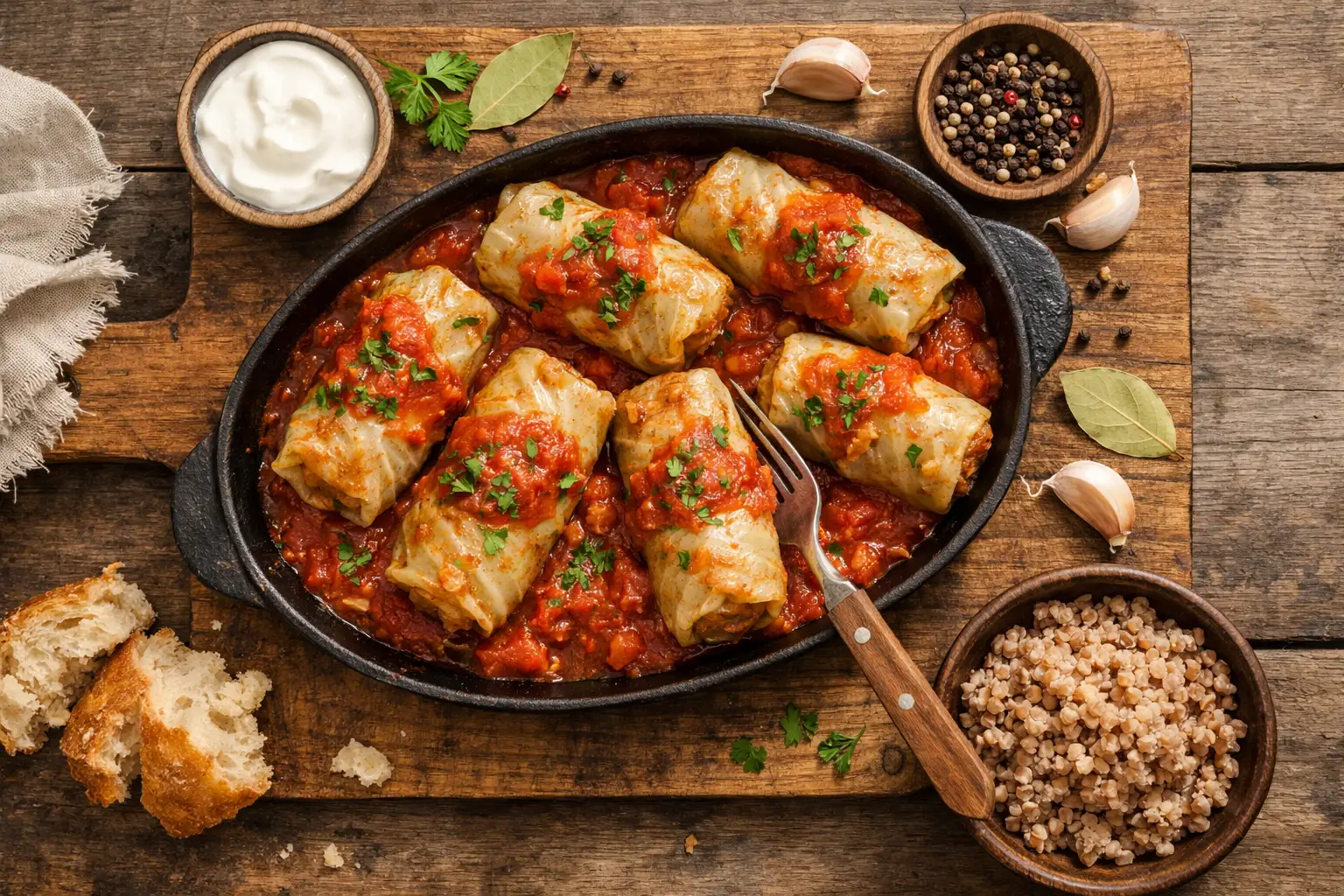
Golabki (Polish Cabbage Rolls): Calories, Nutrition and Health Benefits
A hearty Polish comfort food wrapping seasoned meat and rice in tender cabbage leaves, delivering 12g protein per roll with cancer-fighting cruciferous benefits.
Quick Nutrition Facts
Per 1 Golabki Roll (180g)
| Nutrient | Amount |
|---|---|
| Calories | 220 kcal |
| Protein | 12g |
| Carbohydrates | 22g |
| Fiber | 2.5g |
| Sugars | 3.5g |
| Fat | 9g |
| Sodium | 380mg |
| Vitamin C | 18mg |
| Vitamin K | 35mcg |
| Iron | 1.8mg |
Macronutrient Breakdown
 ChatGPT
  Claude
  AI Mode
  Perplexity
NUTRITIONIST INSIGHT
Golabki combines protein-rich meat with cruciferous cabbage, delivering glucosinolates that support detoxification and may reduce cancer risk. Choosing lean meat and brown rice boosts fiber by 40% while keeping calories under control.
Myth Busters
MYTH #1: Golabki Are Too Heavy for a Healthy Diet
TRUTH: One golabki roll has only 220 calories with 12g protein and 2.5g fiber. That's comparable to a chicken sandwich. The cabbage wrapper adds fiber and antioxidants with minimal calories.
MYTH #2: Cabbage Rolls Lose All Nutrients When Cooked
TRUTH: While some vitamin C is lost during cooking, cabbage retains most of its fiber, glucosinolates, and minerals after braising. Slow cooking in tomato sauce actually enhances lycopene absorption.
MYTH #3: Diabetics Should Avoid Golabki Because of the Rice
TRUTH: Cabbage has an extremely low glycemic index (GI 10). The protein and fat from the meat filling slow glucose absorption significantly, making the overall glycemic impact moderate. Use cauliflower rice for even lower carbs.
MYTH #4: Golabki Are Only Comfort Food With No Real Nutrition
TRUTH: Golabki deliver a balanced macro profile plus cancer-fighting compounds from cruciferous cabbage. Each roll provides 18mg vitamin C, 35mcg vitamin K, and 1.8mg iron.
MYTH #5: You Need Pork to Make Authentic Golabki
TRUTH: Traditional recipes vary across Poland. Turkey or chicken golabki cut calories to 150 per roll while maintaining the classic texture. Many modern Polish families use lean beef or plant-based alternatives.
NutriScore by Health Goals
| Health Goal | NutriScore | Why This Score? |
|---|---|---|
| Weight Loss |  | 220 calories with 12g protein and 2.5g fiber promote fullness. Limit to 1-2 rolls, skip cream sauces. |
| Muscle Gain | | 12g protein per roll, 22g carbs for glycogen replenishment. Pair with extra lean meat for higher protein. |
| Diabetes Management | | Cabbage wrapper has GI 10. Protein and fat slow glucose absorption. Substitute cauliflower rice to reduce carbs further. |
| PCOS Management | | Balanced protein-to-carb ratio supports insulin sensitivity. Cruciferous cabbage aids estrogen metabolism. |
| Pregnancy Nutrition |  | Good source of iron (1.8mg) and folate from cabbage for fetal development. Protein supports maternal tissue growth. |
| Viral/Flu Recovery | | Easy to digest, 18mg vitamin C for immunity, warm broth-based preparation soothes throat and provides hydration. |
PERSONALIZED NUTRITION
Track your meals with NutriScan for personalized NutriScores based on your specific health goals!
Blood Sugar Response to Golabki
Understanding how golabki affect your blood glucose helps you plan meals around your health goals.
Typical Glucose Response Curve
*This chart shows typical blood glucose response for general healthy individuals. Individual responses may vary. Not medical advice.*
How to Flatten the Spike
Pairing golabki with fiber-rich sides slows glucose absorption and reduces the peak blood sugar level:
- Sauerkraut side salad - Adds probiotics and extra fiber from fermented cabbage
- Mixed green salad with vinegar dressing - Vinegar may reduce post-meal glucose by 20%
- Steamed broccoli or cauliflower - Extra cruciferous fiber and vitamins
- Dill pickle spears - Low-calorie, low-carb traditional Polish accompaniment
This combination not only reduces the glucose spike but also extends energy release, keeping you fuller for longer.
Cultural Significance
Golabki (literally "little pigeons" in Polish) are one of Poland's most beloved traditional dishes, with roots tracing back centuries across Central and Eastern Europe.
In Poland:
- A staple of Sunday family dinners and holiday celebrations
- Traditional recipe passed through generations, with each family having their own variation
- Served at weddings, Christmas Eve (Wigilia), and Easter celebrations
- Regional variations use buckwheat groats, mushrooms, or barley instead of rice
Global Spread:
- Known as "holubtsi" in Ukraine, "sarma" in the Balkans, "holishkes" in Jewish cuisine
- Cabbage roll variations exist in over 30 countries from Sweden to Japan
- Polish immigrants brought golabki to the US, Canada, and Australia in the 19th-20th centuries
- Detroit, Chicago, and Pittsburgh have strong golabki traditions in Polish-American communities
Compare & Substitute
Golabki vs Similar Stuffed Dishes (Per 100g)
| Nutrient | Golabki (Cabbage Rolls) | Pierogi (Potato) | Sarma (Grape Leaves) | Stuffed Bell Peppers |
|---|---|---|---|---|
| Calories | 122 kcal | 210 kcal | 135 kcal | 115 kcal |
| Carbs | 12g | 30g | 14g | 13g |
| Fiber | 1.4g | 1.8g | 1.2g | 1.6g |
| Protein | 6.7g | 5.5g | 7g | 6.5g |
| Fat | 5g | 8g | 6g | 4g |
| Vitamin C | 10mg | 3mg | 5mg | 45mg |
| Iron | 1mg | 0.8mg | 1.2mg | 0.9mg |
| Best For | Balanced meal, high protein | Quick energy, comfort food | Mediterranean diet | Low-calorie, high vitamin C |
Frequently Asked Questions
How many calories are in one golabki roll?
One traditional golabki roll (180g) contains approximately 220 calories with 12g protein, 22g carbs, and 9g fat. Lighter versions made with turkey or chicken can be as low as 150 calories per roll. The calorie count depends largely on the meat-to-rice ratio and sauce.
Are golabki healthy?
Yes, golabki are a nutritionally balanced meal. Each roll provides 12g protein, 2.5g fiber, 18mg vitamin C, and cancer-fighting glucosinolates from cabbage. For the healthiest version, use lean ground turkey, brown rice, and tomato-based sauce instead of cream.
Can diabetics eat golabki?
Diabetics can enjoy golabki in moderation. The cabbage wrapper has a very low glycemic index (GI 10), and the protein and fat in the filling slow glucose absorption.
Tips for diabetics:
- Substitute cauliflower rice for white rice to cut carbs by 60%
- Limit to 1-2 rolls per meal
- Pair with a fiber-rich side salad
- Monitor blood sugar 2 hours after eating
Are golabki good for weight loss?
Golabki can support weight loss when prepared thoughtfully. At 220 calories per roll with 12g protein and 2.5g fiber, they provide good satiety.
Best practices: Use lean turkey or chicken, choose brown rice, stick to 1-2 rolls, and use tomato sauce rather than cream-based sauces. Track portions with NutriScan app to stay within your daily calorie goals.
What is the best meat for golabki?
Traditional golabki use a 50/50 mix of pork and beef (220 cal/roll). For healthier versions, lean ground turkey drops calories to about 150 per roll while maintaining good texture. Chicken breast mince works well too. Some modern recipes use plant-based meat alternatives for a vegetarian option.
Can you freeze golabki?
Yes, golabki are one of the best foods for meal prepping and freezing. They keep for up to 3 months in the freezer without significant nutritional loss. Cook fully before freezing, then reheat at 175C (350F) for 30-40 minutes from frozen.




Similar Nutritious Foods
4505 Chicharrones Classic Chili Salt
7 Eleven Japan Crispy Corn Cheese
Explore More Nutrition Tools & Resources
AI Calorie Counter App - Snap a Photo, Get Macros
AI Nutritionist App That Reads Your Logged Meals
Best Protein Supplements for Women
Bulking Meal Plan App That Sets Your Surplus
ChatGPT Calorie Counter Alternative That Keeps the Total
ChatGPT Diet Plan Alternative That Tracks What You Eat
ChatGPT Weight Loss Coach Alternative With a Food Log
Fast Food Calorie Counter App That Reads the Tray
Free Calorie Tracker App with AI Photo Scans | NutriScan
Indian Diet Plan App With Veg and Non Veg Meals
Indian Food Calorie Calculator - Get Instant Nutrition Facts for Desi Meals — 2026
Intermittent Fasting for Women, Timer and Meal Log App
Intermittent Fasting Tracker App - Free Fasting Timer
Macro Tracker App That Fills the Numbers From a Photo
Mediterranean Diet Meal Plan App That Counts the Oil
Micronutrient Tracker App for Vitamins and Minerals
MyFitnessPal Alternative That Stays Free | NutriScan
NutriScore App: A Free Grade on Every Meal | NutriScan
Nutrition Label Scanner App for the Amount You Ate
Second Trimester Protein Guide
Vegetarian Meal Plan App With a Protein Target
Voice Calorie Counter - Speak to Track Meals Hands-Free
Water and Calorie Tracker App - Free Water Log