Gourmet Bagels: Calories, Nutrition and Health Benefits
Australian trending breakfast staple packed with complex carbs and protein for sustained energy and versatile meal options.
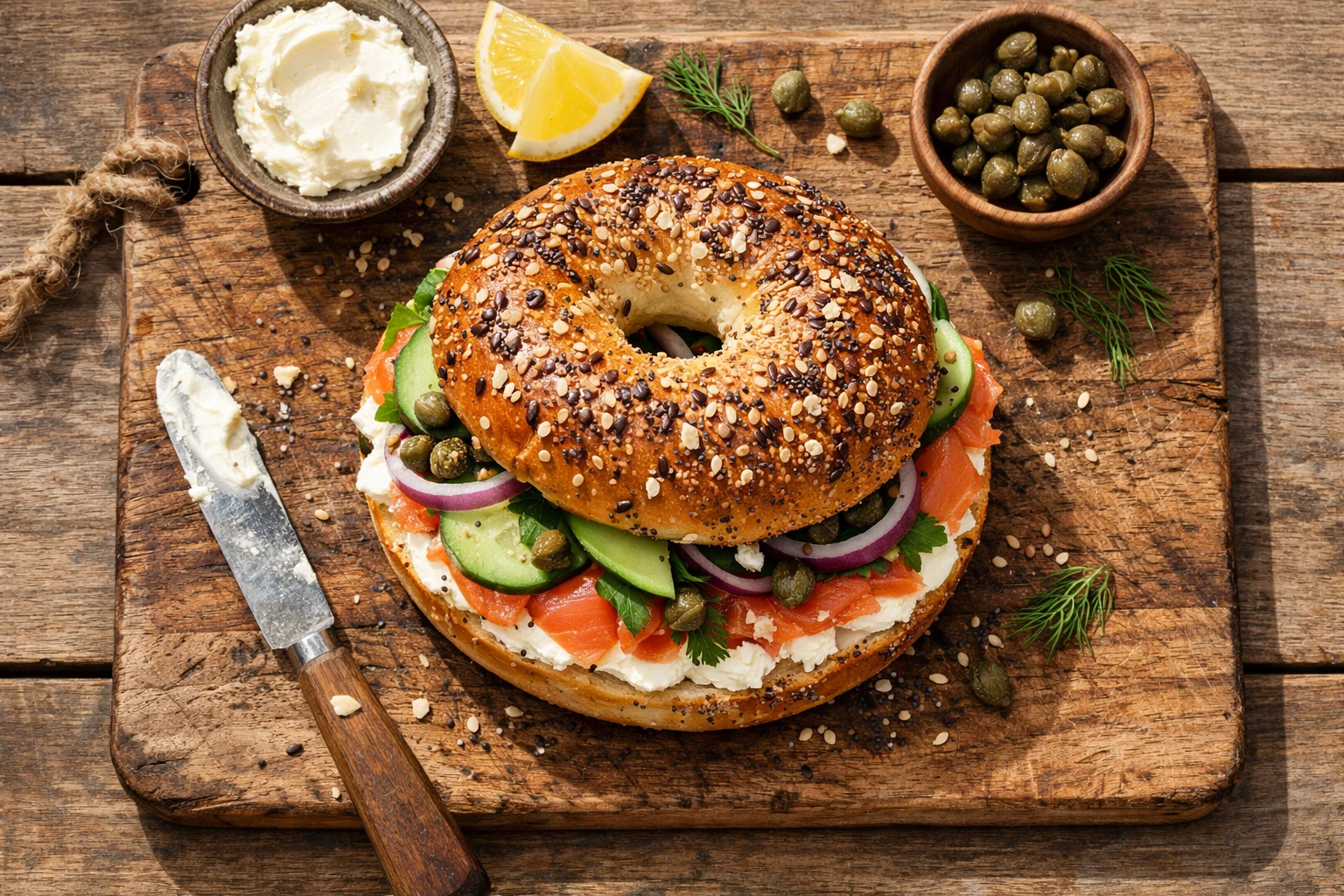
Quick Nutrition Facts
Per 1 Bagel (100g)
| Nutrient | Amount |
|---|---|
| Calories | 270 kcal |
| Protein | 10g |
| Carbohydrates | 54g |
| Fiber | 2g |
| Sugars | 5g |
| Fat | 1.5g |
| Iron | 3.6mg |
| Calcium | 40mg |
| Sodium | 480mg |
| B Vitamins | 15% DV |
Macronutrient Breakdown
 ChatGPT
  Claude
  AI Mode
  Perplexity
NUTRITIONIST INSIGHT
Whole grain bagels provide sustained energy from complex carbs and 10g protein per serving. Choose varieties with visible seeds and whole grains; pair with protein and healthy fats to balance blood sugar and extend satiety.
Myth Busters
MYTH #1: All Bagels Are Unhealthy
TRUTH: Whole grain bagels contain fiber, B vitamins, and antioxidants that support heart health and metabolism. The key is choosing whole grain over refined white flour and controlling portion sizes.
MYTH #2: Bagels Always Cause Weight Gain
TRUTH: Weight depends on total calorie intake, not bagels alone. A half bagel (135 calories) paired with protein creates a balanced 300-350 calorie meal. Monitor portions and frequency (2-3x/week) for weight management.
MYTH #3: Diabetics Should Never Eat Bagels
TRUTH: Whole grain intake improves insulin sensitivity by 18% and reduces fasting glucose compared to refined grains. Diabetics can enjoy half portions of whole grain bagels paired with protein and healthy fats.
MYTH #4: Bagels Have No Nutritional Value
TRUTH: Bagels provide 10g protein, iron (20% DV), B vitamins for energy metabolism, and selenium. Whole grain versions add fiber, magnesium, and antioxidants that refined versions lack.
MYTH #5: Toasting Bagels Destroys Nutrients
TRUTH: Toasting only minimally affects nutrient content. Heat may reduce some B vitamins by 5-10% but doesn't significantly impact protein, fiber, or minerals. The crispy texture can improve digestibility for some people.
MYTH #6: Fresh Bagels Are Always Better Than Frozen
TRUTH: Frozen bagels retain nearly identical nutrition to fresh ones. Freezing preserves nutrients and prevents mold growth. Thaw at room temperature or toast directly from frozen for convenient meal prep.
NutriScore by Health Goals
| Health Goal | NutriScore | Why This Score? |
|---|---|---|
| Weight Loss |  | 270 calories and 54g carbs require portion control. Choose half bagels, pair with protein, limit to 2-3x/week. |
| Muscle Gain |  | 10g protein plus 54g carbs support post-workout glycogen replenishment and muscle recovery. |
| Diabetes Management | | Whole grain versions reduce peripheral insulin resistance by 18%. Eat half portions with protein and fat. |
| PCOS Management |  | High glycemic load affects insulin sensitivity. Limit to half portions, choose whole grain, pair with protein. |
| Pregnancy Nutrition | | Whole grains provide folate, iron (20% DV), and B vitamins essential for fetal development and energy. |
| Viral/Flu Recovery | | Easy to digest, provides quick energy, iron supports oxygen transport, B vitamins aid recovery metabolism. |
PERSONALIZED NUTRITION
Track your meals with NutriScan for personalized NutriScores based on your specific health goals! Use our Online Macro Calculator to find your daily nutrition targets.
Blood Sugar Response to Bagels
Understanding how bagels affect your blood glucose helps you make informed decisions about portions and pairings.
Typical Glucose Response Curve
This chart shows typical blood glucose response for general healthy individuals. Individual responses may vary. Not medical advice.
How to Flatten the Spike
Pairing bagels with protein or healthy fat slows glucose absorption and reduces peak blood sugar:
- 🥚 Eggs - Provides complete protein and healthy fats
- 🐟 Smoked salmon - Adds omega-3s and protein
- 🥑 Avocado - Healthy monounsaturated fats slow digestion
- 🥜 Nut butter (almond, peanut) - Protein and healthy fats combined
- 🧀 Cottage cheese or cream cheese - Protein-rich dairy options
This combination reduces glucose spikes, extends energy release, and keeps you fuller longer.
Cultural Significance
Bagels originated in 17th-century Poland as a gift for women after childbirth, symbolizing the circle of life.
Australian Bagel Boom (2025):
- Gourmet bagel shops trending across Melbourne, Sydney, Brisbane
- Creative toppings: smashed avo, halloumi, beetroot hummus
- Artisan varieties: sourdough bagels, ancient grain blends, seasonal flavors
- Brunch culture driving demand for premium breakfast options
Global Impact:
- Jewish immigrants brought bagels to North America in 1800s
- Montreal and New York styles differ: sweeter vs saltier
- 372 million bagels consumed annually in US alone
- Modern variations: everything, sesame, poppy seed, cinnamon raisin
Compare & Substitute
Bagels vs Similar Breakfast Carbs (Per 100g)
| Nutrient | 🥯 Bagel | 🍞 Whole Wheat Bread | 🥐 Croissant | 🌯 Whole Wheat Tortilla |
|---|---|---|---|---|
| Calories | 270 kcal | 247 kcal | 406 kcal | 300 kcal |
| Carbs | 54g | 41g | 45g | 51g |
| Fiber | 2g | 7g | 2.6g | 4.5g |
| Protein | 10g | 13g | 8.2g | 9g |
| Fat | 1.5g | 3.5g | 21g | 6.5g |
| Iron | 3.6mg | 2.5mg | 2.1mg | 2.8mg |
| Sodium | 480mg | 491mg | 430mg | 680mg |
| GI | 69 (high) | 51 (medium) | 67 (medium-high) | 52 (medium) |
| Best For | Pre-workout energy, post-workout | Weight loss, diabetes | Occasional treat, high-energy | Wraps, portion control |
Frequently Asked Questions
Are bagels good for weight loss?
Bagels can fit into a weight loss plan with portion control. A standard bagel has 270 calories and 54g carbs; eating half portions reduces intake to 135 calories while maintaining satisfaction.
Best practices: Choose whole grain varieties; pair with protein (eggs, smoked salmon, Greek yogurt); limit to 2-3 times per week; avoid cream cheese overload (use thin spreads or avocado instead).
Can diabetics eat bagels?
Diabetics can eat bagels in moderation by choosing whole grain versions with lower glycemic impact. Whole grain intake improves insulin sensitivity and reduces fasting glucose.
Tips for diabetics:
Eat half a bagel (27g carbs); always pair with protein or healthy fat; choose whole grain over white flour; best timing is mid-morning or lunch, not on empty stomach; monitor blood sugar 2 hours after eating.
How much protein is in a bagel?
A standard bagel contains 10g of protein per 100g serving. While this provides moderate protein, pairing with high-protein toppings creates a complete meal.
Protein-boosting combos: 2 eggs (12g) + bagel (10g) = 22g total; smoked salmon (20g/100g) + bagel = 15-18g; Greek yogurt spread (10g) + bagel = 20g total.
What are the main health benefits of bagels?
Key Benefits:
- Sustained Energy: 54g complex carbs fuel workouts and daily activities
- Muscle Support: 10g protein aids recovery and maintenance
- Iron Content: 20% DV supports oxygen transport and prevents anemia
- B Vitamins: Support energy metabolism and nervous system function
- Whole Grain Benefits: Fiber, antioxidants, improved insulin sensitivity (whole grain varieties)
- Versatile Nutrition Base: Easy vehicle for adding protein, vegetables, healthy fats
When is the best time to eat a bagel?
Depends on your goal:
- Weight Loss: Morning with protein (eggs, Greek yogurt), avoid late-night eating
- Muscle Gain: Post-workout within 1 hour for glycogen replenishment
- Diabetes: Mid-morning or lunch paired with protein and fat, not on empty stomach
- Energy: 2-3 hours before physical activity or sports
- General Health: Breakfast or lunch; pair with vegetables and protein
IMPORTANT NOTE
Avoid eating bagels alone without protein or fat to prevent rapid blood sugar spikes.
Are whole grain or white bagels healthier?
Whole grain bagels are significantly healthier - choose them whenever possible:
Whole Grain Bagels:
- Higher fiber content (4g vs 2g)
- Lower glycemic index (improved blood sugar control)
- More B vitamins, magnesium, selenium
- Improve insulin sensitivity by 18%
- Support heart health and weight management
White/Refined Bagels:
- Higher glycemic index (rapid blood sugar spike)
- Less fiber and nutrients
- Can increase peripheral insulin resistance
- Easier to digest (benefit if you have digestive issues)
Recommendation: Choose whole grain for diabetes, weight loss, and heart health; white bagels only occasionally for quick energy or digestive sensitivity.
How many bagels should I eat per day?
General Guidelines:
- Half bagel daily - Weight loss, diabetes, PCOS (135 calories, 27g carbs)
- 1 bagel daily - Active individuals, muscle gain (270 calories, 54g carbs)
- 2-3x per week - General health maintenance and variety
Avoid excess: More than 1 bagel daily can provide too many refined carbs (even whole grain), excess sodium (480mg per bagel), and displace other nutrient-dense foods.
Track your meals with NutriScan app to see how bagels fit your personal nutrition goals.
Can I eat a bagel on an empty stomach?
Generally acceptable for most people but not optimal for blood sugar control.
May want to avoid if you have:
- Diabetes: Causes faster blood sugar spike without protein buffer
- PCOS: Affects insulin sensitivity
- Digestive sensitivity: May cause bloating for some
Better approach: Always pair with protein (eggs, Greek yogurt, nut butter) or healthy fat (avocado, smoked salmon) for balanced nutrition, stable blood sugar, and sustained energy.


Similar Nutritious Foods
4505 Chicharrones Classic Chili Salt
7 Eleven Japan Crispy Corn Cheese
Explore More Nutrition Tools & Resources
AI Calorie Counter App - Snap a Photo, Get Macros
AI Nutritionist App That Reads Your Logged Meals
Best Protein Supplements for Women
Bulking Meal Plan App That Sets Your Surplus
ChatGPT Calorie Counter Alternative That Keeps the Total
ChatGPT Diet Plan Alternative That Tracks What You Eat
ChatGPT Weight Loss Coach Alternative With a Food Log
Fast Food Calorie Counter App That Reads the Tray
Free Calorie Tracker App with AI Photo Scans | NutriScan
Indian Diet Plan App With Veg and Non Veg Meals
Indian Food Calorie Calculator - Get Instant Nutrition Facts for Desi Meals — 2026
Intermittent Fasting for Women, Timer and Meal Log App
Intermittent Fasting Tracker App - Free Fasting Timer
Macro Tracker App That Fills the Numbers From a Photo
Mediterranean Diet Meal Plan App That Counts the Oil
Micronutrient Tracker App for Vitamins and Minerals
MyFitnessPal Alternative That Stays Free | NutriScan
NutriScore App: A Free Grade on Every Meal | NutriScan
Nutrition Label Scanner App for the Amount You Ate
Second Trimester Protein Guide
Vegetarian Meal Plan App With a Protein Target
Voice Calorie Counter - Speak to Track Meals Hands-Free
Water and Calorie Tracker App - Free Water Log