Greek Feta in Olive Oil: Calories, Nutrition and Health Benefits
Premium Greek cheese preserved in heart-healthy olive oil, delivering protein, calcium, and authentic Mediterranean flavor.
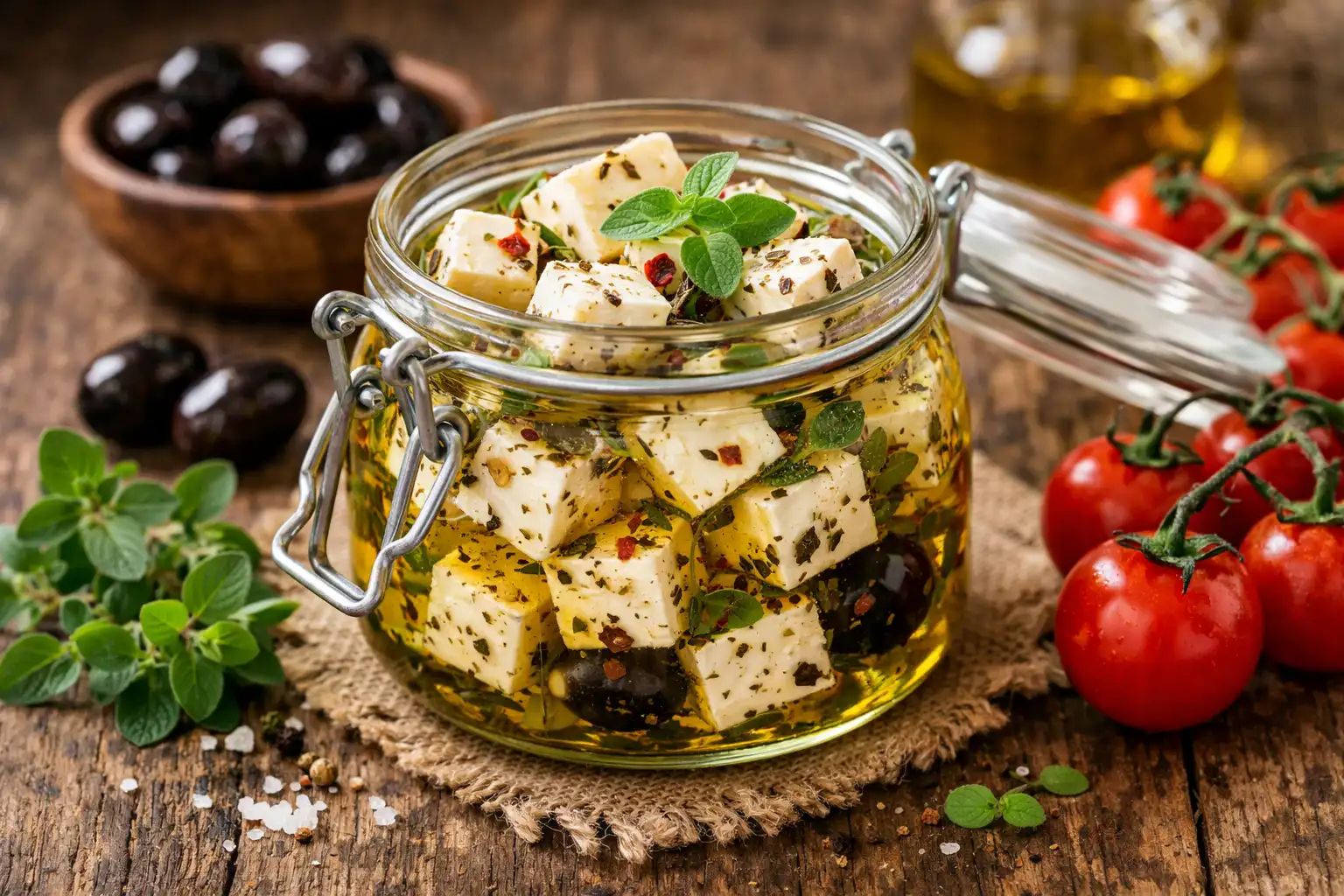
Quick Nutrition Facts
Per 100g (approximately 3/4 cup crumbled)
| Nutrient | Amount |
|---|---|
| Calories | 264 kcal |
| Protein | 14g |
| Carbohydrates | 4g |
| Fiber | 0g |
| Sugars | 4g |
| Fat | 21g |
| Saturated Fat | 14g |
| Monounsaturated Fat | 4.6g |
| Sodium | 1116mg |
| Calcium | 493mg |
| Vitamin B12 | 1.7mcg |
| Phosphorus | 337mg |
Macronutrient Breakdown
 ChatGPT
  Claude
  AI Mode
  Perplexity
NUTRITIONIST INSIGHT
Greek feta provides 14g complete protein and 493mg calcium (49% DV) per 100g. Traditionally made from sheep's milk or sheep-goat blend, authentic PDO feta contains probiotics from natural fermentation that support digestive health.
Myth Busters
MYTH #1: Feta Cheese Is Too High in Fat for Weight Loss
TRUTH: While feta contains 21g fat per 100g, high-protein foods like feta increase satiety and help preserve muscle during weight loss. Mediterranean diet studies show cheese consumers have better long-term weight outcomes when portion-controlled.
MYTH #2: All Feta Is the Same
TRUTH: Authentic Greek feta (PDO certified) is made from minimum 70% sheep's milk, creating superior flavor and texture. Non-Greek varieties often use 100% cow's milk with different nutritional profiles and lower probiotic content.
MYTH #3: The Sodium in Feta Is Too Dangerous
TRUTH: While 100g contains 1116mg sodium, typical servings are 30-40g (335-446mg). Research shows dairy calcium may offset some sodium effects on blood pressure. Rinse feta briefly or choose reduced-sodium versions if monitoring intake.
MYTH #4: Diabetics Should Avoid Cheese Due to Fat
TRUTH: Greek feta is excellent for diabetics. With only 4g carbs per 100g and high protein that stabilizes blood sugar, feta fits well in low-carb diabetes management plans.
MYTH #5: Feta Has No Significant Vitamins
TRUTH: Greek feta provides 1.7mcg vitamin B12 (71% DV) per 100g, essential for energy and nerve function. It also contains vitamin A, riboflavin, phosphorus (337mg - 34% DV), and calcium for bone health.
MYTH #6: Olive Oil Makes Feta Unhealthier
TRUTH: Olive oil preservation adds heart-healthy monounsaturated fats and polyphenol antioxidants. While more calorie-dense than brine-packed (264 vs 240 cal), the Mediterranean fats provide cardiovascular benefits.
NutriScore by Health Goals
| Health Goal | NutriScore | Why This Score? |
|---|---|---|
| Weight Loss |  | 264 calories per 100g, but 14g protein promotes fullness. Limit to 30-40g daily; drain excess oil. |
| Muscle Gain |  | Excellent protein source (14g per 100g) with all essential amino acids. Calcium supports muscle contraction and bone strength during training. |
| Diabetes Management | | Low carbs (4g), high protein stabilizes blood sugar. Perfect for low-carb meal plans. Monitor sodium if hypertensive. |
| PCOS Management | | Low glycemic load, high protein supports insulin sensitivity. Full-fat dairy may benefit hormonal balance; watch portions. |
| Pregnancy Nutrition | | High calcium (493mg - 49% DV) for bone development, vitamin B12 for neural health, complete protein for growth. Ensure pasteurized. |
| Viral/Flu Recovery | | High protein aids tissue repair, probiotics support immunity, easy to digest, vitamin B12 for energy recovery. |
PERSONALIZED NUTRITION
Track your meals with NutriScan for personalized NutriScores based on your specific health goals! Use our Online Macro Calculator to find your daily nutrition targets.
Blood Sugar Response to Greek Feta
Understanding how Greek feta affects blood glucose demonstrates its benefits for glycemic control.
Typical Glucose Response Curve
This chart shows typical blood glucose response for general healthy individuals. Individual responses may vary. Not medical advice.
How to Optimize Blood Sugar Benefits
Pairing Greek feta with fiber-rich foods creates balanced meals for stable glucose:
- 🥗 Leafy greens and vegetables - Adds fiber and micronutrients
- 🥒 Cucumber and tomato salad - Traditional Greek pairing with hydration
- 🥖 Whole grain bread or crackers - The protein slows carb absorption
- 🫒 Kalamata olives - Complete Mediterranean nutrition with healthy fats
This combination provides sustained energy, prevents glucose spikes, and delivers complete nutrition.
Cultural Significance
Greek feta is one of the world's oldest cheeses, with records dating back to Homer's Odyssey (8th century BCE).
In Greece:
- Protected Designation of Origin (PDO) status since 2002 by European Union
- Must be made in specific Greek regions using traditional methods
- Minimum 70% sheep's milk, balance from goat's milk
- Aged minimum 3 months in wooden barrels or metal containers
- Essential to Greek cuisine: salads, spanakopita, moussaka, mezze
Global Impact:
- Greece produces over 140,000 tons annually
- Exported to 50+ countries worldwide
- Integral to Mediterranean diet recognized by UNESCO
- Inspired countless feta-style cheeses globally
- Symbol of Greek culinary heritage and quality
Compare & Substitute
Greek Feta vs Similar Cheeses (Per 100g)
| Nutrient | 🧀 Greek Feta (Olive Oil) | 🧀 Regular Feta (Brine) | 🧀 Goat Cheese | 🧀 Ricotta Cheese |
|---|---|---|---|---|
| Calories | 264 kcal | 240 kcal | 268 kcal | 174 kcal |
| Carbs | 4g | 4g | 2.2g | 7.5g |
| Fiber | 0g | 0g | 0g | 0g |
| Protein | 14g | 14g | 18g | 11g |
| Fat | 21g | 19g | 21g | 13g |
| Sodium | 1116mg | 1116mg | 368mg | 84mg |
| Calcium | 493mg | 493mg | 298mg | 207mg |
| B12 | 1.7mcg | 1.7mcg | 0.2mcg | 0.3mcg |
| Best For | Mediterranean flavor | Lower calorie option | Lower sodium, high protein | Low sodium, lighter option |
Frequently Asked Questions
Is Greek feta in olive oil good for weight loss?
Greek feta can support weight loss when portion-controlled. With 14g protein per 100g, it promotes satiety and helps preserve muscle mass during calorie restriction. The key is moderation.
Best practices: Limit to 30-40g per serving (79-106 cal); drain excess olive oil to reduce calories; pair with vegetables for volume; use as flavor accent in salads; choose reduced-sodium if watching salt intake.
Can diabetics eat Greek feta in olive oil?
Yes, Greek feta is excellent for diabetics. With only 4g carbs per 100g, low glycemic index, and high protein that stabilizes blood sugar, it fits perfectly in diabetes meal plans.
Tips for diabetics: Include 30-50g in meals with vegetables and whole grains; the protein and fat slow glucose absorption; monitor blood pressure if sensitive to sodium; choose brine-packed for fewer calories if managing weight.
How much protein is in Greek feta?
Greek feta contains 14 grams of high-quality complete protein per 100g. This provides all essential amino acids needed for muscle building, tissue repair, and immune function.
For muscle gain or high-protein diets, 40-50g feta provides 5.6-7g protein. Combine with other protein sources like chicken, fish, or legumes for complete nutrition.
What are the main health benefits of Greek feta?
Key Benefits:
- Bone Health: 493mg calcium (49% DV) and 337mg phosphorus (34% DV) strengthen bones and teeth
- Muscle Building: 14g complete protein with all essential amino acids supports muscle growth and repair
- Blood Sugar Control: Low carbs, high protein stabilize glucose; ideal for diabetes management
- Gut Health: Natural fermentation provides probiotics that support digestive health
- Energy and Nerves: 1.7mcg vitamin B12 (71% DV) essential for energy production and nerve function
- Weight Management: High satiety from protein helps control appetite despite calorie density
Is feta in olive oil healthier than regular feta?
Feta in olive oil contains heart-healthy monounsaturated fats and polyphenol antioxidants from the oil. However, it's more calorie-dense (264 vs 240 cal per 100g).
Choose olive oil version for: Mediterranean diet benefits; heart health focus; enhanced flavor and texture; longer shelf life; antioxidant boost.
Choose brine-packed for: Lower calories; weight loss; reduced fat intake; easier sodium control when rinsed.
Track meals with NutriScan app to see which fits your personal nutrition goals.
Should I drain the olive oil from feta before eating?
Depends on your goals:
Drain and pat dry if: Focused on weight loss (saves 30-50 cal per serving); counting calories strictly; prefer lower fat intake; using feta in baked dishes.
Keep the oil if: Following Mediterranean diet pattern; want full flavor; enjoying as appetizer with bread; seeking antioxidant benefits; not restricting fat.
Middle approach: Drain excess but keep light coating for balanced flavor and nutrition.
Can I eat Greek feta on an empty stomach?
Generally safe for most people—the high protein and fat won't spike blood sugar.
May want to pair with food if you have: Lactose intolerance (though feta has minimal lactose); sensitive stomach (high fat can be heavy); prefer balanced nutrition (add vegetables or whole grains).
Better approach: Include in balanced meals or snacks with vegetables, whole grains, or olives for complete Mediterranean nutrition and optimal digestion.


Similar Nutritious Foods
4505 Chicharrones Classic Chili Salt
7 Eleven Japan Crispy Corn Cheese
Explore More Nutrition Tools & Resources
AI Calorie Counter App - Snap a Photo, Get Macros
AI Nutritionist App That Reads Your Logged Meals
Best Protein Supplements for Women
Bulking Meal Plan App That Sets Your Surplus
ChatGPT Calorie Counter Alternative That Keeps the Total
ChatGPT Diet Plan Alternative That Tracks What You Eat
ChatGPT Weight Loss Coach Alternative With a Food Log
Fast Food Calorie Counter App That Reads the Tray
Free Calorie Tracker App with AI Photo Scans | NutriScan
Indian Diet Plan App With Veg and Non Veg Meals
Indian Food Calorie Calculator - Get Instant Nutrition Facts for Desi Meals — 2026
Intermittent Fasting for Women, Timer and Meal Log App
Intermittent Fasting Tracker App - Free Fasting Timer
Macro Tracker App That Fills the Numbers From a Photo
Mediterranean Diet Meal Plan App That Counts the Oil
Micronutrient Tracker App for Vitamins and Minerals
MyFitnessPal Alternative That Stays Free | NutriScan
NutriScore App: A Free Grade on Every Meal | NutriScan
Nutrition Label Scanner App for the Amount You Ate
Second Trimester Protein Guide
Vegetarian Meal Plan App With a Protein Target
Voice Calorie Counter - Speak to Track Meals Hands-Free
Water and Calorie Tracker App - Free Water Log