Greek Gyros: Calories, Nutrition and Health Benefits
A protein-packed Mediterranean street food featuring seasoned rotisserie meat, fresh vegetables, and creamy tzatziki wrapped in warm pita bread.
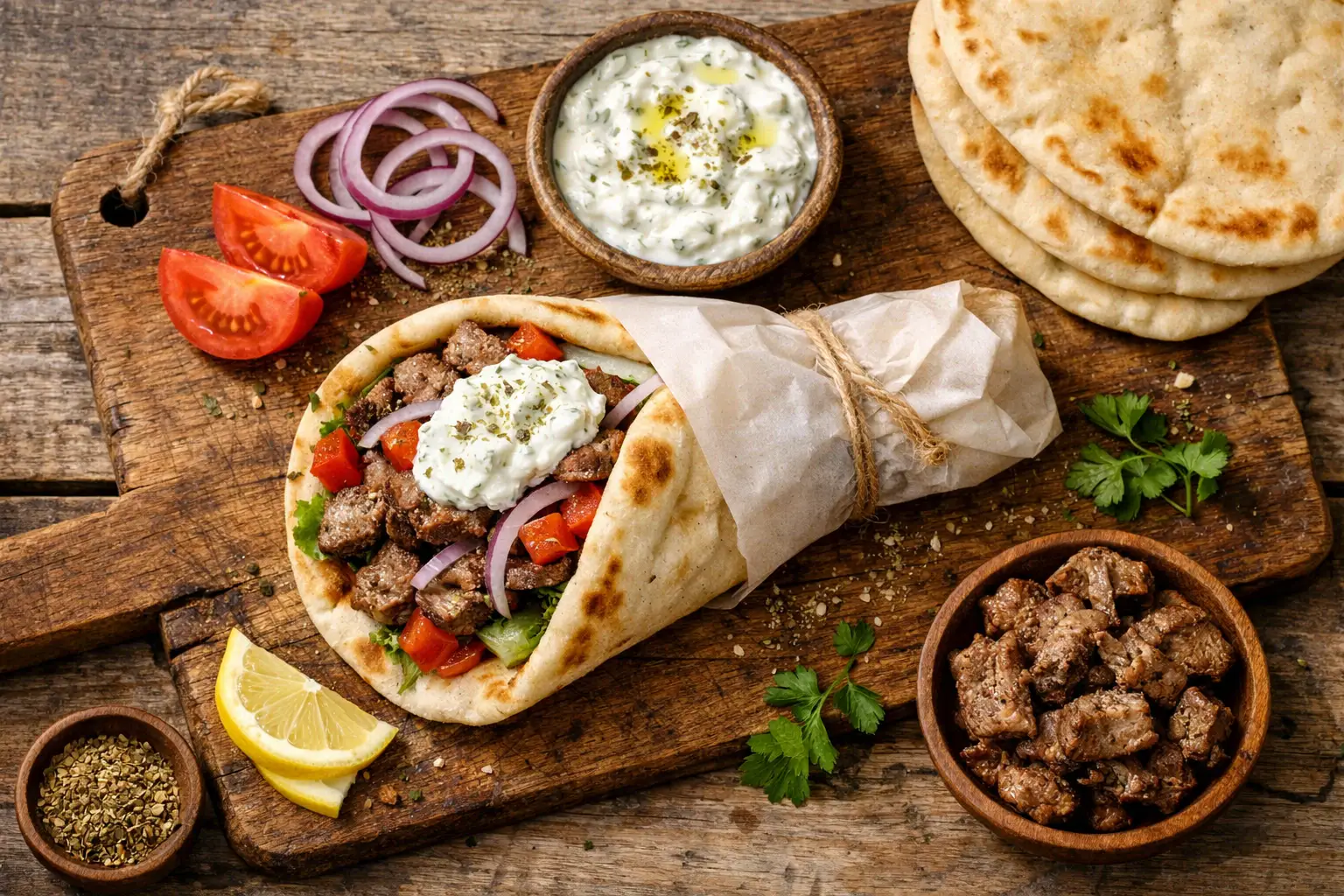
Quick Nutrition Facts
Per 1 Traditional Gyros Wrap (350g)
| Nutrient | Amount |
|---|---|
| Calories | 415 kcal |
| Protein | 35g |
| Carbohydrates | 49g |
| Fiber | 3g |
| Sugars | 4g |
| Fat | 12g |
| Saturated Fat | 4.5g |
| Sodium | 890mg |
| Iron | 4.2mg |
| Zinc | 5.8mg |
| Vitamin B12 | 2.4mcg |
Macronutrient Breakdown
 ChatGPT
  Claude
  AI Mode
  Perplexity
NUTRITIONIST INSIGHT
Greek gyros delivers 35g of complete protein with high bioavailability from lamb or beef. The tzatziki adds probiotics that may support gut health and glycemic control. For a healthier version, ask for extra vegetables and use half the pita.
Myth Busters
MYTH #1: Gyros Are Junk Food
TRUTH: While high in sodium, gyros provide significant nutrition: 35g protein, 100% DV vitamin B12, 52% DV zinc. Lamb and beef are among the best sources of bioavailable zinc and B12, essential for immune function and red blood cell formation.
MYTH #2: All Gyros Meat Is Unhealthy Processed Meat
TRUTH: Traditional Greek gyros uses marinated whole cuts of pork or chicken. American-style lamb/beef gyros is more processed. Research shows unprocessed red meat has different health impacts than processed varieties - the key is frequency and preparation method.
MYTH #3: Gyros Will Make You Gain Weight
TRUTH: At 415 calories with 35g protein, gyros can fit a balanced diet. The high protein content promotes satiety and muscle preservation. Weight gain comes from overall calorie surplus, not individual foods. Split one wrap for a 200-calorie satisfying snack.
MYTH #4: The Tzatziki Is Just Empty Calories
TRUTH: Tzatziki provides probiotics from yogurt that may improve fasting blood glucose, plus calcium, protein, and cucumber's hydrating benefits. A 2-tablespoon serving adds only 35 calories but significant nutrition.
MYTH #5: Gyros Have No Nutritional Value
TRUTH: One gyros wrap provides 70% daily protein needs, 40% of daily B12 requirements, significant iron and zinc. The vegetables add fiber, vitamins A and C. It's a complete meal, not empty calories.
NutriScore by Health Goals
| Health Goal | NutriScore | Why This Score? |
|---|---|---|
| Weight Loss |  | 415 calories is moderate, but high protein (35g) promotes satiety. Watch portions; split one wrap. Skip extra tzatziki and pita. |
| Muscle Gain |  | Excellent 35g complete protein with high bioavailability. Good post-workout meal with carbs for glycogen replenishment. |
| Diabetes Management | | Refined pita causes blood sugar spikes (GI ~70). Protein and fat slow absorption. Choose lettuce wrap or half pita to reduce carb load. |
| PCOS Management | | High protein supports hormone balance, but watch sodium (890mg). Choose chicken gyros over lamb for lower saturated fat. |
| Pregnancy Nutrition |  | Excellent source of iron, zinc, and B12 crucial for fetal development. Ensure meat is thoroughly cooked; moderate sodium intake. |
| Viral/Flu Recovery | | High protein and zinc support immune function. Easy to eat when appetite is low. The warm pita and tzatziki are soothing. |
PERSONALIZED NUTRITION
Track your meals with NutriScan for personalized NutriScores based on your specific health goals!
Blood Sugar Response to Greek Gyros
Understanding how gyros affects your blood glucose can help you make informed decisions about when and how to eat it.
Typical Glucose Response Curve
This chart shows typical blood glucose response for general healthy individuals. Individual responses may vary. Not medical advice.
How to Flatten the Spike
Pairing carbs with protein and fat slows glucose absorption - gyros already has this built in, but you can optimize further:
- Use lettuce wrap instead of pita - Eliminates refined carbs entirely
- Request extra vegetables - Adds fiber to slow digestion
- Choose chicken over lamb - Lower fat allows faster gastric emptying
- Split into two meals - Half the carbs per sitting
Cultural Significance
Gyros (meaning "turn" in Greek) originated in Greece in the 1920s, inspired by Turkish doner kebab brought by refugees from Asia Minor.
In Greece:
- Street food staple since the 1950s, found at "souvlatzidika" (grill shops)
- Traditional filling is pork or chicken, not lamb
- Served with tzatziki, tomatoes, onions, and sometimes fries inside the wrap
- Each region has variations: Athens favors pork, Thessaloniki prefers chicken
Global Adaptation:
- American-style gyros uses lamb/beef blend on vertical rotisserie
- Middle Eastern countries have similar dishes: shawarma, doner, kathi roll
- Popular in Australia, Germany, and the UK with Mediterranean immigrant communities
- Estimated $3 billion global market for wrapped meat sandwiches
Naming:
- Pronounced "YEE-ros" in Greek, not "JY-ros"
- Plural is also "gyros" (not "gyroi" despite Greek grammar)
Compare & Substitute
Greek Gyros vs Similar Wraps (Per Serving)
| Nutrient | Greek Gyros | Chicken Shawarma | Beef Doner | Falafel Wrap |
|---|---|---|---|---|
| Calories | 415 kcal | 350 kcal | 480 kcal | 520 kcal |
| Protein | 35g | 28g | 32g | 18g |
| Carbs | 49g | 42g | 45g | 58g |
| Fat | 12g | 10g | 22g | 24g |
| Fiber | 3g | 3g | 2g | 8g |
| Sodium | 890mg | 780mg | 950mg | 720mg |
| Best For | Muscle gain, high protein | Weight loss, lean protein | Indulgence, flavor | Plant-based, fiber |
Frequently Asked Questions
Are Greek gyros healthy?
Greek gyros can be part of a healthy diet when consumed in moderation. One wrap provides 35g of high-quality protein, 100% daily B12, and significant zinc and iron.
Health considerations:
- High sodium (890mg, 37% DV) - not ideal for hypertension
- Saturated fat (4.5g) from lamb - moderate intake advised
- Refined pita adds quick carbs - affects blood sugar
Healthier choices: Choose chicken over lamb, add extra vegetables, use half pita or lettuce wrap.
How many calories are in a Greek gyros?
A standard Greek gyros wrap contains 415 calories. However, portions vary significantly:
- Street vendor (Greece): 350-400 calories
- US restaurant: 500-650 calories
- Large/loaded: 700-830 calories
The calorie difference comes from meat quantity, extra tzatziki, and pita size. Track with NutriScan app for accurate counts.
Can diabetics eat Greek gyros?
Diabetics can enjoy gyros occasionally with modifications. The refined pita bread (GI ~70) causes blood sugar spikes, but protein and fat slow absorption.
Tips for diabetics:
- Use lettuce wrap or eat open-faced with half pita
- Prioritize vegetables over meat quantity
- Choose chicken over lamb (faster digestion)
- Monitor blood sugar 2 hours after eating
The tzatziki's probiotics may help with glycemic control - don't skip it entirely.
Is gyros meat processed?
It depends on the preparation:
More processed (American-style):
- Ground lamb/beef blend
- Added sodium, spices, preservatives
- Formed into cone shape
- Associated with higher cardiovascular risk
Less processed (Traditional Greek):
- Marinated whole cuts of pork/chicken
- Stacked on vertical spit
- Minimal additives
For healthier options, ask about preparation method or choose restaurants using whole meat cuts.
What is healthier: gyros or shawarma?
Both are nutritionally similar, with differences based on meat choice and preparation:
| Factor | Gyros | Shawarma |
|---|---|---|
| Calories | 415 (lamb) | 350 (chicken) |
| Protein | 35g | 28g |
| Fat | 12g | 10g |
| Sodium | 890mg | 780mg |
Verdict: Chicken shawarma is slightly leaner. Both are healthy in moderation - the preparation method matters more than the name.
How much protein is in a Greek gyros?
A standard gyros wrap provides 35g of complete protein, primarily from:
- Lamb/beef meat: 26g
- Tzatziki yogurt: 4g
- Pita bread: 5g
This meets 70% of daily protein needs for sedentary adults (50g) and 50% for active individuals (70g). The protein is highly bioavailable with all essential amino acids.
How often can I eat gyros?
Recommended frequency based on health goals:
- Weight loss: 1-2 times per month (share or half portion)
- Muscle gain: 2-3 times per week (great protein source)
- Heart health: 1-2 times per month (watch sodium)
- General health: Once per week is reasonable
The main concerns are sodium (890mg per serving) and saturated fat. Balance gyros days with lower-sodium, plant-forward meals.


Similar Nutritious Foods
4505 Chicharrones Classic Chili Salt
7 Eleven Japan Crispy Corn Cheese
Explore More Nutrition Tools & Resources
AI Calorie Counter App - Snap a Photo, Get Macros
AI Nutritionist App That Reads Your Logged Meals
Best Protein Supplements for Women
Bulking Meal Plan App That Sets Your Surplus
ChatGPT Calorie Counter Alternative That Keeps the Total
ChatGPT Diet Plan Alternative That Tracks What You Eat
ChatGPT Weight Loss Coach Alternative With a Food Log
Fast Food Calorie Counter App That Reads the Tray
Free Calorie Tracker App with AI Photo Scans | NutriScan
Indian Diet Plan App With Veg and Non Veg Meals
Indian Food Calorie Calculator - Get Instant Nutrition Facts for Desi Meals — 2026
Intermittent Fasting for Women, Timer and Meal Log App
Intermittent Fasting Tracker App - Free Fasting Timer
Macro Tracker App That Fills the Numbers From a Photo
Mediterranean Diet Meal Plan App That Counts the Oil
Micronutrient Tracker App for Vitamins and Minerals
MyFitnessPal Alternative That Stays Free | NutriScan
NutriScore App: A Free Grade on Every Meal | NutriScan
Nutrition Label Scanner App for the Amount You Ate
Second Trimester Protein Guide
Vegetarian Meal Plan App With a Protein Target
Voice Calorie Counter - Speak to Track Meals Hands-Free
Water and Calorie Tracker App - Free Water Log